Accessible vacations survey
Contents
- The survey ↴
- How many UK adults travel with health and access considerations? ↴
- The accessible ‘travel gap’ vs demand ↴
- A confidence crisis and accessible information vacuum ↴
- Accessible vacation planning and experience ↴
- Summary: Justin Francis OBE, Responsible Travel ↴
- Insight: Dr Jillian Rickly, Nottingham University ↴
- Tips and resources ↴
- Methodology ↴
Key themes
- A mainstream market: Two in five UK adults travel with access and health considerations in mind, presenting a huge market opportunity.
- Accessible adventure demand: UK adults with access or health considerations are traveling less overall, but want to travel more - and more adventurously, with high interest levels in nature-based, active and cultural vacations.
- Confidence gap: Millions of people with health and access considerations feel shut out of travel, and it’s a confidence crisis holding them back. 23 percent say stress and lack of confidence limit their vacation choices, compared to just 8 percent of people without access or health needs. The gap widens among young people and women.
- Information vacuum: Accessibility information online is the most essential factor to boosting travel confidence for those who need it. But a separate survey of tour operators by Responsible Travel indicates an accessible information vacuum.
 While every tourism activity will not suit every body, tourism is for everyone. Because one size does not fit all, accessible tourism is underscored by the core values of independence, dignity and equity.
– Dr Jillian Rickly, Professor of Tourism at the University of Nottingham and co-editor of the first Handbook of Accessible Tourism
Introduction
This survey, conducted with YouGov, explores accessible ‘adventure’ travel. By this, we simply mean vacations that challenge and enrich us in some way. Think nature-based, cultural or active escapes.
From it, we learn that traveling with a health or access consideration is becoming the norm. That millions of UK adults with disabilities or long-term health conditions want to travel more - and more adventurously - but still face barriers to doing so. And we gain insight into how even small businesses can address these barriers to help boost traveler confidence and trust.
It’s a topic we’ll return to annually. Each year, the survey will reveal the travel habits and experiences of people with, and without, health and accessibility needs. We hope this will fuel discussion, shared learning and progress as an industry, as we navigate towards a more accessible, inclusive future for all.
I’d never thought a safari vacation would be something I’d get very much out of – what is the point if you can’t physically see the animals after all? Not only is Eswatini one of the most beautiful, warm and friendly places I’ve ever visited, I left with so many unexpected memories to treasure. I also got a lot more out of the game drives than I was expecting. Eswatini was a whole sensory immersion. I will remember it all forever. – Rachel Nafzger - Seable customer
The survey
Which best describes your situation when it comes to traveling?
- Two in five UK adults travel with access and health considerations in mind.
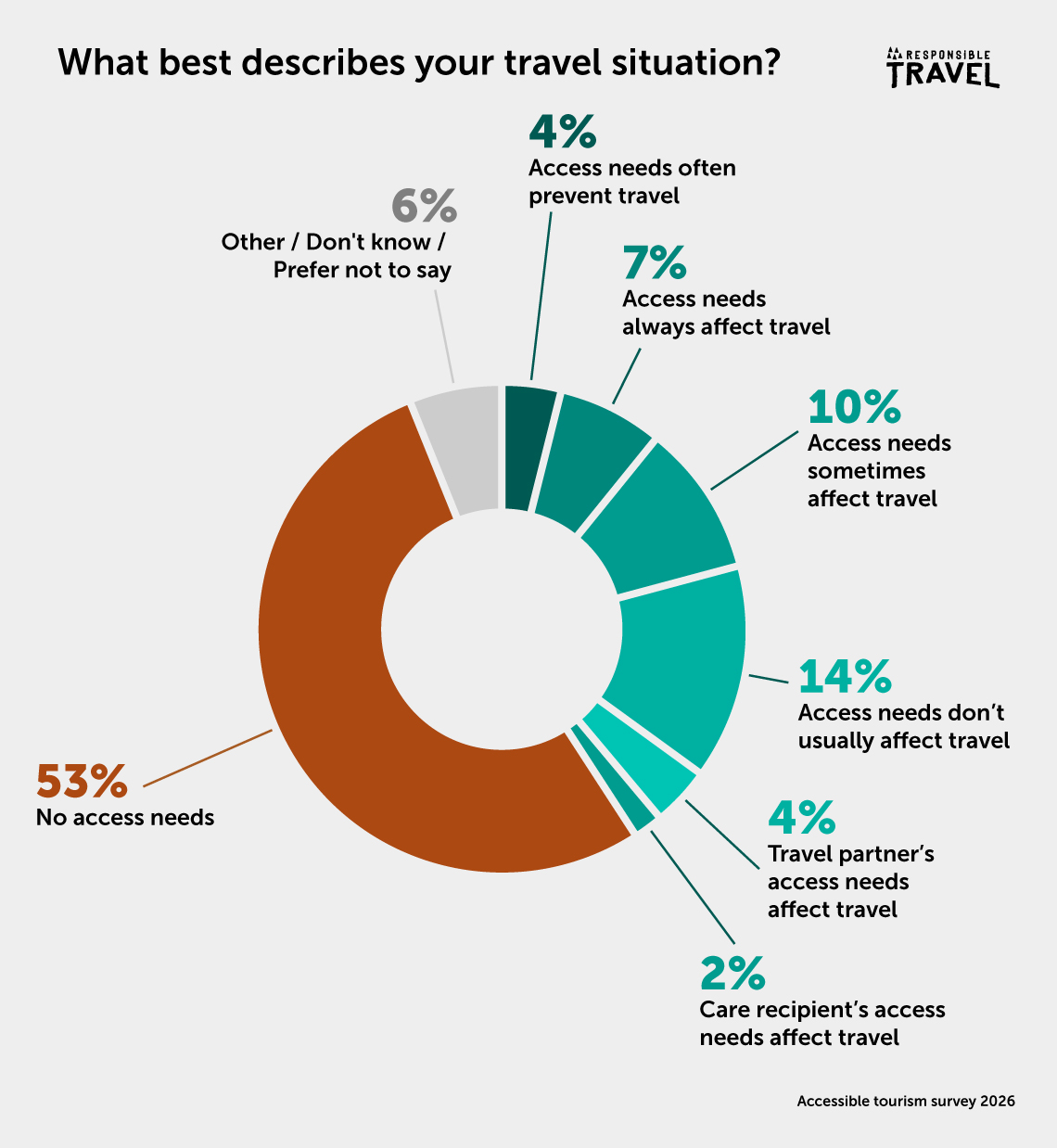
This represents a much larger group than the 25 percent of the population quoted as having a disability in UK government figures – and a much larger market than the travel industry may assume.
We asked the UK public to consider access and health in as broad a sense as possible, because accessibility covers an enormous range of needs: from physical issues such as wheelchair use or limited mobility, to sensory impairments, mental health conditions, memory loss and other cognitive limitations.
The need for accessibility in travel is often not isolated to one individual, and we felt it was important to capture the experiences of unpaid carers, travel companions and families as well.
So, while 35 percent of UK adults identified themselves as having one or more long-term health condition, illness or impairment, a further 6 percent identified as an unpaid carer and/or regular travel companion of someone who does, with their travel decisions dependent on the needs of that person – equating to 41 percent of UK adults in total.
We asked the UK public to consider access and health in as broad a sense as possible, because accessibility covers an enormous range of needs: from physical issues such as wheelchair use or limited mobility, to sensory impairments, mental health conditions, memory loss and other cognitive limitations.
The need for accessibility in travel is often not isolated to one individual, and we felt it was important to capture the experiences of unpaid carers, travel companions and families as well.
So, while 35 percent of UK adults identified themselves as having one or more long-term health condition, illness or impairment, a further 6 percent identified as an unpaid carer and/or regular travel companion of someone who does, with their travel decisions dependent on the needs of that person – equating to 41 percent of UK adults in total.
How often do you go on vacation?
- Adults with access or health considerations are traveling less overall, with a clear and consistent ‘travel gap’ across vacation types.
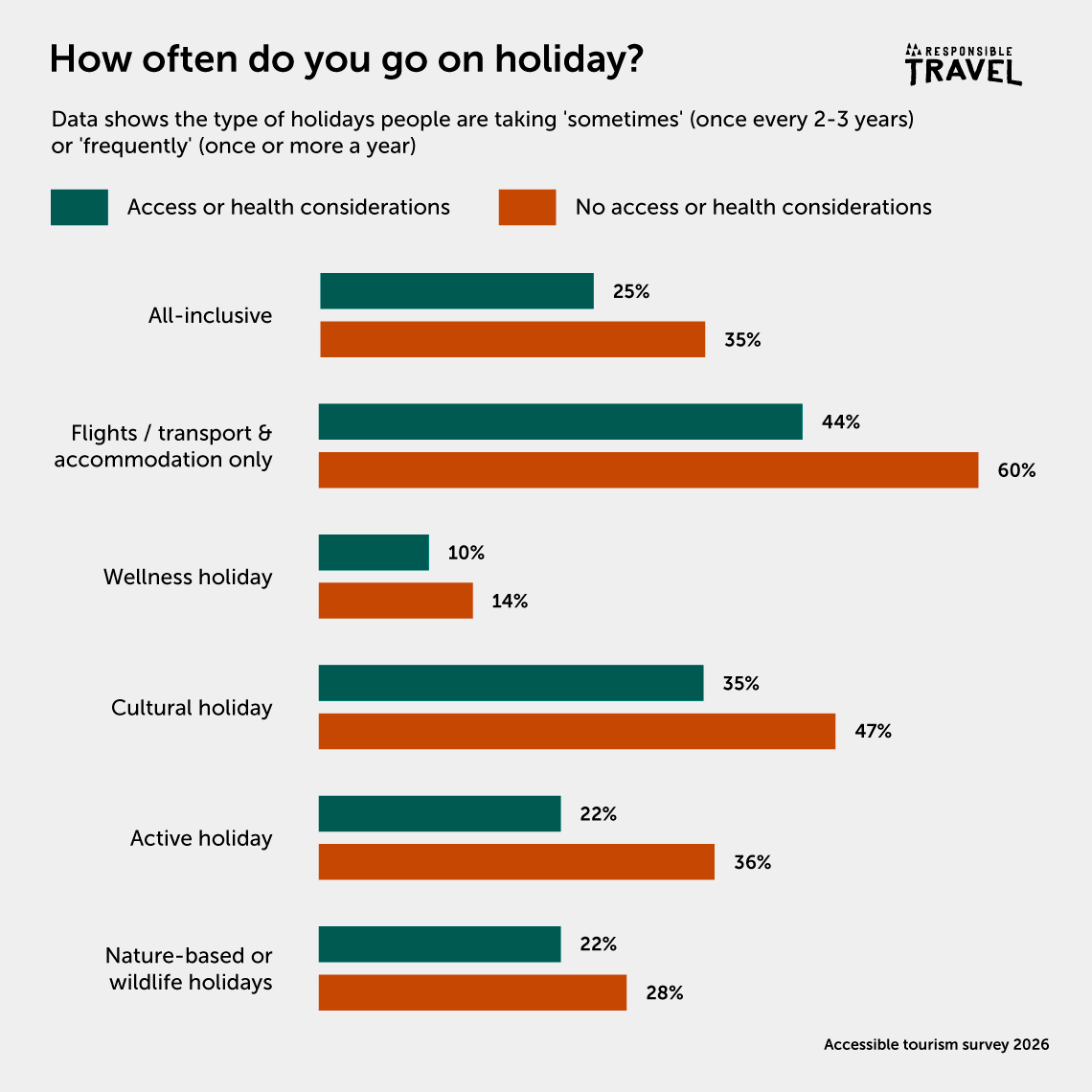
We looked at six types of vacation, spanning the breadth of travel options and preferences.
Overall, UK adults most frequently opt for ‘transport and accommodation only’ trips (e.g. city breaks, Airbnb, Center Parcs) with 72 percent saying they have taken this type of trip at some point. However, while 60 percent of those without access or health needs take these vacations 'sometimes' (once every two or three years) or 'frequently' (once or more a year), this falls to 44 percent of adults with access or health considerations.
This travel gap persists across all-inclusive, wellness, and nature-based vacations, but it is most pronounced for cultural and active trips.
People with access and health considerations are significantly less likely to take these vacations sometimes or frequently. For active vacations, participation drops by 14 percentage points (22 percent compared with 36 percent), and participation in cultural breaks by 12 percentage points (35 percent versus 47 percent).
Overall, UK adults most frequently opt for ‘transport and accommodation only’ trips (e.g. city breaks, Airbnb, Center Parcs) with 72 percent saying they have taken this type of trip at some point. However, while 60 percent of those without access or health needs take these vacations 'sometimes' (once every two or three years) or 'frequently' (once or more a year), this falls to 44 percent of adults with access or health considerations.
This travel gap persists across all-inclusive, wellness, and nature-based vacations, but it is most pronounced for cultural and active trips.
People with access and health considerations are significantly less likely to take these vacations sometimes or frequently. For active vacations, participation drops by 14 percentage points (22 percent compared with 36 percent), and participation in cultural breaks by 12 percentage points (35 percent versus 47 percent).
How interested are you in accessible adventure travel?
- A majority of those with access or health considerations would like to travel more – and more adventurously.
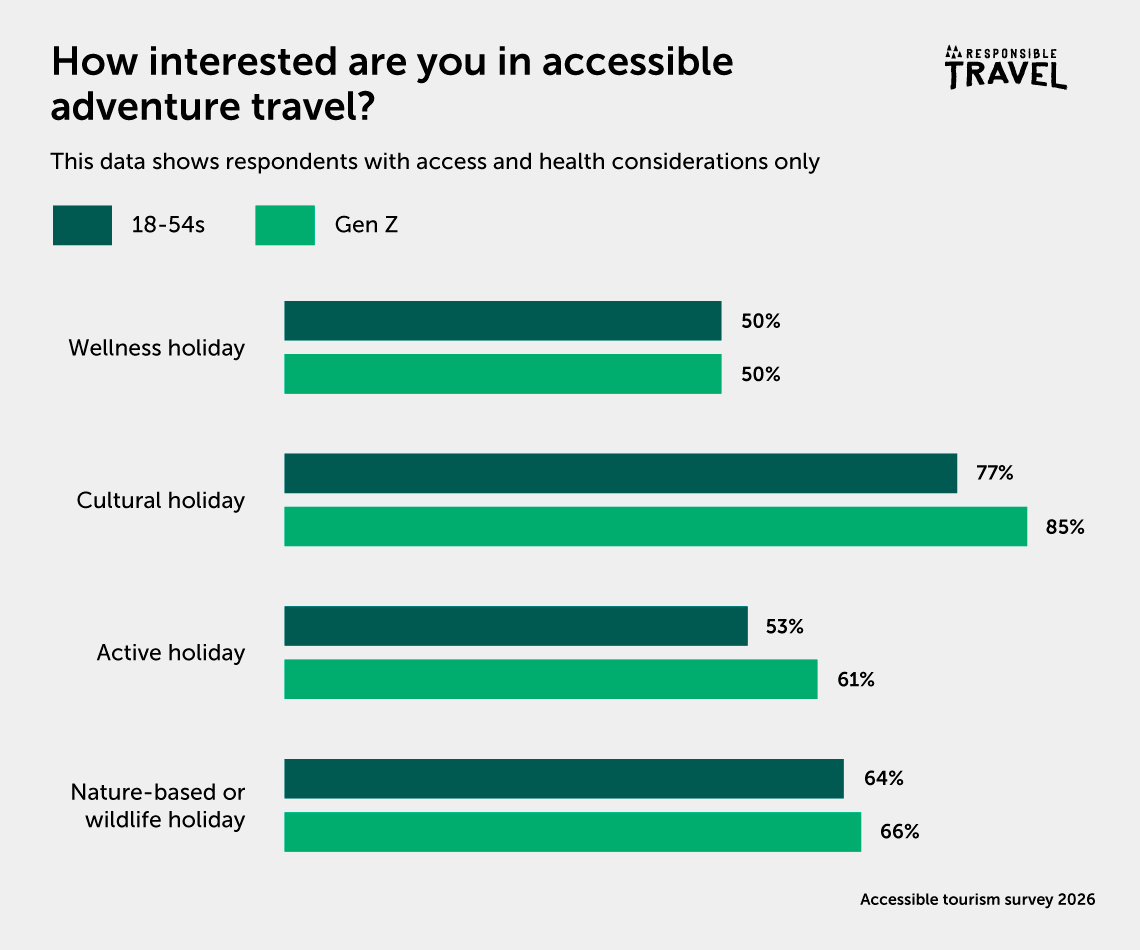
There is substantial market demand for more accessible adventure tourism, and a profound opportunity for those businesses that adapt to meet it.
A majority of people with access or health needs express interest in taking more active, cultural and nature-based vacations, if confident they have been designed to meet their needs.
While 64 percent of adults with access or health needs rarely or never take a cultural vacation, over three-quarters (77 percent) of those aged 18-54, and 85 percent of Gen Z, would like to.
And despite 77 percent of adults with access or health needs rarely or never taking a nature-based vacation, 64 percent of 18-54s and 66 percent of Gen Z express interest in doing so.
Over three-quarters (77 percent) rarely or never take an active vacation, but a majority – 53 percent of 18-54s and 61 percent of Gen Z – would like to.
A majority of people with access or health needs express interest in taking more active, cultural and nature-based vacations, if confident they have been designed to meet their needs.
While 64 percent of adults with access or health needs rarely or never take a cultural vacation, over three-quarters (77 percent) of those aged 18-54, and 85 percent of Gen Z, would like to.
And despite 77 percent of adults with access or health needs rarely or never taking a nature-based vacation, 64 percent of 18-54s and 66 percent of Gen Z express interest in doing so.
And while 90 percent of people with access or health needs ‘rarely or never’ take a wellness vacation, many – particularly younger generations – would like to, with 51 percent of Millennials and 50 percent of Gen Z expressing interest.
There is such an inspiring shift toward active, immersive tourism right now. The message from our community is clear: they want the same adrenaline, the same depth, and the same stories as any other traveler, and we are so proud to make that happen. – Damiano la Rocca, Founder of Seable Vacations
What limits your choice of the vacations you take or prevents you from taking the vacations you would like?
- Millions of people with health and access considerations feel shut out of travel, and it’s a confidence crisis holding them back.
- The confidence gap is wider among young people and women.
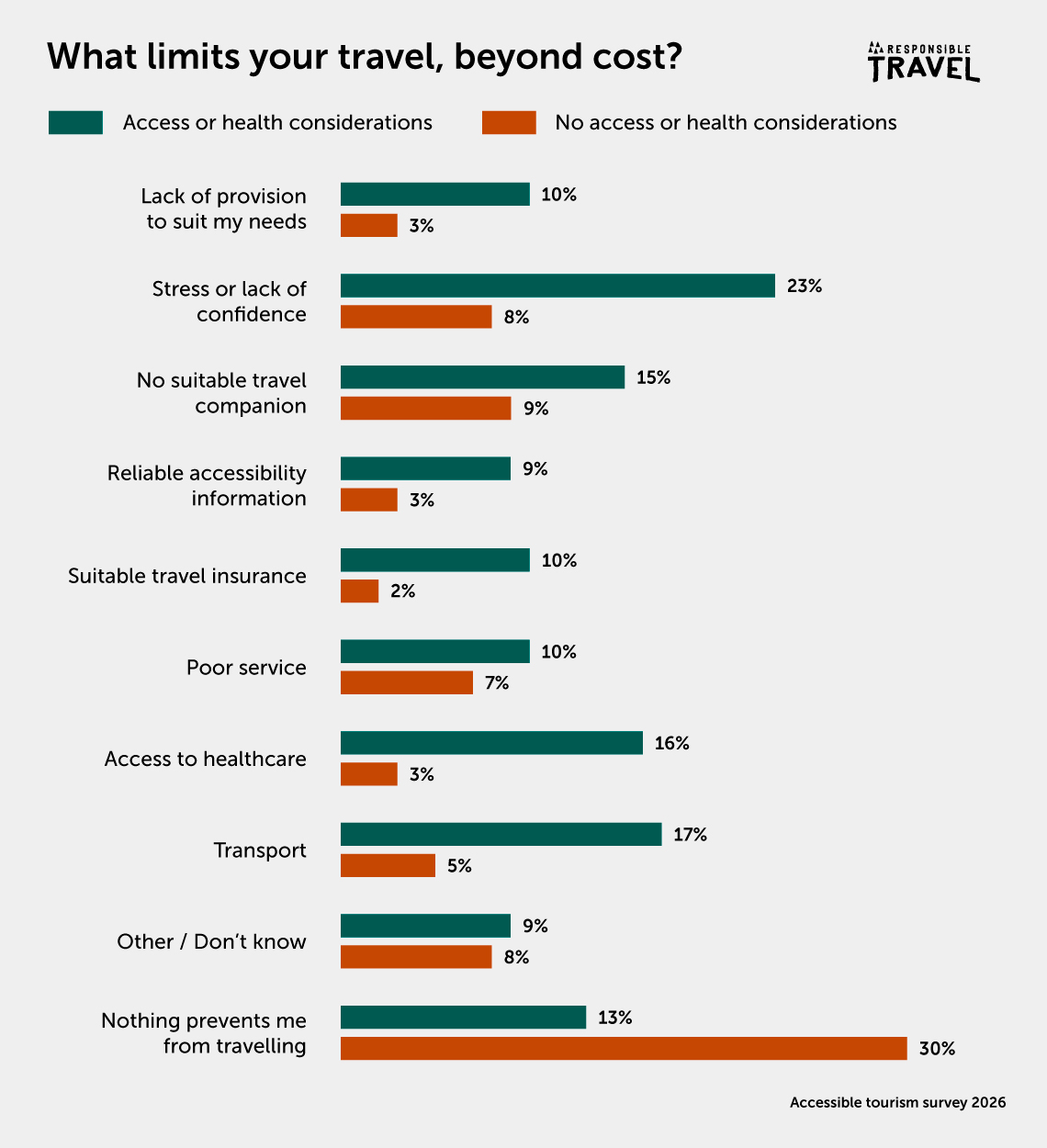
We asked the UK public what limits their choice of vacations and prevents them taking the trips they want. Unsurprisingly, the biggest issue was cost – both the cost of vacations (50 percent) and cost-of-living pressures (46 percent). However, the next most significant factor was more unexpected: confidence.
The poll reveals a substantial confidence gap.
Almost a quarter (23 percent) of people with access and health considerations said a lack of confidence prevented them from taking the trips they want rising to nearly one in three (32 percent) among Gen Z in this group. By contrast, just 8 percent of people without health or access considerations – and 9 percent of Gen Z within this group – said they lacked the confidence to travel.
Among women with access and health considerations, 27 percent lacked the confidence to travel, compared with 19 percent of men in the same group and just 7 percent of women without any access or health considerations.
Across all UK adults, one in seven (14 percent) said a lack of confidence when traveling, or finding travel stressful, limited the vacations they took.
The poll reveals a substantial confidence gap.
Almost a quarter (23 percent) of people with access and health considerations said a lack of confidence prevented them from taking the trips they want rising to nearly one in three (32 percent) among Gen Z in this group. By contrast, just 8 percent of people without health or access considerations – and 9 percent of Gen Z within this group – said they lacked the confidence to travel.
Among women with access and health considerations, 27 percent lacked the confidence to travel, compared with 19 percent of men in the same group and just 7 percent of women without any access or health considerations.
The survey also shows that for people with health and access considerations, difficulty with transport or transport accessibility (17 percent), concerns about access to healthcare while on vacation (16 percent), and the lack of a suitable travel companion (15 percent) are also significant barriers to travel.
From my personal experience recovering from a kidney transplant, I felt trapped at home and it wasn’t good for my mental health. To live is to experience things, and on the few occasions I did get away I was able to leave behind thoughts of my illness – it was bliss. It was also great to give my wife a break. Finding information about what you can do is daunting; all the exciting things seemed off the table. When you are ill, your confidence drops, and it’s stressful and depressing trying to research. – Justin Francis, co-founder and executive chair of Responsible Travel
What is essential to making you feel more confident booking an active, cultural, nature-based or adventurous vacation?
- Clear accessibility information is the most ‘essential’ factor to increasing travel confidence.
- There’s a vacuum of online accessibility information for vacations. Addressing this gap is one of the simplest ways for travel companies and destinations to help address the confidence crisis and increase accessible sales.
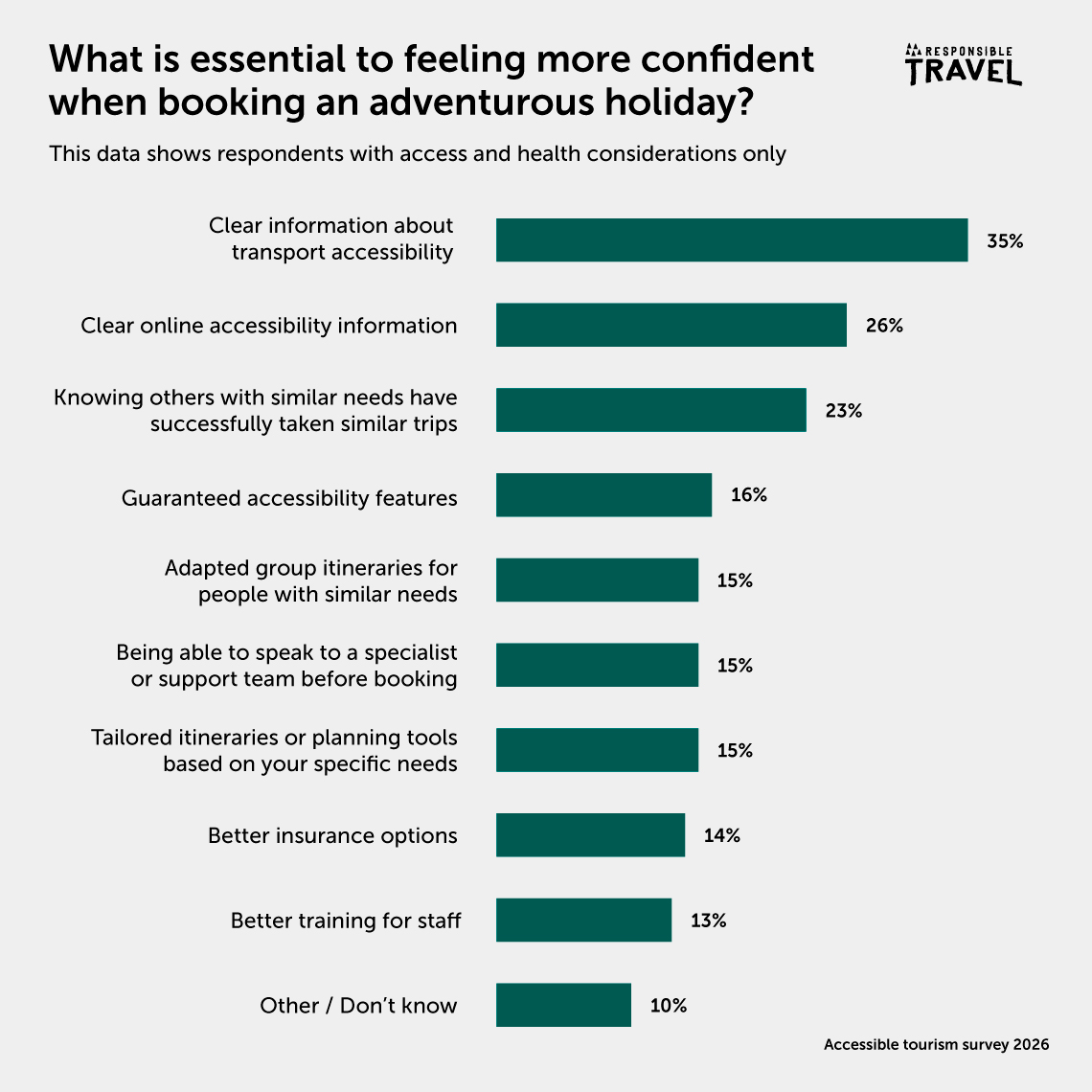
Our respondents with access and health considerations were clear: information is key.
While not every vacation is going to meet everyone’s needs, providing clear, detailed information about transport accessibility (35 percent), making accessibility information available online without the need for a phone call (26 percent), and showing reviews from people with similar needs (23 percent) helps travelers identify suitable trips and feel confident booking more active, cultural, nature-based or adventurous vacations.
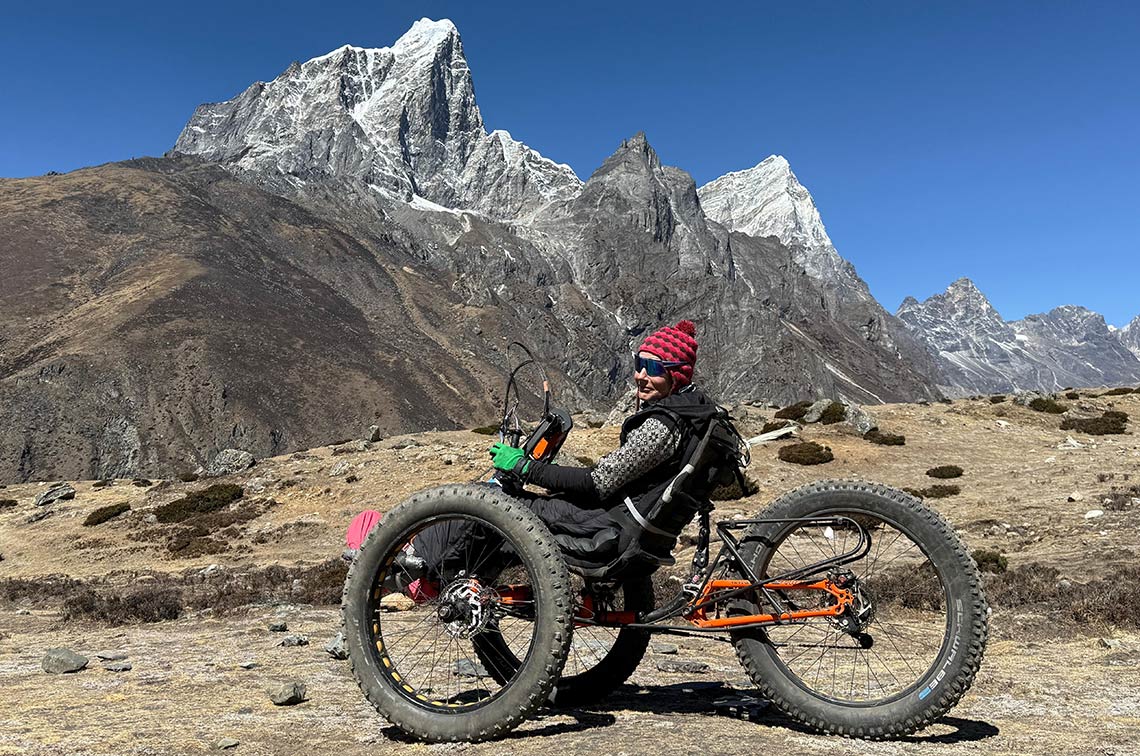
Confidence grows when we embrace vulnerability, plan well, and stay open to learning, but it also depends on the travel industry removing barriers and sharing honest, accessible information. With this approach, travel becomes not just possible, but empowering, inclusive and part of a bigger picture of making our environments more accessible to all.
“If I am making the effort to travel somewhere new I really want to experience the place I am going to. Really immerse myself in its history, culture and ways of life. Observe the similarities, embrace the differences and return home feeling like I’ve either emotionally felt something, learnt something, or both.” – Rachel Nafzger, a regular traveler who is blind.
Only 39 percent of women with access and health considerations said their vacations were relaxing and enjoyable, compared with 50 percent of women without health considerations. Women with health and access considerations were also more likely to say they mainly found vacations ‘challenging but rewarding’ (15 percent) compared to nine percent of men in this group – and just seven percent of women without health considerations.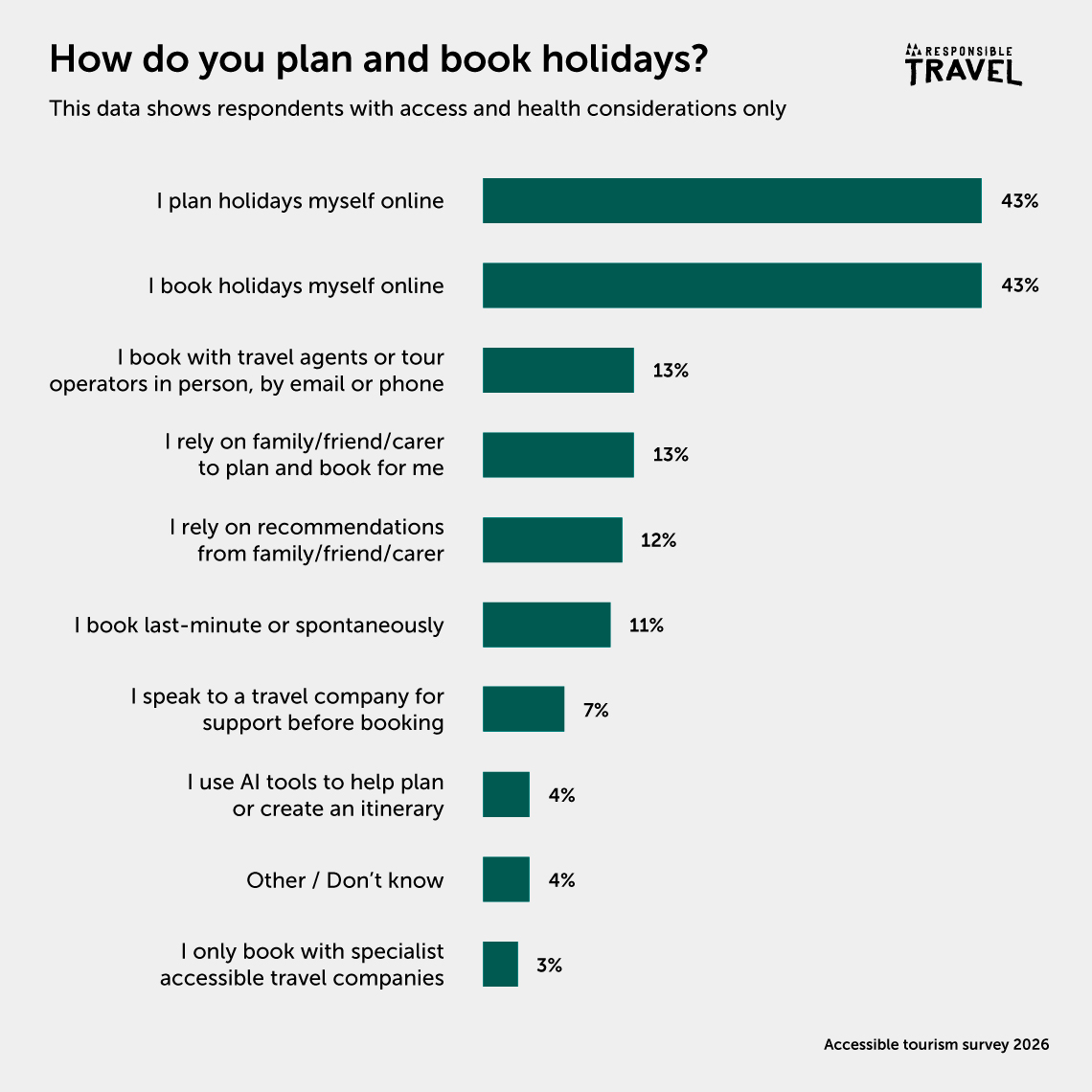
According to accessible travel charity, Tourism for All, this might reflect a broader generational shift in attitudes to accessibility.
“In our experience, younger generations seem to be raising the bar for travel companies on accessibility,” says CEO Ray Veal. “They’re more likely to say, ‘Here’s what I want to do, so how can we make this experience happen?’ rather than ask ‘are you able to accommodate my needs?’”
“That reflects a broader societal change,” he adds. “These days, we generally assume that spaces and experiences will be accessible and inclusive. That often isn’t the reality, but the expectation is they should be. Younger travelers are more likely to want more adventurous vacations and to expect travel companies to accommodate different needs. Because of that, they may be more likely to encounter and report barriers.”
A minority of respondents report that they’ve been turned away by travel companies, which we hope reflects positive industry progress. However, people with access and health considerations still take fewer adventurous trips despite strong interest, and more often opt for ‘transport and accommodation only’ vacations – such as vacation rentals or resorts – which are most commonly booked online. It may be that fewer barriers are encountered when traveling in this way.
One thing that overshadows any travel experience I have ever had is the quality (or lack of) of assistance for passengers with disabilities at airports and on airplanes. It is notoriously not fit for purpose across the board, at home and abroad and it can prove a real barrier. Imagine having been on an adventure of a lifetime, achieving things you never thought possible, and then being brought down at the very last minute by a task as simple as just trying to get home again?
Summary:
 It’s easy to think of accessible tourism as a niche, but as this survey shows, traveling with health and access considerations is the norm. Every day, we speak with customers who have a diverse range of health and access needs and a shared passion for travel.
A few years ago, an extended period of serious ill health curtailed my travels. I joined the millions of people for whom travel feels impossible, and yet I discovered it was a time when I needed its restorative power - and the sense of perspective and possibility it brings - more than ever. That feeling is one shared by many of our survey respondents and those who travel with us.
Our survey highlights the practical and logistical barriers to accessible vacations that people with access or health needs most frequently encounter. It also exposes a lack of confidence many feel about booking a more adventurous trip.
Great strides have been made in making travel more accessible. But the travel and confidence gaps that this report reveals show we still have far to go. Yet what’s also clear is that even small changes we make as businesses can help boost confidence and open doors to travel - and more adventurous vacations - for more people. Sharing the right information online, great customer service, and listening with care to individual needs can all have a significant positive impact.
Confidence again is key. Some travel companies have been working hard for many years to create fantastic accessible adventures around the world. Others are just starting to become more consciously accessible. Some struggle much more to adapt, not through indifference but worry - that they’ll get it ‘wrong’ or simply don’t know where to start. We’re committed to improving and learning as a business, and hope others will join us on the journey. What’s important is taking that first step.
Insight:
 The findings of the Responsible Travel YouGov Accessibility Poll align with a well-established body of research demonstrating that individuals with access needs exhibit travel motivations comparable to those of the general population. Their relatively lower participation in tourism activities is not a reflection of reduced desire to travel but rather corresponds to a lack of confidence related to access support across the travel journey and destination.
In other words, having a disability does not diminish the desire to get away from everyday life and experience something new and unforgettable. This holds true for active, cultural, and nature-based vacations, which signals substantial opportunities for tourism businesses the proactively invest in accessibility.
The poll further highlights that this crisis of confidence is disproportionately influenced by informational barriers. Travelers with access support needs rely on the availability of clear, accurate, and comprehensive information to evaluate options and plan their vacations. Incomplete or inconsistent accessibility information dramatically increases the cognitive and logistical effort required to plan a trip, necessitating that travelers verify details directly with providers.
This additional burden can result in either abandoning vacation planning or making repeat visits to reliable destinations and trusted tourism businesses. Encouragingly, informational barriers are among the most readily addressed through the provision of up-to-date, detailed online information regarding services, facilities, and access support.
Furthermore, the survey highlights the significance of the social dimensions of travel for people with access support needs. Consistent with existing research, the findings point to elevated interpersonal constraints, with many disabled travelers relying on support from family members, friends, or carers. As a result, the availability of their social network significantly influences the feasibility of travel. Consequently, accessibility strongly affects the destination choice for intergenerational families and mixed-ability groups.
These dynamics reinforce the notion that investments in accessibility, combined with transparent and trustworthy information, is a strategic approach to strengthening long-term resilience and competitiveness.
We often speak with customers who have health and access concerns and, along with our partners, want to be able to offer a better service to them. Even simple changes can help vacations become more accessible, boost traveler confidence, and result in more bookings.
These include:
“Accommodation is the hardest; is the room accessible? Can I get in the shower ok? Can I get from the room to the dining area without steps or a broken lift? Accurate information is crucial for me: for example going to a hotel that says they have ramp access, only to turn up and find they bring out a ramp that is at a 60-70 degree angle. So I try to get as many pictures as possible of the hotel from all angles to work out if it will work.”
What would help, he says, is “a simple access statement that literally ‘walks’ you through accessing the hotel, including every room that you would need to access. Nothing elaborate, just simple and concise, ideally with pictures, as every disabled person is different and then they can make up their own minds. In short hoteliers can never have too much accurate info or too many pictures!”
Customer reviews can add important insights and build confidence, says Tim Williamson, Customer director at Responsible Travel.
“Our survey clearly shows that knowing others with similar needs have successfully taken similar trips can help instill more confidence in booking a vacation, particularly if it’s out of a customer’s usual comfort zone. Detailed customer reviews can add valuable insight and plug information gaps. Is this an area you can work more proactively on?”
“Simply making the effort to acknowledge that access can look different for every person can go a long way. If someone indicates an access requirement on an inquiry or booking, don’t assume anything. Take the time to contact them and discuss exactly what this means. Listen to what they do and don’t need, consider if you can accommodate them, and if you can’t, have an honest conversation with clear reasons why not, and offer an alternative solution where possible. Truly listening, trusting in what you are being told, open communication, and enabling autonomy are where good accessibility starts. It may not be as complicated as you think.”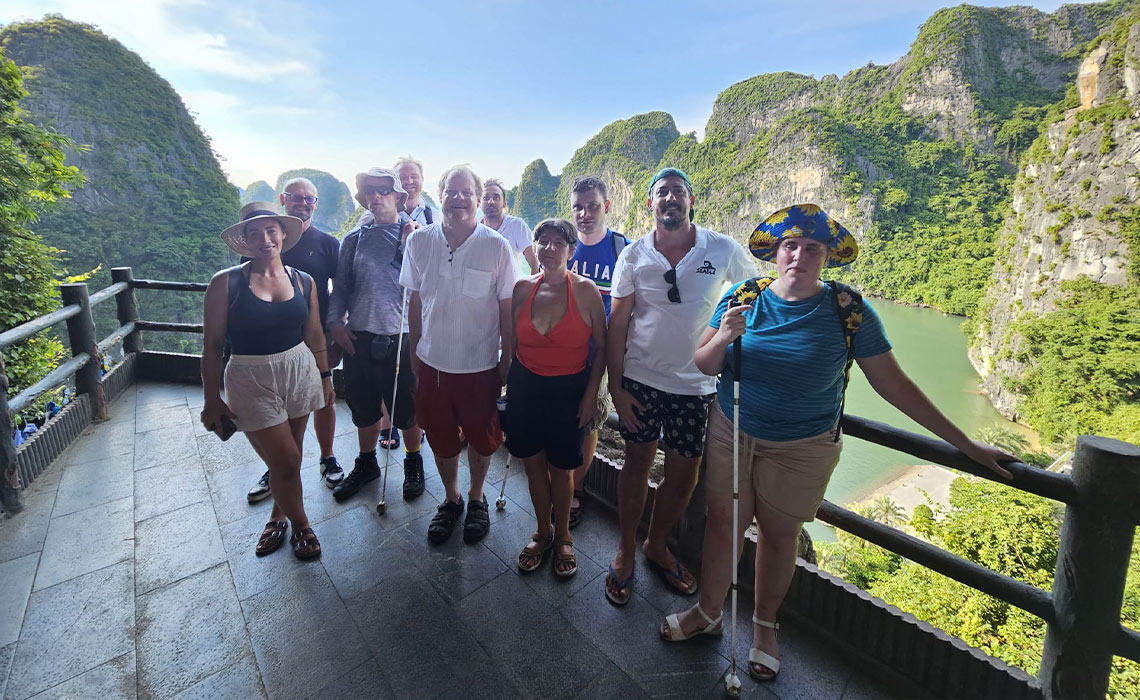
You can also check out VisitEngland’s Accessible and Inclusive Tourism Toolkit for Businesses.
Dr Jillian Rickly, Professor of Tourism at the University of Nottingham and co-editor of the first Handbook of Accessible Tourism
“Embedding accessibility across the travel journey, from transport to accommodation to activities, is not only about meeting diverse access needs but also about championing inclusive design practices to create flexible experiences. This means clearer information, knowledgeable staff, and barrier-free environments.”
“For a visually impaired traveler, the vacation begins the moment they land on your website. By making your online presence inclusive, you are opening the door for travelers to at least explore what you have to offer. Accessibility is a journey, and ensuring your digital 'shop front' is welcoming to everyone is the best place to begin.”
Seable traveler, Rachel Nafzger, agrees.
“Have you put alt text on all your amazing promo pictures? Is your website screen reader accessible? Is there more than one way to contact you to accommodate different communication needs? Is your general tone open and friendly?”
“I’ve been pushed around in a wheelchair when I don’t need one, parked somewhere and left for two-and-a-half hours wondering whether anyone will actually come back to help me on my flight, and waited an hour-and-a-half post-landing for ground staff to assist me off a flight, meaning I missed my last train home. These are on a good day. I have also experienced much worse, as have many other disabled people.
“One of the problems is that in the grand scheme of things, disabled passengers are a minority voice. It would be great if publications and travel companies alike would take the time to get clued in on what is going on, gather some authentic voices, and use their platforms to help amplify disabled traveler experiences to (hopefully) help drive change in this area.”
Many people find overly narrow labels unhelpful, and most people just want to have a wonderful vacation. That's where we come in. We like to think that by spending longer with you in the planning stages we can build something special that also meets any accessibility needs.
Our accessible travel guide includes tips and advice, insightful interviews and vacations we love. We hope it shows that there are many different ways to take on new adventures.
You can explore it here.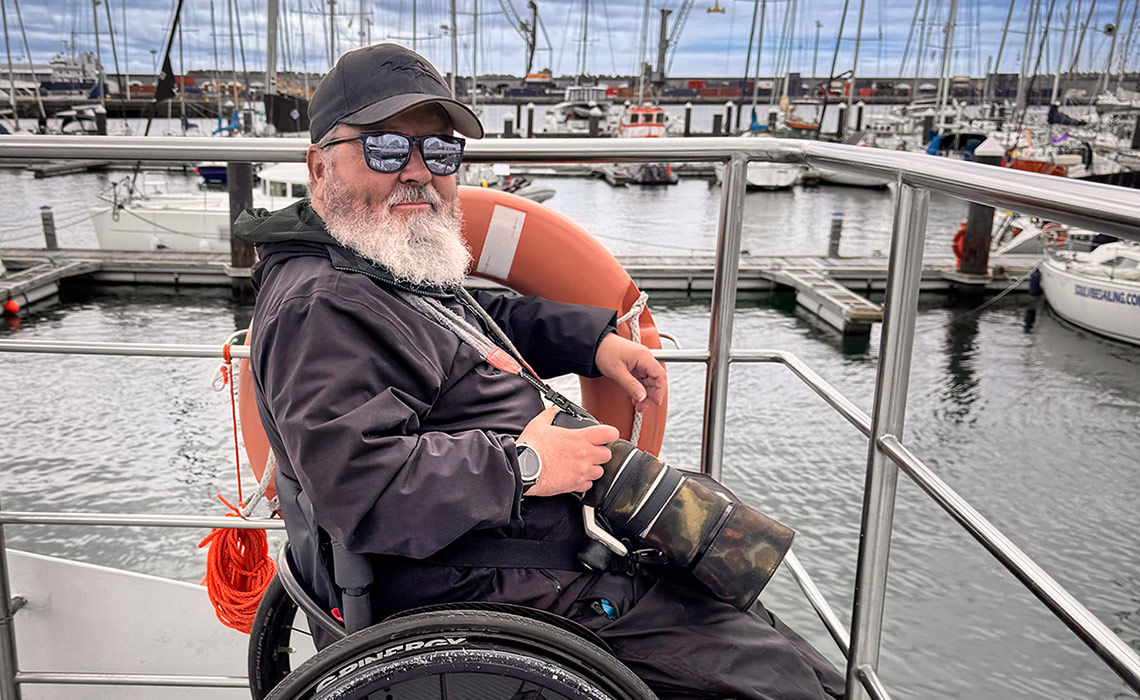 When I was a kid and we used to go with my parents to the seaside, I found myself bubbling with joy at the prospect of seeing the sea again. I’m always reminded of that feeling when we go on our adventures; cresting a new hill, going round a mountain bend or turning onto a new street. To me it’s the little things and they’re the reasons for living.
All figures, unless otherwise stated, are from YouGov Plc. Total sample size was 2099 adults, of which 843 are included in the group, “people with access and health considerations”, including those that have one or more long term health conditions, illness or impairments or are an unpaid carer/regularly travel with someone who does. Fieldwork was undertaken between 16th - 19th January 2026. The survey was carried out online. The figures have been weighted and are representative of all UK adults (aged 18+).
When I was a kid and we used to go with my parents to the seaside, I found myself bubbling with joy at the prospect of seeing the sea again. I’m always reminded of that feeling when we go on our adventures; cresting a new hill, going round a mountain bend or turning onto a new street. To me it’s the little things and they’re the reasons for living.
All figures, unless otherwise stated, are from YouGov Plc. Total sample size was 2099 adults, of which 843 are included in the group, “people with access and health considerations”, including those that have one or more long term health conditions, illness or impairments or are an unpaid carer/regularly travel with someone who does. Fieldwork was undertaken between 16th - 19th January 2026. The survey was carried out online. The figures have been weighted and are representative of all UK adults (aged 18+).
For Question 1, by long-term health conditions, illnesses, or impairments, we specified: Vision (e.g. blindness or partial sight); Hearing (e.g. deafness or partial hearing); Mobility (e.g. walking short distances, climbing stairs, wheelchair use); Dexterity (e.g. lifting and carrying objects, using a keyboard); Learning, understanding, or concentrating, Memory (e.g. dementia); Mental health, Stamina or breathing/fatigue; Social or behavioural (e.g. a neurodiverse condition such as Autism Spectrum Disorder or Attention Deficit Disorder).
Full dataset is available upon request: email jenny@responsibletravel.com or sarah@responsibletravel.com
While not every vacation is going to meet everyone’s needs, providing clear, detailed information about transport accessibility (35 percent), making accessibility information available online without the need for a phone call (26 percent), and showing reviews from people with similar needs (23 percent) helps travelers identify suitable trips and feel confident booking more active, cultural, nature-based or adventurous vacations.
- In November 2025 we carried out a survey of over 130 tour operators and found a significant disconnect between the demand for accessible vacations and the information available. Plugging this information vacuum is the first step in increasing travel confidence.
Confidence grows when we embrace vulnerability, plan well, and stay open to learning, but it also depends on the travel industry removing barriers and sharing honest, accessible information. With this approach, travel becomes not just possible, but empowering, inclusive and part of a bigger picture of making our environments more accessible to all. – Karen Darke MBE, UK Paralympic gold medallist, adventurer and author
Photo: Karen Darke on her Everest Base Camp trek in 2025
What best describes your vacation experiences?
- People with access and health considerations are less likely to find their vacations exciting and fun than those without.
“If I am making the effort to travel somewhere new I really want to experience the place I am going to. Really immerse myself in its history, culture and ways of life. Observe the similarities, embrace the differences and return home feeling like I’ve either emotionally felt something, learnt something, or both.” – Rachel Nafzger, a regular traveler who is blind.
Only 39 percent of women with access and health considerations said their vacations were relaxing and enjoyable, compared with 50 percent of women without health considerations. Women with health and access considerations were also more likely to say they mainly found vacations ‘challenging but rewarding’ (15 percent) compared to nine percent of men in this group – and just seven percent of women without health considerations.
How do you plan and book vacations?
- When planning and booking vacations, more people turn to human support than AI – and usage is lower among those with access or health considerations.
Human contact remains important when booking vacations, particularly among older generations.
Thirteen percent of UK adults say they book vacations in person, or by phone or email, rising to 17 percent among those aged over 55.
Marginally more people with access or health considerations speak to a travel company for support before booking (7 percent, compared to 5 percent of those without). They are less likely to book vacations independently online and more likely to rely on a friend or family member to help plan and book (13 percent compared to 9 percent of those without access or health considerations).
Overall, 43 percent of those with access or health considerations said they would book vacations independently online, compared with 51 percent of people without.
Thirteen percent of UK adults say they book vacations in person, or by phone or email, rising to 17 percent among those aged over 55.
Marginally more people with access or health considerations speak to a travel company for support before booking (7 percent, compared to 5 percent of those without). They are less likely to book vacations independently online and more likely to rely on a friend or family member to help plan and book (13 percent compared to 9 percent of those without access or health considerations).
Overall, 43 percent of those with access or health considerations said they would book vacations independently online, compared with 51 percent of people without.
How often do vacation companies turn away customers with access or health needs?
- Gen Z are more than twice as likely to be told their travel needs cannot be met.
According to accessible travel charity, Tourism for All, this might reflect a broader generational shift in attitudes to accessibility.
“In our experience, younger generations seem to be raising the bar for travel companies on accessibility,” says CEO Ray Veal. “They’re more likely to say, ‘Here’s what I want to do, so how can we make this experience happen?’ rather than ask ‘are you able to accommodate my needs?’”
“That reflects a broader societal change,” he adds. “These days, we generally assume that spaces and experiences will be accessible and inclusive. That often isn’t the reality, but the expectation is they should be. Younger travelers are more likely to want more adventurous vacations and to expect travel companies to accommodate different needs. Because of that, they may be more likely to encounter and report barriers.”
A minority of respondents report that they’ve been turned away by travel companies, which we hope reflects positive industry progress. However, people with access and health considerations still take fewer adventurous trips despite strong interest, and more often opt for ‘transport and accommodation only’ vacations – such as vacation rentals or resorts – which are most commonly booked online. It may be that fewer barriers are encountered when traveling in this way.
One thing that overshadows any travel experience I have ever had is the quality (or lack of) of assistance for passengers with disabilities at airports and on airplanes. It is notoriously not fit for purpose across the board, at home and abroad and it can prove a real barrier. Imagine having been on an adventure of a lifetime, achieving things you never thought possible, and then being brought down at the very last minute by a task as simple as just trying to get home again? – Rachel Nafzger - Seable customer
Summary:
Justin Francis OBE, co-founder and executive chair, Responsible Travel
It’s easy to think of accessible tourism as a niche, but as this survey shows, traveling with health and access considerations is the norm. Every day, we speak with customers who have a diverse range of health and access needs and a shared passion for travel.A few years ago, an extended period of serious ill health curtailed my travels. I joined the millions of people for whom travel feels impossible, and yet I discovered it was a time when I needed its restorative power - and the sense of perspective and possibility it brings - more than ever. That feeling is one shared by many of our survey respondents and those who travel with us.
Our survey highlights the practical and logistical barriers to accessible vacations that people with access or health needs most frequently encounter. It also exposes a lack of confidence many feel about booking a more adventurous trip.
Great strides have been made in making travel more accessible. But the travel and confidence gaps that this report reveals show we still have far to go. Yet what’s also clear is that even small changes we make as businesses can help boost confidence and open doors to travel - and more adventurous vacations - for more people. Sharing the right information online, great customer service, and listening with care to individual needs can all have a significant positive impact.
Confidence again is key. Some travel companies have been working hard for many years to create fantastic accessible adventures around the world. Others are just starting to become more consciously accessible. Some struggle much more to adapt, not through indifference but worry - that they’ll get it ‘wrong’ or simply don’t know where to start. We’re committed to improving and learning as a business, and hope others will join us on the journey. What’s important is taking that first step.
Insight:
Dr Jillian Rickly, Professor of Tourism at the University of Nottingham and co-editor of the first Handbook of Accessible Tourism
The findings of the Responsible Travel YouGov Accessibility Poll align with a well-established body of research demonstrating that individuals with access needs exhibit travel motivations comparable to those of the general population. Their relatively lower participation in tourism activities is not a reflection of reduced desire to travel but rather corresponds to a lack of confidence related to access support across the travel journey and destination.
In other words, having a disability does not diminish the desire to get away from everyday life and experience something new and unforgettable. This holds true for active, cultural, and nature-based vacations, which signals substantial opportunities for tourism businesses the proactively invest in accessibility.
The poll further highlights that this crisis of confidence is disproportionately influenced by informational barriers. Travelers with access support needs rely on the availability of clear, accurate, and comprehensive information to evaluate options and plan their vacations. Incomplete or inconsistent accessibility information dramatically increases the cognitive and logistical effort required to plan a trip, necessitating that travelers verify details directly with providers.
This additional burden can result in either abandoning vacation planning or making repeat visits to reliable destinations and trusted tourism businesses. Encouragingly, informational barriers are among the most readily addressed through the provision of up-to-date, detailed online information regarding services, facilities, and access support.
Furthermore, the survey highlights the significance of the social dimensions of travel for people with access support needs. Consistent with existing research, the findings point to elevated interpersonal constraints, with many disabled travelers relying on support from family members, friends, or carers. As a result, the availability of their social network significantly influences the feasibility of travel. Consequently, accessibility strongly affects the destination choice for intergenerational families and mixed-ability groups.
These dynamics reinforce the notion that investments in accessibility, combined with transparent and trustworthy information, is a strategic approach to strengthening long-term resilience and competitiveness.
Tips for travel companies
These include:
- Making information about transport accessibility clear.
- Sharing accessibility information online, so it can be accessed without the need for a phone call.
- Providing reviews and case studies from people with accessibility needs who have taken a trip previously.
- Sharing information about access to healthcare in the vacation destinations.
Accommodation: ‘Accurate information is crucial for me’
Paul Mahoney, who uses a wheelchair, finds he often lacks the detailed information he needs to make a decision on whether or not a vacation – and especially accommodation – will be suitable for him.“Accommodation is the hardest; is the room accessible? Can I get in the shower ok? Can I get from the room to the dining area without steps or a broken lift? Accurate information is crucial for me: for example going to a hotel that says they have ramp access, only to turn up and find they bring out a ramp that is at a 60-70 degree angle. So I try to get as many pictures as possible of the hotel from all angles to work out if it will work.”
What would help, he says, is “a simple access statement that literally ‘walks’ you through accessing the hotel, including every room that you would need to access. Nothing elaborate, just simple and concise, ideally with pictures, as every disabled person is different and then they can make up their own minds. In short hoteliers can never have too much accurate info or too many pictures!”
Customer reviews can add important insights and build confidence, says Tim Williamson, Customer director at Responsible Travel.
“Our survey clearly shows that knowing others with similar needs have successfully taken similar trips can help instill more confidence in booking a vacation, particularly if it’s out of a customer’s usual comfort zone. Detailed customer reviews can add valuable insight and plug information gaps. Is this an area you can work more proactively on?”
Back to basics: good customer service can go a long way
Traveler Rachel Nafzger, who is blind, chooses to travel adventurously with the support of our specialist partner, Seable Vacations. She says that better accessibility can often come from good customer service and open communication.“Simply making the effort to acknowledge that access can look different for every person can go a long way. If someone indicates an access requirement on an inquiry or booking, don’t assume anything. Take the time to contact them and discuss exactly what this means. Listen to what they do and don’t need, consider if you can accommodate them, and if you can’t, have an honest conversation with clear reasons why not, and offer an alternative solution where possible. Truly listening, trusting in what you are being told, open communication, and enabling autonomy are where good accessibility starts. It may not be as complicated as you think.”
Photo: Group, including Rachel Nafzger, stood together in Ha Long Bay, Vietnam. Credit: Seable
Working together: listen to your customers
Damiano La Rocca is the founder of Seable Vacations which offers tours designed specifically for people who are blind or partially-sighted. He recommends listening to travelers who have health and access considerations, rather than working in isolation. “It is a common worry among tour operators that they will 'get it wrong' when it comes to accessibility, but we always say that while doing something is a start, doing it with the customer is much better.”Get clued up: boost confidence and sales with training
Great service provision for travelers with access or health considerations can help build customer confidence and loyalty – and training could help. Accessibility charity Tourism For All offers advice and tips for businesses, customer service and tailored training courses, as well as free online staff training programmes to help travel companies and tourism businesses become more accessible.You can also check out VisitEngland’s Accessible and Inclusive Tourism Toolkit for Businesses.
Dr Jillian Rickly, Professor of Tourism at the University of Nottingham and co-editor of the first Handbook of Accessible Tourism
“Embedding accessibility across the travel journey, from transport to accommodation to activities, is not only about meeting diverse access needs but also about championing inclusive design practices to create flexible experiences. This means clearer information, knowledgeable staff, and barrier-free environments.”
Inclusivity online: opening up your digital shop front
Seable Vacations founder, Damiano La Rocca“For a visually impaired traveler, the vacation begins the moment they land on your website. By making your online presence inclusive, you are opening the door for travelers to at least explore what you have to offer. Accessibility is a journey, and ensuring your digital 'shop front' is welcoming to everyone is the best place to begin.”
Seable traveler, Rachel Nafzger, agrees.
“Have you put alt text on all your amazing promo pictures? Is your website screen reader accessible? Is there more than one way to contact you to accommodate different communication needs? Is your general tone open and friendly?”
Normalising accessible travel: Using your platform for improvement
Seable traveler Rachel Nafzger says prebooked assistance for passengers with disabilities at airports and on airplanes is notoriously poor – but travel media and companies can help amplify disabled traveler experiences.“I’ve been pushed around in a wheelchair when I don’t need one, parked somewhere and left for two-and-a-half hours wondering whether anyone will actually come back to help me on my flight, and waited an hour-and-a-half post-landing for ground staff to assist me off a flight, meaning I missed my last train home. These are on a good day. I have also experienced much worse, as have many other disabled people.
“One of the problems is that in the grand scheme of things, disabled passengers are a minority voice. It would be great if publications and travel companies alike would take the time to get clued in on what is going on, gather some authentic voices, and use their platforms to help amplify disabled traveler experiences to (hopefully) help drive change in this area.”
Explore our travel guide and tips for travelers
Accessible tourism is about tourism for all. No matter what your needs are.Many people find overly narrow labels unhelpful, and most people just want to have a wonderful vacation. That's where we come in. We like to think that by spending longer with you in the planning stages we can build something special that also meets any accessibility needs.
Our accessible travel guide includes tips and advice, insightful interviews and vacations we love. We hope it shows that there are many different ways to take on new adventures.
You can explore it here.
Photo: Paul Mahoney on a whale watching trip in the Azores. Credit: Paul Mahoney
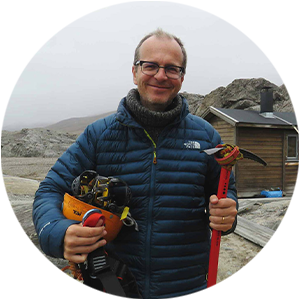
When I was a kid and we used to go with my parents to the seaside, I found myself bubbling with joy at the prospect of seeing the sea again. I’m always reminded of that feeling when we go on our adventures; cresting a new hill, going round a mountain bend or turning onto a new street. To me it’s the little things and they’re the reasons for living. – Traveler Paul Mahoney
Methodology
For Question 1, by long-term health conditions, illnesses, or impairments, we specified: Vision (e.g. blindness or partial sight); Hearing (e.g. deafness or partial hearing); Mobility (e.g. walking short distances, climbing stairs, wheelchair use); Dexterity (e.g. lifting and carrying objects, using a keyboard); Learning, understanding, or concentrating, Memory (e.g. dementia); Mental health, Stamina or breathing/fatigue; Social or behavioural (e.g. a neurodiverse condition such as Autism Spectrum Disorder or Attention Deficit Disorder).
Full dataset is available upon request: email jenny@responsibletravel.com or sarah@responsibletravel.com




- Recently viewed
