Nepal and Bhutan express tour
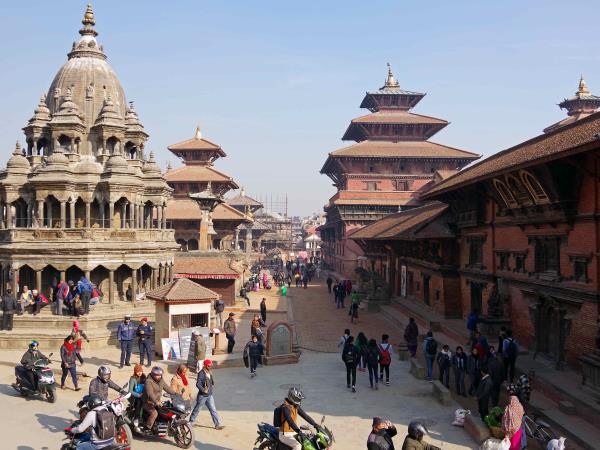
Price
US $2100 excluding flights
More info
Best built tour for those who is short on time.
International flights Kathmandu-Paro (round) $525/pax extra +$40 visa fee to Bhutan.
Visa to Nepal is $30/pax on arrival.
Best time to visit: September-July Contact us for your dates or customization!
International flights Kathmandu-Paro (round) $525/pax extra +$40 visa fee to Bhutan.
Visa to Nepal is $30/pax on arrival.
Best time to visit: September-July Contact us for your dates or customization!

Description of Nepal and Bhutan express tour
Price information
US $2100 excluding flights
Best built tour for those who is short on time.
International flights Kathmandu-Paro (round) $525/pax extra +$40 visa fee to Bhutan.
Visa to Nepal is $30/pax on arrival.
Best time to visit: September-July Contact us for your dates or customization!
International flights Kathmandu-Paro (round) $525/pax extra +$40 visa fee to Bhutan.
Visa to Nepal is $30/pax on arrival.
Best time to visit: September-July Contact us for your dates or customization!
Check dates
2026: 6 Oct, 20 Oct, 3 Nov, 17 Nov, 1 Dec
Travel guides
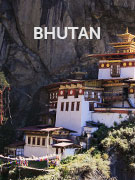
We unlock the secrets of the dzongs, Druk Path trek and Buddhist festivals in our Bhutan travel guide.
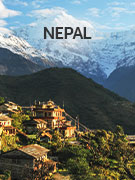
Get into your stride with our guide, and find out what to do and how to travel like a local on your Nepal vacation.
Vacation information
Diet:
We can cater for vegetarians on this vacation. Sadly we cannot offer vegan food.
Reviews
3 Reviews of Nepal and Bhutan express tour
4 out of 5 stars
Reviewed on 04 Apr 2025 by Carole Henderson
Excellent....There were many memorable moments but the bucket list ticked was the helicopter to Everest. Read full reviewReviewed on 29 Mar 2024 by James Estrada
My tour guide and driver were very good and Bhutan itself was magical. In particular, even I prepared extensively for this trip I learned a great more about Buddhism and its philosophy from my guide. Read full reviewReviewed on 15 Feb 2020 by Karen Nichols
There is a beautiful spirit in the people that cannot be captured in words. Read full reviewResponsible Travel
As the pioneers of responsible tourism, we've screened this (and every) vacation so that you can travel knowing we've worked to maximise the benefits of your vacation to local people and places, and minimise any negative impacts.
Planet
Both Nepal and Bhutan operate protected area systems that directly fund conservation. In Bhutan, the takin — a large bovine mammal found only in the eastern Himalayas — is the national animal and the subject of an active government breeding and protection programme. The fee paid to enter the Takin conservation zone on the route to Taktshang goes directly toward that programme. Your guide can explain the specifics on site and point you toward ways to follow or support the project after the trip.Wildlife encounters on this itinerary are passive — observation only. If you see an animal, keep your distance, stay quiet, and don't whistle or call out. Don't leave food out or dispose of food scraps in the open; it attracts animals into areas where contact with people causes problems for both sides.
Plastic. We run a plastic-free policy on all our tours. Don't bring single-use plastic bags, and decline them when buying food or gifts from local vendors — most will have an alternative if asked. Carry a reusable BPA-free water bottle. Both Nepal and Bhutan have clean water available at designated refill stations along the main routes; your guide will show you where these are. There's no need to buy bottled mineral water at any point on this tour.
Waste. Designated recycling and waste collection points exist along the route in both countries. Your guide will walk you through what goes where on the first day. The system works when everyone uses it — bag your rubbish and hold it until you reach a collection point rather than disposing of it on the trail or roadside.
Water and energy use. Fresh water is a limited resource at altitude. Keep showers short and turn taps off while brushing your teeth. In Kathmandu, local transport is available for most sightseeing routes and is what we use by default — it's cheaper, less polluting, and gives a more accurate picture of how the city moves. In Bhutan, we use vans rather than individual jeeps where the group size allows, which reduces both emissions and road congestion on narrow mountain roads.
Accommodation. Every hotel on this itinerary is selected based on its environmental practices: solar power where available, electric or gas cooking rather than wood burning, waste separation, and locally sourced food. We review these annually and will replace any property that no longer meets the standard.
People
Every person running this tour is from Nepal or Bhutan. Guides, drivers, porters, hotel staff, and restaurant owners are all local — not local affiliates of an international operator, but independent businesses and individuals from the communities the tour passes through. Tourism is the primary income source for most families in the Khumbu, the Kathmandu Valley, and Bhutan's Paro and Punakha valleys. When you spend money on this trip, it stays in the region.A few practical ways to reinforce that: buy fruit, snacks, and drinks from local shops rather than imported goods from convenience stores. When you visit the handicraft workshops on the itinerary — several of which are cooperatives that specifically train and employ women in both Nepal and Bhutan — take the time to understand what you're looking at before you buy. Some workshops offer short sessions where you can try the craft yourself. Ask your guide if one is available; it's worth an hour.
The team. Guides are trained annually and attend team-building trips once a year. We support language learning for every guide — most already speak two or three languages, and we actively help them add more, so the tour runs in languages beyond English. All guides and porters receive medical insurance, a full kit (clothing, footwear, equipment), meals, and accommodation for every trip they work. These are baseline conditions, not extras.
Tipping is not included in the tour price and is not obligatory, but it's the most direct way to recognise good work. If your guide went beyond the job, or your porter carried more than their share, a tip handed directly to them — not to the company — is the right way to acknowledge it. Your guide can advise on appropriate amounts if you're unsure.
People. Greet everyone you pass — on the trail, in a village, at a tea house. A simple Namaste in Nepal or Kuzu Zangpo in Bhutan goes a long way. Learn a few words in each language; your guide will teach you the basics on the first day if you ask. Share something from your own language in return. The people you meet on this tour are not a backdrop to the landscape — they're the reason the place is worth coming to.
Popular similar vacations
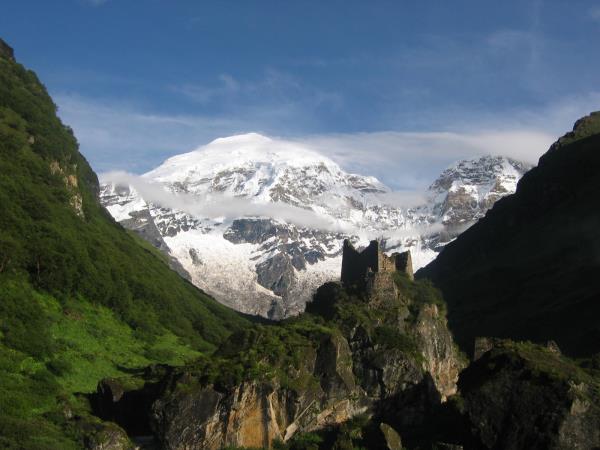
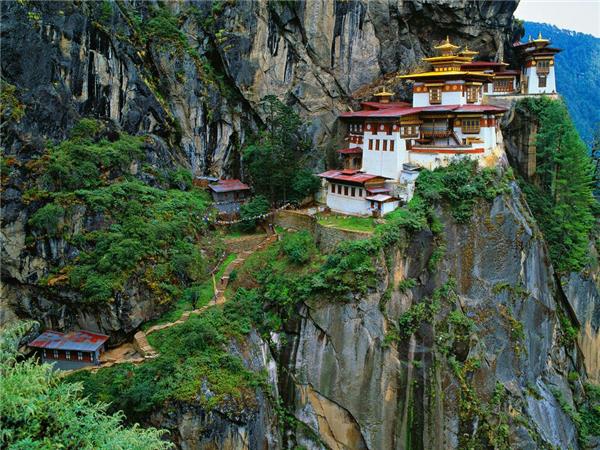
Small group tour to Bhutan
From US $3495 - US $4870 7 days excluding flights
Discover Bhutan's beauty, history and adventures
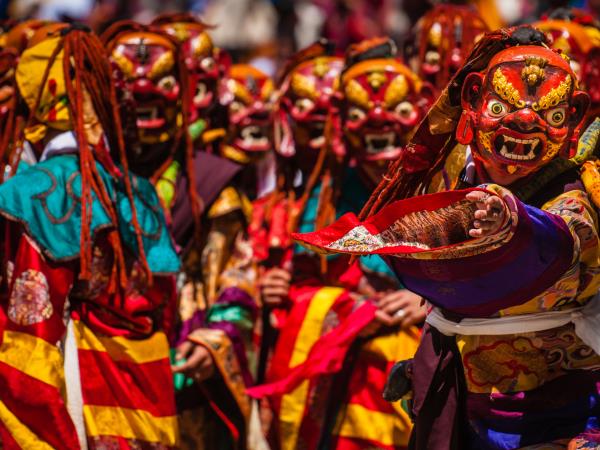
Buddhist Bhutan cultural tour, Black necked Crane Festival
From US $3775 11 days excluding flights
Discover Bhutan's highlights and rare black-necked cranes