Bhutan & Nepal vacation, Himalayan Kingdoms
Price
£2449To£2749 excluding flights
Duration
12 days
Countries
Bhutan, Nepal
Type
Small group
More info
Price excludes your return Kathmandu-Paro-Kathmandu flights which will be quoted based on availability
Last minute
Late availability on these dates: 05 Nov, 05 Dec, 26 Dec

Description of Bhutan & Nepal vacation, Himalayan Kingdoms
Map

Price information
£2449To£2749 excluding flights
Price excludes your return Kathmandu-Paro-Kathmandu flights which will be quoted based on availability
Check dates, prices & availability

Travel guides
We unlock the secrets of the dzongs, Druk Path trek and Buddhist festivals in our Bhutan travel guide.
Get into your stride with our guide, and find out what to do and how to travel like a local on your Nepal vacation.
Responsible Travel
As the pioneers of responsible tourism, we've screened this (and every) vacation so that you can travel knowing we've worked to maximise the benefits of your vacation to local people and places, and minimise any negative impacts.
Planet
In Nepal, we encourage trekkers to eat the same meals as much as possible, to reduce the amount of cooking fuel required. We also strongly recommend the use of filtered or purified water instead of purchasing bottled water en-route and adding to the already large problem of plastic waste in the mountains.The Bhutanese people in general are very environmentally conscious, and this makes traveling and working in Bhutan a pleasure. The Bhutanese government has many rules in place to ensure that the local culture, religion and traditions are protected, and we fully support their efforts.
We know that tourism and the development required to support it will always have some kind of impact on the local environment and ecosystems. It is our duty as tour operators, and as travelers, to strive to ensure that we support and make positive impacts, while also aiming to reduce any negative impacts as much as possible. We know that making the positive difference we aim to achieve will not be an easy task.
We design our itineraries to avoid domestic flights and the associated CO2 emissions as much as possible. We also try to design some city tours to be done on foot as much as possible and reduce the amount of driving each day.
Drinking water and the waste associated with single-use plastic water bottles is something we are working hard on in all our destinations. We encourage travelers to bring their own water bottles, and are also rolling out a program of providing large water canisters on group tours instead of small bottles, and offering filtered water bottles to travelers, which can vastly reduce waste generated by our customers on an ongoing basis after their tour with us.
We encourage energy saving on our tours by asking travelers to turn off all air-conditioning, lights, and electronics when leaving their hotel rooms. Littering at any of the sites must also be avoided. If trash cans are not available, we facilitate the collection and later disposal of any waste generated during our tours.
Many of the sites we visit on our tours are seen as natural wonders. We encourage our travelers to treat these sites as such, sticking to marked paths, not picking wild plants or flowers, and avoiding disturbing the local wildlife as much as possible.
As responsible travelers, we recognize the need to reduce our plastic consumption and provide sustainable alternatives to our customers. That's why we've partnered with Water to Go to offer a fantastic solution.
Water to Go is a company on a mission to tackle the issue of plastic pollution by providing travelers with reusable filter bottles. These bottles are not your average water containers. They are designed with advanced filtration technology that allows you to safely refill your bottle from natural water sources, taps, and even in places where tap water is not typically considered safe to drink.
People
Our Nepal tours avoid domestic flights as much as possible and instead travel by road between Kathmandu, Chitwan National Park, and Pokhara. We feel this provides a much better experience, allowing you to see more of the country you are traveling through, while also reducing CO2 emissions.Our Nepal trekking tours are all lodge-based, which provides more income and support to the local mountain communities than camping. All porters used are employed under the guidelines provided by the International Porter Protection group, which covers their clothing & footwear and maximum loads, as well as other employment guidelines. We do not include elephant-back safaris on any of our tours and advise our travelers against booking these locally.
We have supported various local charities and NGOs over the years, including specific donations and support to our local team and their families following the 2015 earthquake.
We use only Nepali guides and drivers on all our tours, and have worked with the same Nepali family for 20 years, who help to run all our operations in Nepal. We aim to use only locally-owned hotels and guesthouses.
In Bhutan, we also try to add in some extra local experiences and interactions with the Bhutanese people, whether this be through trying local sports like archery, attending local festivals or tsechus, or visiting family homes. All trekking guides, cooks, and muleteers used are employed under the guidelines provided by the International Porter Protection group, which covers their clothing & footwear and loads, as well as other employment guidelines.
We use only Bhutanese guides and drivers on all our tours and aim to use locally-owned hotels and guesthouses in most locations.
Throughout our long tourism business journey, exceeding 20 years of operations in the Middle East and Asia in particular, we have succeeded in establishing strong links with many of the communities we are dealing with in our host destinations. We aim to use locally-owned hotels instead of international chains, and encourage our guests to buy local products and make use of services provided in the communities they travel through. We help indirectly through the experiences and cultural exchanges that take place between the local population and the travelers during our tours.
We employ local guides, using local handicraft shops, and recommend shops to our travelers so that their vacation spending contributes to the people of that country. Furthermore, we provide each traveler with a tipping guide or arrange a tipping kitty that will help to ensure that those numerous people working hard to make sure our vacations run smoothly and are a great experience, are rewarded as they should be.
We also try to consider the social and cultural aspects of the local community and how to respect the customs and traditions of its inhabitants. Our tour notes will provide advance information on dress codes and particular local customs, and our guides will expand on this in their explanations during the tour. This means we can create valuable and rewarding opportunities for our travelers and allow local people to mingle and exchange ideas and thoughts without causing any unintended offence.
Popular similar vacations
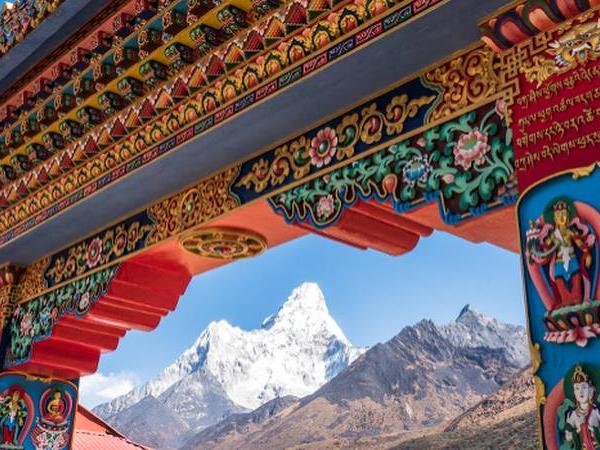
Everest Base Camp & Kala Pattar trek for over 50s
From US $3390 - US $3560 21 days excluding flights
Everest Base Camp & Kala Pattar with eco camps
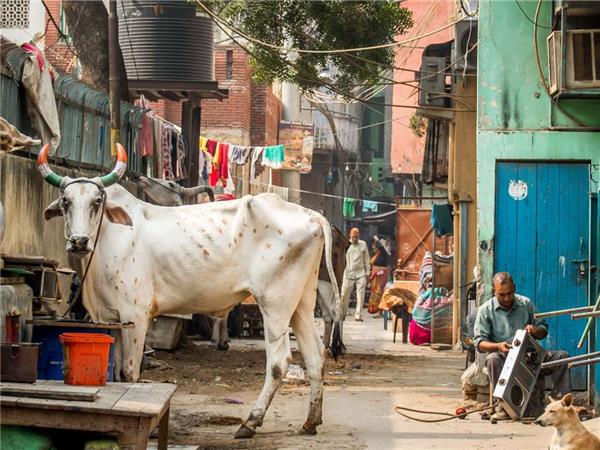
Delhi to Kathmandu tour
From US $1836 - US $2540 15 days excluding flights
An inspiring cultural tour
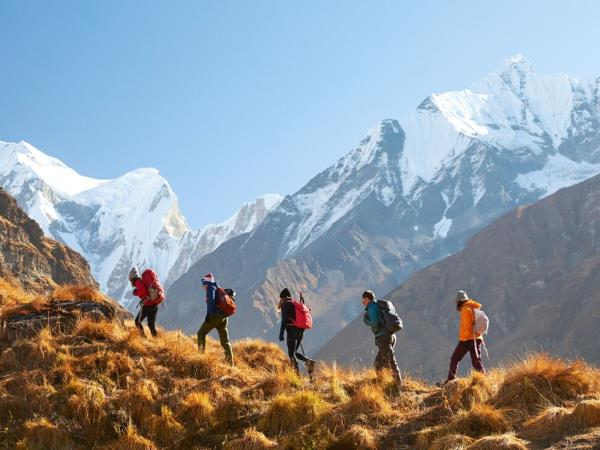
Nepal walking vacation in comfort
From US $2022 - US $3030 8 days excluding flights
Who says trekking in Nepal means roughing it