2 week self-drive in Namibia
Price
£2239excluding flights
Duration
14 Days
Type
Tailor made
More info
Prices start from £ 2,239 per adult with meals as described.
Car hire included. Tailor made, fully flexible itinerary to suit your departure dates with in country assistance included.
Ask for an international flight quote too.
Car hire included. Tailor made, fully flexible itinerary to suit your departure dates with in country assistance included.
Ask for an international flight quote too.

Description of 2 week self-drive in Namibia
Price information
£2239excluding flights
Prices start from £ 2,239 per adult with meals as described.
Car hire included. Tailor made, fully flexible itinerary to suit your departure dates with in country assistance included.
Ask for an international flight quote too.
Car hire included. Tailor made, fully flexible itinerary to suit your departure dates with in country assistance included.
Ask for an international flight quote too.
Departure information
Everything is tweak-able, giving you the freedom to build a unique and personal trip for your chosen date. Upgrade your accommodation for all - or just part - of your trip, slow down the pace with few extra nights here and there or add a few more active adventures along the way
Travel guides
There may well be an awful lot of sand in Namibia - a country characterised by two vast deserts.

From Moroccan souks to East Africa's savannah, our Africa travel guide reveals a continent that needs several lifetimes to explore.
Responsible Travel
As the pioneers of responsible tourism, we've screened this (and every) vacation so that you can travel knowing we've worked to maximise the benefits of your vacation to local people and places, and minimise any negative impacts.
Planet
Making a positive difference for the planet and people is central to how we design our trips, and Namibia is a strong example of this. Its vast, fragile desert landscapes and community-led conservation initiatives make it ideal for slower, more conscious travel. On this itinerary, we focus on ensuring your journey supports both the environment and local communities.We prioritise locally owned, small-scale lodges and guesthouses over international chains, giving you a more authentic stay while supporting local jobs. Many use solar power, conserve water and are designed to blend into sensitive desert surroundings. In areas such as Etosha and Waterberg, lodges contribute through park fees and conservation levies that fund habitat protection, wildlife monitoring and rural employment.
Experiences are low impact and led by trained local guides who follow ethical wildlife viewing practices. Self-driving reduces the need for internal flights and encourages a deeper connection to the landscape. We also provide guidance on responsible travel and work with animal welfare experts, Animondial, to ensure high welfare standards across all of our wildlife experiences.
As a business, we back this up at home by working from a B-Corp-certified office, operating largely paper-free and partnering with Earthly to support projects that remove carbon, restore biodiversity and improve livelihoods. A small contribution is included in every itinerary to help protect Namibia’s landscapes and ecosystems.
People
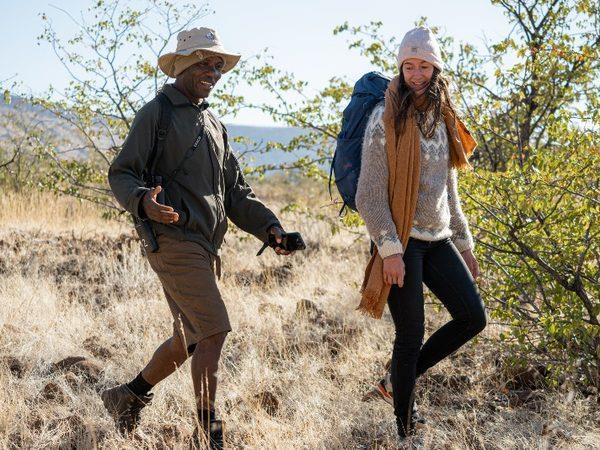
The accommodation we work with in Namibia follows the same ethos as across our trips worldwide: small-scale, characterful places that are locally owned, authentic and rooted in their surroundings, rather than large international hotel chains. Namibia offers some of the best examples of this approach, with lodges and guesthouses designed to blend into dramatic desert, savannah and mountain landscapes while supporting local employment and community livelihoods.We maximise local economic opportunities further by working exclusively with locally owned excursion companies wherever possible. Throughout the trip, you’ll meet knowledgeable Namibian guides, whether on game drives in national parks, exploring desert landscapes or learning more about the country’s unique wildlife and geology. Their first-hand insight adds depth to each experience while ensuring tourism income stays within the local economy.
A key part of our itineraries is our close collaboration with in-country partners who are based in Namibia. These local partners play an active role in shaping each journey, offering authentic insight into daily life and helping us steer travelers away from overused routes. This approach not only creates more meaningful experiences, but also helps reduce pressure on fragile environments and supports the national economy long before you arrive, as local teams are involved in itinerary planning and logistics from the outset.
Our partners and accommodation providers are strongly committed to conservation and the protection of Namibia’s natural heritage. Many operate in or near conservation areas and contribute directly through park fees, conservation levies and community projects that support wildlife protection and habitat management. Guests are often provided with clear guidance on how to travel responsibly, including respecting wildlife, conserving water in arid regions and understanding local customs and cultural norms.