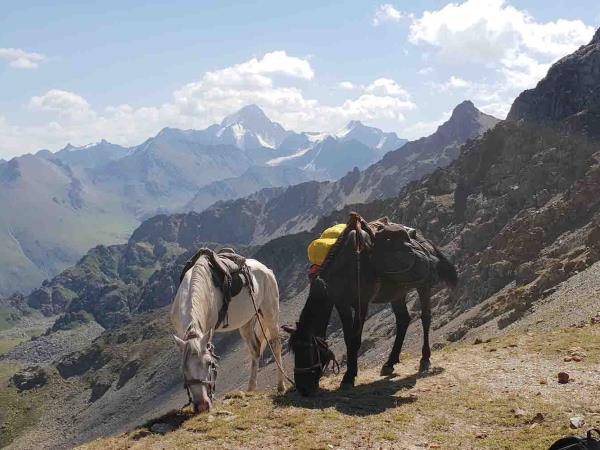
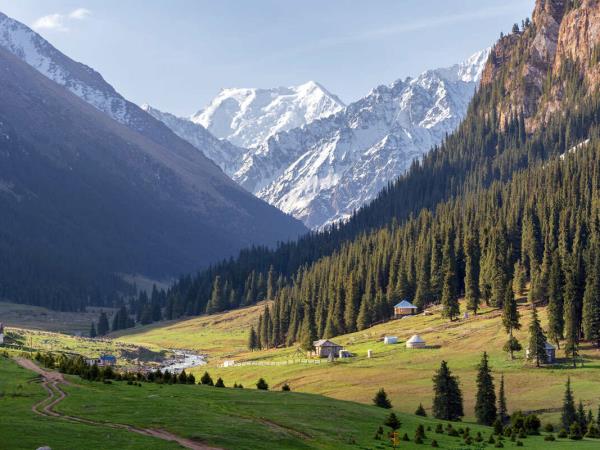
Horse trekking in Tian Shan mountains, Kyrgyzstan
Price
US $2999 excluding flights
Duration
11 Days
Type
Small group
More info
Not Included:
Transfers outside our group transfer timings
Insurance (compulsory)
Tips
Alcoholic drinks & snacks

Description of Horse trekking in Tian Shan mountains, Kyrgyzstan
Map
Price information
US $2999 excluding flights
Not Included:
Transfers outside our group transfer timings
Insurance (compulsory)
Tips
Alcoholic drinks & snacks
Check dates, prices & availability

Travel guides

Discover whether a horse riding vacation is for you and saddle up as we trot out our tips on when to go.
The Silk Road threads together Kyrgzstan's varied views, from its many mountains and canyons to its wildflower meadows.
Vacation information
Dietary requirements:
We can cater for vegetarian and vegan diets.
Responsible Travel
As the pioneers of responsible tourism, we've screened this (and every) vacation so that you can travel knowing we've worked to maximise the benefits of your vacation to local people and places, and minimise any negative impacts.
Planet
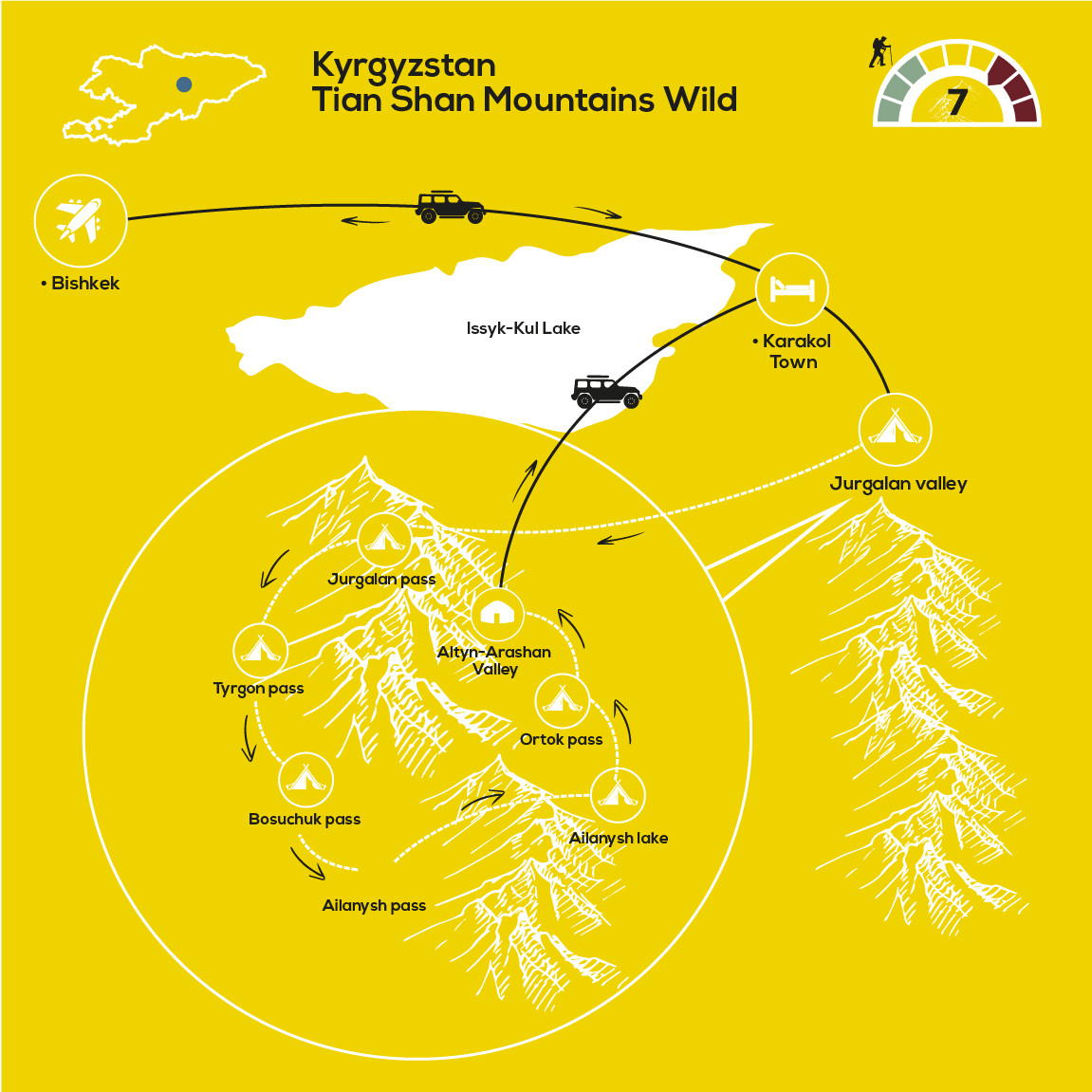
CARBON REDUCTIONThis journey through the Tian Shan Mountains has a naturally low-carbon footprint, designed to keep transport and infrastructure to a minimum while maximising time spent outdoors. There are no internal flights on the itinerary. Travelers arrive into Bishkek and complete the entire route by a combination of shared vehicle and horseback, significantly reducing emissions compared to conventional overland tours that rely heavily on private or long-distance road transfers. The use of shared local transport between Bishkek, Karakol, and the trailhead helps to minimise the carbon cost per traveler.
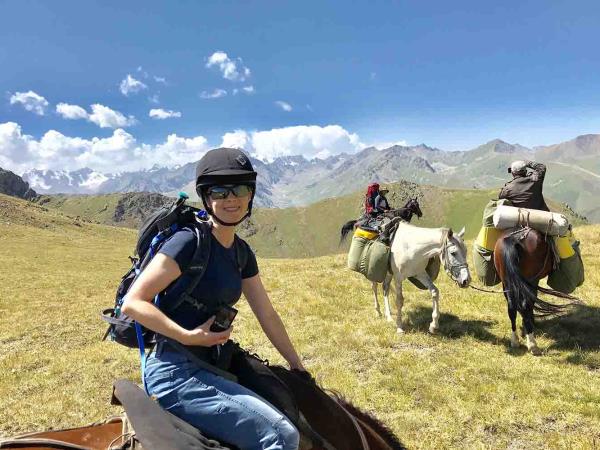
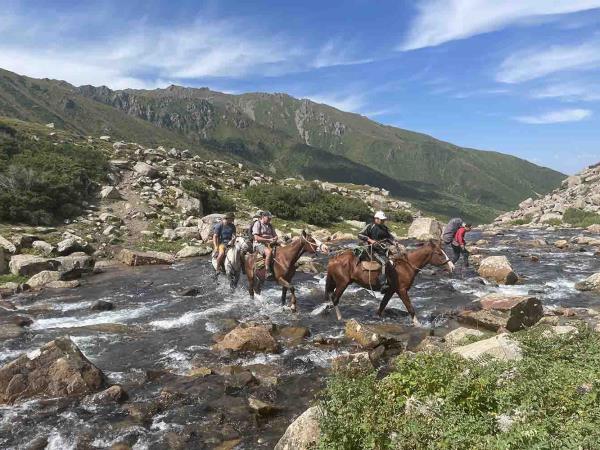
From the third day onward, all travel is powered by human and animal energy. Participants spend six full days on horseback and several days walking or hiking, removing the need for any mechanised transport in the mountains. The pace of travel reflects a traditional nomadic rhythm, slow, self-sufficient, and deeply connected to the land with minimal fossil fuel use once the expedition begins.
Food throughout the trip is locally sourced wherever possible. Ingredients are purchased from markets in Bishkek, Karakol, and nearby villages, with meals prepared by the guiding team using seasonal produce. Kyrgyz cuisine naturally features a high proportion of grains, vegetables, and dairy from local farms, and vegetarian options are available daily. This emphasis on regional, fresh ingredients avoids the carbon cost of long supply chains and imported foods.
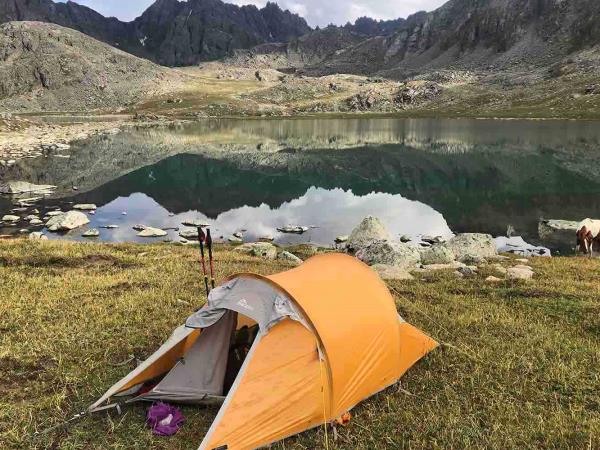
Accommodation is carefully chosen for proximity to the route, eliminating unnecessary transfers and extra driving. The wild camping nights and traditional yurts are naturally low-energy forms of shelter lit by lanterns or limited generator power, and heated with locally sourced wood rather than fossil fuels. In the yurts, electricity is restricted to a few evening hours, and water is drawn from local streams. The result is a journey that demands almost no electricity or artificial heating for the majority of its duration.
Guests are provided with pre-departure guidance on responsible travel, including advice on reducing plastic waste, conserving water, and traveling light to cut emissions. The guiding team models low-impact habits in camp, such as reusing materials, cooking efficiently, and ensuring all waste is packed out.
ENVIRONMENT AND WILDLIFE
Traveling through the Tian Shan Mountains offers a rare opportunity to experience one of Central Asia’s least disturbed ecosystems. The itinerary has been developed to operate with minimal environmental intrusion and to actively contribute to the protection of the landscapes that make the journey possible.
All wild camps are operated on a strict leave no trace principle. Camps are rotated through wide alpine valleys to prevent soil compaction or overuse of any one site. Waste is carried out and disposed of responsibly after returning to the valley towns. Soap and detergents are biodegradable, and guests are encouraged to wash only away from waterways. Cooking uses small, efficient stoves or local firewood gathered sustainably by the horsemen.
The route passes through regions that form part of the Issyk-Kul and eastern Tian Shan conservation network, home to ibex, marmot, and occasionally snow leopard. Entry fees to national and protected areas support local conservation authorities and maintenance of the trails used by both travelers and herders. By traveling with local guides who understand the terrain, riders avoid damaging sensitive ground or disturbing grazing herds.
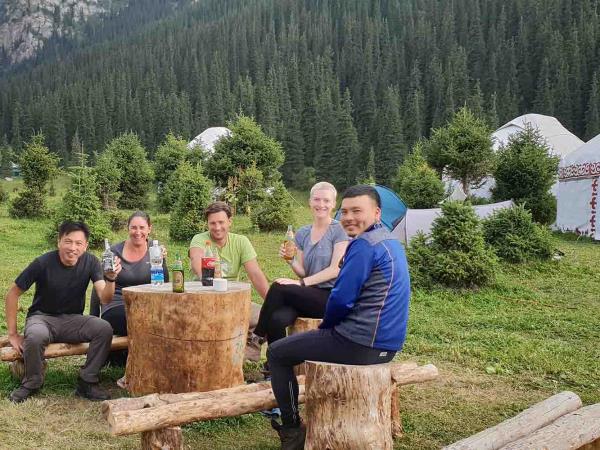
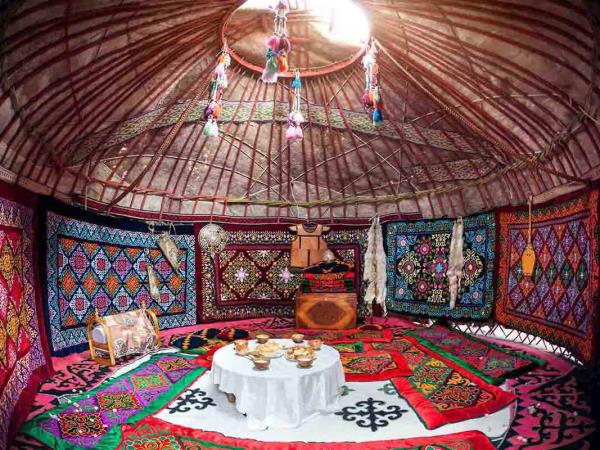
The yurts used on the journey belong to local herding families who maintain them seasonally, following traditional ecological practices that have preserved these landscapes for centuries. Staying with them helps sustain nomadic livelihoods, a vital form of cultural and environmental stewardship. The use of yurts and tents eliminates the need for permanent tourist structures or large-scale buildings in pristine areas.
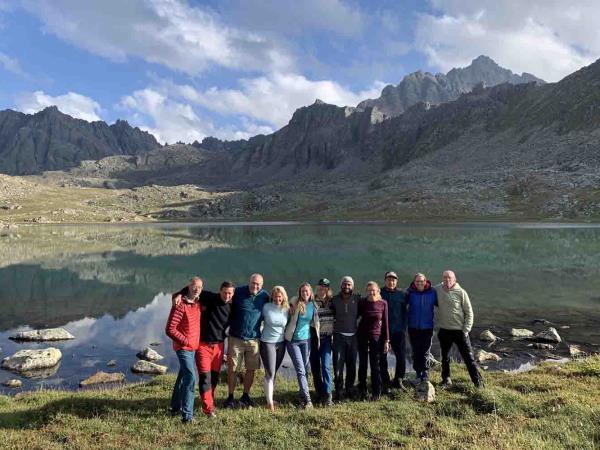
The guiding team provides informal education about the region’s biodiversity, local plants, and the importance of conserving fragile alpine ecosystems. The small group size, usually no more than twelve participants, ensures a light footprint and prevents overcrowding on delicate trails.
Though this is a wilderness journey rather than a wildlife tour, it directly supports the preservation of the region’s natural integrity by demonstrating that responsible, low-impact tourism has tangible economic value for local communities. Each traveler contributes to the conservation of these high-altitude pastures simply by participating in a form of travel that values protection over exploitation.
People
LOCAL ECONOMYThis adventure is designed to keep economic benefits within Kyrgyzstan and, wherever possible, within the rural communities along the route. All accommodation, from boutique city hotels to family-run guesthouses and yurt stays is locally owned and managed. There are no international chains involved. Wild camping services, horse hire, and logistical support are provided by residents of the surrounding valleys, ensuring that income remains in the regions where tourism has the most meaningful impact.
The expedition is guided entirely by Kyrgyz professionals, including lead guide Maks, his team of horsemen, cooks, and drivers. Their deep local knowledge shapes every aspect of the experience, from the selection of riding routes to cultural interpretation. Travelers benefit from authentic interactions, while guides and support teams earn fair, sustainable income through employment that honours traditional skills.
Supplies for the expedition, food, fuel, and camping materials, are purchased locally in Bishkek, Karakol, and small villages en route. The group’s use of local markets and small vendors creates a reliable demand that encourages small-scale enterprise. In Karakol and Bishkek, travelers are encouraged to visit local craft markets and teahouses, directly supporting family-run businesses.
The trip deliberately limits the use of imported goods and services, creating a self-reliant micro-economy around the expedition. This model helps rural communities diversify their income beyond livestock herding, reducing economic vulnerability while maintaining traditional livelihoods.
EMPLOYMENT, INCLUSIVITY AND DIVERSITY
Everyone involved in delivering this trip from horsemen and cooks to interpreters and drivers is Kyrgyz. The partnership with local teams ensures that 100% of operational staff are employed from within the country, with most coming directly from the eastern Issyk-Kul region. This approach provides fair employment in areas where opportunities are limited and where tourism, when managed responsibly, can offer long-term stability.
Equal pay and fair working conditions are a priority. The local staff earn their wages for guiding and equestrian services, with additional seasonal income during the trekking months. Employment is based on skill, experience, and reliability, regardless of gender or background. Women are increasingly engaged in the logistics and hospitality aspects of the journey, particularly in Karakol and Bishkek where guesthouses and small hotels are often family-run and female-managed.
The trip welcomes travelers from all backgrounds and is LGBTQ+ friendly. While the remote nature of the itinerary means it is best suited to able-bodied travelers due to the terrain and riding requirements, inclusivity and respect are at the heart of the experience. The local guides are always learning and improving on their cross-cultural communication and responsible tourism principles are encouraged, to ensure a safe and welcoming environment for all participants.
The trip indirectly supports community resilience by creating dignified work and preserving cultural heritage. By showing that small-group, low-impact tourism has real economic and social value, it helps sustain the next generation of guides and horsemen who will continue to act as guardians of this extraordinary landscape.
Popular similar vacations
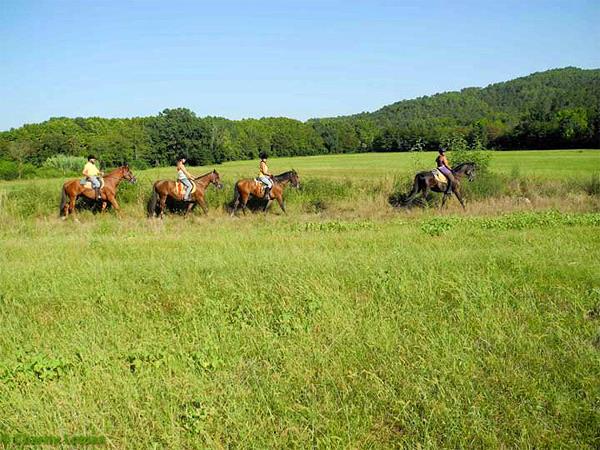
Catalan horse riding vacation in Spain
From €760 - €1330 8 days excluding flights
Horse riding in the beautiful Catalan countryside
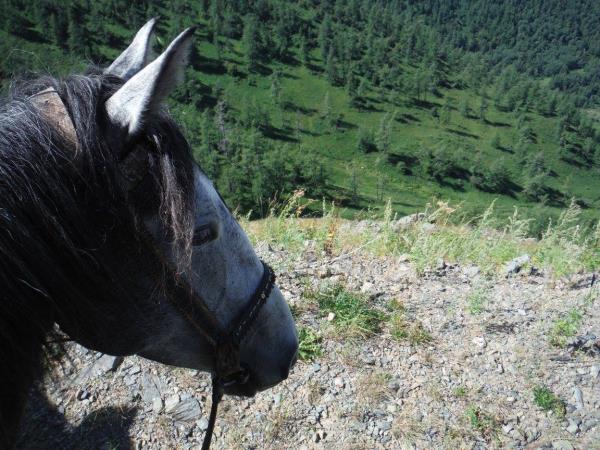
Kazakhstan horse riding vacation
From NZ $5250 16 days excluding flights
Explore eastern Kazakhstan's dramatic Altai range by horse
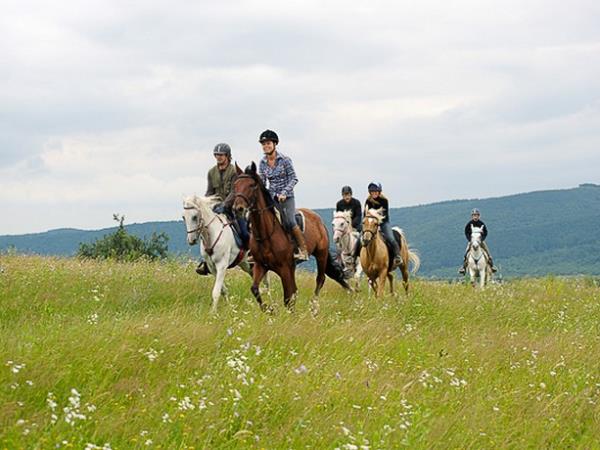
Horse riding vacation in Romania
From €1305 - €2185 7 days excluding flights
An eco horse riding facility in Transylvania