Southern Africa overland adventure, Cape Town to Vic Falls
Price
£2575 excluding flights
Duration
21 Days
Countries
Botswana, Namibia, South Africa, Zimbabwe
Type
Small group

Description of Southern Africa overland adventure, Cape Town to Vic Falls
Price information
£2575 excluding flights
Check dates
2026: 18 Nov, 25 Nov, 2 Dec, 9 Dec, 16 Dec, 30 Dec
2027: 6 Jan, 20 Jan, 27 Jan, 3 Feb, 10 Mar, 24 Mar, 7 Apr, 21 Apr, 12 May, 26 May, 9 Jun, 30 Jun, 7 Jul, 14 Jul, 21 Jul, 28 Jul, 4 Aug, 11 Aug, 25 Aug, 1 Sep, 8 Sep, 6 Oct, 13 Oct, 20 Oct, 24 Oct, 27 Oct, 17 Nov, 24 Nov, 1 Dec, 8 Dec, 15 Dec, 29 Dec
2027: 6 Jan, 20 Jan, 27 Jan, 3 Feb, 10 Mar, 24 Mar, 7 Apr, 21 Apr, 12 May, 26 May, 9 Jun, 30 Jun, 7 Jul, 14 Jul, 21 Jul, 28 Jul, 4 Aug, 11 Aug, 25 Aug, 1 Sep, 8 Sep, 6 Oct, 13 Oct, 20 Oct, 24 Oct, 27 Oct, 17 Nov, 24 Nov, 1 Dec, 8 Dec, 15 Dec, 29 Dec
Travel guides
There aren't many places you can see penguins on the beach, whales from the shore, and then go on an incredible safari.
Grab our Cape Town to Victoria Falls travel guide with both hands and find out all you need to know.
Vacation information
Diet:
We can cater for vegetarians on this vacation. Sadly we cannot offer vegan food.
Responsible Travel
As the pioneers of responsible tourism, we've screened this (and every) vacation so that you can travel knowing we've worked to maximise the benefits of your vacation to local people and places, and minimise any negative impacts.
Planet
CARBON REDUCTIONThis itinerary is designed as a single, linear overland route from Cape Town to Victoria Falls, avoiding the need for multiple regional flights that are common in Southern Africa itineraries. By traveling in one purpose-built safari vehicle for the full duration, emissions are shared across the group, significantly reducing the per-person carbon footprint compared with independent travel or fly-in safaris that rely on multiple light aircraft sectors.
The routing has been carefully structured to avoid backtracking and unnecessary mileage, following a logical northbound progression through South Africa, Namibia, Botswana and Zimbabwe. This reduces total fuel consumption over the course of the trip and ensures that long-distance driving is completed as efficiently as possible.
The itinerary also incorporates multi-night stays in key locations, including Sossusvlei, Swakopmund, Etosha National Park and the Okavango Delta gateway region. This reduces the need for daily packing, unpacking and relocation, limiting short-distance transfers that cumulatively increase fuel use.
In the Okavango Delta, transport shifts entirely away from motor vehicles to mokoro (dugout canoe) travel and walking safaris, removing fuel use for a significant portion of the itinerary. This not only lowers emissions but also reduces reliance on mechanised access in a sensitive wetland environment.
Camping logistics are also designed with efficiency in mind. Equipment, food supplies and water are transported collectively for the group rather than individually, reducing duplication of resources and unnecessary transport movements.
While this remains a long-haul, multi-country itinerary and therefore not low-carbon overall, the structure prioritises shared transport, efficient routing, reduced flight dependency and lower-impact activity design, all of which contribute to a reduced carbon footprint per traveler relative to comparable trips.
ENVIRONMENT AND WILDLIFE
This itinerary passes through a series of national parks, conservation areas and protected landscapes, including the Cederberg region, Namib-Naukluft National Park, Etosha National Park, the Okavango Delta and the Makgadikgadi Pans. Each of these areas operates under conservation frameworks that regulate visitor access, protect habitats and contribute to long-term biodiversity preservation.
In Etosha National Park, wildlife viewing is restricted to designated tracks and waterhole access points, which helps prevent habitat degradation and reduces stress on animals. The park’s management system ensures that vehicle movement is controlled, limiting off-road driving and protecting fragile vegetation. Entrance fees paid by visitors contribute directly to park maintenance, anti-poaching operations and ecological monitoring programmes.
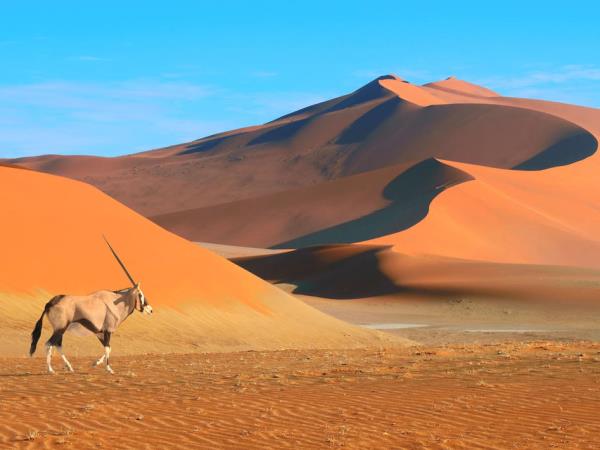
In the Namib Desert, particularly at Sossusvlei and Deadvlei, visitor access is carefully managed through defined pathways and controlled vehicle zones, protecting the structure of the dunes and the surrounding salt pan ecosystems. The Namib is one of the oldest deserts in the world, and these controls are essential to prevent erosion and long-term environmental damage.
The Okavango Delta represents one of the most sensitive ecosystems on the itinerary. Activities here are deliberately low impact, with mokoro excursions guided by local polers and bush walks led by trained guides. These non-motorised approaches minimise noise, avoid water pollution and allow wildlife to behave naturally without disturbance from engines.
Camping throughout the trip uses established sites or temporary low-impact setups, particularly during wilderness stays. In these cases, strict “leave no trace” principles are followed, with all waste removed and no permanent infrastructure left behind. This approach reduces the need for built accommodation in fragile environments.
Across all regions, tourism revenue contributes directly to conservation funding, supporting anti-poaching patrols, wildlife protection, habitat management and research initiatives. By traveling through multiple protected areas, this itinerary supports a network of conservation efforts across Southern Africa rather than a single site.
People
LOCAL ECONOMYThis itinerary is designed to spread tourism revenue across a wide geographical area, rather than concentrating spending in one or two major destinations. By traveling overland through South Africa, Namibia, Botswana and Zimbabwe, the trip supports a broad range of local economies, including smaller towns and rural regions that benefit directly from tourism income.
Accommodation and services are sourced from a mix of locally owned campsites, guesthouses and regional suppliers, ensuring that spending reaches businesses operating within the destinations visited. This includes food provisioning, fuel supply, campsite management and maintenance services along the route.
In Botswana, experiences such as mokoro excursions in the Okavango Delta provide direct income to local community members, particularly those trained as polers and guides. These activities are community-linked and form an important part of the local tourism economy.
Stops in regional centers such as Swakopmund, Maun and smaller settlements along the route also provide opportunities to engage with local markets, shops and independent businesses, contributing to more diverse economic participation.
By operating as a mobile overland trip, the itinerary naturally distributes spending across multiple locations, supporting a wider network of suppliers and reducing reliance on a single tourism hub. This helps create a more resilient and inclusive economic model across the regions visited.
EMPLOYMENT, INCLUSIVITY AND DIVERSITY
The trip is operated by a small, locally based overland crew, typically including a guide and driver, both of whom are employed within the region and bring extensive knowledge of the landscapes, wildlife and cultures encountered along the route. These roles require a high level of skill, including logistics management, mechanical knowledge, wildlife interpretation and group leadership.
In addition to the core crew, the itinerary supports employment across a wide range of roles, including campsite staff, local guides, mokoro polers, hospitality teams and activity providers in each destination. This creates a distributed employment network across multiple countries, particularly in rural areas where tourism is a key source of income.
Cultural experiences, such as the San-guided walk in the Kalahari, are delivered directly by local community members, ensuring that knowledge is shared authentically and that income flows to those participating. These experiences are structured to be respectful and community-led, rather than externally staged.
In regions such as Botswana and Namibia, tourism is closely linked to conservation-based employment, where jobs in guiding, camp operations and wildlife management provide long-term career pathways. The itinerary supports this model by directing visitors into areas where tourism revenue contributes directly to both livelihoods and conservation outcomes.
The small group size also ensures that interactions remain manageable and respectful, reducing pressure on local communities while allowing for more meaningful engagement between travelers and the people they meet. This helps support a more inclusive and balanced tourism experience across the route.
Popular similar vacations
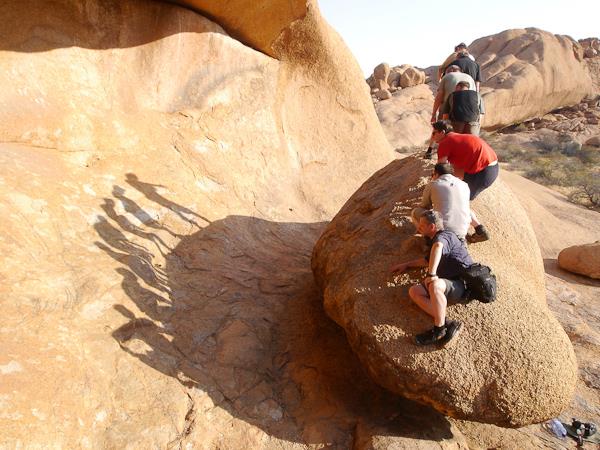
Cape Town to Victoria Falls small group lodge tour
From US $4700 - US $5055 21 days excluding flights
Classic route lodge safari to Namibia, Botswana & Zimbabwe
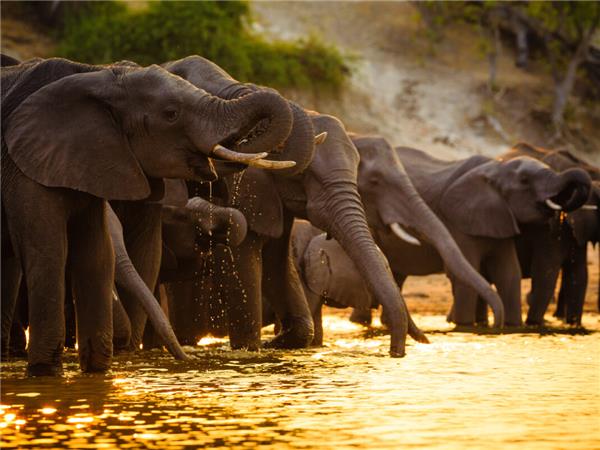
Vic Falls to Cape Town vacation in Southern Africa
From US $3885 - US $4730 20 days excluding flights
A spectacular and diverse African journey
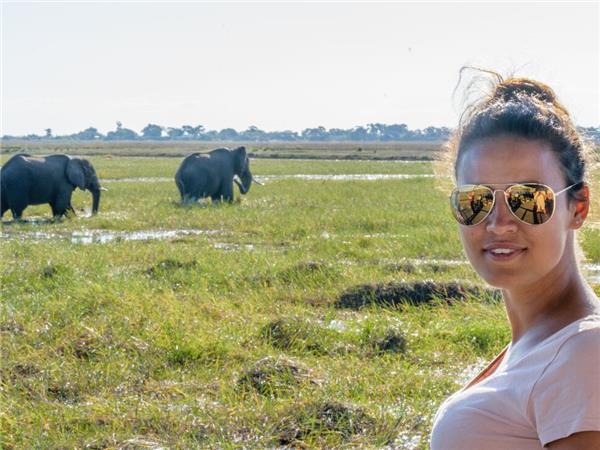
Cape Town to Vic Falls small group tour
From US $2652 - US $4290 22 days excluding flights
Adventure packed vacation from Cape Town to Victoria Falls