Food & drink in Denmark
The best way to start exploring food and drink in Denmark is around breakfast time, and through the medium of coffee and cake. The capital, Copenhagen, is a city of cafes, and catching up with friends and family in a favorite spot is a ritual for people here – in fact the average Dane drinks between three and four cups of coffee every day.
After you’ve chosen your coffee, move onto the pastry cabinet. Will it be a classic cinnamon swirl, known as a kanelsnegle? A spandauer, a flaky, circular pastry filled with custard or jam? Or a tart rabarberhorn, made with buttermilk and filled with rhubarb and marzipan?
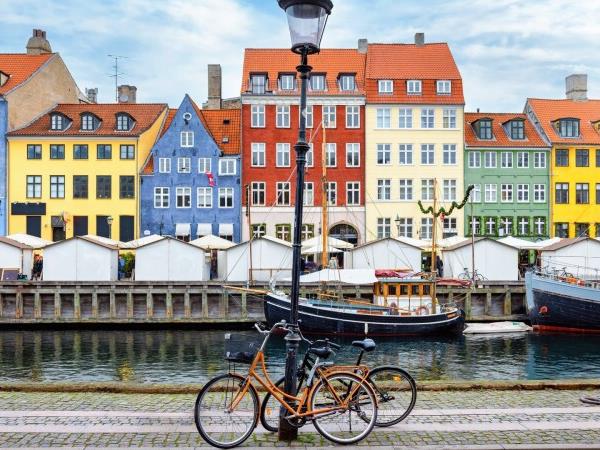
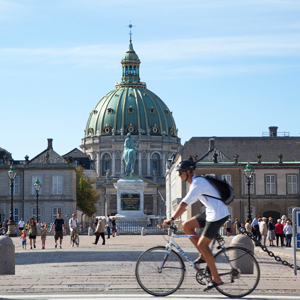
Copenhagen is also a city of bikes, and our Scandinavia trips that pass through Denmark will often combine food tastings and cycling. Pedal (nice and slowly, of course) around neighbourhoods such as Nørrebro, Christianshavn and Refshaløen in the company of a local guide, sampling fishcakes, hot dogs, open sandwiches and pastries as you go, perhaps pausing for the occasional Danish beer, too. Don’t worry, the going is mostly flat.
Denmark regularly ranks among the happiest countries in the world, and this dedication to cafe culture must be at least partly responsible. Read on to learn some of the history behind Danish food and drink, and a few more specialities for you to keep an eye out for.
After you’ve chosen your coffee, move onto the pastry cabinet. Will it be a classic cinnamon swirl, known as a kanelsnegle? A spandauer, a flaky, circular pastry filled with custard or jam? Or a tart rabarberhorn, made with buttermilk and filled with rhubarb and marzipan?
Copenhagen is also a city of bikes, and our Scandinavia trips that pass through Denmark will often combine food tastings and cycling. Pedal (nice and slowly, of course) around neighbourhoods such as Nørrebro, Christianshavn and Refshaløen in the company of a local guide, sampling fishcakes, hot dogs, open sandwiches and pastries as you go, perhaps pausing for the occasional Danish beer, too. Don’t worry, the going is mostly flat.
Denmark regularly ranks among the happiest countries in the world, and this dedication to cafe culture must be at least partly responsible. Read on to learn some of the history behind Danish food and drink, and a few more specialities for you to keep an eye out for.

Revolutions in cuisine
Much of traditional Danish food is rooted in the pre-Industrial Revolution period, and the harsh Scandinavian winters. People would predominantly eat food from the farms where they worked, so whatever could be caught, grown or raised, and they also prioritised ingredients that kept well. Salted meat and fish, potatoes, and dry food like rye and barley, are all fundamental to the Danish diet. Meals were often heavy, to stave off the cold.
Come the mid-20th century, and many Danish chefs began to look abroad, particularly to France, where nouvelle cuisine was all the rage, emphasising light, beautifully presented dishes using fresh and locally sourced ingredients. For decades afterwards, Mediterranean and specifically French cuisine would dominate the menus of high-end Danish restaurants.
In 2003, along came a restaurant called Noma, and with it another revolution in Danish cuisine, this time prompted by the release of the New Nordic Food Manifesto by a group of Scandinavian chefs, that laid out 10 rules for healthy, innovative and ethical eating. Noma, and the many restaurants that followed in its wake, was enormously influential, prioritising seasonal Danish ingredients and experimenting with dishes that included bear meat dumplings, lobster salad with herbs drawn from the beach, and beef tartare with… ants. Today, Denmark has some 37 Michelin-starred restaurants, 30 of them in Copenhagen alone.
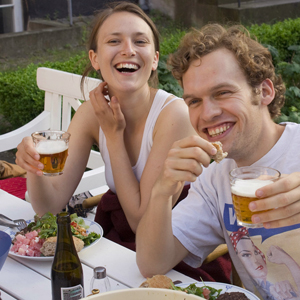
One Danish food tradition that has stood the test of time, is that of coming together to cook and eat together as a family or group of friends. Acts of bonding like this, and the daily coffee and cake ritual, are integral to the mood known as hygge, a general sense of cosy contentment. And what says cosy contentment better than a full belly?
Come the mid-20th century, and many Danish chefs began to look abroad, particularly to France, where nouvelle cuisine was all the rage, emphasising light, beautifully presented dishes using fresh and locally sourced ingredients. For decades afterwards, Mediterranean and specifically French cuisine would dominate the menus of high-end Danish restaurants.
In 2003, along came a restaurant called Noma, and with it another revolution in Danish cuisine, this time prompted by the release of the New Nordic Food Manifesto by a group of Scandinavian chefs, that laid out 10 rules for healthy, innovative and ethical eating. Noma, and the many restaurants that followed in its wake, was enormously influential, prioritising seasonal Danish ingredients and experimenting with dishes that included bear meat dumplings, lobster salad with herbs drawn from the beach, and beef tartare with… ants. Today, Denmark has some 37 Michelin-starred restaurants, 30 of them in Copenhagen alone.
One Danish food tradition that has stood the test of time, is that of coming together to cook and eat together as a family or group of friends. Acts of bonding like this, and the daily coffee and cake ritual, are integral to the mood known as hygge, a general sense of cosy contentment. And what says cosy contentment better than a full belly?
Copenhagen cycling vacation, Denmark
Explore the happy city of Copenhagen by bike
From
£1169
5 days
ex flights
Denmark and Sweden luxury family vacation
Copenhagen, Stockholm City Tour Relaxing Swedish Spa Retreat
From
£14699 to £29398
19 days
ex flights
Copenhagen and Norway by rail vacation
Discover Copenhagen and Norway Fjords by rail in Summer
From
£10990 to £16485
13 days
ex flights
Scandinavia small group tour
Soak up a little Scandinavian minimalism
From
US $9516 to US $12460
21 days
ex flights
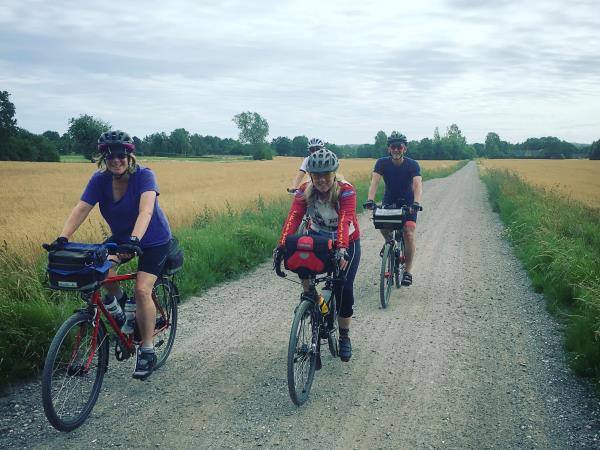
Netherlands to Denmark biking vacation
11 day cycling vacation from the Netherlands to Denmark
From
£2345
13 days
ex flights
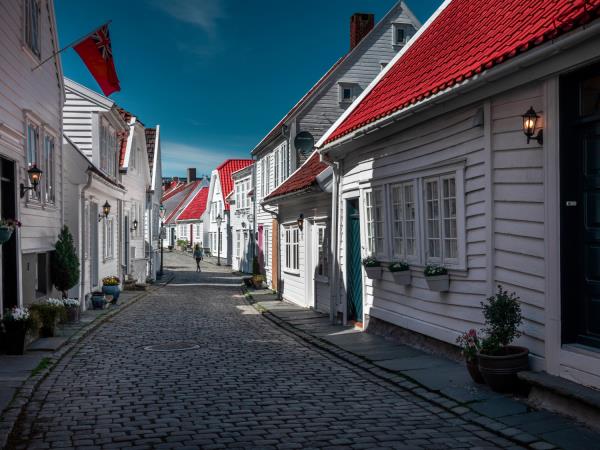
Norway, Denmark and Swedish Lapland luxury vacation
Nordic Capitals and Arctic Wilderness Luxury Journey
From
£9595 to £14395
16 days
ex flights


Contact Us
Call us for a chat about our vacations. We are happy to discuss your vacation and help in any way we can. No bots, queues or awful hold music.

1-866-821-6866
Call toll free
Calling from outside the USA

A sense of plaice – highlights of Danish cuisine
The food and drink in Denmark share many similarities with those of other Nordic countries. Where the Swedes have a smorgasbord, for instance, the Danes have their smørrebrød. These open sandwiches are made from dense, dark rye bread with various toppings, including salted beef and raw onion, roast pork and pickled cabbage, smoked eel with chives and scrambled egg, or liver pate. Danish smoked eel is highly prized – the Japanese ambassador to Denmark once eulogised about its quality in a letter home.
Denmark is quite a small country, so there is not a great deal of regional variety in the cuisine. However, visitors will find more international fare in Zealand, where the capital is located, while in Jutland, bound by the North and Baltic seas, you can try hearty, traditional dishes like kale stew, as well as lots of lamb and mutton.
Seafood is ubiquitous, as you would expect from a country where you’re never more than 52km from the coast. Oysters are a speciality, as is breaded plaice and poached cod, and of course pickled herring, another favoured topping on smorrebrod. Ninety-five percent of oysters are famed, and Denmark is one of the few places where they can be found growing wild. On some parts of the coast, naturalist guides lead oyster safaris, showing visitors how to find and shuck their own shellfish. Ribe, on the Jutland peninsula, even has an oyster festival in March.
Danish liquorice is famously salty. The Danes have used salt to preserve their food for centuries – an indispensable technique for those setting out on long sea voyages, such as the Vikings. You’ll find liquorice-infused beer, vodka and chocolate everywhere you go in Denmark.
Denmark is quite a small country, so there is not a great deal of regional variety in the cuisine. However, visitors will find more international fare in Zealand, where the capital is located, while in Jutland, bound by the North and Baltic seas, you can try hearty, traditional dishes like kale stew, as well as lots of lamb and mutton.
Seafood is ubiquitous, as you would expect from a country where you’re never more than 52km from the coast. Oysters are a speciality, as is breaded plaice and poached cod, and of course pickled herring, another favoured topping on smorrebrod. Ninety-five percent of oysters are famed, and Denmark is one of the few places where they can be found growing wild. On some parts of the coast, naturalist guides lead oyster safaris, showing visitors how to find and shuck their own shellfish. Ribe, on the Jutland peninsula, even has an oyster festival in March.
Danish liquorice is famously salty. The Danes have used salt to preserve their food for centuries – an indispensable technique for those setting out on long sea voyages, such as the Vikings. You’ll find liquorice-infused beer, vodka and chocolate everywhere you go in Denmark.
Akvavit is a spirit, served chilled, that is found on the table at pretty much any Nordic celebration, and Denmark is no exception. It’s also called snaps, and you’ll see people brandishing a bottle around any festive occasion. Skål is the toast you need, but sample with caution, it’s powerful stuff.
As for street food, you will encounter hot dog vans parked up all over the country. The national dish in Denmark is actually fried chunks of pork belly in parsley sauce, but these fire engine-red, boiled pork sausages are so abundant that some consider them the national fast food. Slather them in mustard, onions and pickled cabbage and they’ll keep you sightseeing for hours.
As for street food, you will encounter hot dog vans parked up all over the country. The national dish in Denmark is actually fried chunks of pork belly in parsley sauce, but these fire engine-red, boiled pork sausages are so abundant that some consider them the national fast food. Slather them in mustard, onions and pickled cabbage and they’ll keep you sightseeing for hours.

Responsible Travel would like to thank the Visit Denmark tourist board for their sponsorship of this guide
More Denmark articles
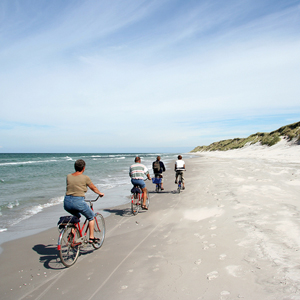
Visit Denmark in spring for wildflowers, summer for sun and autumn for wildlife.
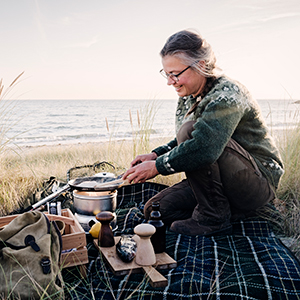
Explore at leisure as we take you through the food, shopping, people and a brief history of Denmark.
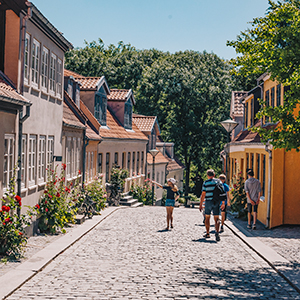
From colourful Copenhagen to the fairy tale island of Funen, here's where to go.
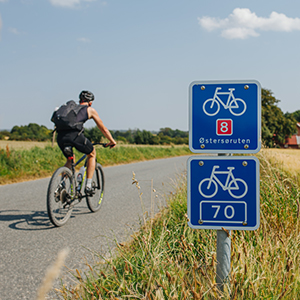
Our Denmark cycling vacations explore EuroVelo routes, islands and coastal landscapes.
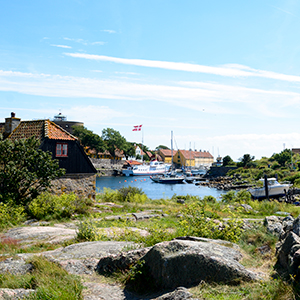
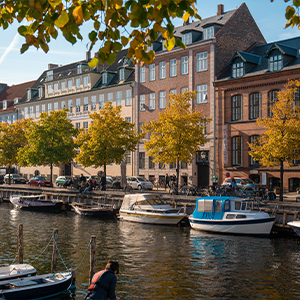
Cycle from castle to canal, wander in Vesterbro and visit world-class museums.
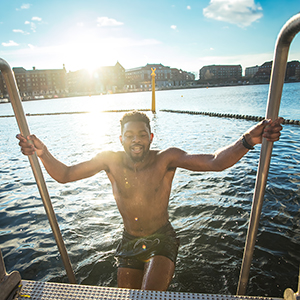
There aren’t many capital cities where it’s clean enough to swim in the harbour. Feel good in this happy country.
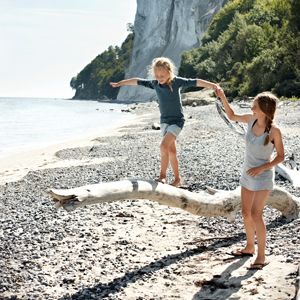
Tivoli Gardens is great, but there are lots more reasons why families love Denmark.
Discover what to eat, how to travel, and health and safety essentials for your trip to Denmark.
Sustainable energy and a love of pedal power make it easy to travel responsibly in Denmark.