Responsible tourism in French Polynesia

In a country founded by seafaring explorers, Polynesians know the importance of everyone pulling together in the same direction![]()

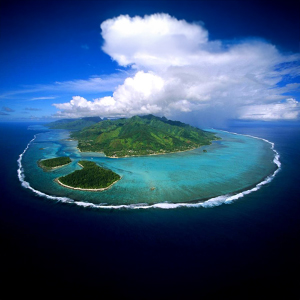
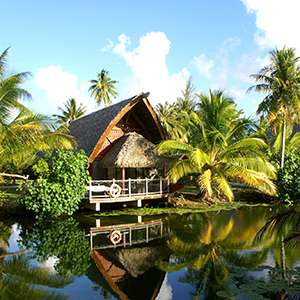
French Polynesia is an island nation, surrounded by ocean and dependent on it. Many people here rely on fishing to feed themselves and their families, while around a fifth of the population are involved with tourism, which largely revolves around spending time in, or on, the water. In fact, it was on the islands of Raiatea and Moorea that the first ever over-water bungalows were built.
Tourism marketing often presents these Pacific islands with images of laid-back island life, beautiful beaches and warm transparent seas rich in marine life. Look a little closer, however, and you’ll see that the image has a few cracks in it. Overfishing is a major issue here, as is the existential threat of a warming ocean and its implications for coral reefs and marine life. But French Polynesia faces these issues with optimism and community.
For example, you need only look at the efforts of local people to protect and restore their corner of the ocean and the reefs and fish within it, conscious that they will be needed by future generations. In a country that was founded by seafaring explorers, and where the primary mode of transport for centuries was a wooden canoe, Polynesians know the importance of everyone pulling together in the same direction.
Tourism marketing often presents these Pacific islands with images of laid-back island life, beautiful beaches and warm transparent seas rich in marine life. Look a little closer, however, and you’ll see that the image has a few cracks in it. Overfishing is a major issue here, as is the existential threat of a warming ocean and its implications for coral reefs and marine life. But French Polynesia faces these issues with optimism and community.
For example, you need only look at the efforts of local people to protect and restore their corner of the ocean and the reefs and fish within it, conscious that they will be needed by future generations. In a country that was founded by seafaring explorers, and where the primary mode of transport for centuries was a wooden canoe, Polynesians know the importance of everyone pulling together in the same direction.
People & culture in French Polynesia
If a practice has lasted for hundreds of years, it’s probably because it works![]()
Rahui – tradition as a conservation strategy
Some 1,300 fish species have been recorded in French Polynesian waters, and if you vacation in the islands, you’re bound to encounter some of them on the menu, from mahi-mahi to swordfish and moonfish, the latter delicious sauteed with lemon and garlic, or stewed with tomatoes. The national dish, poisson cru, is a staple of the roulotte food trucks you’ll find around Papeete on Tahiti. Many communities around French Polynesia are dependent on fishing, either to feed themselves or to earn an income.
But rising demand for seafood around the world, and diminishing stocks, are leading to overfishing. Large fleets, often Chinese, are particularly rapacious in their pursuit of valuable tuna from the Pacific Ocean. Chinese fishing vessels have stoked controversy in French Polynesia, with persistent allegations of illegality and decimation of fish stocks.
But overfishing is nothing new in this region. In the 1960s, the first deep-freeze units began arriving in the Austral Islands, the southernmost of French Polynesia’s five island groups. This, combined with more modern and efficient technology like motorised boats, meant that not long after, populations of some coastal fish such as mullet began to plummet.
Rather than look to modern solutions for a modern problem, however, islanders instead turned to the past, and reprised an ancient Polynesian practice called rahui. Rahui has various different meanings, depending on context, but in this instance it is a strict but temporary prohibition on harvesting resources from a specific area (land or sea), allowing them to be replenished. It is closely linked to the concept of mana in Polynesian and Hawaiian culture, wherein any living thing, as well as places and objects, may be imbued with a spiritual energy, which fosters a deep and enduring connection with the environment.
After consultation with the community, a rahui was imposed on the main bay of the island of Raha, banning spearfishing and night fishing, but allowing local people to continue fishing with lines and harpoons. A few years later, the restrictions were temporarily lifted, and islanders were delighted to find their bay was full of plump fish and lobsters again. The rahui remains in place most of the time, safeguarding fish stocks for future generations of islanders.
Rahui are not official marine protected areas, which are typically created by the government, cover wide areas and are imposed on a permanent basis. A rahui tends to cover a much smaller area, such as a lagoon, a lake or a stretch of coast, and so is not a weapon against large-scale commercial fishing. But today there are around 20 rahui in place around French Polynesia, with some 13 of them on Tahiti. Most if not all relate to fishing and are helping to increase the number and size of fish in these waters, while making the local fishing industry itself more sustainable.
These embargos are not always successful. They need full local support, because they’re hard to monitor. If someone wants to head out at night with a speargun, nothing is really stopping them, other than the perception that to do so goes against the best interests of the community as a whole.
And rahui do cause tension, because they mean a drop in income for those communities that depend on fishing for their livelihoods. Still, research shows that the vast majority of Polynesians support marine protections, and want them to go further still. It just goes to show – if a practice has lasted for hundreds of years, it’s probably because it works.
What you can do
Often the seafood that you eat when vacationing on islands or coastal destinations is not actually fresh, or locally sourced. Talk to your tour operator, your guide, or just a fisherman, and ask them what to look for on menus, or which restaurants to seek out, if you want to eat fish that’s fresh off a small boat.
Our vacations in French Polynesia engage respectfully with local communities. For instance, they support projects that get Tahitian school children to spend a day in a lagoon, learning traditional navigation skills, and about the importance of marine ecosystems and how to protect them. They also work closely with local NGOs, helping to raise awareness among travelers and local people about environmental issues such as overfishing, coral reef degradation and biodiversity loss.
But rising demand for seafood around the world, and diminishing stocks, are leading to overfishing. Large fleets, often Chinese, are particularly rapacious in their pursuit of valuable tuna from the Pacific Ocean. Chinese fishing vessels have stoked controversy in French Polynesia, with persistent allegations of illegality and decimation of fish stocks.
But overfishing is nothing new in this region. In the 1960s, the first deep-freeze units began arriving in the Austral Islands, the southernmost of French Polynesia’s five island groups. This, combined with more modern and efficient technology like motorised boats, meant that not long after, populations of some coastal fish such as mullet began to plummet.
Rather than look to modern solutions for a modern problem, however, islanders instead turned to the past, and reprised an ancient Polynesian practice called rahui. Rahui has various different meanings, depending on context, but in this instance it is a strict but temporary prohibition on harvesting resources from a specific area (land or sea), allowing them to be replenished. It is closely linked to the concept of mana in Polynesian and Hawaiian culture, wherein any living thing, as well as places and objects, may be imbued with a spiritual energy, which fosters a deep and enduring connection with the environment.
After consultation with the community, a rahui was imposed on the main bay of the island of Raha, banning spearfishing and night fishing, but allowing local people to continue fishing with lines and harpoons. A few years later, the restrictions were temporarily lifted, and islanders were delighted to find their bay was full of plump fish and lobsters again. The rahui remains in place most of the time, safeguarding fish stocks for future generations of islanders.
Rahui are not official marine protected areas, which are typically created by the government, cover wide areas and are imposed on a permanent basis. A rahui tends to cover a much smaller area, such as a lagoon, a lake or a stretch of coast, and so is not a weapon against large-scale commercial fishing. But today there are around 20 rahui in place around French Polynesia, with some 13 of them on Tahiti. Most if not all relate to fishing and are helping to increase the number and size of fish in these waters, while making the local fishing industry itself more sustainable.
These embargos are not always successful. They need full local support, because they’re hard to monitor. If someone wants to head out at night with a speargun, nothing is really stopping them, other than the perception that to do so goes against the best interests of the community as a whole.
And rahui do cause tension, because they mean a drop in income for those communities that depend on fishing for their livelihoods. Still, research shows that the vast majority of Polynesians support marine protections, and want them to go further still. It just goes to show – if a practice has lasted for hundreds of years, it’s probably because it works.
What you can do
Often the seafood that you eat when vacationing on islands or coastal destinations is not actually fresh, or locally sourced. Talk to your tour operator, your guide, or just a fisherman, and ask them what to look for on menus, or which restaurants to seek out, if you want to eat fish that’s fresh off a small boat.
Our vacations in French Polynesia engage respectfully with local communities. For instance, they support projects that get Tahitian school children to spend a day in a lagoon, learning traditional navigation skills, and about the importance of marine ecosystems and how to protect them. They also work closely with local NGOs, helping to raise awareness among travelers and local people about environmental issues such as overfishing, coral reef degradation and biodiversity loss.
Environment & Wildlife in French Polynesia
Preserving the ocean for future generations
With coral reefs in peril around the world, those of French Polynesia are in remarkably good health, supporting a wealth of marine biodiversity. Research indicates that these reefs seem quite resilient to coral bleaching so far, and could potentially even serve as a ‘refuge’ for some species as well as offering a useful case study for scientists working on reef protection.
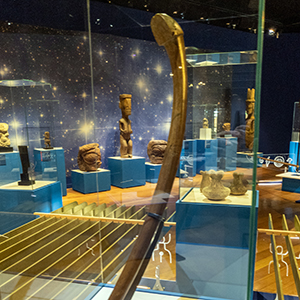
For Polynesians, the ocean is more than just a source of fish, and a place where tourists like to snorkel. It is intrinsically bound up with life here, woven into every strand of culture from the clothes people wear to the songs they sing and the decor of their homes. The need to safeguard the ocean, and the life it contains, for future generations, is something that is never far away from people’s minds.
So it’s not surprising that the concept of deep-sea mining for precious minerals is drawing concern. While some Pacific island nations such as the Cook Islands are tentatively exploring the practice, French Polynesia has gone in the opposite direction by setting aside almost five million square kilometres of ocean to form the largest Marine Protected Area in the world. A fifth of the area will be highly protected, meaning that the only activities that can legally take place are traditional coastal fishing, scientific research and ecotourism such as whale watching.
“The concept of Rahui is really deeply respected,” says Alexandrine Wan, founder of our partner Nani Travels. “The government originally was not as keen on the idea, but it was a local-led effort. Now the government is on board, though, and we have the biggest protected area in the world – the threat of deep sea mining was the trigger for that intervention. People didn’t need teaching to respect the ocean, it’s a temple for us.”
Deep-sea mining is understandably viewed as a lucrative business, with minerals and metals such as nickel, manganese and cobalt in great demand for everything from solar panels to weaponry. But it’s incredibly destructive, churning up the ocean floor and damaging ecosystems, with noisy machinery disrupting the way marine life like whales communicate and great plumes of pollution being produced that can spread vast distances.
When you add this insanity to the growing threats of sea level rise, ocean warming and acidification that are imperilling island nations around the world, the implications for marine life and the communities that depend on it are stark. But French Polynesia is taking a stand against the wilful destruction of the ocean, and our vacations are making a contribution, too.
On some trips you can join a participative scientific research project, helping to collect data on coral health. On some excursions you will be accompanied by local naturalist guides. Other trips donate to environmental organisations to help support educational programs, raising awareness about issues such as biodiversity loss, ocean conservation and the need for more sustainable forms of tourism.
What you can do
One major reason for French Polynesia’s reefs being in such good condition is the amount of time and effort invested by local communities into keeping them that way. Groups such as Coral Gardeners and Te Mana O Te Moana that focus on coral and sea turtles respectively, accept donations to help support their work.
You could also ask your tour operator whether they support any environmental or community projects, and whether there is the opportunity for you to get involved yourself during your trip.
For Polynesians, the ocean is more than just a source of fish, and a place where tourists like to snorkel. It is intrinsically bound up with life here, woven into every strand of culture from the clothes people wear to the songs they sing and the decor of their homes. The need to safeguard the ocean, and the life it contains, for future generations, is something that is never far away from people’s minds.
So it’s not surprising that the concept of deep-sea mining for precious minerals is drawing concern. While some Pacific island nations such as the Cook Islands are tentatively exploring the practice, French Polynesia has gone in the opposite direction by setting aside almost five million square kilometres of ocean to form the largest Marine Protected Area in the world. A fifth of the area will be highly protected, meaning that the only activities that can legally take place are traditional coastal fishing, scientific research and ecotourism such as whale watching.
“The concept of Rahui is really deeply respected,” says Alexandrine Wan, founder of our partner Nani Travels. “The government originally was not as keen on the idea, but it was a local-led effort. Now the government is on board, though, and we have the biggest protected area in the world – the threat of deep sea mining was the trigger for that intervention. People didn’t need teaching to respect the ocean, it’s a temple for us.”
Deep-sea mining is understandably viewed as a lucrative business, with minerals and metals such as nickel, manganese and cobalt in great demand for everything from solar panels to weaponry. But it’s incredibly destructive, churning up the ocean floor and damaging ecosystems, with noisy machinery disrupting the way marine life like whales communicate and great plumes of pollution being produced that can spread vast distances.
When you add this insanity to the growing threats of sea level rise, ocean warming and acidification that are imperilling island nations around the world, the implications for marine life and the communities that depend on it are stark. But French Polynesia is taking a stand against the wilful destruction of the ocean, and our vacations are making a contribution, too.
On some trips you can join a participative scientific research project, helping to collect data on coral health. On some excursions you will be accompanied by local naturalist guides. Other trips donate to environmental organisations to help support educational programs, raising awareness about issues such as biodiversity loss, ocean conservation and the need for more sustainable forms of tourism.
What you can do
One major reason for French Polynesia’s reefs being in such good condition is the amount of time and effort invested by local communities into keeping them that way. Groups such as Coral Gardeners and Te Mana O Te Moana that focus on coral and sea turtles respectively, accept donations to help support their work.
You could also ask your tour operator whether they support any environmental or community projects, and whether there is the opportunity for you to get involved yourself during your trip.
Paradise – ‘some restrictions may apply’
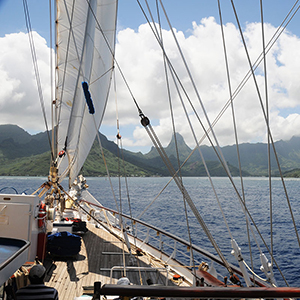
There are only two ways to reach French Polynesia – by plane, and by boat. Cruise tourism is big business here – 50-60,000 passengers annually, on top of those who take a cruise once they arrive. The mega vessels that attract such opprobrium are banned – the maximum capacity is 3,500 and any ship carrying more than 2,500 is limited to the Society Islands of Tahiti, Raiatea and Moorea. Bora Bora, which is also one of the Society Islands and wants to pitch itself as a quality-over-quantity luxury tourism destination, only accepts 1,200 cruise passengers per day.
French Polynesia’s tourism strategy outlines its efforts to make tourism to the islands sustainable, emphasising slow travel, environmental protection, and enabling as many local people to participate as possible, the better to ensure tourists receive a genuine welcome.
“I think what Bora Bora did is pretty smart, a big step towards understanding their capacity,” says Alexandrine Wan. “With new technology some cruises are amazing so it’s about choosing the right partners to come into our ocean and what they have to offer us. There are some that give back to communities and scientific projects, going beyond the hotspots. Catamarans are another issue. They are small but we have many of them, and insufficient anchorage. That means they anchor all over the place, damaging coral and causing litter. So, we have work to do in structuring the sailing cruise business. Bora Bora has spoken, though, and things will evolve. But we are on island rhythm so it does take time.”
Tourism represents around 80 percent of income to French Polynesia, and while the official strategy is to cap visitor numbers at 280,000 annually, that’s not enough for some. The president has announced his intention to triple arrivals to 600,000, which will mean more cruise ships and more terminals, more hotels and resorts, and more flights.
How does that fit with a quest for more sustainable tourism when the entire population of French Polynesia is just 280,000? Hard to say. The islands are renowned for their peace and beauty, but only time will tell if that lasts.
French Polynesia’s tourism strategy outlines its efforts to make tourism to the islands sustainable, emphasising slow travel, environmental protection, and enabling as many local people to participate as possible, the better to ensure tourists receive a genuine welcome.
“I think what Bora Bora did is pretty smart, a big step towards understanding their capacity,” says Alexandrine Wan. “With new technology some cruises are amazing so it’s about choosing the right partners to come into our ocean and what they have to offer us. There are some that give back to communities and scientific projects, going beyond the hotspots. Catamarans are another issue. They are small but we have many of them, and insufficient anchorage. That means they anchor all over the place, damaging coral and causing litter. So, we have work to do in structuring the sailing cruise business. Bora Bora has spoken, though, and things will evolve. But we are on island rhythm so it does take time.”
Tourism represents around 80 percent of income to French Polynesia, and while the official strategy is to cap visitor numbers at 280,000 annually, that’s not enough for some. The president has announced his intention to triple arrivals to 600,000, which will mean more cruise ships and more terminals, more hotels and resorts, and more flights.
How does that fit with a quest for more sustainable tourism when the entire population of French Polynesia is just 280,000? Hard to say. The islands are renowned for their peace and beauty, but only time will tell if that lasts.
Whale tourism rules in French Polynesia
Lower a microphone into the waters off the Society Islands between July and November, and you might capture the snorts, squeals and barks of humpback whales, whose song is among the most complex in the animal kingdom. They come to these warm waters to reproduce and raise their young and, as elsewhere in the world, their presence draws boatloads of curious tourists.
Sometimes, those tourists will actually get in the water with the whales. In French Polynesia you can swim with these gentle giants, so long as you follow local rules about keeping your distance for your safety, and theirs. Being alongside them, watching them move around beneath the surface, is an incredible experience entirely different to the quite limited view you would normally enjoy from a boat.
However, concerns about the effects on whales of regularly coming into close proximity with swimmers and their boats has led to tightened restrictions. Only three boats are now allowed to approach a whale at the same time, and boats must keep a 100m distance.
Additionally, only seven people are allowed in the water with the whales at a time, but they are now allowed to approach to within 15m. Given that the average length of a humpback whale is around 15m, that doesn’t leave a whole lot of space to back away if the whale decides to make a rapid turn or flap its tail. And who is to say what effect it has on whales, to encounter groups of people up close several times a day.
Whale tourism can bring significant economic benefits to local communities, and has been immensely successful in boosting conservation of these majestic animals, with many species once hunted to the edge of extinction. French Polynesia’s enhanced regulations are an attempt to manage whale tourism without detriment to the whales themselves.
What you can do
On any kind of wildlife experience, it’s vital to follow the rules not only for your own safety but also for that of the animals. On our vacations you can be confident that whether you’re watching whales from a boat, or actually getting in the water with these graceful giants, the activities always abide by official regulations, and use responsible boat operators.
Sometimes, those tourists will actually get in the water with the whales. In French Polynesia you can swim with these gentle giants, so long as you follow local rules about keeping your distance for your safety, and theirs. Being alongside them, watching them move around beneath the surface, is an incredible experience entirely different to the quite limited view you would normally enjoy from a boat.
However, concerns about the effects on whales of regularly coming into close proximity with swimmers and their boats has led to tightened restrictions. Only three boats are now allowed to approach a whale at the same time, and boats must keep a 100m distance.
Additionally, only seven people are allowed in the water with the whales at a time, but they are now allowed to approach to within 15m. Given that the average length of a humpback whale is around 15m, that doesn’t leave a whole lot of space to back away if the whale decides to make a rapid turn or flap its tail. And who is to say what effect it has on whales, to encounter groups of people up close several times a day.
Whale tourism can bring significant economic benefits to local communities, and has been immensely successful in boosting conservation of these majestic animals, with many species once hunted to the edge of extinction. French Polynesia’s enhanced regulations are an attempt to manage whale tourism without detriment to the whales themselves.
What you can do
On any kind of wildlife experience, it’s vital to follow the rules not only for your own safety but also for that of the animals. On our vacations you can be confident that whether you’re watching whales from a boat, or actually getting in the water with these graceful giants, the activities always abide by official regulations, and use responsible boat operators.
More French Polynesia articles
August to October is the best time to visit for whale watching, whilst December's expensive.
Travel on a ship that is also carrying vital supplies to the islands.
From a playlist to listen to on the plane to a pirogue-plying guide – here’s how to discover the culture of French Polynesia.
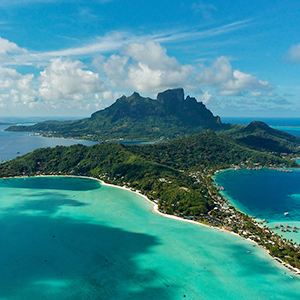
Swim or snorkel with sharks and manta rays, hike extinct volcanoes and explore a true tropical beauty.
Our guide to the main island in French Polynesia covers our top things to do here from culture to food.





_calf_Moorea_2.jpg)