Ancient sites in Syria
Having emerged from years of civil war, visitors are starting to return to Syria, with many drawn by the opportunity to visit its spectacular ancient sites. Some, such as Aleppo, Homs and Palmyra, were heavily damaged in the fighting, and our Syria vacations, through hiring local guides, paying entrance fees, and using locally owned hotels and restaurants, are helping contribute financially to reconstruction efforts as well as the rebuilding of Syria’s tourism infrastructure.
Syria occupies a unique position in geography and history. Its position between Europe and the Middle East, and its Mediterranean coast, have seen it tussled over by empires for centuries. Babylonians, Egyptians, Persians, Greeks, Romans, Ottomans, Islamic dynasties and armies of crusading Christian knights have left their indelible mark on Syria.
On our Syria history tours you’ll explore walled cities that were once connected by Silk Road trade routes, fed by complex irrigation systems and populated by churches, mosques, forts, palaces and huge, covered bazaars. Syria boasts six UNESCO World Heritage Sites, and countless other archaeological sites of note, and there is no better way to explore them than in the company of an expert local guide such as Rami Nawaya, the founder of our partner, Syrian Guides.
“Because Syria is located in this strategic place all the dynasties, all the empires, all the kingdoms attempted to occupy it. And the invaders enriched Syria, it’s why we have a very colourful society – it’s a mosaic of people,” says Rami, who trained as a guide after realising he had a talent and a passion for showing people around his home city of Damascus. “The reason I do this is people. I love dealing with people of different nationalities, different countries, hearing their stories. And when you guide them, you see these places through fresh eyes.”

The reason I do this is people. Guiding them, I see these places through fresh eyes.![]()

Tours that support ancient traditions
The best guides don’t only tell you what life was like in these ancient places – they explain how life in them works today. “We believe that the guide is the key, the bridge, between the visitor and the culture,” says Rami. “That’s why we also take people to meet the locals, to see how they live, their traditions.” So, in Homs, you’ll visit a family-run winery, perhaps the only one in Syria, and between guided tours of Syria’s historic sites you’ll spend time in the workshops of local artisans, watching them at their work as they create silk brocade on traditional looms, or jewellery boxes and furniture inlaid with intricate mosaics.
“Mosaic art started in Damascus 150 years ago,” says Rami. “It's wood inlaid with mother of pearl, and they make geometrical shapes, using different trees for the colouration. We visit people who have been in this industry for maybe 50 years, 70 years. We hope people will purchase something but even if they don’t, the artisans are pleased with the visits because they believe it helps their professions survive.”
“Mosaic art started in Damascus 150 years ago,” says Rami. “It's wood inlaid with mother of pearl, and they make geometrical shapes, using different trees for the colouration. We visit people who have been in this industry for maybe 50 years, 70 years. We hope people will purchase something but even if they don’t, the artisans are pleased with the visits because they believe it helps their professions survive.”
Visiting Syria’s ancient sites
Syria has hundreds of recorded archaeological sites, and countless more that are yet to be documented. They include well-known locations such as Aleppo, Palmyra and Bosra, as well as places including Mari, Ugarit and Ebla, one of Syria’s earliest kingdoms.
Our tours of Syria’s ancient sites will often cross the border from either Lebanon or Jordan, as those countries tend to have better flight options. They can be either small group tours on fixed dates, or tailor made tours where you can create an itinerary that meets your interests. In either case you’ll be fully escorted throughout, with brilliant local guides taking you around every location.
Our tours of Syria’s ancient sites will often cross the border from either Lebanon or Jordan, as those countries tend to have better flight options. They can be either small group tours on fixed dates, or tailor made tours where you can create an itinerary that meets your interests. In either case you’ll be fully escorted throughout, with brilliant local guides taking you around every location.
Do you need a guide to visit Syria?
It’s possible to travel Syria independently, but the best way is to have the services of a local guide. Syria has endured years of civil war, and infrastructure has been weakened across the country. Going with a guide not only ensures you make the most of your time, but also makes getting around more convenient, as reliable transport between cities and decent hotels are arranged for you, plus you have support available if you need it.
It’s important to be honest with people about [the realities of] traveling here. But Syria is really rewarding. It is safe, people are friendly and resilient.![]()
Syria is not very easy to get around. Roads are in poor shape and often badly lit, meaning most driving must be done during the daytime. There are good hotels, but luxurious places are few and far between. “It’s important to be honest with people about traveling here,” says Rami. “If you are expecting five-star hotels, if you expect not to see some destroyed areas, or military checkpoints, then Syria is not for you. But if you are okay with this, Syria is really rewarding. It is safe, people are friendly and resilient. Talking to them can reveal deep insights and help you understand the conflict in a different dimension.”
Syria’s historical sites
Many of Syria’s historical sites, including the Ancient City of Aleppo and Palmyra, were severely damaged during the civil war between 2011 and 2024, but reconstruction work is underway.
“Entrance fees have been increased to USD$10 but I'm not sure if it is enough because there is a lot of damage and problems,” says Rami. Vast amounts of funding are needed to restore even places like Palmyra, let alone less-known sites. But the Syrian government has many other challenges to deal with, such as rebuilding infrastructure and providing housing, so restoration is understandably not a main priority at present.
Despite this, you can still visit most of the key ancient sites in Syria, and many of them thankfully emerged relatively unscathed from the war. In some areas, such as the Ancient City of Aleppo, you may see ongoing reconstruction work. “I particularly admire one of the organisations involved, the Aga Khan Development Network,” says Rami. “They are bringing back the stonework as it was before, making sure these places are being reconstructed according to international standards.”

Syria vacation, ancient wonders
Welcome to Syria, ancient and modern
From
€845 to €1850
7 days
ex flights
Syria and Lebanon guided tour
Ancient cities, crusader castles and the ruins of Palmyra
From
£2999 to £3299
10 days
ex flights
Syria tour, tailor made culture
Explore ancient sites and historic cities
From
US $1300 to US $2550
10 days
ex flights


Contact Us

Call us for a chat about our vacations. We are happy to discuss your vacation and help in any way we can. No bots, queues or awful hold music.

1-866-821-6866
Call toll free
Calling from outside the USA


Most significant ancient sites in Syria
You can restore the souks but the main challenge is to bring back the people.![]()
Ancient City of Aleppo
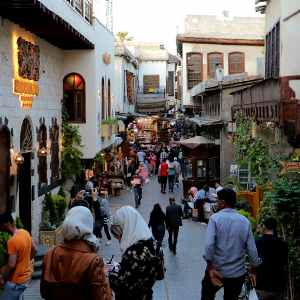
Like many of Syria’s ancient sites, Aleppo bears deep scars from the civil war. Much of the 14th-century souk was destroyed, for instance, and when travelers visit the stalls that remain it will hopefully encourage more to open. “You can restore the souks but the main challenge is to bring back the people,” says Rami.
Other highlights of a stroll through Aleppo’s ancient alleyways include an 800-year-old-soap factory, which uses Syrian olive oil and laurel oil, and a chance to meet and chat with residents with the help of your guide. These conversations can be inspiring and illuminating, often bringing forth stories of resilience and hope from people who have endured years of war.
Other highlights of a stroll through Aleppo’s ancient alleyways include an 800-year-old-soap factory, which uses Syrian olive oil and laurel oil, and a chance to meet and chat with residents with the help of your guide. These conversations can be inspiring and illuminating, often bringing forth stories of resilience and hope from people who have endured years of war.
Ancient City of Damascus
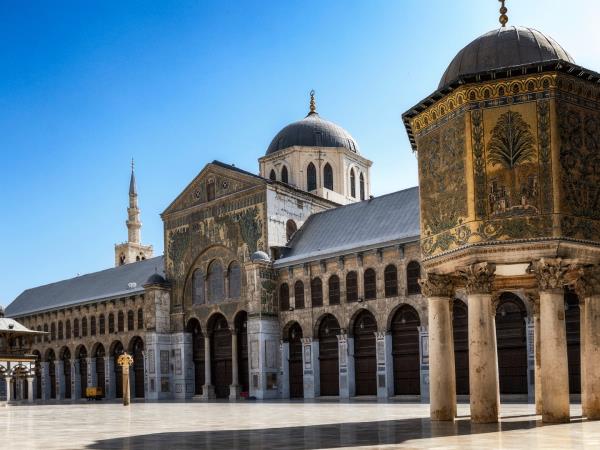
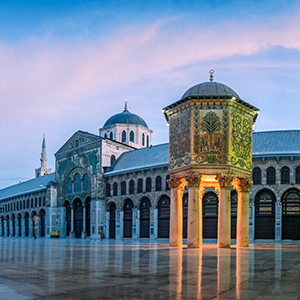
Founded in the 3rd millennium BC, Damascus, the Syrian capital, is the oldest continuously inhabited city in the world, “and when you walk through it, you feel that history immediately,” says Rami. Home to the Umayyad Mosque, the oldest working mosque in the world, as well as Syria’s largest souk and its oldest cafe in Nofar (a great lunch spot), the Ancient City of Damascus is a lovely place to explore for a day on foot.
Damascene streets are lined with historic architecture including caravanserais, palaces and mansions, while the National Museum holds the first known alphabet, which was carved into a stone tablet. Damascus is known as ’the city of jasmine’, and if you visit in spring, you’ll catch many public spaces in full beautiful bloom.
Damascene streets are lined with historic architecture including caravanserais, palaces and mansions, while the National Museum holds the first known alphabet, which was carved into a stone tablet. Damascus is known as ’the city of jasmine’, and if you visit in spring, you’ll catch many public spaces in full beautiful bloom.
Apamea
Apamea is an impressive site. Located in the Orontes Valley, 55km from Hama, this Hellenistic-Roman city boasts the Great Colonnade, a 2km-long street lined with columns, one of the longest in the Roman Empire, as well as the ruins of a 20,000-seat theatre, which was one of the empire’s largest.
Bosra
Bosra, in the south of the country near the border with Jordan, is one of Syria’s most enthralling ancient sites, most famous for its striking Roman amphitheatre built from black basalt. Tours here take in the city’s Roman and Byzantine ruins, its early Islamic architecture, and perhaps even a memorable picnic overlooking the Hauran plain.
Krak des Chevaliers
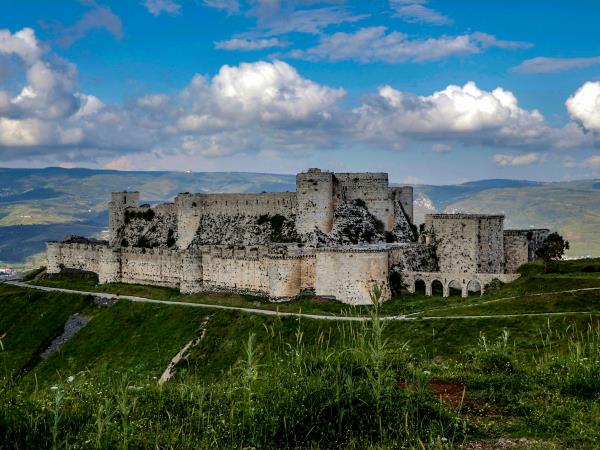
Occupying a strategic position above the ‘Valley of the Christians’, where most of the population are Greek Orthodox, the Krak des Chevaliers is a Crusader Castle and one of the best-preserved of its kind. Bearing traces of Byzantine, Crusader and Islamic civilisations, this powerfully proportioned outpost is a UNESCO World Heritage Site.
Hama
Known for its 17 huge norias (waterwheels) that irrigated the city and its surrounding farmlands for centuries and are prominent examples of medieval Muslim technology, Hama is a nice spot for a riverside stroll and a restaurant lunch.
Homs
Homs has a number of ancient churches and mosques and is also a good base for exploring the nearby Krak des Chevaliers, but sadly much of the city was devastated by a prolonged siege during the civil war. Nevertheless, there are signs of recovery, not least the happy sight of the historic souq reopening.
Palmyra
“Palmyra is really a miracle,” says Rami, “and some say the name Palmyra comes from the Aramaic word for miracle. It has a beautiful oasis which is why the city was able to become a huge kingdom in the past.” And what a past it had – a vital trade hub, one of the most significant cultural centers of the ancient world, dating back to the Roman Empire and bearing treasures like the Temple of Bel, the Arch of Triumph and the Great Colonnade. Sadly, much of the city was destroyed during the civil war, and during your visit you may see some of the rebuilding work that is going on.
Syria and its ancient sites have been deeply fractured by years of war. And now, like a skilful mosaic artist at work, the country is slowly, carefully, putting itself back together. Through bringing in vital tourism revenue, and engaging with local communities in a respectful way, our vacations help this process along.
Syria and its ancient sites have been deeply fractured by years of war. And now, like a skilful mosaic artist at work, the country is slowly, carefully, putting itself back together. Through bringing in vital tourism revenue, and engaging with local communities in a respectful way, our vacations help this process along.
More Syria articles
Our Syria travel guide is with you all the way through the country’s mezze of delights.
Find out the best places to go in Syria with our useful map and list of highlights.