Culture & customs in Papua New Guinea
Papua New Guinea has a richly diverse culture. There are more than 750 distinct tribes in this island nation, each of which has its own language, customs, beliefs and traditions – as a whole, these are known as kastom. Cultural life in Papua New Guinea is centerd around village communities, ancestral and spiritual beliefs, and ancient ceremonial practices such as tribal gatherings, initiation rites, and festivals.
Physically remote and still very isolated, Papua New Guinea is one of the least-visited countries in the world. This means its culture and customs have flourished with relatively little outside influence for centuries. Tribal culture here is enormously diverse given that many communities only come into contact with each other infrequently, at events such as festivals.
There are some unifying factors in Papua New Guinean culture. The bird-of-paradise is the national bird and appears on the country’s flag. Its feathers were often used for traditional tribal headdresses, a practice that is fading away, however, while there is a corresponding increased interest in birdwatching here. Tok Pisin is the most widely spoken language of Papua New Guinea, which allows disparate tribes to communicate. And the traditional mumu feast, where meat and vegetables are wrapped in banana leaves and cooked under hot stones, is common across the country.
The best way to explore tribal culture in Papua New Guinea is by joining an organised tour accompanied by a local guide. In fact, tourism here is so limited, and many communities are so remote, that you would find it difficult to travel independently. Our Papua New Guinea vacations immerse you in local culture, so you’ll spend time in villages to meet people and often join in activities with them. The Highlands region in particular is a great place for tribal encounters, and home to some of the most resilient cultures anywhere in the country. Some tours are also designed to coincide with tribal festivals.
Physically remote and still very isolated, Papua New Guinea is one of the least-visited countries in the world. This means its culture and customs have flourished with relatively little outside influence for centuries. Tribal culture here is enormously diverse given that many communities only come into contact with each other infrequently, at events such as festivals.
There are some unifying factors in Papua New Guinean culture. The bird-of-paradise is the national bird and appears on the country’s flag. Its feathers were often used for traditional tribal headdresses, a practice that is fading away, however, while there is a corresponding increased interest in birdwatching here. Tok Pisin is the most widely spoken language of Papua New Guinea, which allows disparate tribes to communicate. And the traditional mumu feast, where meat and vegetables are wrapped in banana leaves and cooked under hot stones, is common across the country.
The best way to explore tribal culture in Papua New Guinea is by joining an organised tour accompanied by a local guide. In fact, tourism here is so limited, and many communities are so remote, that you would find it difficult to travel independently. Our Papua New Guinea vacations immerse you in local culture, so you’ll spend time in villages to meet people and often join in activities with them. The Highlands region in particular is a great place for tribal encounters, and home to some of the most resilient cultures anywhere in the country. Some tours are also designed to coincide with tribal festivals.

The best places to explore tribal culture in Papua New Guinea are in regions such as the Highlands, along the Sepik River and on the islands.
Visiting Papua New Guinea’s tribal groups to learn about their customs and ways of life is a major highlight of cultural vacations here. On some tours, you can spend a day or even a few days with tribal communities, where you might be welcomed to join a celebration, or to simply take part in the activities of day-to-day life, from harvesting crops to preparing meals.
Our tours are generally small group departures, with no more than 12 people, meaning they can visit villages and local tribes with minimal impact. They are always accompanied by local guides who can advise you on how to visit respectfully. You may also be met by someone from the community, who can help you bridge the language gap.
Visiting Papua New Guinea’s tribal groups to learn about their customs and ways of life is a major highlight of cultural vacations here. On some tours, you can spend a day or even a few days with tribal communities, where you might be welcomed to join a celebration, or to simply take part in the activities of day-to-day life, from harvesting crops to preparing meals.
Our tours are generally small group departures, with no more than 12 people, meaning they can visit villages and local tribes with minimal impact. They are always accompanied by local guides who can advise you on how to visit respectfully. You may also be met by someone from the community, who can help you bridge the language gap.
The Highlands
Chimbu is a province in Papua New Guinea’s Highlands region, peppered with remote villages and alive with ancient traditions, dress and customs. Spend time at a village here, seeing how weapons and musical instruments are made and having a go at making a bilum, a sturdy string bag used throughout the country. The Kalam tribe lives in Simbai, Madang province, another village we visit. The Kalam wear distinctive helmets covered in beetle heads.
The Asaro ‘Mudmen’, who reside in the Highlands, coat their skin in mud and wear ghoulish clay masks adorned with pigs’ teeth and shells. There are various origin myths around this tradition, but they all center on the mud and mask combination making the men look like spirits or ghosts, which terrified their enemies and gave the Asaro a fearsome advantage. The mud mask tradition originates with the Asaro people, but many tribes in the Eastern Highlands now perform similar displays for visitors.
The Asaro ‘Mudmen’, who reside in the Highlands, coat their skin in mud and wear ghoulish clay masks adorned with pigs’ teeth and shells. There are various origin myths around this tradition, but they all center on the mud and mask combination making the men look like spirits or ghosts, which terrified their enemies and gave the Asaro a fearsome advantage. The mud mask tradition originates with the Asaro people, but many tribes in the Eastern Highlands now perform similar displays for visitors.
Sepik
The Sepik is Papua New Guinea’s longest river, meandering 1,200km from the West Papuan border to the Bismarck Sea, west of Madang. Wewak is the gateway to river exploration, usually by motorised longboat. Tribal villages with stilt houses wait around each bend, where rituals are conducted in haus tambaran (spirit houses).
Along the Sepik River you might encounter people known as ‘Crocodile Men’. Using razor blades, they scar their skin with cuts to resemble the hide of the crocodile in an animist tradition that pays tribute to the reptile’s strength.
Along the Sepik River you might encounter people known as ‘Crocodile Men’. Using razor blades, they scar their skin with cuts to resemble the hide of the crocodile in an animist tradition that pays tribute to the reptile’s strength.
The Islands
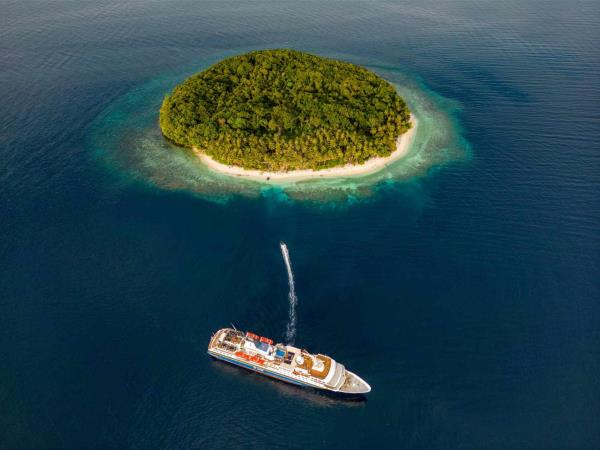
Papua New Guinea makes up half of the island of New Guinea, and over 600 offshore islands, many of which are little more than coral atolls. Our small ship expedition cruises are a convenient and exciting way to visit several islands on one trip. One stop on a Melanesia cruise might be the small island of Tsoilik where, besides strolling along the idyllic white sand beach, you can meet the local tribespeople who follow a subsistence lifestyle here, and perhaps try paddling a traditional outrigger canoe or learning to weave a basket by hand.
Where to explore tribal culture in Papua New Guinea
What are the main customs in Papua New Guinea?
Sing-sings
A sing-sing in Papua New Guinea is an annual tribal gathering where neighbouring communities can share their culture and traditions. Often forming part of major festivals, they see tribal groups donning traditional dress and paint, and performing songs, dances and rituals.
Wantok System
Wantok is a form of community welfare system based around mutual responsibility that tribal groups in Papua New Guinea use to take care of themselves, especially their more vulnerable members. People are expected to look out for their wantoks whether that means offering food or a bed to those who are financially disadvantaged, or a shoulder to cry on in times of difficulty.
This interconnectedness between those who speak the same language (wantok = one talk) reinforces cultural values and promotes social cohesion. But it also has disadvantages, sometimes leading to nepotism, and financial difficulties for those who are called on to share most.
Initiation rites
There are many tribal initiation rites across Papua New Guinea, often marking the beginning of adulthood. Among them are the Fire Dance, which is a rite of passage performed by adolescent male members of the Baining tribe of New Britain. They compete wearing massive headdresses shaped like animals’ heads, and run through and kick the fire, sending up showers of sparks, accompanied by chanting and singing from village elders.
And on one of our Papua New Guinea small group tours you can meet the Crocodile Men from the Chambri tribe, who practice skin scarification as an initiation rite for boys, marking their skin with ‘crocodile’ scars to signal their passage into manhood.
Cultural festivals & events in Papua New Guinea
Goroka Show
The Goroka Show is the longest-running tribal gathering and cultural festival in Papua New Guinea, hosted in Goroka, capital of the Eastern Highlands Province. It’s an annual event conceived in the 1950s by Australian patrol officers to provide an opportunity for isolated and historically warring tribes to interact in a peaceful environment.
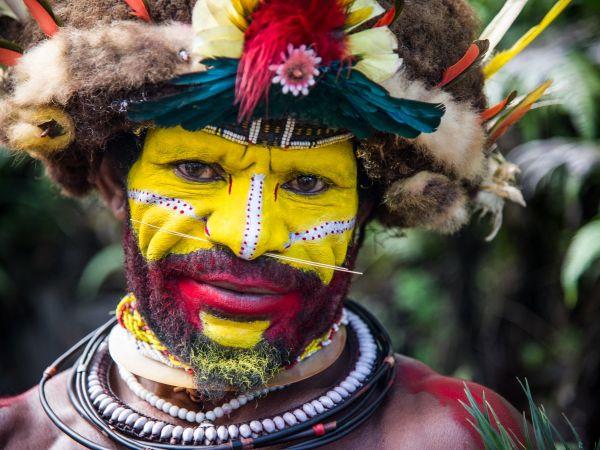
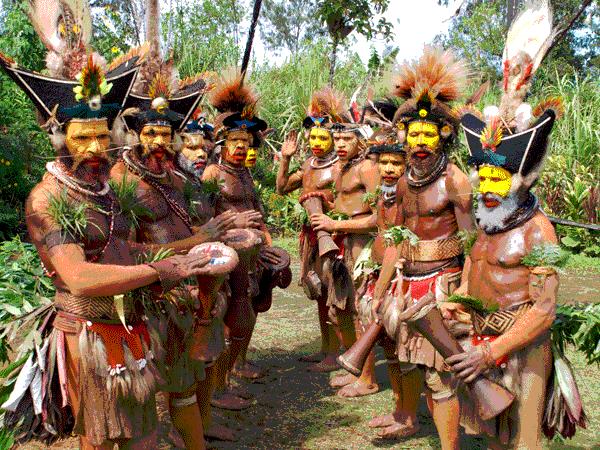
On our Goroka Show vacations you can join tribes from across the Highlands as they gather wearing their own unique forms of dress, which include elaborate feather headdresses, grass or bead skirts, shell and horn necklaces and vibrant face and body paint, plus traditional weapons.
National Mask & Warwagira Festival
The National Mask and Warwagira Festival is an annual event held in July that celebrates the unique mask cultures of the Tolai, Baining and Sulka peoples of East New Britain Province. It’s an extravaganza of cultural dancing, ritual performance and storytelling with a variety of traditional cookery demonstrations (portions of snake meat are not unknown).
The opening ceremony is called the Kinavai and features the arrival of the Tolai Tubuans and Duk-Duks (masked spirits) emerging from the sea mist at dawn. You can also see the traditional Tolai shell money exchanges that mark the opening of the festival, as well as the Baining Fire Dance.
Kalam Festival
The Kalam Festival is an annual event for the Simbai community, an area so remote you must access it by small plane. Only a handful of tourists can visit and witness ceremonies such as the initiation rites for adolescent boys entering manhood, sing-sings with participants sporting impressive green beetle headpieces and arrangements for marriages. Our Papua New Guinea festival vacations will sometimes include a visit to the Kalam Festival.
Kenu & Kundu Festival
The Kenu and Kundu Festival is held on the first weekend of November every year, with thrilling traditional canoe races accompanied by rhythmic drumming as the centerpiece. As well as the boats (kenu) and drums (kundu), you can join competitors from 600-plus islands in the Milne Bay Province, and thousands of spectators, with sing-sings and communal meals all part of the fun, too.
Papua New Guinea small group tour
Stay with tribes and visit a festival in Papua New Guinea
From
US $13731 to US $14421
14 days
ex flights
Papua New Guinea, Goroka Show and Tribal Lands
The very best of Papua's diverse traditional cultures
From
£7495 to £7999
12 days
ex flights
Papua New Guinea guided cultural tour
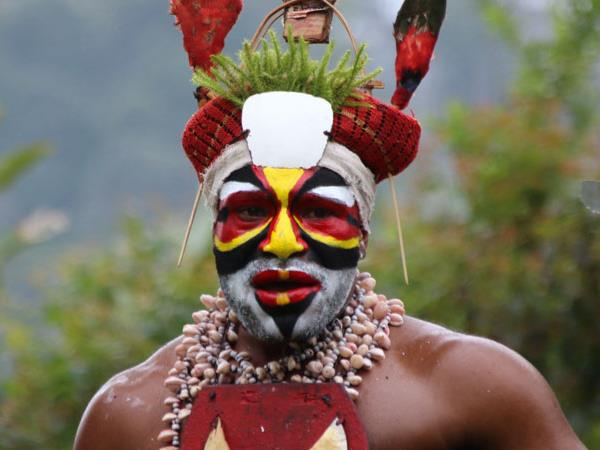
Discover the best of Papua's traditional cultures
From
£6695
10 days
ex flights


Contact Us
Call us for a chat about our vacations. We are happy to discuss your vacation and help in any way we can. No bots, queues or awful hold music.

1-866-821-6866
Call toll free
Calling from outside the USA

How to experience Papua New Guinea culture responsibly
Traveling responsibly in Papua New Guinea means joining organised small group tours that work closely with local tribal communities, so they can choose how and when tourists visit, and what they share with them.Papua New Guinea culture: quick facts
Our travelers also ask…
What makes Papua New Guinea culture unique?
Papua New Guinea is one of the most culturally diverse countries in the world with centuries-old ways of life that are richly diverse, rooted in tradition and largely unaffected by tourism. Tribal communities here are frequently geographically isolated from each other, which has allowed unique cultures to develop.
Can tourists experience tribal culture in Papua New Guinea?
Travelers on organised tours can experience Papua New Guinea tribal culture in many ways, from staying in villages (with local guides) to festivals, communal meals known as mumus and visits with everyone from farmers to artisanal wood carvers and fishermen. On our vacations in Papua New Guinea, you can be confident that these encounters are always on the host community’s terms, ensuring they feel authentic rather than staged.
What are the main customs in Papua New Guinea?
Some of the most significant customs in Papua New Guinea include sing-sings, where tribal groups come together to share their cultures, beliefs and traditional dress; the wantok system, a kind of social safety net that ensures tribal communities take care of their own, and rituals from courting dances to initiation ceremonies and shared meals, cooked underground, known as mumu.
More Tribal cultures articles
Respectful and authentic encounters that ensure you get a warm welcome.
Our favorite encounters with tribal groups in Africa and why they’re special.
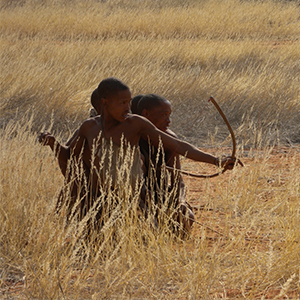
We explain how to be a respectful guest, rather than an unwelcome pest.
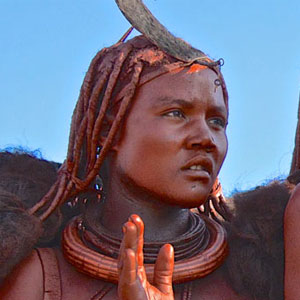
Meeting and learning about local tribal groups is a privilege that demands a responsible and sensitive approach.
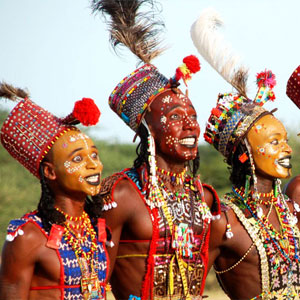
The ancient Gerewol festival is an extraordinary spectacle cultural event to which you can bear witness as a rare visitor.
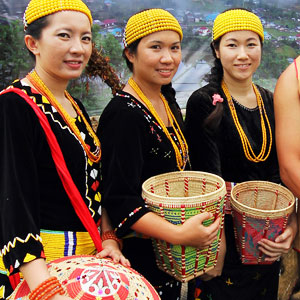
The culture and heritage of the Lun Bawang people is at the core of Sarawak community tourism.
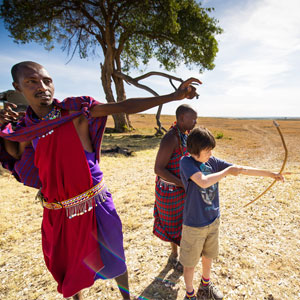
From village visits to a stay at a Maasai-run camp, there are plenty of ways to get close to these landscape custodians.
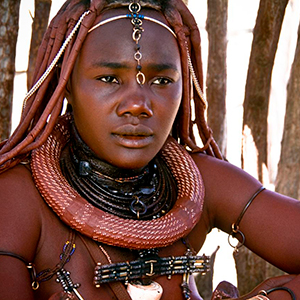
A vacation to Namibia shouldn’t just be about desert landscapes and Big Five safaris. Tribal culture is fascinating.
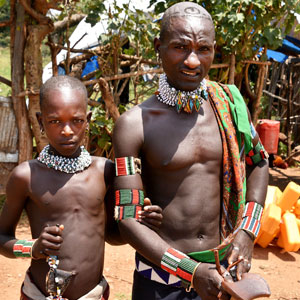
The cultural diversity is astounding, but tourists must tread lightly and with respect.
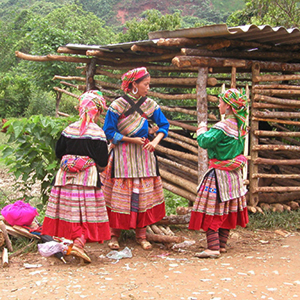
Our hill tribe trekking tours encourage travelers to interact with villagers, on their level.
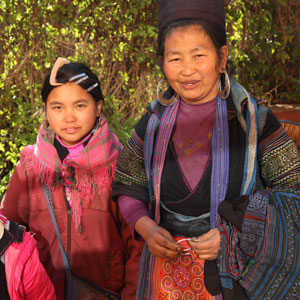
Away from the cities, life in the tribal villages flows, as it always has, without the trappings of the modern world.
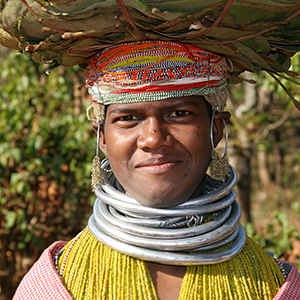
Experience India alongside some of its tribal cultures on our vacations.




.jpg)
