Nepal and Bhutan 15 day tour
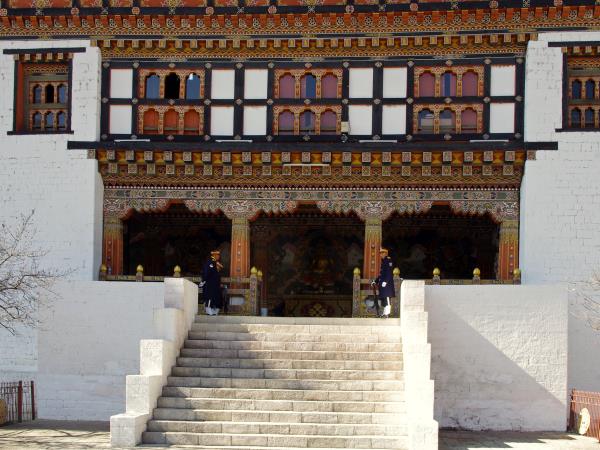
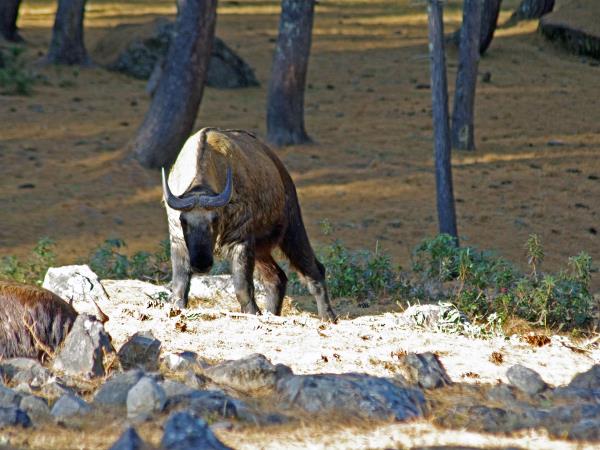
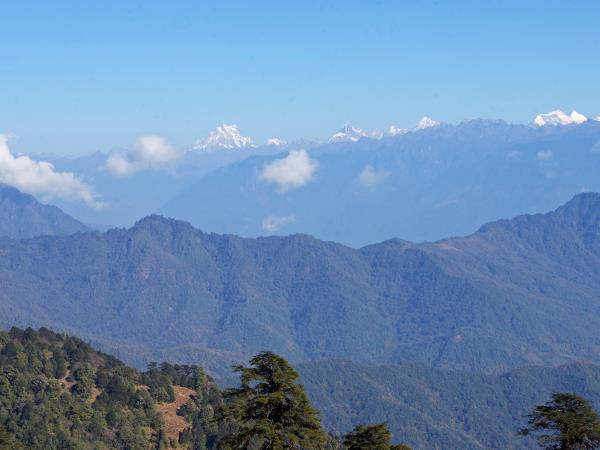
Price
US $3150 excluding flights
More info
Best time to visit is from February to June; and from October to December.
Get in touch with us to customise your trip or to find out about more tours and options that are available!
Get in touch with us to customise your trip or to find out about more tours and options that are available!

Description of Nepal and Bhutan 15 day tour
Price information
US $3150 excluding flights
Best time to visit is from February to June; and from October to December.
Get in touch with us to customise your trip or to find out about more tours and options that are available!
Get in touch with us to customise your trip or to find out about more tours and options that are available!
Check dates
2026: 3 Oct, 20 Oct, 7 Nov, 28 Nov
Travel guides
We unlock the secrets of the dzongs, Druk Path trek and Buddhist festivals in our Bhutan travel guide.
Get into your stride with our guide, and find out what to do and how to travel like a local on your Nepal vacation.
Reviews
2 Reviews of Nepal and Bhutan 15 day tour
4.5 out of 5 stars
Reviewed on 09 May 2023 by David Talbot
1. What was the most memorable or exciting part of your vacation?
All of it!! Memorable was the lovely, friendly people we encountered especially the staff at the tour operator and all our guides/drivers. The culture was amazing with stunningly beautiful buildings in both countries, like nowhere else we have been. Exciting for us was seeking out the wildlife (our passion) and seeing the one-horned rhino and gharial up close, also some of the amazing birds we had identified as possible 'target' species before the trip. Fab views of Everest on our return flight from Bhutan on a glorious morning was also pretty exciting!
2. What tips would you give other travelers booking this vacation?
As this was a bespoke trip, possible other travelers wouldn't do just the same itinerary but we would say that such a trip isn't for the faint-hearted! there were no rest days or really even 'easy' days but that's what we love. If we go so far to such amazing countries we don't want to waste a moment and want to experience anything & everything possible, with an open-mind and great enthusiasm. If this sounds too much, travelers should allow for some part days 'off' from the schedule but that's a bit of a waste of time to us!
3. Did you feel that your vacation benefited local people, reduced environmental impacts or supported conservation?
Yes, to a certain extent. The tour operator has a great approach/philosophy regarding just what they offer. The hotels they use are small, local, typical buildings owned and run by people from the 2 countries. They also support local communities/individuals as and when possible. We visited wildlife projects and cultural/conservation areas where our entrance fees go towards the upkeep and maintenance of projects which aim to conserve the national culture in terms of buildings/museums etc but also their precious wildlife
4. Finally, how would you rate your vacation overall?
The tour operator arranged a great trip for us. Everything worked efficiently and in a timely manner. Any (small) inconsistencies were swiftly resolved via a quick WhatsApp message or through the guides who without exception were excellent - knowledgeable, caring, helpful, friendly. Nothing was too much trouble for any of them. Well done to the tour operator, we rate them highly and would recommend them to anyone wishing to visit these 2 fascinating countries.
Reviewed on 25 Nov 2023 by Monica Garcia
1. What was the most memorable or exciting part of your vacation?
Without any doubt the time we spent in Bhutan, we were fascinated by the country, the culture, the people, our guide and our driver....everything
2. What tips would you give other travelers booking this vacation?
Try to understand the cultural differences and don´t get angry when things do not work, go to Bhutan and stay for a few days, enjoy Chitwan but avoid the
safari Jeep and go rather for the jungle walk, avoid Nagarkot, if you go for homestay make sure it is one where the people speak english and be prepared to
fence for yourself in the monastery sleep over.
3. Did you feel that your vacation benefited local people, reduced environmental impacts or supported conservation?
Yes, we felt that doing the trip with locals was beneficial to both Nepal and Bhutan
4. Finally, how would you rate your vacation overall?
We had a good time, enjoyed it despite minor issues but not encounter mayor ones
Read the operator's response here:
Dear Monica,
We're delighted to hear that Bhutan left a lasting impression on you with its rich culture and people. Your advice on cultural understanding and exploring destinations like Chitwan will be valuable to future travelers. We're pleased that you felt your trip supported local communities in Nepal and Bhutan. Responsible tourism is a cornerstone of our ethos, and it's heartening to know our efforts resonated with you. We hope to have the opportunity to welcome you back on another adventure soon!
Sincerely,
Lesia
We're delighted to hear that Bhutan left a lasting impression on you with its rich culture and people. Your advice on cultural understanding and exploring destinations like Chitwan will be valuable to future travelers. We're pleased that you felt your trip supported local communities in Nepal and Bhutan. Responsible tourism is a cornerstone of our ethos, and it's heartening to know our efforts resonated with you. We hope to have the opportunity to welcome you back on another adventure soon!
Sincerely,
Lesia
Responsible Travel
As the pioneers of responsible tourism, we've screened this (and every) vacation so that you can travel knowing we've worked to maximise the benefits of your vacation to local people and places, and minimise any negative impacts.
Planet
These are some of the most beautiful countries on earth, and that beauty is precisely what brings travelers to them. Keeping it that way is the whole job. Our guides are trained to leave nowhere worse than they found it — not only in the obvious tourist spots, but everywhere we go — and to gently encourage the communities we pass through to do the same. Litter, and plastic in particular, is the battle we care about most. We won't pretend it's won: Nepal has very little recycling capacity, and discarded plastic still turns up across otherwise pristine countryside. But every bottle not bought is a small victory, and changing habits — ours and our hosts' — is how a real tradition of caring for the land takes root.That's why we ask you to forget bottled mineral water for the duration of the trip. Water has never been scarce in the Himalayas; our guides know where to find clean spring sources to refill your bottle, and carry purification tablets for anything that needs treating. In the larger cities, where bottled water is sometimes unavoidable, your guide will show you how to dispose of the plastic responsibly rather than simply adding it to the pile.
Wildlife across the region is increasingly well looked after, and the populations of several rare species are slowly recovering. The Buddhist outlook — a belief in harmony and balance with all living things — does a great deal of quiet good here, and many of the national parks and sanctuaries you'll visit are funded almost entirely by responsible tourism. We do not run, promote or support any activity that harms or exploits animals. We also ask you never to feed wildlife or leave food where they can reach it: it spreads sickness, makes animals dangerously reliant on people, and can turn a wild creature into a risk to the very villages we're trying to support.
Where we can, we keep our footprint light. Many of the teahouses and guesthouses along the route run entirely on solar power, and a panel makes a perfectly good way to keep your own devices charged on the go — a small reminder that, up here, the simplest solutions are often the best ones.
People
We're a local company, and that shapes everything about how we run a trip. Wherever we can, we put your money into local hands: family-run homestays that give households a welcome second income, locally owned guesthouses and teahouses rather than the international chains, and food bought from the organic smallholders who grow it. It's a small economy, and small choices move it.We'll always nudge you towards the local kitchen, too. Order a Western dish and, more often than not, you're paying for imported ingredients and a supply chain that bypasses the people around you. Order dal bhat and you're eating what the country actually eats — and it's a revelation how much it changes from one valley to the next, one household to the next, the same name carrying a hundred different flavours, all washed down with sweet masala tea. Our gentle challenge to you is this: for twenty-one days, live as a local. Eat what we eat, sleep where we sleep, and travel humbly. You learn far more about a place by stepping into its life than by watching from the outside.
We also believe these cultures are worth protecting on their own terms, without being reshaped by the outside world. So when a festival or a ritual falls during your trip, we don't keep you at arm's length behind a camera — we invite you in. Take part, share the moment, and join the celebration respectfully, as a guest rather than a spectator.
And we keep our groups small. Small groups tread more lightly, build real connections with the people who host them, and let us tailor each journey to the travelers on it — which is better for you, and better for everyone who welcomes you along the way.
Popular similar vacations
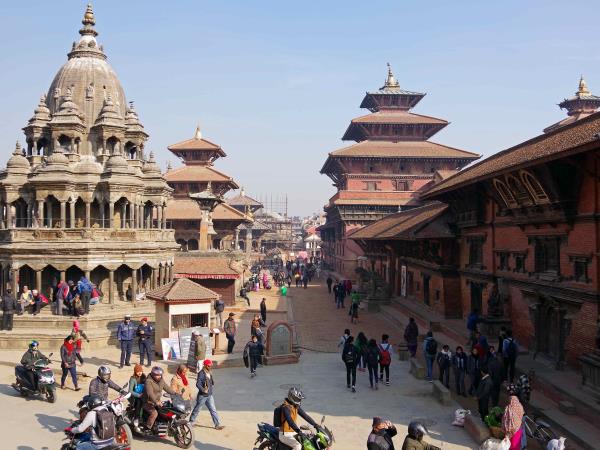
Nepal, Bhutan and Tibet Tour
From US $3600 21 days excluding flights
A cultural extravaganza in landlocked South Asian countries
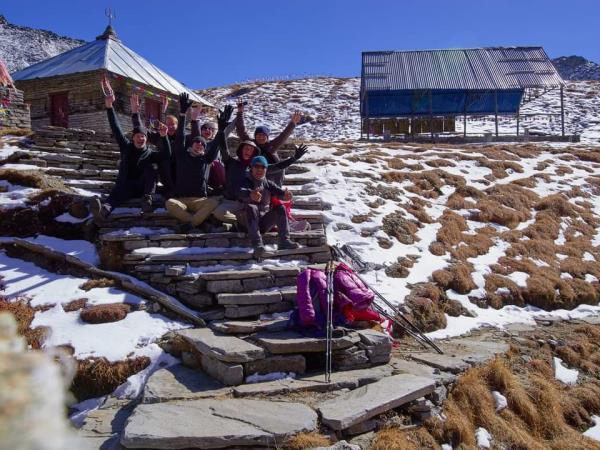
Khopra Danda trekking vacation in Nepal
From US $1230 - US $1750 9 days including domestic flights only
This is a moderate,off-the-beaten-track adventure
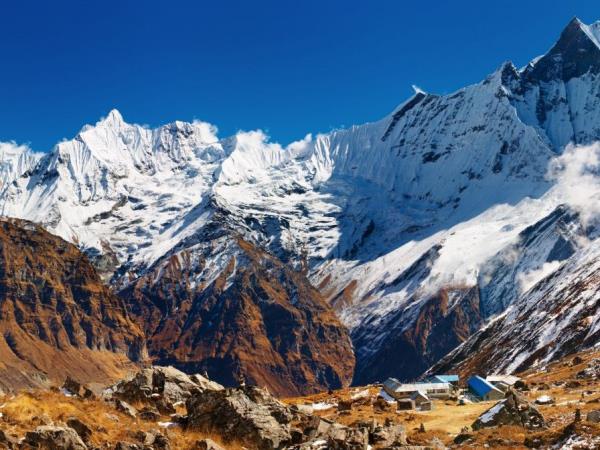
Annapurna Base Camp trekking vacations
From US $1135 - US $1550 8 days including domestic flights only
Most popular, legendary and classical trek in the world