Trans Kalahari camping safari, Botswana
Price
US $2910excluding flights
Duration
15 Days
Type
Small group
Group size
Up to 12 people
More info
Single supplement: US$181pp (If you are traveling on your own, Sunway will “room” you with another same gender client.
You do not pay extra when booking as a single person.
If however you request a single tent, then you'll pay the single supplement.)
You do not pay extra when booking as a single person.
If however you request a single tent, then you'll pay the single supplement.)

Description of Trans Kalahari camping safari, Botswana
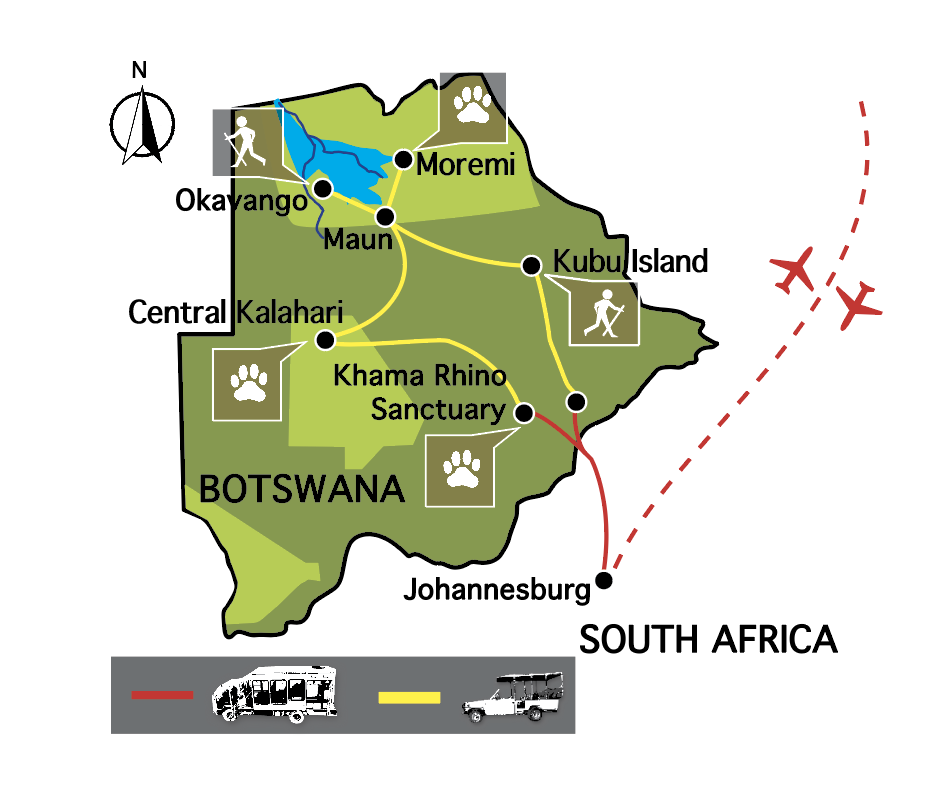
Map
Price information
US $2910excluding flights
Single supplement: US$181pp (If you are traveling on your own, Sunway will “room” you with another same gender client.
You do not pay extra when booking as a single person.
If however you request a single tent, then you'll pay the single supplement.)
You do not pay extra when booking as a single person.
If however you request a single tent, then you'll pay the single supplement.)
Check dates, prices & availability

Travel guides
If you’re looking to travel to southern Africa, our travel guide is the best place to start your journey.
Learn what we rate and what we don’t when it comes to African safaris, as well as plenty of useful advice.
Responsible Travel
As the pioneers of responsible tourism, we've screened this (and every) vacation so that you can travel knowing we've worked to maximise the benefits of your vacation to local people and places, and minimise any negative impacts.
Planet
Carbon Reduction Small Group Travel, we specialise in small group travel, with a maximum of 12 and a minimum of 4 clients per tour. Traveling in small groups not only creates a more personal and immersive safari experience, but it also reduces our impact on the environments and communities we visit. Whether we’re exploring national parks or engaging with local cultures, smaller groups help us leave a lighter footprint—both environmentally and socially. Lower Fuel Consumption Joining this safari significantly reduces your carbon footprint compared to self-drive travel. A typical 4WD rental uses around 12L/100km and usually carries two people—equal to 6L/100km per person. In contrast, our purpose-built safari trucks average 25L/100km, but with 9.5 clients on board, that’s just 2.6L/100km per person. Traveling together is not only more sustainable, but it also allows you to relax and enjoy the journey while our experienced guides take care of the logistics. Responsible Cooking Wherever possible, we cook using gas rather than wood or charcoal, helping to preserve limited firewood resources in remote areas. This approach supports local conservation efforts and helps reduce our environmental impact. Environment and Wildlife Waste Management We follow a strict leave-no-trace policy. All waste is collected and disposed of responsibly at appropriate facilities. In our workshop, we also use oil traps, recycle oil and containers, and use biodegradable cleaning products wherever possible. Drinking Water Plastic pollution is a major concern. On a 3-week safari, one client drinking from 1-litre plastic bottles would generate 100 bottles of waste. Multiply that by thousands of travelers, and the numbers are staggering. To combat this, all our vehicles carry a tank of clean, safe tap water, refilled regularly along the route. We encourage clients to bring a reusable bottle and refill it as needed—reducing our reliance on single-use plastic bottles. Water Conservation Water is a precious resource, especially in the arid regions we visit. We ask clients to be mindful of water usage—keeping showers short and reporting any leaks or waste. Every drop counts. Wildlife Ethics Our guides are trained to ensure that all wildlife encounters are conducted respectfully. We avoid loud noises and sudden movements, and maintain a safe and appropriate distance from animals at all times. We never feed wildlife, as doing so can lead to dependency and aggressive behaviour, often resulting in the animal being destroyed by authorities. Our goal is always to observe without disturbing, and to leave nature as we found it.People
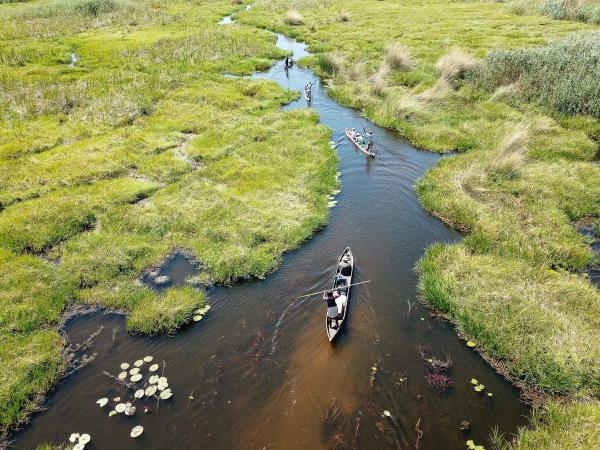
Supporting Local Economies Okavango SOS Trees Project – Botswana For generations, the communities of the Okavango Delta have carved traditional mokoros (dugout canoes) from the wood of the sausage tree (Kigelia africana). With the rise in tourism, demand for mokoros has surged, placing increasing pressure on these slow-growing trees. Each wooden mokoro lasts about five years—meaning trees are being felled faster than they can regenerate. To address this, the host company supports a conservation initiative promoting the use of fibreglass mokoros. These replicas are more durable (lasting up to ten years), more stable, and have a far lower environmental impact. A portion of your tour fee contributes to this project, and guests are welcome to make additional donations. Since the launch, we’ve helped replace over 30 traditional mokoros with fibreglass versions—helping to preserve the Okavango’s unique ecosystem while still supporting the poler communities. Please contact our office if you’d like to contribute or learn more. Wooden Curios – Buy Small, Think Big When visiting curio markets, we encourage clients to support local carvers by purchasing smaller wooden items rather than large pieces. This helps reduce deforestation around carving centers, while still supporting local livelihoods and craftsmanship. Tours for Underprivileged Youth – South Africa We run educational safaris into South Africa’s national parks for underprivileged teenagers (aged 14–18) from Johannesburg in partnership with the PEN Organisation—an NGO supporting neglected and vulnerable children and families. Many of these young people have never seen wildlife or visited protected areas. These tours introduce them to nature conservation, showcase careers in tourism, and help inspire a new generation of environmental stewards. We run as many of these trips as possible each year because we believe Africa’s future lies in its youth. Local Markets – Respectful Bartering Shopping at local markets is a great way to support communities and engage with local culture. We encourage clients to barter—gently and in good humour—but also remind them that what may seem like a small amount of money can make a big difference to a local vendor. Fair trade and mutual respect create a more authentic and meaningful exchange for everyone. Park Fees – Conservation Through Travel Your national park entry fees directly support conservation. These funds help maintain park infrastructure, fund anti-poaching patrols, and support local staff and their families with housing, education, and healthcare. By visiting these parks, you’re helping protect wildlife and wild places for future generations. Locally Owned Accommodation Wherever possible, we stay in locally owned lodges, B&Bs, and tented camps that actively support responsible tourism. This ensures our travel spend benefits rural communities directly—through employment, skills development, and pride in sustainable tourism. We avoid large hotel chains in favour of simpler, characterful accommodations that connect you with the local environment and people. Local Guides & Community Involvement Each safari includes two professional tour guides throughout, but we also work with local guides and community experts for specific experiences. Their insight adds richness to your journey, and your visit supports local livelihoods and cultural preservation. These guides offer knowledge that only comes from living in the area—and your interactions with them help build understanding and goodwill between travelers and host communities. We use local guides and community initiatives in: Botswana: Okavango Delta, Chobe NP, Ghanzi San Bushman walk South Africa: Mkuze village walk, Qunu Mandela site, Kosi Bay eSwatini: Hlane bush walk Lesotho: Pony trekking in Malealea Malawi: Lake Malawi boat excursion Mozambique: Dhow excursions Namibia: Brandberg (Tsiseb Conservancy), Spitzkoppe, Gariep River canoeing, Sossusvlei 4WD drivers Zambia: Lower Zambezi canoe trip, South Luangwa walks & drives, Victoria Falls activities Zimbabwe: Great Zimbabwe, Matobo NP, Hwange NP, Victoria FallsPopular similar vacations
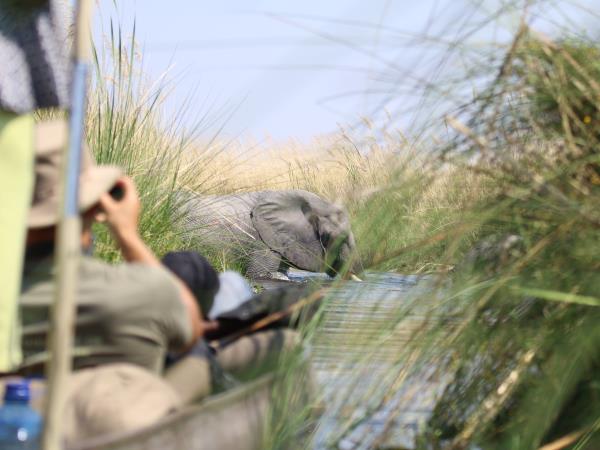
Namibia and Botswana camping safari
From US $3365 - US $3595 21 days excluding flights
Camping safari to Namib desert, Caprivi, Etosha & Okavango
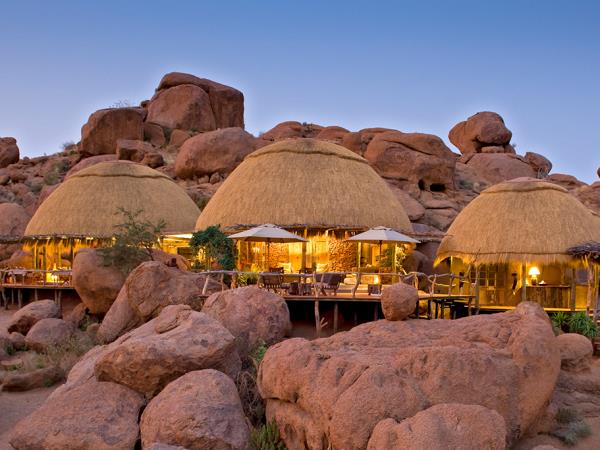
Namibia safari and vacation
From £4660 - £5290 11 days excluding flights
A fabulous small group guided trip in Nambia
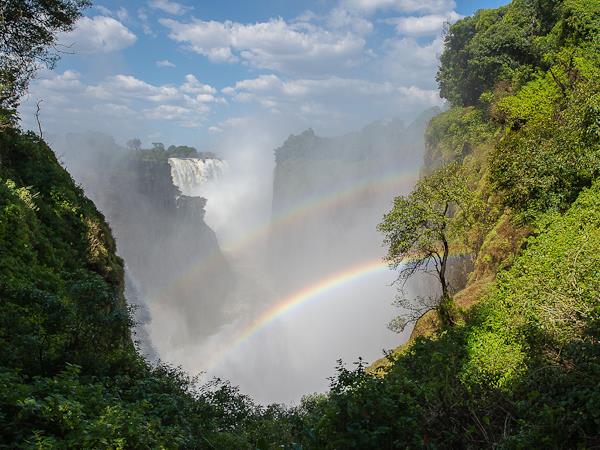
Namibia and Botswana safari vacation
From US $4485 - US $4835 21 days excluding flights
Namibia & Botswana lodge safari Caprivi Etosha Okavango