Cambodia private culture and adventure tour
Price
£4818 excluding flights
Duration
21 Days
Type
Tailor made

Description of Cambodia private culture and adventure tour
Price information
£4818 excluding flights
Departure information
This trip can be tailor made throughout the year to suit your requirements
Travel guides
We've packed so much into our Cambodia travel guide that it's bursting at the Siem Reaps. Read on to find out more.
Fancy some sea kayaking? Keen on Costa Rica? What about Wales? Choose your own adventure with our guide.
Vacation information
Dietary requirements:
We can cater for vegetarian and vegan diets.
Responsible Travel
As the pioneers of responsible tourism, we've screened this (and every) vacation so that you can travel knowing we've worked to maximise the benefits of your vacation to local people and places, and minimise any negative impacts.
Planet
CARBON REDUCTIONThe published daily itinerary uses private overland road transport between Phnom Penh, Kratie, Kampong Thom, Siem Reap, Battambang, Kampong Chhnang, Kampot and Sihanoukville. No domestic flight is described. This avoids using short internal air sectors, although the source price section contains a contradictory general reference to internal flights. That statement must be checked before publication.
The route has been designed as one continuous journey rather than a series of returns to Phnom Penh. Private vehicles still produce operational emissions and are not presented as low-carbon public transport. Local ferries and boats are used where water crossings form part of the route, including Koh Trong, Tonle Sap, the Mekong, Prek Tnot and Koh Rong.
Human-powered transport forms part of the vacation. The Phnom Penh architecture tour uses a cyclo, with additional sections on foot. Koh Trong can be explored by bicycle, depending on the arrangement selected. Walking is included on at least nine days, including Phnom Penh, Angkor, Battambang, Smiling Gecko, Kampot, La Plantation and the final market visits.
Soriyabori Resort’s villas are naturally ventilated and use fans rather than air-conditioning. This reduces electricity demand during the Koh Trong stay, though no property-level carbon measurement has been published. Shinta Mani Angkor reused a former hospitality-school dormitory and training building rather than replacing it with a completely new structure.
Amber Kampot separates general, recyclable and hazardous waste. It uses refillable water containers and ceramic dispensers for bathroom products, reducing the purchase of small plastic bottles. Surplus food is passed to local farmers rather than being sent directly to landfill.
The Royal Sands supplies arriving guests with refillable stainless-steel bottles and provides refill stations around the resort. It has also reduced single-use plastic bottles on its boats. The resort holds Travelife certification, covering environmental management alongside employment and community criteria.
Food at Farmhouse Resort uses produce from the Smiling Gecko farm wherever possible. Vegetarian dishes are available there on request. La Plantation works with organic growing systems and family farms using natural cultivation methods. Vegetarian and vegan requirements for the wider trip must be requested before travel, as daily availability has not been independently confirmed at every property and restaurant.
Travelers are advised to reduce unnecessary air-conditioning use, retain towels and linen when they do not require changing, refill bottles where safe drinking-water stations are supplied and pack lightly. No Scope 1, Scope 2 or Scope 3 calculation is available for the complete itinerary, and no carbon-offsetting claim is made.
ENVIRONMENT AND WILDLIFE
The Koh Trong visit includes a stop at a reforestation project. The published itinerary does not identify the organisation, the area planted or whether a separate conservation fee is paid, so no quantified restoration claim is made. The island tour also uses a community ferry and locally available bicycles or oxcarts, while visits to orchards and pomelo growers provide a reason to retain productive land.
Soriyabori was assembled using traditional Khmer timber buildings and the work of skilled craftspeople. Its stated purpose includes retaining architectural knowledge that is being lost as wooden houses are replaced by concrete construction. The naturally ventilated rooms avoid air-conditioning but still use electricity and other resources, so the property is not described as impact-free.
Maisons Wat Kor reports measures to reduce plastic use, save water and energy, and purchase local or organic ingredients. Its traditional wooden accommodation uses Khmer design and local craft skills. Amber Kampot’s measures include waste separation, refillable drinking-water containers and recycling education delivered at a nearby school.
The Royal Sands removes plastic waste from the beach and sends suitable material for recycling through the local municipality. Guests receive refillable bottles rather than disposable plastic bottles. Its environmental policy covers the island’s beach, vegetation and wildlife, although no independent biodiversity gain figure is available.
The visit to La Plantation supports a farm audited under organic standards. Its certified products are grown without synthetic pesticides or chemical fertilisers, and the company works with more than 70 family farms. These practices reduce chemical use within the participating farms, though the itinerary itself does not fund a separate habitat-restoration programme.
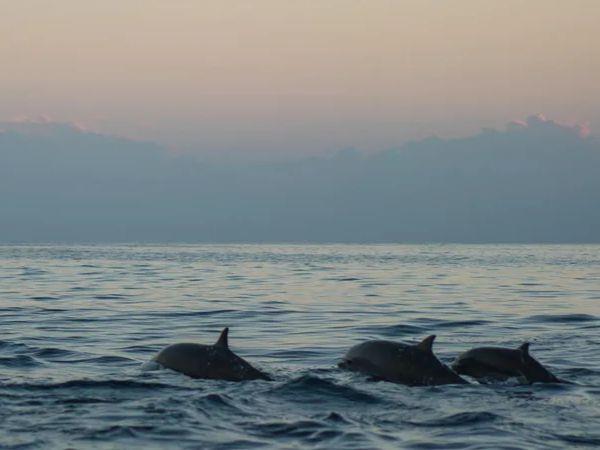
Two wildlife-viewing journeys are included. One looks for Mekong Irrawaddy dolphins near Kratie. The other is operated through the Prek Tnot community in a coastal estuary where Irrawaddy dolphins and other marine mammals have been recorded. Boats should approach slowly, avoid chasing or surrounding animals, keep noise low and allow the boat guide to determine viewing distance. Sightings are never guaranteed.
The Prek Tnot community-based tourism project was established with support from Save Cambodia’s Wildlife. Its tourism activities provide a local economic reason to retain mangroves and protect marine resources. The included boat journey purchases a community service, but no separate donation to a conservation organisation has been identified.
The trip uses local guides at cultural, archaeological and community sites. No formal wildlife-guide qualification has been supplied for the dolphin boat crews, so none is claimed. Travelers should follow local instructions and avoid feeding wildlife, buying wildlife products or removing plants, stones, coral or shells.
No trip-specific invasive-species procedure has been verified. Travelers should clean soil from footwear before moving between farms, islands and natural sites, and must not carry plants, seeds or untreated agricultural material between locations. No named opt-out conservation fee is currently included.
People
LOCAL ECONOMYAt least two named hotels have clearly verified Cambodian founders or ownership. Shinta Mani was founded by Cambodian businessman Sokoun Chanpreda. Maisons Wat Kor was created by Battambang residents Kim Nou and Huoth Sophea. Farmhouse Resort is integrated into the Smiling Gecko Cambodia campus and operates as an income-generating training business rather than an international chain property. Ownership information is not sufficiently clear for every remaining hotel to give a reliable overall percentage.
The itinerary pays local guides, drivers, boat operators and cyclo riders across the country. It also includes market visits, a Phnom Penh cooking class, Koh Trong community transport, stone carving at Preah Net Preah, a pottery session in Kampong Chhnang and a Battambang livelihoods tour. These are paid services delivered where the skills and products originate.
On Koh Trong, travelers use the local ferry and visit villages, farms and orchards. Bicycle hire can be arranged through the island’s community tourism office. Pomelo cultivation is an important local income source, and the island’s fruit has protected geographical status. Purchases should be made directly from growers when possible.
Pouk Silk Farm and Les Artisans d’Angkor provide opportunities to see Cambodian craft production. The visit does not justify claiming that every retail purchase goes directly to an individual maker, so travelers should ask how products are sourced before buying.
Maisons Wat Kor states that its team is entirely local. The hotel buys fruit and vegetables from nearby producers and stocks work made by Battambang artisans, community groups, local NGOs, young artists and monks. Its founders built the property around traditional Khmer houses and local craftsmanship.
Farmhouse Resort is Smiling Gecko’s largest training operation and an important source of income for the wider campus. The resort trains Cambodian chefs and hospitality staff. Produce is sourced from the campus farm where possible, and the property is managed by Cambodian hospitality professionals.
The La Plantation visit pays a family-run social agricultural business employing more than 150 permanent staff, with a further 100 to 150 seasonal workers during the pepper harvest. It also works with more than 70 family farms, purchasing their production under agreed fair-trade conditions.
The Prek Tnot boat trip is delivered through a community-based tourism operation. The Kampot and Kep programme also includes local markets, seafood sellers and small agricultural producers. The Koh Rong stay pays an island resort that supports Sok San Primary School, although no fixed portion of each room payment has been published as a school contribution.
EMPLOYMENT, INCLUSIVITY AND DIVERSITY
The vacation creates work for Cambodian guides, drivers, cooks, market traders, cyclo riders, boat crews and craftspeople. The clearest supplier-level employment figure comes from Maisons Wat Kor, which states that its hotel team is entirely local. Exact percentages have not been supplied for the complete ground operator or every accommodation, so no itinerary-wide percentage is claimed.
Shinta Mani Angkor began as a dormitory and training center for the Shinta Mani School of Hospitality. The associated foundation reports that more than 300 disadvantaged local students have received free hospitality education. The hotel group also states that it recruits from surrounding communities, including applicants without previous professional experience.
Farmhouse Resort provides hospitality training as part of the Smiling Gecko campus. Its Cambodian staff receive support from visiting mentors, while the wider project combines education with agriculture, carpentry and vocational development. Revenue from stays contributes to the operation of this project.
La Plantation provides permanent and seasonal work in a rural area so employees can remain close to their families. Its published benefits include meals, medical cover, a pension arrangement and training. Its associated education programme supports school facilities, supplies, teacher salaries and transport for pupils continuing into secondary education.
The Royal Sands supports Sok San Primary School. Its current programme has supplied a water-filtration system and aims to improve classrooms and school facilities. Donations are invited separately; the accommodation payment should not be described as a fixed donation unless the hotel confirms such an arrangement.
Amber Kampot has delivered waste and recycling education at a nearby school. The hotel also sends suitable food leftovers to local farmers. These are property-led initiatives rather than activities included in the guest itinerary.
No complete supplier wage audit or workplace diversity report has been supplied. It is therefore not possible to verify that every business pays above the Cambodian legal minimum or to state percentages for women, disabled employees or other groups that face barriers to employment.
This is a private tailor-made trip and can be booked by LGBTQ+ travelers, but a formal LGBTQ+ inclusion policy has not been verified across all suppliers. No stronger claim is made.
The standard itinerary is not fully suitable for travelers with limited mobility. It includes cyclo travel, bicycle or oxcart transport, ferry steps, small boats, speedboats, uneven temple surfaces, hill paths and the Bamboo Train. Some visits may be adapted, but each hotel, vehicle and activity would require written confirmation before booking.
No operator-funded Trip for a Trip scheme or equivalent day-trip programme has been verified for this vacation.
Popular similar vacations
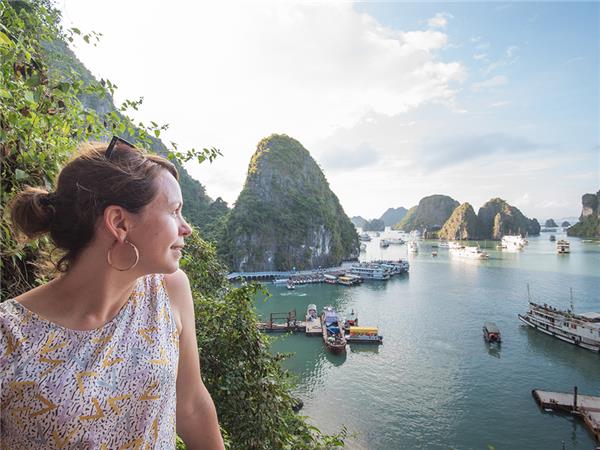
Cambodia and Vietnam vacation
From US $2765 - US $3225 18 days excluding flights
A magnificent journey of discovery
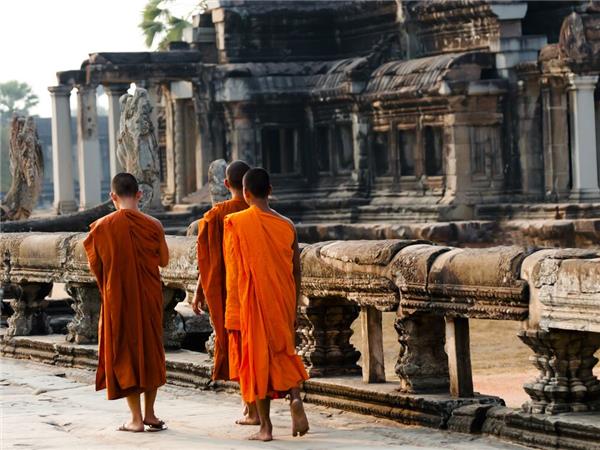
Cambodia and Vietnam small group tour
From US $3307 - US $4430 13 days excluding flights
Explore the exotic landscapes food & culture of Indochina
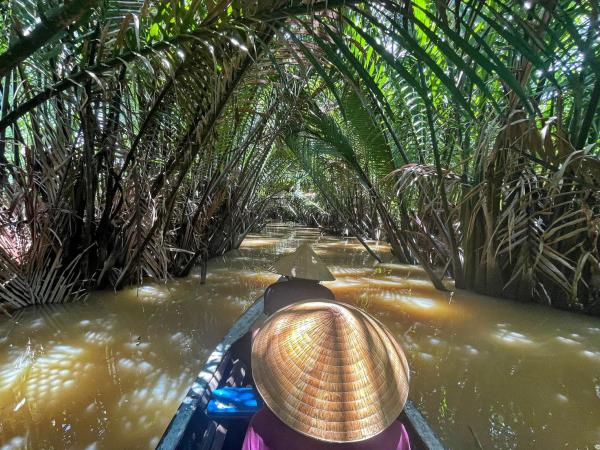
Indochina overland tour, Saigon to Angkor
From US $2450 - US $2515 15 days excluding flights
Vietnam and Cambodia: the Mekong Delta to Angkor Wat