EuroVelo cycling routes in Europe

We’re proud to work on a project like this. It really inspires you to cycle more and explore more.
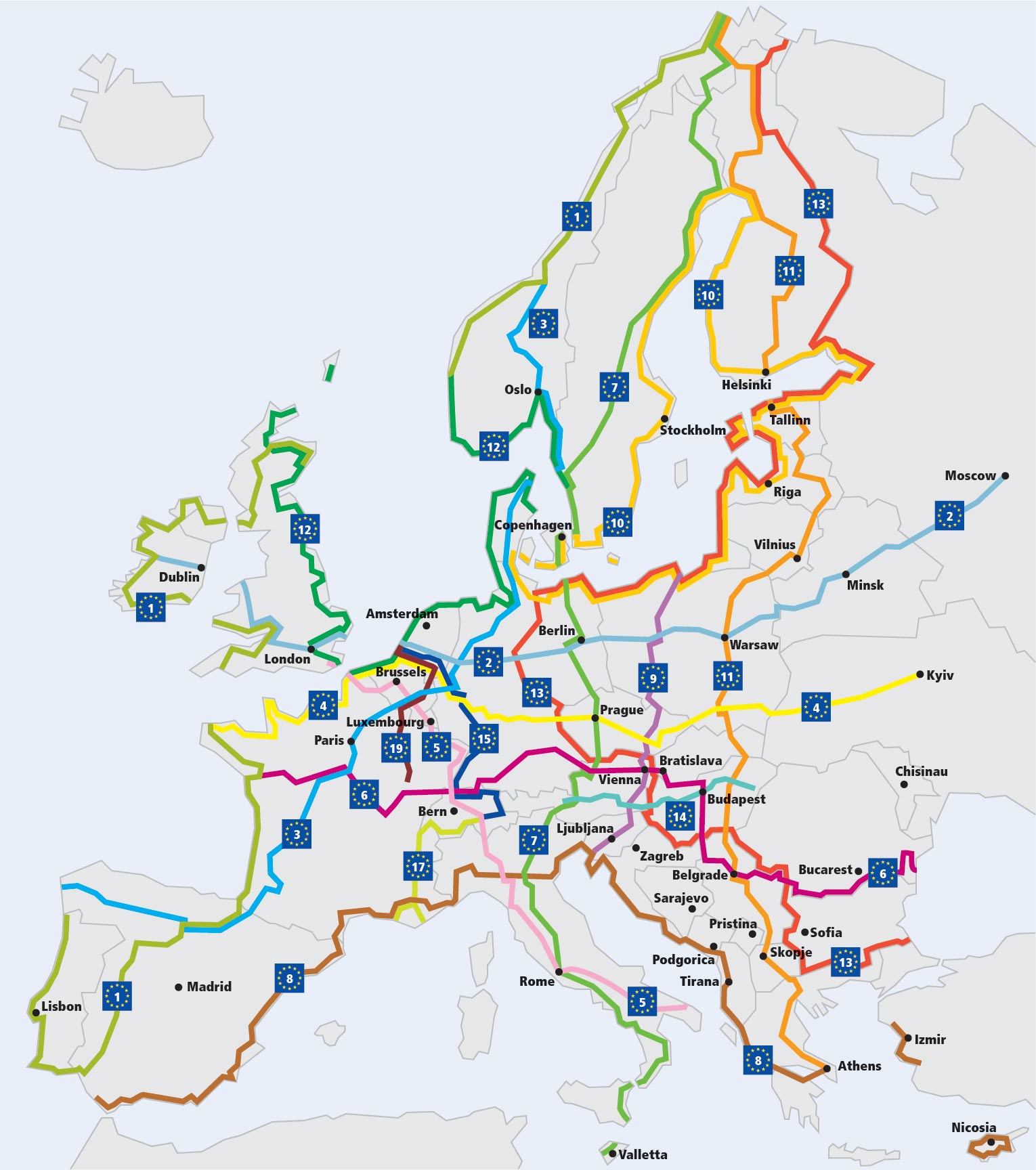
What has Malta got to do with Malmo or Mantua? What connects the Norwegian island of Magerøya with Macedonia? EuroVelo, the European cycle route network, links these vastly different places, and many more, via 17 routes and 90,000km of trails.

EuroVelo is a European Cyclists’ Federation initiative. Its aim is to connect existing cycle routes in individual countries into longer trans-national routes. A not-for-profit project, funds go on improving, then maintaining and promoting the trails. There’s another goal, too – to get Europeans cycling more.

It appears that I’ve been cycling on EuroVelo routes without even realising it. One passes the top of my road in Bristol, England; another passes just one street over.

It’s remarkable to think that if I were to follow these paths from my doorstep I could end up in Portugal (by following EuroVelo 2) or on a road leading towards Moscow (by following EuroVelo 1).

There’s a chance that you, too, have already cycled on a EuroVelo route without realising.

The backbone of Europe

“EuroVelo is designed to be the backbone of all other cycle networks,” says Jessica Casagrande, EuroVelo’s communications and projects coordinator. EuroVelo takes famous routes, such as the popular paths along the Loire Valley in France and the River Rhine, and connects them to other trails to make long and inspirational routes across Europe. Teams then work at a regional level to improve the routes, taking them off road where possible, and creating consistent signing and route maps.

“It’s so nice to connect people and places,” says Jessica. “I think we’re proud to work on a project like this. It’s very inspirational… it’s both very European and very personal and really inspires you to cycle more and explore more.”

It’s hard to see a downside to EuroVelo’s plans to unify Europe – and Europeans – through amazing trails and a love of cycling.

What routes are there in the EuroVelo network?

How many EuroVelos are there?

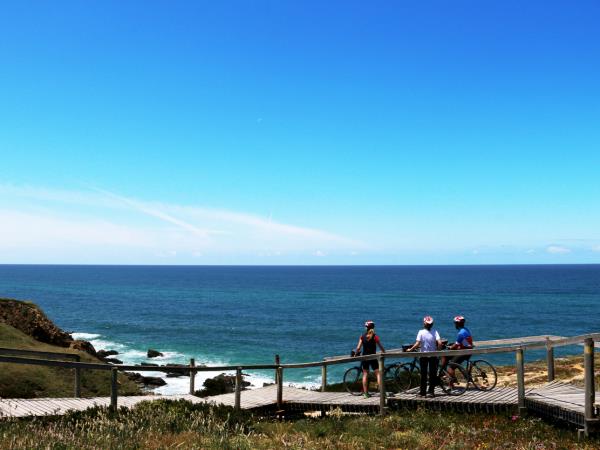
As of 2023, there are 17 trails. The longest is very long indeed: the 11,000km-long Atlantic Route (EuroVelo 1), which connects Norway with Portugal. The most popular is the 4,700km-long EuroVelo 6, which follows the gentle, flat course of the Loire, Danube and Rhine rivers.

Odd-numbered EuroVelo trails run north-south, whilst even-numbered trails run east-west.

The routes are designed to be enjoyed by anyone, and most people are likely to cycle a portion of a route as part of a wider trip.

“I have cycled a few sections of EuroVelo 7,” says Agathe Daudibon, manager at EuroVelo. “We went from Mantua to Trento in Italy, where we met many cyclists on the road and there was very good signage, and beautiful river and lake landscapes. And between Prague and Dresden, where EuroVelo 7 follows the Elbe Cycle Route and its gorge.”

EuroVelo focuses on connecting beautiful regional routes like these. The Elbe Cycle Route is one of Germany’s most popular – and the short section which Agathe describes between Prague and Dresden is 220km. Agathe’s route from Mantua to Trento follows the River Mincio for some of its way, on the flat and pretty Peschiera-Mantova cycle path.

A history of the EuroVelo routes

EuroVelo started as an idea for 12 cross-Europe routes, conceived decades ago. Many discussions later and the first route ‘opened’ in 2011: the North Sea Cycle Route (EuroVelo 12). More routes followed until, in 2019, the Meuse Cycle Route (EuroVelo 19) joined the network as the 16th route. EuroVelo 14 – a jaunt through Austria and Hungary that helps link other EuroVelo routes together – followed in 2020, bringing the total to 17.

These paths celebrate the massive diversity of the continent. There is no one route that represents Europe. The 17 routes go across 38 countries, and there is room for more. At country and regional levels, there are National EuroVelo Coordination Centres and Coordinators (NECC/Cs) working with partners – like Sustrans in the UK – to manage the routes. EuroVelo’s focus now is on improving the 17 routes, until they are all signed and as many as possible are on cycle paths.

Which EuroVelo routes are complete?

Of the routes mapped, 60 percent are complete. Where trails aren’t complete, there are still roads and ways to get from A to B. EuroVelo maps show how established a trail is; when it’s theoretical, you may have to do your own navigation and road cycling.

There are plenty of established trails, though, for cyclists who prefer route-following to route-finding. The best of these is the Rhine Cycle Route (EuroVelo 15), which is fully certified. The quality of the routes is improving all the time; more and more trails are moving onto designated cycle routes. This is dependent on the pre-existing infrastructure in each country. France is well set up; Greece less so.

“France is working a lot on cycling tourism, with the aim of being the first cycling tourism destination in Europe,” says Jessica. It currently hosts 10 EuroVelo routes and its portion of the Atlantic Route is marketed there as ‘La Vélodyssée’. France is far ahead of some other places in developing its infrastructure, and its rural towns have already seen the benefits.

“This is actually a very good example of how you can work on this kind of local tourism and develop very rural destinations,” says Jessica.

One of the most developed routes is the North Sea Cycle Route (EuroVelo 12). One of the least, as of 2021, is EuroVelo 14 – but this is changing fast. Increasingly, the routes are signed.

What do EuroVelo signs look like?

A small blue square with a wreath of stars around a number is the sign that you are on a EuroVelo route. Signing the routes is an ongoing process; many signs currently appear in Austria, France, Hungary, Slovakia, Switzerland and the UK, but not on every part of every route.

Contact Us

Responsible Travel, Travel Team

Call us for a chat about our vacations. We are happy to discuss your vacation and help in any way we can. No bots, queues or awful hold music.

Responsible Travel, Travel Team

How to get involved

I can’t cycle 11,000 km!

Looking at these trails on a map, your initial reaction might be horror – they’re so long! But of course, the vast majority of people who use a EuroVelo network are not cycling its entire length; they are commuters, day-trippers and vacationmakers.

Very few people would drive the length of a motorway, just because it was there. Most people use the EuroVelo network to get from A to B. “I cycle on EuroVelo 5 to get to work,” says Jessica.

What EuroVelo route should I do?

Given that most travelers aren’t planning to do the entire route, there are fantastic highlights on every route in the EuroVelo universe.

Many people eye with interest the Iron Curtain Trail (EuroVelo 13), a 9,000km border cycle that traces where the Iron Curtain fell across the continent. It’s on Jessica’s to-do list, “I have a background in Eastern European studies– contemporary European history is very meaningful to me.” But, weaving as it does across and along borders, the route has so far proved hard to develop beyond the planning stages.

Some routes are historic: the Via Romea Francigena (EuroVelo 5) follows a 10th-century pilgrimage route from London to Rome. EuroVelo 3 follows the French Way of the Camino de Santiago. EuroVelo 9, from the Baltic to the Adriatic, follows the Amber Road, which used to transport the gemstones from the Baltic.

Some routes are thematic. The Sun Route (EuroVelo 7) begins in Norway and Finland – the lands of the midnight sun – and takes you to the even brighter sunshine of Italy and Malta.

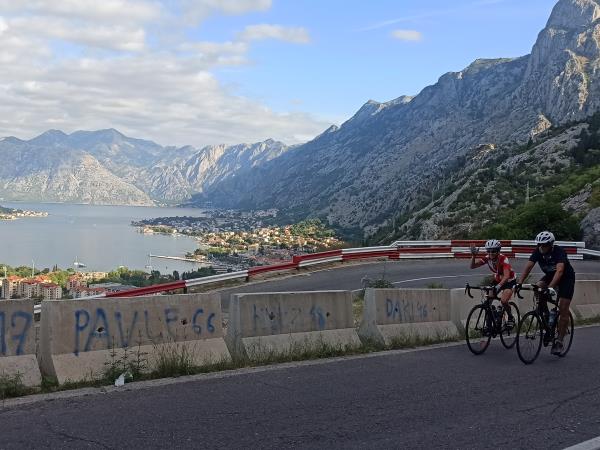
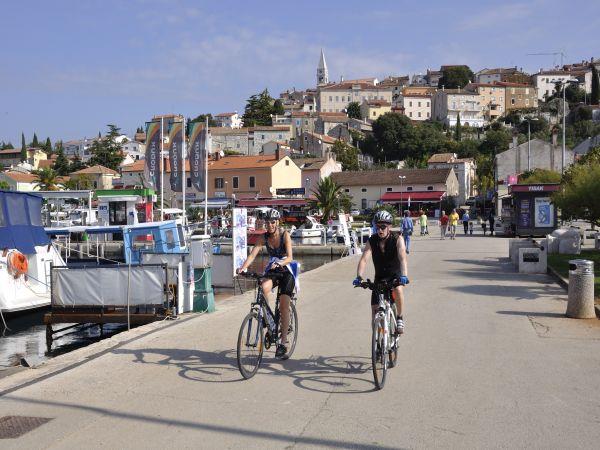
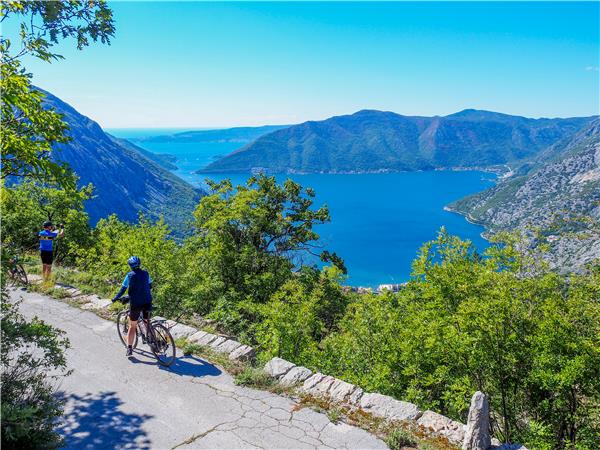
The Route of Health and Friendship, on the disused Parenzana railway in Slovenia, takes the prize for the best name. It forms part of the Mediterranean Route (EuroVelo 8), which also contains a cycle up the R-25 serpentine road leading out of Montenegro’s Bay of Kotor, and the pretty Trieste to Pula cycle route.

Some journeys cannot help but be political: the Capitals Route (EuroVelo 2) goes from Dublin to London, Berlin and Warsaw, finishing in Moscow’s Red Square. The Central Europe Route (EuroVelo 4) starts in France, dips into Belgium, the Netherlands, Germany, Czechia and Poland, passing Pochayiv Monastery in Ukraine before finishing in Kyiv.

Cycling is like telling a story, but the name of the route is only half of the tale. For many, the story of their journey is very personal. Witness the thousands who take to the saddle to cycle for charity, in memory of others, or after life-changing news.

The rise of European cycling

Cycle tourism is on the up. More of us than ever are interested in traveling sustainably or spent the pandemic years exploring our local areas on two wheels. There’s a growing interest in e-bikes, which make cycling more accessible to a broader spectrum of cyclists.

EuroVelo is involved in Europe’s More Cycling Tourism project – which extols the benefits of a peloton of pedallers, for environment, for our health, and for society.

Cyclists make fantastic tourists, spending more money and more time in a destination than the average visitor. They also reach areas that are off the usual tourist trail. It means that cycle trails are a key part of rural development, bringing life, business and customers to regions that have been bypassed by other modes of transport. The cycling cafés cropping up in villages are testament to this – and, of course, they can be used by community members, too.

Practicalities

How to download Eurovelo routes

The EuroVelo website serves as good inspiration, showing overviews of the routes and their highlights, including the heritage sites, delicacies and natural wonders you’ll see on your way.

You can then download the route or individual stages as a GPX file, which contains the route’s GPS data. Alternatively, you can follow printed maps, guides and signs. The EuroVelo site links you to any useful guides that are written about portions of the route. EuroVelo has also launched a route planner tool.

A 20,000-member strong Facebook EuroVelo discussion group gives advice on everything from the best apps for booking trains to the best bike for the trip.

Ways to experience the EuroVelo trails

Cycle a whole route: It takes around two weeks to cycle the popular Rhine River Route (EuroVelo 15). Some will take far longer.

Cycle in a circle: The Baltic Sea Cycle Route (EuroVelo 10) and the North Sea Cycle Route (EuroVelo 12) are both circular.

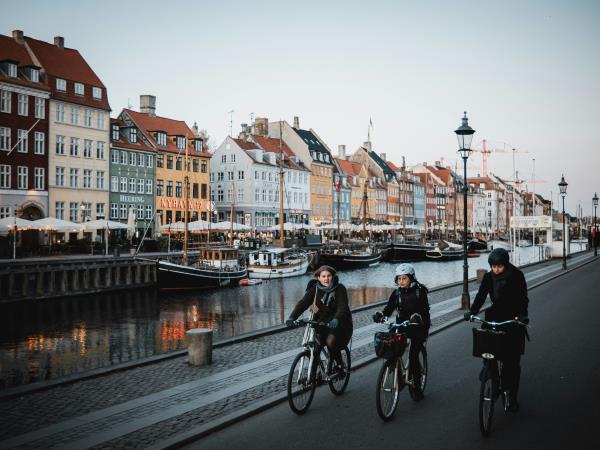
Cycle a section: Popular sections of EuroVelo 7 include a jaunt along Lake Garda, where a cycle path along a cliff edge gives the impression that you’re cycling over the water itself. The Berlin-Copenhagen portion goes past Kronborg castle, thought to be inspiration for Shakespeare’s Hamlet. The most popular route, EuroVelo 6, has wonderful sections along France’s Loire Valley and the Danube.

Go for a day out: Wherever you are in Europe you may well have a route on your doorstep. Vacations that involve a bit of cycling may join a EuroVelo trail for a stint – just look for that halo of white stars on blue when you’re studying the road signs.

Walk: Many cycle trails are mixed use, meaning you can follow portions of them on foot.

Tips for cycling on EuroVelo routes

Look for blue signs with a semi-circle of stars – these mark a EuroVelo route. Direction is important. Aim for the direction with the least headwind, travel with the prevailing wind for the region, and look for routes that follow rivers downstream – and downhill! More and more cyclists are choosing to cycle in spring and autumn to avoid summer heatwaves. However, you should start the Sun Route (EuroVelo 7) in summer so you can enjoy the midnight sun in Norway, which gives the route its name. Trains and other public transport can help with your route, though booking different trains in different countries can be challenging. France allows bikes for free on its TER trains; Germany charges a small fee. Route 14, which crosses Austria and Hungary, is particularly well-served by the rail network in both countries. Across the network there are a number of interesting ferry crossings, too – from countless small river ferries, where it’s just you and your bike on board, to ships that run from Sicily to Malta, and Gedser in Denmark, to Rostock, Germany.
Written by Eloise Barker
Photo credits: [Page banner: © EuroVelo] [Intro: © EuroVelo / Marc Gash] [Which EuroVelo routes are complete?: © EuroVelo] [What EuroVelo route should I do?: © EuroVelo] [Ways to experience the EuroVelo trails: © EuroVelo / Cykelframjandet]