Traditionally, an anchor tattoo meant that you’d crossed the Atlantic Ocean. Today, the feat remains one of the biggest you can undertake by boat. We find out how you can take part – new ink optional.
“Look, sailing is all about emotion. It’s a ridiculous way to travel. If you want to get across the Atlantic the best way is to fly. If you want the romance of being on a boat, you go on a cruise. But to be in a plastic bucket, going at eight miles an hour, often in slightly the wrong direction – why would people do that, if it wasn’t for the emotion of it all?”
Bruce Jacobs is managing director of Rubicon 3, who run sailing expeditions across the Atlantic.
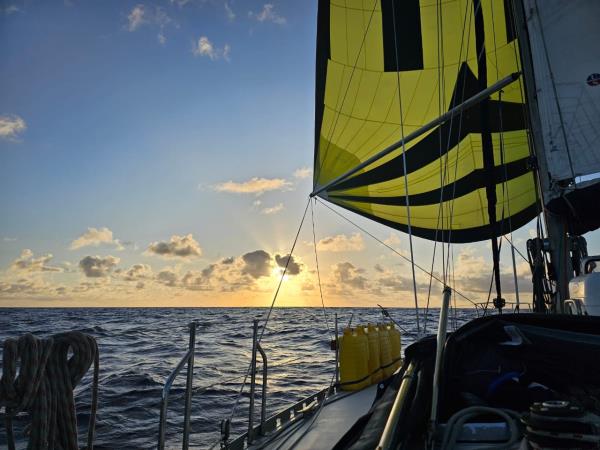
Crossing this ocean is no mean feat. Whilst the record for an Atlantic crossing by a sailing vessel is just three days, for most boats it's normally a good three weeks of sailing, much of it without land in sight. In fact, the first sight of land after deep ocean sailing can feel miraculous.
It's a route that is marked by miles and miles of featureless ocean and lots of long watches on deck. You'll celebrate with an Atlantic crossing party at the half-way point. For want of any physical markers, you might simply have to log the longitude, and dress up for the occasion.
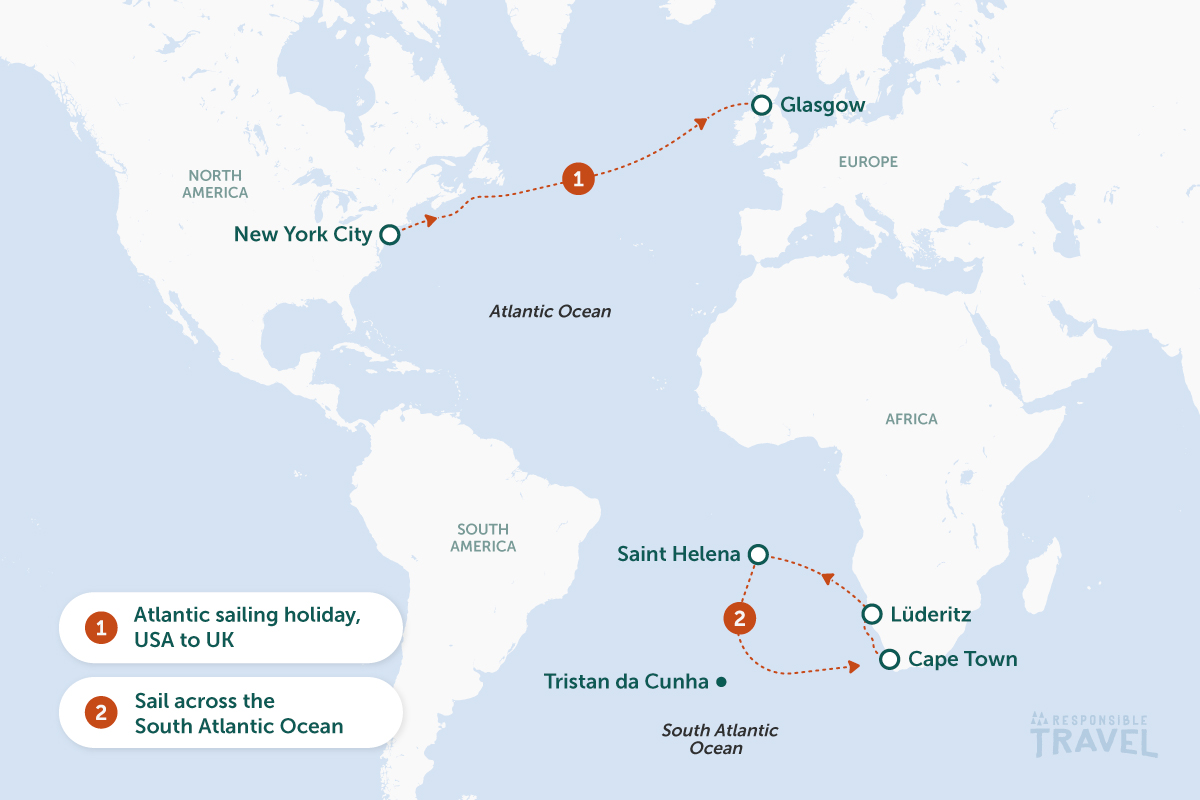
The classic route traditionally taken across by races and by leisure sailors is from the Canary Islands to the Caribbean. There's also a northern route to cross west to east, taking in Canada en route. You can also
sail in the south Atlantic from Cape Town to St Helena.
Sailing across the Atlantic is a true expedition, full of unknowns and adventure. How long it takes, and the route you follow is completely weather-dependent. It’s a month at sea – sometimes more. Given the enormity of the task at hand, it’s hard not to become philosophical when talking about the trip.
“Crossing the Atlantic is the most extreme and in-depth manifestations of that process of working with nature,” says Bruce. “You are crossing one of the world’s five great oceans using just the wind and your skills and your energy. The value is in that – looking at the horizon when you’re a thousand miles from the closest bit of land, seeing sunrises and sunsets and the millions of stars at night.
“And you’re totally in the hands of nature. In the mountains you can get to shelter. In the ocean you are there… you have to be at one with it – there’s nowhere else to be… That’s an emotional and a deep experience for people.”
True adventures don’t just try the body, they challenge the spirit – as they should.