Kalimantan travel guide

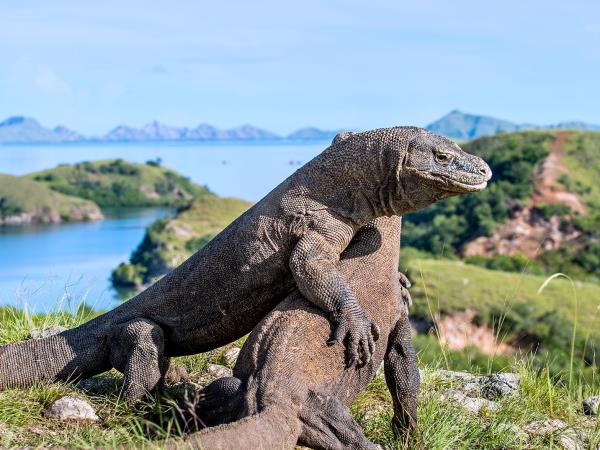
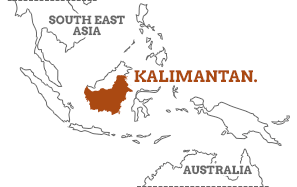
If you were to slice the top third off Borneo, removing Malaysian Sabah and Sarawak, and tiny Brunei, you would be left with Indonesian Kalimantan. Far less visited than Malaysian Borneo, wilder and with less tourism infrastructure, Kalimantan is slowly developing a reputation that draws adventurous travelers like moths to a flame.
Sparsely populated, but incredibly biodiverse, the rainforest of Kalimantan’s interior is one of the oldest on the planet – twice the age of the Amazon.
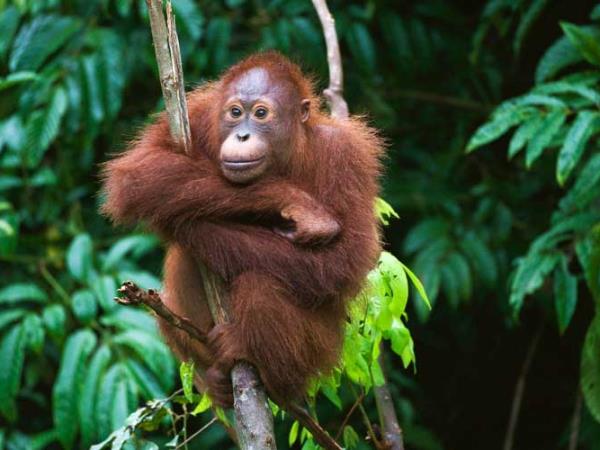
Its natural resources have been liberally plundered, threatening the survival of many species but most particularly orangutans, as well as traditional tribal ways of life. Yet there remains much here for the cultural traveler as well as the trekker, or the conservation-minded. There are more than 70 living languages spoken on Kalimantan, but of course ‘wow’ is universal…which is lucky, as you’ll be saying it an awful lot.

Read our Kalimantan travel guide for more details.
Kalimantan is…

where you go when ‘off the beaten track’ starts getting too busy.

Kalimantan isn’t…

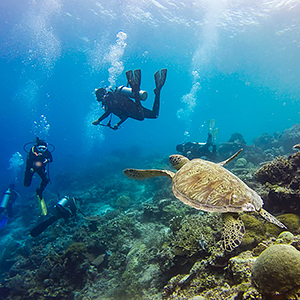
solely about orangutans and rainforest – it’s also an exceptional diving destination brimming with tribal culture.

Things to do in Kalimantan…

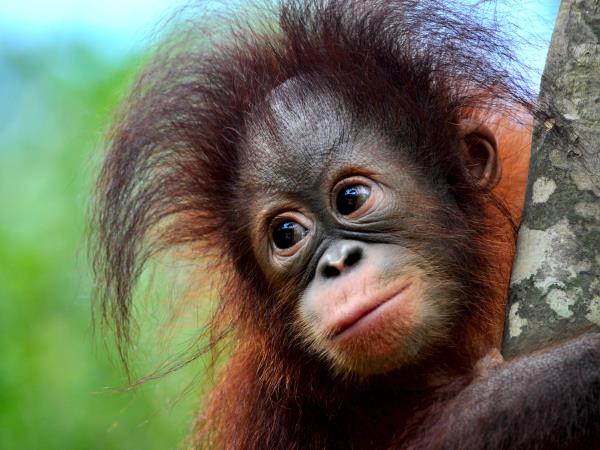
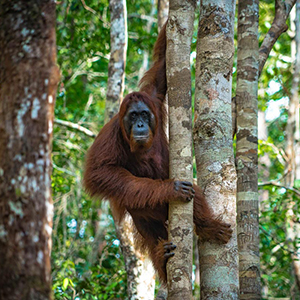
Kalimantan, specifically the sanctuary at Samboja Lestari, is the perfect place to get hands-on with conservation. There are ‘forest schools’ here, set up to teach orangutans the skills they need to survive before they are returned to the wild, and manmade islands where those too sick or injured to ever return can live out their lives in peace. Volunteer conservation vacations see you involved with every aspect of the center’s work: enrichment tasks such as teaching the apes to hunt for food by hiding it; reforestation; construction and maintenance work. Stays at the eco-lodge in Samboja Lestari, during which you can also see rescued sun bears, can be combined with diving in the Derawan Archipelago off the east coast of Kalimantan. The islands are surrounded by colourful coral reefs and nutrient-rich waters that support an immense diversity of marine life, from sea turtles to rays and sharks. You’ll travel between island resorts, with multiple day trips to what are widely regarded as some of the best diving sites in Borneo – if not the continent. You can also easily combine Kalimantan with other islands such as Java, Bali or Komodo. Indonesia highlights tours will allow you to appreciate the differing wildlife, culture and scenery of each island, and leave plenty of time to see some of the key locations on each. After all, if you’re traveling a long way to reach Kalimantan, then it makes financial sense to see and do as much as possible while you’re in the region. These tend to be tailormade trips too, allowing you greater freedom to shape the itineraries according to your interests.

Things not  to do in Kalimantan…

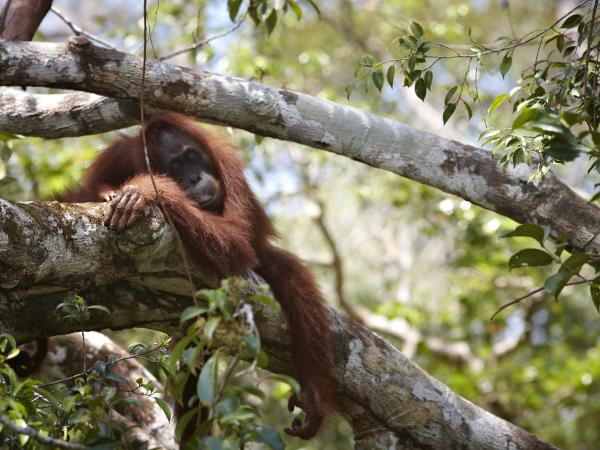
It would be a mistake to underestimate the weather when planning a trip to Kalimantan. The climate here is very warm, rarely dipping below the high 20°Cs, and in the forested interior you can expect to encounter rain throughout the year, though mostly between November and January. The dry season is typically the best time to visit if you want to trek in the rainforest, as it can get quite swampy underfoot when wet, and you’re likely to pick up the occasional leech as well. Maybe pack a small packet of salt! Relatively under-explored when compared to Sabah and Sarawak, which make up the rest of Borneo, Kalimantan’s big appeal to the visitor is of course its wildlife, particularly the orangutans that are found in the national parks. But don’t neglect the cultural aspect of Kalimantan – traditional tribal ways of life are just as fascinating and equally under threat by the deforestation that plagues Borneo. You can stay in longhouses with Dayak families, learn how to tap a rubber tree and which forest plants will heal you or poison you, and watch as rattan vines are skillfully woven into handicrafts. When you get home, don’t forget to tell your friends. Kalimantan is little-known and while we hope that as tourism here grows it will be sustainably managed, the plain fact is that it has enormous value when it comes to conservation. Such is the rate of deforestation on Kalimantan for palm oil production – much of it illegal – that tourism is vital in persuading government officials and local communities that trees are worth something standing upright.

Contact Us

Responsible Travel, Travel Team

Call us for a chat about our vacations. We are happy to discuss your vacation and help in any way we can. No bots, queues or awful hold music.

Responsible Travel, Travel Team

What does a Kalimantan
vacation entail?

Kalimantan vacations can be either tailormade tours, which will span other islands as well such as Bali and Java, or small group trips with fixed itineraries, and usually focusing entirely on Kalimantan. Trip lengths vary between one and two weeks, but if you’re volunteering at an orangutan sanctuary you can be there for up to a month to ensure both you and the project get the maximum benefit of your time.

In most respects Kalimantan is far less developed than Malaysian Borneo, so it has a generally poor road network. For that reason you will likely either focus on one specific area, such as Tanjung Puting National Park in Central Kalimantan, or Samboja Lestari in the east, or get around by internal flights. Kalimantan is a destination for the adventurous traveler: you can expect basic (though comfortable and welcoming) accommodation, and you’ll hear very little English spoken outside the cities. Guides are pretty much essential, and they will normally be recruited from local communities.
Trekking in Kalimantan is usually combined with boat cruising, as many communities are found along riverbanks. Longer treks can be hard-going, especially during the rainy season, but they’re not essential if you want to see orangutans, as there are several more accessible locations in both Tanjung Puting National Park and Samboja Lestari.

Vacations in Kalimantan may focus on the wildlife, the culture, a mix of both, or diving in the idyllic Derawan Archipelago. If you want to make a seriously positive difference to your trip, you can volunteer at an orangutan sanctuary in Samboja Lestari. Expect it to be full-on, ‘hands dirty’ work, with long days – but immensely rewarding. You won’t need any particular skills (let the tour operator know beforehand, though, if you do have any), but enthusiasm, a passion for conservation and a willingness to get stuck in are essential.

Responsible tourism

The orangutan and sun bear sanctuary at Samboja Lestari serves a vital role in both rehabilitating orangutans ready for a return to the wild, and providing a safe environment for those that can never go back. As with other such sanctuaries and research centers around Kalimantan, day visits and overnight stays, as well as orangutan volunteer vacations, provide vital funds to support their work. National park entry fees are also often used to fund reforestation that creates habitats for endangered species.

There are numerous opportunities to engage with indigenous tribal communities in Kalimantan, such as by staying in a Dayak longhouse, village visits and simply traveling with local guides. Not only does this ensure that money from tourism reaches often impoverished economies, but it also helps to keep traditional customs alive. But it’s a two-way street, and by traveling responsibly you’re also likely to get a more honest, insightful and enjoyable vacation to Kalimantan.

Remember that you are visiting people in their homes, so it’s respectful to ask permission whenever you want to snap a photo, especially of women or children. In practically every case you can expect a smile and a nod, but to avoid causing offence it’s best to either learn a few simple phrases or ask your guide to interpret.
Written by Rob Perkins
Photo credits: [Page banner: attiarndt] [Is/Isn't: pxhere] [Things to do in Kalimantan: pxhere] [What does a Kalimantan vacation entail?: Marc Veraart]