LGBTQ+ vacations in Costa Rica
In the field of responsible tourism, Costa Rica has long been viewed as something of a pioneer. It was one of the first countries to fully embrace the concept of ecotourism, and actions such as living almost entirely off renewable energy and abolishing its military (whose funds were then diverted into renewable energy, amongst other initiatives) have cemented its place as a forward-thinking, conscientious nation.
Broadly speaking, this pioneering attitude has led the way for LGBTQ+ rights in Latin America. Costa Rica is one of the most welcoming places in the region for LGBTQ+ travelers, despite the prevalence of conservative religious attitudes and macho culture. We hope that Costa Rica continues to push forward with equal rights, as it has done with ecotourism, and that other neighbouring countries decide to follow its leadership once again, this time in recognition of the LGBTQ+ community.
Broadly speaking, this pioneering attitude has led the way for LGBTQ+ rights in Latin America. Costa Rica is one of the most welcoming places in the region for LGBTQ+ travelers, despite the prevalence of conservative religious attitudes and macho culture. We hope that Costa Rica continues to push forward with equal rights, as it has done with ecotourism, and that other neighbouring countries decide to follow its leadership once again, this time in recognition of the LGBTQ+ community.
History of LGBTQ+ rights in Costa Rica
As with many places in the world, Central America did not discriminate against LGBTQ+ people until the Europeans arrived. Under Spanish colonial rule – with its conservative Roman Catholic morality – sex between men was declared a sin, and outlawed. Same-sex relationships were decriminalised in Costa Rica as early as the 1880s, although they were still seen as ‘sinful’ by many.
In 1971, Costa Rica established the universal age of consent, regardless of sexual orientation, although the constant battle between conservative religious beliefs and progressive views meant that the penal code referred to same-sex relationships in derogatory terms until 2002, when the controversial terminology was repealed.
In 1971, Costa Rica established the universal age of consent, regardless of sexual orientation, although the constant battle between conservative religious beliefs and progressive views meant that the penal code referred to same-sex relationships in derogatory terms until 2002, when the controversial terminology was repealed.
A law was passed in 2013 recognising a form of domestic partnership, making Costa Rica the first country in Central America to legally recognise any form of same-sex relationship. After numerous attempts to legalise civil unions and despite blockades by hard-line religious groups, the Costa Rican Constitutional Court finally ruled in favour of marriage equality in 2020, prompted by the Inter-American Court of Human Rights. It also legalised adoption rights for couples and strengthened anti-discrimination laws.
The Inter-American Court of Human Rights ruling instructed that member countries, including Costa Rica, must give transgender people equal rights. Identity documents in Costa Rica no longer show the gender registered at birth, smoothing the way to self-identification.
The Inter-American Court of Human Rights ruling instructed that member countries, including Costa Rica, must give transgender people equal rights. Identity documents in Costa Rica no longer show the gender registered at birth, smoothing the way to self-identification.
“We are recognizing that there are some rights enjoyed by the majority of the population, while others don't enjoy those rights,” said President Carlos Alvarado Quesada. “What these measures are doing is implementing the equality that was missing.”
There is still progress to be made, with conversion therapy still legal, the laws around non-binary genders ambiguous, and some conservative and religious groups and parties actively undermining rights gained. But – as a country that prioritises social inclusion and progressive rule of law over populism – there is hope that conservative attitudes will change and that full and equal rights are in Costa Rica’s future.
There is still progress to be made, with conversion therapy still legal, the laws around non-binary genders ambiguous, and some conservative and religious groups and parties actively undermining rights gained. But – as a country that prioritises social inclusion and progressive rule of law over populism – there is hope that conservative attitudes will change and that full and equal rights are in Costa Rica’s future.
Attitudes towards the LGBTQ+ community
In many respects, Costa Rica is an open-minded and tolerant society. Catholicism does still hold sway here, and as with many countries, the more religious and conservative sectors of society will object to the LGBTQ+ community – although travelers are unlikely to face harassment.
‘Macho’ culture also exists in Costa Rica, though this is slightly more watered down than elsewhere in the region. In general, although there are still people for whom LGBTQ+ issues are taboo, this is more likely to be expressed privately. Cosmopolitan areas such as the capital, San José, and LGBTQ+ hotspots such as Manuel Antonio, are particularly liberal.
There are signs, too, that Costa Rica wants to be seen as welcoming to the LGBTQ+ community. In 2014, on the International Day Against Homophobia, Transphobia and Biphobia, the rainbow flag was flown beside the Costa Rican flag over the Casa Presidencial. This was the first time this had happened, making it a truly symbolic act which offered hope and solidarity to LGBTQ+ people across the country.
‘Macho’ culture also exists in Costa Rica, though this is slightly more watered down than elsewhere in the region. In general, although there are still people for whom LGBTQ+ issues are taboo, this is more likely to be expressed privately. Cosmopolitan areas such as the capital, San José, and LGBTQ+ hotspots such as Manuel Antonio, are particularly liberal.
There are signs, too, that Costa Rica wants to be seen as welcoming to the LGBTQ+ community. In 2014, on the International Day Against Homophobia, Transphobia and Biphobia, the rainbow flag was flown beside the Costa Rican flag over the Casa Presidencial. This was the first time this had happened, making it a truly symbolic act which offered hope and solidarity to LGBTQ+ people across the country.
LGBTQ+ travel in Costa Rica
LGBTQ+ tourism is increasing rapidly in Costa Rica. The country is a popular retirement or relocation destination for many foreign citizens from North America and Europe, and there is a growing gay community amongst them. Many have opened guest houses in popular tourist areas, and the LGBTQ+-owned properties are a draw for travelers.
Costa Rica also has gay resort areas, the best known being the beach region of Manuel Antonio National Park. This is a hugely popular destination for all travelers, especially during US vacation periods such as spring break. The short travel time from much of the US, the proliferation of LGBTQ+-friendly or -owned guest houses, along with the abundant wildlife right on its doorstep, mean that Manuel Antonio is beginning to rival classic Latin American LGBTQ+ destinations such as Mexico’s Puerto Vallarta.
Observers might also suggest that this tourism savvy nation will also be aware of the financial value of attracting LGBTQ+ travelers. Some local LGBTQ+ people have described very different experiences of life in Manuel Antonio, excluded from the area as it gentrifies for wealthy tourists.
For the most part, LGBTQ+ travel in Costa Rica will be no different to any other kind of vacation: outstanding nature experiences, thriving wildlife, expert naturalist guides and range of adventure activities, from hiking up a volcano to white water rafting.
Travelers of all sexual orientations are advised to be respectful if visiting places of worship, dressing appropriately, and avoiding public displays of affection.
There are LGBTQ+-owned guest houses, but – unless you’re keen to support LGBTQ+ businesses – there will be little need for travelers to seek these out, especially if traveling with a responsible vacation company that can ensure they do not work with prejudiced accommodation owners. Costa Rica is rightfully famed for its wonderful ecolodges, and these should be open to all. What’s more, Costa Rica is an excellent destination for children, and families with LGBTQ+ parents and guardians will find this an ideal place to introduce their kids to nature.
Being able to make the most of these experiences without worrying about discrimination, and being able to freely be with a partner in public, mean that Costa Rica is only going to grow in popularity as a destination for LGBTQ+ travelers.
Contact Us
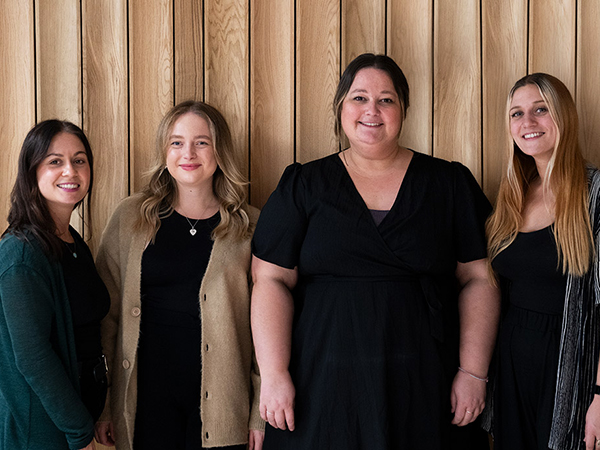
Call us for a chat about our vacations. We are happy to discuss your vacation and help in any way we can. No bots, queues or awful hold music.

1-866-821-6866
Call toll free
Calling from outside the USA

LGBTQ+ festivals & events
Costa Rica’s Pride march – known as the Diversity March – takes place in late June in San José. Between 2010 and 2020 it grew from a march of a few dozen people heckled by bystanders to a gathering of over 100,000 people celebrating the progress of LGBTQ+ rights in Costa Rica, and protesting the discrimination still faced by local people.
Follow Pride Costa Rica for updates on events occurring throughout the year.
Follow Pride Costa Rica for updates on events occurring throughout the year.
More LGBTQ articles

We have created this LGBTQ+ guide to help travelers understand if they will face discrimination.
In this formerly closed country, mindsets have taken a while to shift. But times are changing.
After decades of persecution and harassment, new laws and a new constitution are giving LGBTQ+ Cubans long-denied rights.
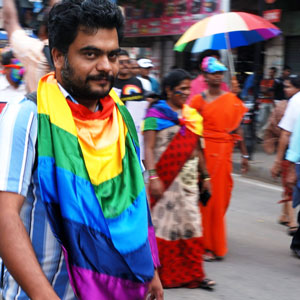
India’s changing laws have opened space for conversations, protests, festivals and a creeping acceptance of LGBTQ+ rights.



Malaysia is one of the more conservative countries in Southeast Asia.

Morocco is one of the safest countries in Africa for LGBTQ+ travelers.
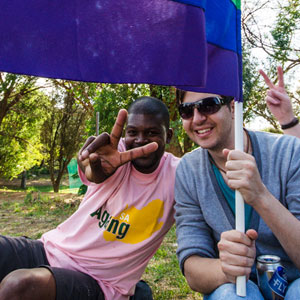
South Africa is seen as one of the most welcoming country in Africa for LGBTQ+ travelers.
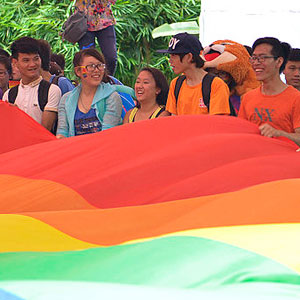
Thailand may be known as the gay capital of Asia, but Vietnam is at the forefront too.
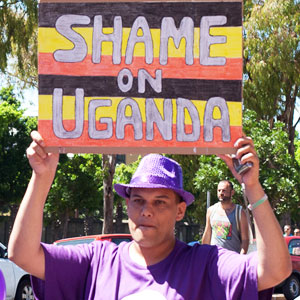
Uganda has some of the harshest anti-LGBTQ+ laws in the world. Some people face the death penalty, and Pride parades and other events are shut down.
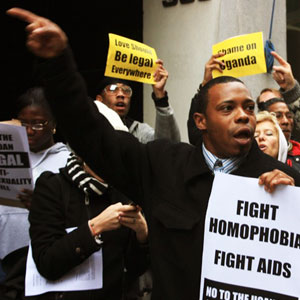
Our guide aims to help LGBTQ+ travelers make informed choices about where they travel.