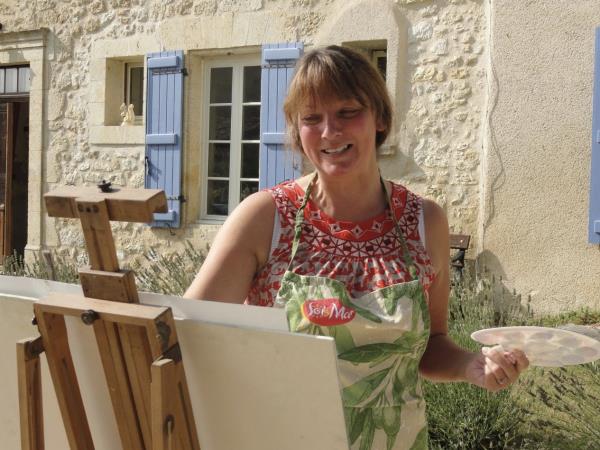
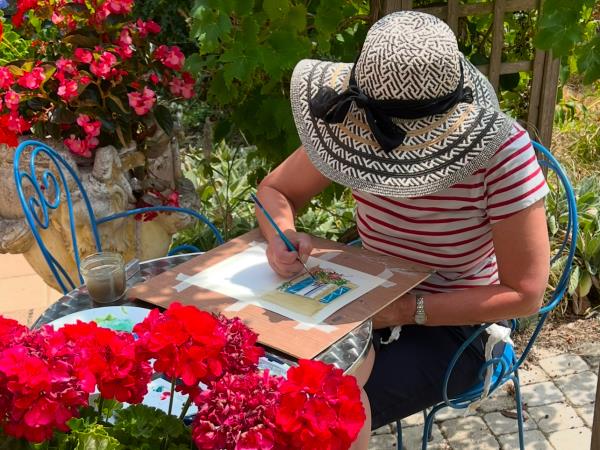
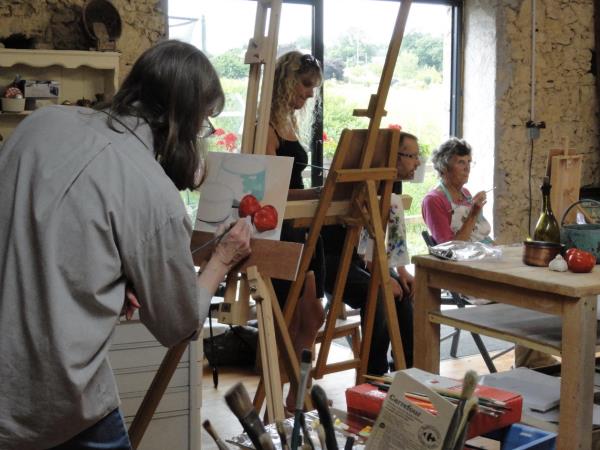
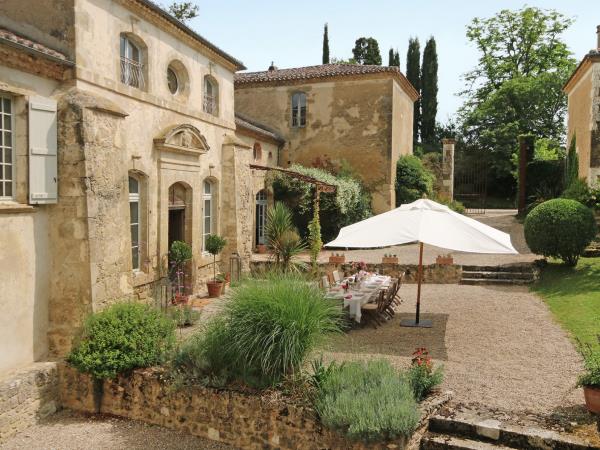
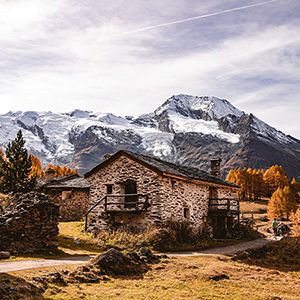
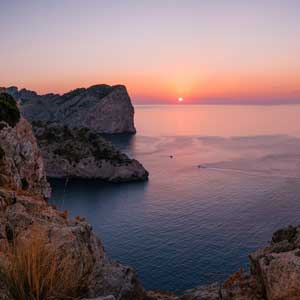
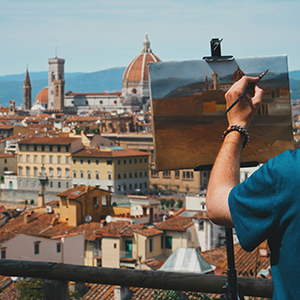
The south of France is an artist’s friend – there’s usually reliably lovely weather, and a great light no matter what time of day you’re painting. In fact, it’s the quality of the light that’s said to have attracted so many artists through the years. Under their special sun, the countryside and the villages are scenic. There’s a wealth of colourful subjects: gardens full of roses, historic villages, stone houses with terracotta tiled roofs. The interest changes day to day: there are markets in nearby towns nearly every day of the week, and the countryside celebrates in summer with festivals and fetes.
As the term itself suggests, France is the spiritual home of painting en plein air. The practice was expounded by 18th-century French artist Pierre-Henri de Valenciennes, and taken up by the Barbizon school, whose members included Daubigny, Manet, Millet and Degas, and who painted in the countryside around Fontainebleau, outside Paris.
This school of painters attracted the attention of painters like Renoir and Monet. Later the Impressionist movement took painting en plein air as a key concept. Photographs of Claude Monet often show him sitting astride his canvas in front of a waterlily pond, sunhat on, cigarette poking out of his unmistakable beard. Paul Cezanne painted this way until his death from pneumonia, after being caught in a storm.
It wasn’t that artists were timid of the great outdoors before the 19th century, rather hampered by their equipment. The advent of paint in aluminium tubes circa 1870 suddenly allowed artists to escape their studios without the difficulty of preparing their oil paints from scratch and carrying them on location. Further inventions suited to al fresco creativity followed – including the French easel, which folds up into a very portable case.
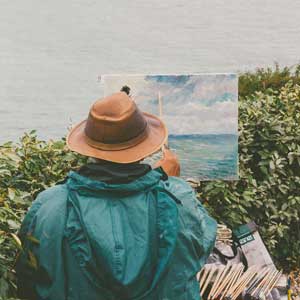
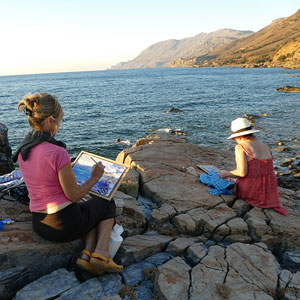
Today, you’ll still see artists propping up their easels in picturesque places – the scene, complete with battered hat and white parasol (useful for diffusing the light, and creating a bit of shade), is a timeless one.