


Swimming with whales & wild dolphins guide

Douglas Adams, The Hitchhiker's Guide to the Galaxy
"Man had always assumed that he was more intelligent than dolphins because he had achieved so much - the wheel, New York, wars, and so on - whilst all the dolphins had ever done was muck about in the water having a good time. But conversely, the dolphins had always believed they were far more intelligent than man - for precisely the same reason"

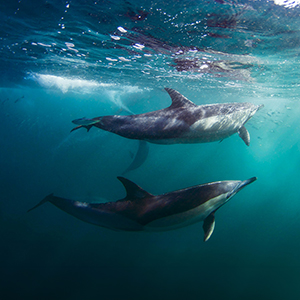
Unlike captive cetaceans, meeting their wild cousins lets you discover their natural behaviour and become, for a moment, part of their underwater world. And when you realise just how much fun it is down there, you may just decide that Douglas Adams’ clever dolphins were right. Their wave surfing, deep diving, joyous song and gentle nature recall a more innocent time, one of carefree childhood frolics and storybooks where animals and people understood each other.
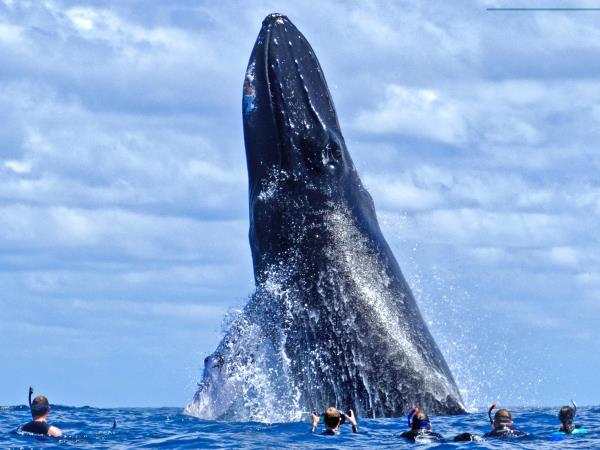
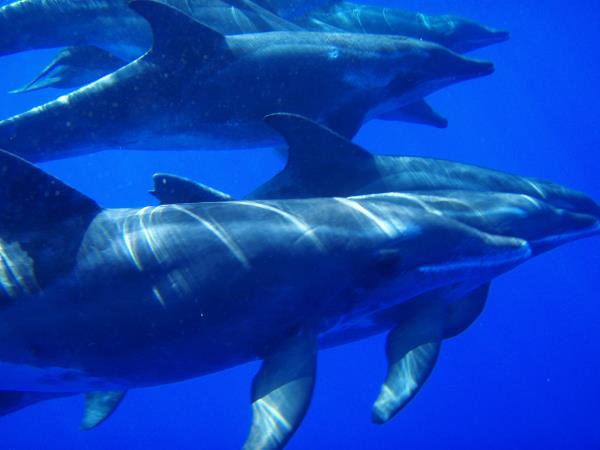
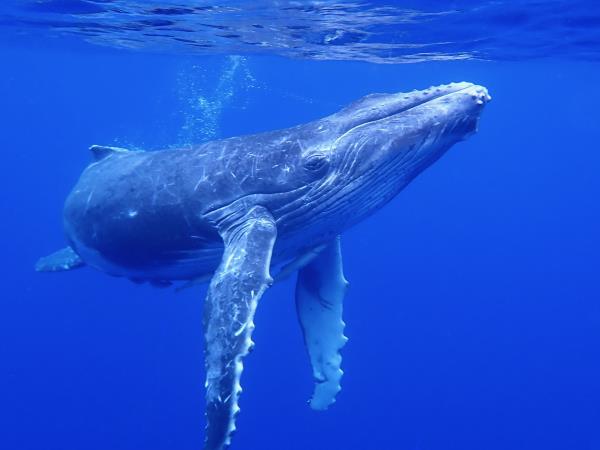
Swimming with these marine mammals is spiritual for some, an adrenaline rush for others, made all the more magical by the knowledge that with wild animals, encounters are on their terms. The feeling of bobbing beside a pod of spinner dolphins or snorkelling above a 40-ton humpback whose fins alone are the length of three grown men may be tough to capture on camera, but it’s sure to be imprinted on your memory for years to come. Our guide to swimming with whales and dolphins shows you how to encounter these creatures responsibly.

Swim with whales & wild dolphins if...

you want to learn more about the behaviour of whales and dolphins. Many trips are accompanied by marine biologists who share their knowledge of the species, and your photos may be used to support research projects. ... you want to experience an animal which some consider as intelligent as humans. However clever they really are, and whether or not their clicks, squeaks and “songs” are in fact a language, encountering a wild cetacean convinces many of their intuitive abilities, and changes our perception of “dumb animals”. ... you want more than just a cetacean selfie. This is something you absolutely have to experience in person – not through a lens.

Don't swim with whales & wild dolphins if...

you are expecting SeaWorld-style acrobatics. These are wild animals, and they'll approach your boat if and when they wish. Sometimes the dolphins will leap into the air, or the whales will introduce you to their calves; sometimes they're little bumps in the distance. This is the beauty of nature – you're not in control, the animals are. ... you aren’t particularly confident in the water – and in your snorkelling equipment. This is the big wide ocean, the animals are wild, and panicking is not ideal for other travelers – or for the whales and dolphins.

Best time to swim with whales & dolphins

Tonga

Humpback whales migrate to the tropical Tongan waters from late July to early October. Here, they give birth and suckle their calves, fattening them up before the long journey back to Antarctica. While sightings can never be guaranteed, there is a very high chance of being able to snorkel alongside them during this period – trips usually include at least five days on the water to increase the chance of this.

The Red Sea

The best destination for year-round encounters, due to the warm, dry climate and sheltered waters. Dec-Feb will be cooler and slightly less pleasant – while any school vacations will bring bigger crowds and higher prices (as well as searing heat in July-Aug) – so we recommend spring and autumn as the best months.

Contact Us

Responsible Travel, Travel Team

Call us for a chat about our vacations. We are happy to discuss your vacation and help in any way we can. No bots, queues or awful hold music.


Responsible Travel, Travel Team

Swimming with whales & dolphins travel advice

Advice on swimming with dolphins - responsibly

Amanda Stafford, from our supplier Whale and Dolphin Connection:
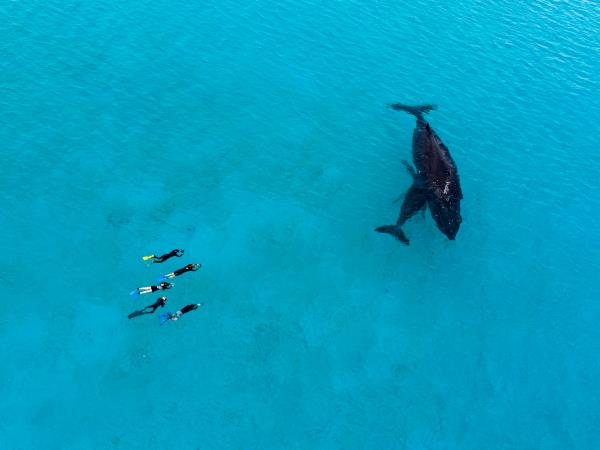
“Responsible boat tour operators allow only a very small number of people, perhaps just two, in the water at a time, keeping a certain distance, don’t stay too long in the water, lots of signals… Putting 30 people in the water at the same time, all thrashing around, is complete and utter madness. When we offered dolphin swimming in the Azores we went to great lengths to develop management protocol around training people. They need to know how to use a snorkel and mask, feel confident in the water – some places just throw people in and they can’t even use a snorkel!”

Tips on swimming with whales

Rae Gill is the tour director of our supplier WhaleSwim Adventures, in Tonga:
"People need to be fit and agile enough to get up a ladder in choppy water. They also need to be able to snorkel 50m at quite a good speed and be confident with their snorkelling gear, not just go out and think they will be able to do it. If they can't, our guides then have to look after one person and it affects the whole group. So we ask them to start getting fit in the swimming pool, to go to there with their snorkel and fins, do lengths to get their speed up and get confident. That way they're not worried about getting water in their snorkel when they're in the water, and they can focus 100 percent on the experience with the whales."
Written by Vicki Brown
Photo credits: [Page banner: Simon Ager Photography] [Is/Isn't : NOAA Photo Library] [Quote: ss_Paul Vinten_113876968-snorkel--spinner-dolphins--sea] [The Azores: Ravi Sarma] [Tonga: Rodrick Eime] [The Red Sea: jtriefen] [Swimming with Dolphins responsibly: Ravi Sarma] [Tips on swimming with Whales: Roderick Eime] [Tips on booking a longer trip: William Warby] [Tips intro: Sam Beebe] [Tip 1: Dino Kuznik] [Tip 2: Roderick Eime]