How to see pumas in Patagonia

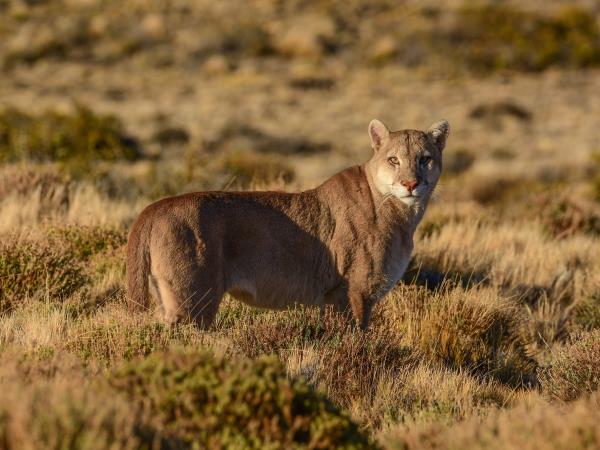
It’s unlikely that you’ve seen a puma in the Americas; it is more likely that a puma has seen you. Puma concolor – the one coloured puma – is a master of disguise, and can be impossible to see without the help of an expert guide with a scope. On puma conservation experiences in Patagonia you can join experts in the field and see them (though probably not before they’ve seen you).

These secretive, solitary cats are widespread enough to have the most given names bestowed on them of any animal in the world: catamount, mountain lion, panther, Florida panther, puma, cougar. Adaptable and clever, happy at sea level, happy at 5,000m up a mountain, pumas have the most powerful hind legs of any cat – great for leaping onto the back of a fleeing guanaco. They are the largest cat that purrs, but they don’t roar; they are probably intimidating enough as it is.

Pumas are graceful and solitary – though occasionally they’ve been known to cooperate with pumas in neighbouring territories, very rare for large cats. Little cubs – cachorros – have spotted coats until they grow older. Males and females are all but identical, except that males are larger and are more rarely seen. For years, a famous face around Torres del Paine National Park was Dark – a 77kg puma with a scarred face and notched ears who was one of the dominant males in the park well into his later life.

The pumas of Patagonia

The pumas in Patagonia are massive, the largest subspecies of the animal. They have a plentiful supply of guanaco down here, but they also eat sheep, much to the despair of ranchers. This the main industry in the area: cattle and sheep farmed on vast estancias.

Estancia life is not an easy life for gauchos and pumas make it harder. Pumas do not always have an easy life either and preying on sheep, an easier catch than a guanaco, is a tempting prospect. In retaliation, pumas were killed, decapitated, and their pelts sold.

Puma killings have destroyed the puma population which is in general decline across the Americas. It’s now illegal in Chile – though in vast, sparse Patagonia, lawmakers will find it hard to regulate.

But pumas can be helped – and tourism can play a huge part. Puma tracking is becoming a more popular activity in places like Chile’s Torres del Paine National Park, where pumas are increasingly becoming habituated towards humans.
You see that stone over there? At 6 o’clock? That’s a puma

Pumas & sheep coexisting: The story of Estancia Cerro Guido

“We are fighting a tradition,” says Soledad Lama, a marketing, tour and travel manager, who represents Cerro Guido, Chile’s largest operating ranch. This ranch farms sheep and cattle over its 107,000 hectares and in 2019 set up a conservation arm, Cerro Guido Conservation Foundation. It is working with Panthera, a global wild cat charity, to come up with a way for estancia and pumas to coexist. It wants other estancias to follow its model.

The property uses guardian dogs – specifically Maremma and Pyrenean mountain dogs from Europe – to protect the sheep. “These dogs are bred to live alongside the sheep – maybe they believe they are sheep!” explains Soledad. “They protect the sheep and give the herd the scent of the dog. The puma smells the dog and stays away.” Maremma are massive, white, fluffy dogs that are raised alongside sheep so that they bond with the herd. They were originally used in Italy to protect flocks from wolves.

“Pumas are opportunistic – if the dog barks – they go away,” says Soledad. “The puma hunts alone and if they can be hurt by the dog they die, so they’re really careful when they’re hunting.”

The introduction of dogs to protect the flocks has been deemed a success. The estancia also uses other non-lethal management techniques, like Foxlights – an after dark lighting system developed by an Australian farmer to keep foxes away from his lambs, and now adopted worldwide. The flashing light imitates the pattern of a person patrolling a property, which warns pumas to stay away.

Whilst pumas are encouraged to stay away from the sheep, they still roam the vast property, and guests on the estancia can head out into the landscape to try and spot them on the ranch's dedicated Conservation Experience. Cerro Guido uses two guides, one from the ranch and one from the foundation, who use radios to keep abreast of sightings, tell guests the story of the property, and use camera traps and other monitoring to keep an eye on the pumas – as well as the other wildlife in the area. Cerro Guido monitors their population and tests their scat for elevated levels of stress hormones in case tourism is causing problems.

This is not a tracking experience. “We don’t chase puma,” says Soledad, “If we see one, we keep our distance to around 50m or more. Keeping a safe distance, we use a scope or binoculars to watch them. If you chase a puma you are modifying its behaviour. And if they cross the Argentina border [where hunting puma is not outlawed] they can get killed.”

What’s it like seeing a puma? “I’ve taken the tour three times,” says Soledad, “And the three times I have seen the puma. It’s beautiful – you see it far away and they can blend in a lot with the environment. The tracker needs to tell you where they are, they might say, “You see that stone over there? At 6 o’clock? That’s a puma”. It’s really difficult to spot them with the naked eye – they blend really well. The landscape is literally the same colour as their fur. Especially during the day, they’re resting, they don’t move a lot, they’re sleeping, eating, or just enjoying the sun.”
I’ve taken the tour three times and all three times I have seen the puma. It’s beautiful.

Binoculars & a beret: puma watching in Patagonia

Cerro Guido is a rare estancia where pumas are being conserved whilst farming practices continue. Other puma watching locations include Estancia Laguna Amarga, also next to Torres del Paine, where the ranch has pivoted from sheep farming into puma conservation and guest experiences. The ranch was a site of BBC filming of the Sir David Attenborough-hosted natural history programme Dynasties.

You can also see pumas in the national park itself on guided tracking tours. These are extremely popular. It’s nice to see a different side of the national park, says Oxana Protchenko from our partner EcoChile, but not all tracking experiences are made equal.

“It’s been a challenge in the tourism industry in general,” says Oxana. “It became so popular to do it that not everyone does it carefully and responsibly. It can pain you to see when you put so much effort into a more ethical experience and suddenly you see another group that has no respect for the animal.” Not everyone offering tracking experiences may have a licence to do so, and practices like feeding and chasing puma risk changing their natural behaviour and affecting their survival. “It’s a great experience,” says Oxana, “But everyone needs to be responsible.”

Our top trip

Wild puma tracking holiday in Patagonia

Wild puma tracking vacation in Patagonia

Track wild pumas in the wilderness of Argentine Patagonia

From US $7299 11 days ex flights
Tailor made:
This trip can be tailor made throughout the year to suit your requirements

Contact Us

Responsible Travel, Travel Team

Call us for a chat about our vacations. We are happy to discuss your vacation and help in any way we can. No bots, queues or awful hold music.

Responsible Travel, Travel Team

Spotting wild pumas in Patagonia – in summary

Patagonia is famous for its pumas. You can choose to try and see pumas on a conservation experience at a private estancia, or with a guide in a national park – our trips tend to center around Torres del Paine National Park. Puma tracking takes place in very small groups, early in the morning or late in the evening. Pumas are nocturnal, so catching them at dawn and dusk makes you more likely to see them out and about. Thermal cameras, thermal drones, tracking collars and other technology are used to keep an eye on pumas. You’ll also need an experienced spotter to pick them out in the landscape and show you where they are.

When is the best time to see pumas in Patagonia?

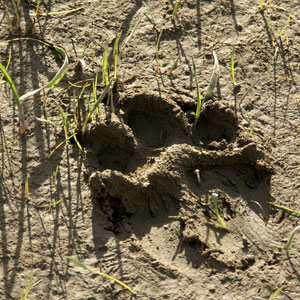
Puma tours are best in winter; from June, the animals follow the guanaco down the mountains and are concentrated in a smaller lowland area. You might also have snow, a great backdrop for spotting sandy-coloured cats, and a ready canvas for any footprints they might leave. Cerro Guido is a rare estancia that is open to tourists year-round, for the pumas. As Soledad points out, “The weather in Patagonia can get really crazy no matter the time of year. But in winter there’s almost no wind – so you don’t feel the cold that badly. It’s a good season to take pictures, spot wildlife and see Patagonia with no crowds.”

Can you see pumas without a guide?

If you’re very lucky, you might – especially since pumas have become habituated to humans in the national park and have even been known to stalk them. But they’re very difficult to spot as they are almost the same colour as their surroundings. Even with a guide pointing out a puma to you, you might not actually be able to see it for several minutes. Guides are often ex-hunters, extremely experienced watching these animals for years, whilst your eyes are still adjusting to a totally new landscape.

Is puma watching ethical?

Practices that cause an animal to modify its behaviour: feeding them, cornering them, or getting too close to them are not ethical. For this reason, some puma tracking is harmful to puma populations, which is why our vacations are so conscious of how they interact with animals.

Where do pumas live in Patagonia?

Pumas are found across the Americas, and across Patagonia, where their populations are monitored in individual national parks. They are known for living in higher density populations in Torres del Paine National Park and, in Argentina, in particularly high population densities in Monte Leon National Park. They are shy and prefer to stay away from people.
Written by Eloise Barker
Photo credits: [Page banner: Robert Sachowski] [Pumas & sheep coexisting: Travel Differently/ Estancia Cerro Guido] [Binoculars & a beret: Travel Differently/ Estancia Cerro Guido] [When is the best time to see pumas in Patagonia?: Travel Differently/ Estancia Cerro Guido]