Nepal homestay trekking vacation
Price
US $1370ToUS $1550 including domestic flights only
More info
Minimum 2 people required for this trip.
Max group size: 7 pax
If dates for fixed departure doesn't match contact us for customized tour.
Best time to visit: October-June
Offers
$50 off per person on October–November departures. Don't miss out—secure your seat by contacting us today.

Description of Nepal homestay trekking vacation
Price information
US $1370ToUS $1550 including domestic flights only
Minimum 2 people required for this trip.
Max group size: 7 pax
If dates for fixed departure doesn't match contact us for customized tour.
Best time to visit: October-June
Check dates
2026: 10 Oct, 24 Oct, 7 Nov, 21 Nov, 5 Dec, 19 Dec
Travel guides
Discover whether a walk in the Himalayas is for you with our guide to the ups and downs.
Be part of a pack on your next outing. These small group walks promise fun and friendship on the trail.
Reviews
1 Reviews of Nepal homestay trekking vacation
5 out of 5 stars
Reviewed on 13 Jan 2020 by Bryan Salte
1. What was the most memorable or exciting part of your vacation?
This trip was exactly what I had envisioned. It was a trek at lower altitude than the treks to Anapurna and Everest base camps. That meant that the trek was
somewhat easier than at higher altitude, but was still enough to provide a challenge. In contrast to those treks, it was non-commercial. During the week of
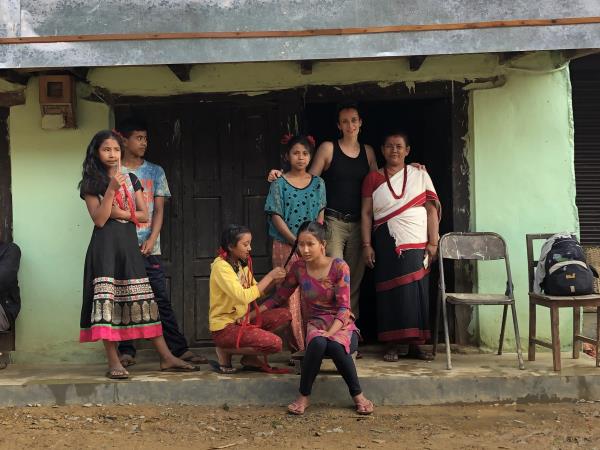
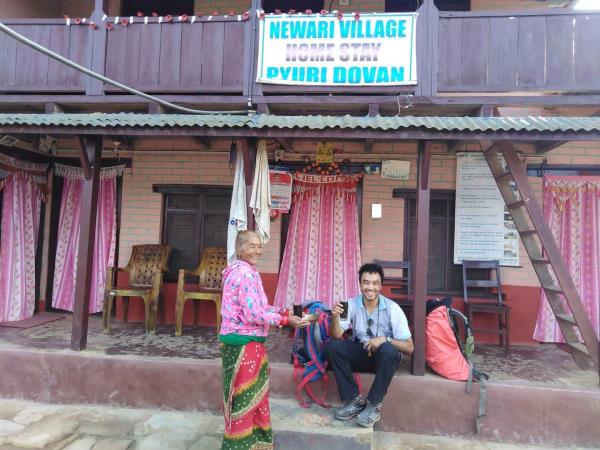
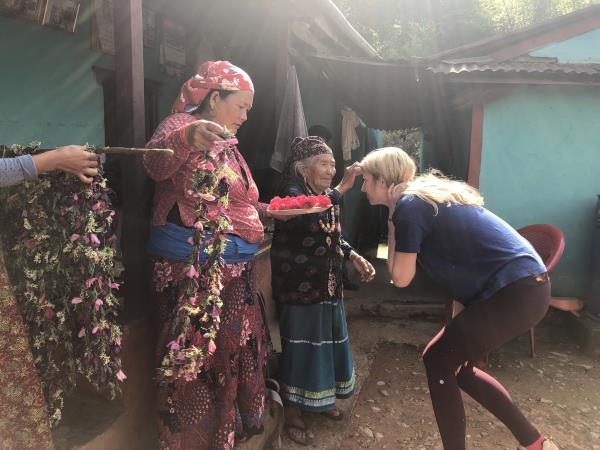
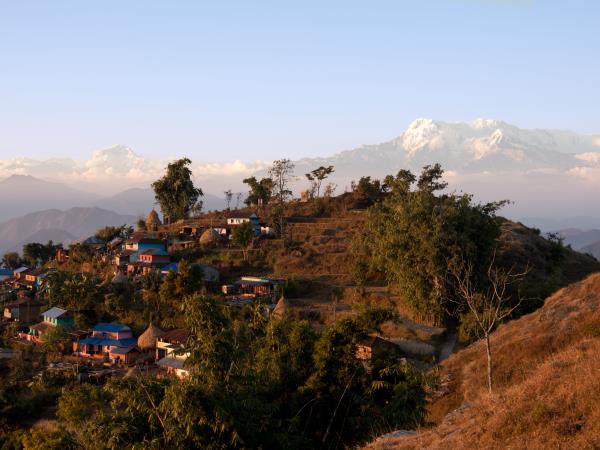
the trek we saw only local people. The lifestyle of the people we saw has changed little over time. Stays were in people's homes, where we shared the food that they cooked for their families. The people we met were universally friendly, although little English was spoken. They welcomed being photographed.
This was very much a genuine experience where we were able to participate to a limited extent in the usual lives of the people we met.
2. What tips would you give other travelers booking this vacation?
Be in reasonable physical condition. Be prepared for somewhat basic accommodations and to have only local food available. If you think that the trek will be a challenge, you may want to arrange for a porter at about $20 to $25 per day so that you can walk without your pack.
3. Did you feel that your vacation benefited local people, reduced environmental impacts or supported conservation?
The local people received some money for our visits. We ate local food and drank only local water which we sterilized. Our footprint was very small.
4. Finally, how would you rate your vacation overall?
Excellent. Ajay and Lesia, who operate the travel company were remarkably friendly and helpful. I had dinner with them on two occasions. The two guides
Kumar and Chandra were both excellent and helpful. I have travelled to over 40 countries and this was definitely in the top few experiences.
Responsible Travel
As the pioneers of responsible tourism, we've screened this (and every) vacation so that you can travel knowing we've worked to maximise the benefits of your vacation to local people and places, and minimise any negative impacts.
Planet
Nepal receives over one million trekkers annually, and the concentration of that traffic on a handful of famous routes creates measurable pressure: trail erosion, waste accumulation, overcrowded teahouses, and inflated local economies that collapse in low season. This itinerary was designed around a different logic.Why an off-the-beaten-path route? The Annapurna low-altitude corridor visited on this trek carries a fraction of the foot traffic of the Everest or Annapurna Circuit routes, yet the Himalayan views are comparable, and the cultural access is considerably richer. When travelers choose lesser-known routes, the economic and infrastructure argument for developing those regions strengthens. Government investment in roads, waste facilities, conservation programmes, and nature protection follows demonstrated demand. Choosing this route is a direct contribution to that case.
Waste and plastic. Nepal's waste infrastructure is concentrated on its most-visited trails. The government has established sorting and recycling facilities on popular routes, but the villages and paths on this itinerary operate without that support. We carry out what we carry in. The guide manages waste sorting throughout the trip, and we do not leave recyclable material at stops that have no capacity to handle it. We also run basic plastic education sessions with homestay communities where there is interest — a single conversation repeated across hundreds of visits compounds over time in a way that an annual clean-up day does not.
Water. Nepal holds approximately 6,000 rivers and rivulets and 3% of the world's freshwater, yet river pollution from detergent, agricultural runoff, and solid waste is a growing problem across the mid-hills. Wildlife and livestock share the same water sources as local communities. On this trek, we use refillable bottles and avoid single-use plastic water purchases throughout.
Energy. The villages on this route run on solar power. There is no mains electricity supply along the trail. Bring a portable solar panel or a high-capacity power bank if you need to charge devices on the move. The guide can advise on charging opportunities at each homestay before departure each morning.
People
5% of the total trip cost goes directly to a school lunch programme in a remote village in Syangja that we passed through while developing this route. The school serves families who cannot consistently keep children in education due to the cost of food and the distance from home. Rather than making a cash donation, which carries real risks of misuse in areas with limited oversight, we buy food directly from local farmers and deliver it to the school. This keeps the money in the local agricultural economy, creates a reliable income stream for smallholder farmers, and ensures that teachers and children have a meal every day the school is open. When you book this trip, that contribution is built in.Teacher recruitment in remote areas. The Syangja corridor faces a chronic shortage of qualified teachers. Salaries for rural postings are low, facilities are basic, and few graduates from urban training colleges are willing to relocate. We work to identify and support local candidates- people from these communities who already speak the language, know the culture, and have family reasons to stay. Keeping teachers local means continuity for students and income that stays in the village rather than being remitted out.
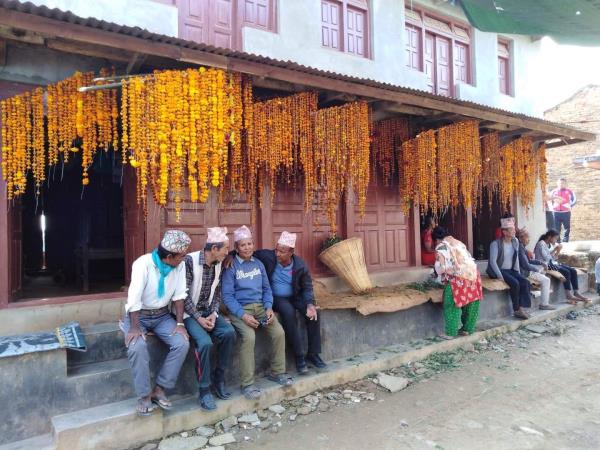
Newari culture. The mid-section of this trek passes through villages with living Newari cultural traditions: a distinct language (Nepal Bhasa), a culinary heritage separate from mainstream Nepali food, and ritual practices tied to specific seasonal and agricultural cycles. Newari communities are one of the oldest continuous cultures in the Kathmandu Valley region, with roots dating back to at least the 7th century CE. We ask our hosts along this route to share their culture openly — through food, through dance, through conversation — because practice is what keeps a tradition alive. Documentation alone does not.
Everything on this route is locally owned. Every homestay, restaurant, and shop on this itinerary is run by people from the region. Our guides and porters were born and raised in these communities; they speak the local languages and maintain relationships with the families hosting you. Every rupee spent on accommodation, food, and locally made crafts stays within the community. That is not an accident of geography — it is how the route was designed.
Popular similar vacations
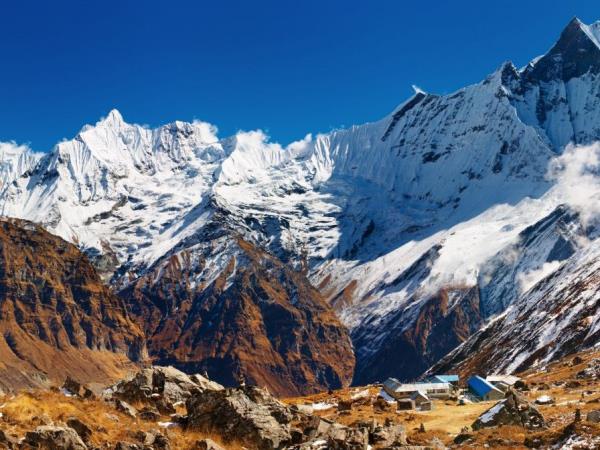
Annapurna Base Camp trekking vacations
From US $1135 - US $1550 8 days including domestic flights only
Most popular, legendary and classical trek in the world
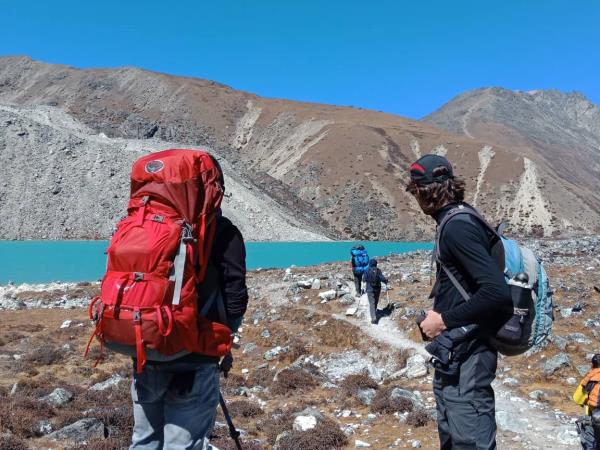
Gokyo Ri Valley trek in Nepal
From US $2150 - US $2420 15 days including domestic flights only
Gokyo Valley Trek: A Scenic Alternative to Everest Base Camp
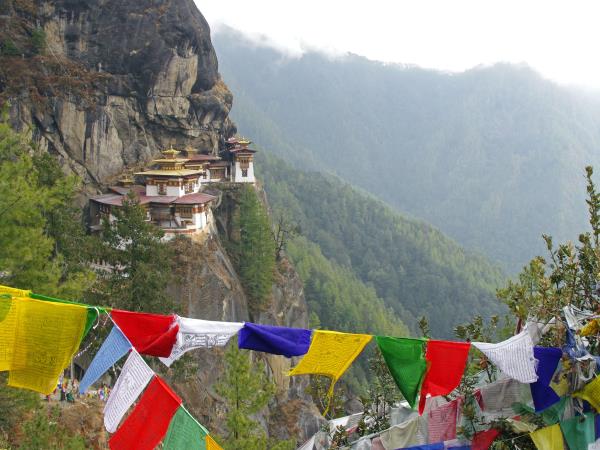
Nepal and Bhutan express tour
From US $2100 7 days excluding flights
Become one with culture and nature in Bhutan and Nepal tour