Namibia self drive safari supporting community conservancies
Price
R 53955ToR 61620 excluding flights
Duration
16 Days
Type
Tailor made
More info
Self-Drive Camping + Lodges tour.
Prices based on traveling in June.
These are subject to change should you wish to travel before or after June. PRICE PER PERSON
These are subject to change should you wish to travel before or after June. PRICE PER PERSON

Description of Namibia self drive safari supporting community conservancies
Price information
R 53955ToR 61620 excluding flights
Self-Drive Camping + Lodges tour.
Prices based on traveling in June.
These are subject to change should you wish to travel before or after June. PRICE PER PERSON
These are subject to change should you wish to travel before or after June. PRICE PER PERSON
Departure information
This trip can be tailor made throughout the year to suit your requirements
Travel guides
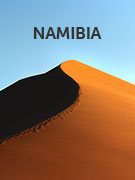
There may well be an awful lot of sand in Namibia - a country characterised by two vast deserts.
Vacation information
Dietary requirements:
We can cater for vegetarian and vegan diets.
Responsible Travel
As the pioneers of responsible tourism, we've screened this (and every) vacation so that you can travel knowing we've worked to maximise the benefits of your vacation to local people and places, and minimise any negative impacts.
Planet
CARBON REDUCTION1. We do not have rail options in Namibia, however the clients only have 1 flight scheduled for this tour, the international arrival and departure flights.
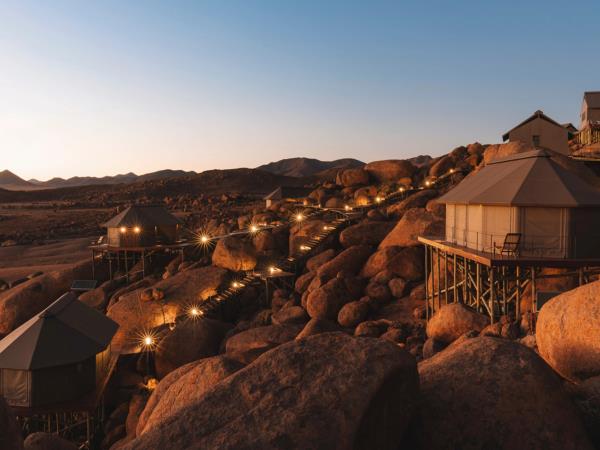
2. ONJOWEWE practices non-motorised activities. The clients will do the Himba Village Visit, however, they walk to the village instead of driving, it's a short, scenic walk that includes facts about the local trees and traditions. THE CHIWANI GROUP (Mowani Campsite) uses energy saving bulbs around the camps, they also have solar powered geysers. SONOP, the entire lodge operates on 100% solar power, powered by 923 solar panels. ONJOWEWE uses solar powered lights and 'donkeys', a wood-fired hot water heater.
3. Shared local transport is not established in Namibia.
4. We strongly recommend kayaking, fat-bike and walking tours/activities to our clients. We often book a kayaking activity in Swakopmund, it lasts about 2-3hours. In this tour, clients have the Himba Village Tour booked, where they walk to the village.
5. We present every group that travels with us the TOSCO guidelines on how to travel responsibly.
6. There are only a handful of electric cars in Namibia. We have a 'taxi' service called LEFA that have a few in their fleet, should clients choose to order a LEFA ride, they may be presented with an electric vehicle. There are only 4 charging stations for these vehicles in the whole country, so it is still very new.
7. Food/dietary requirements are communicated to the lodges ahead of time, they will cater to vegans/vegetarians. There are vegan/vegetarian options in the supermarkets as well, however, clients should aim to buy this in the big cities, as the villages and small towns won't cater to that.
8. The meat consumed in Namibia is all locally-sourced, however, our fruits and vegetables are often imported from other countries. More establishments are building local gardens to source their fresh foods from, there is also a garden in Fonteine (Damaraland Area), that is aiming to provide fresh local vegetables to the lodges in the area. ZANNIER SONOP only has set menus, to reduce waste. They source their herbs, meat and honey from a local farm, and their fish from the coast.
ENVIRONMENT AND WILDLIFE :
1. THE CHIWANI GROUP (Mowani Campsite) supply all their water from local boreholes. KALAHARI ANIB LODGE ; Waste from Gondwana lodges is meticulously separated according to material type. Glass is crushed, and sheet metal is pressed. Gondwana ensures environmentally sustainable disposal, with the bulk of waste being recycled and the remainder used to produce refuse-derived fuel. #ItsUp2Us campaign, aimed at ensuring only biodegradable waste ends up in landfills.
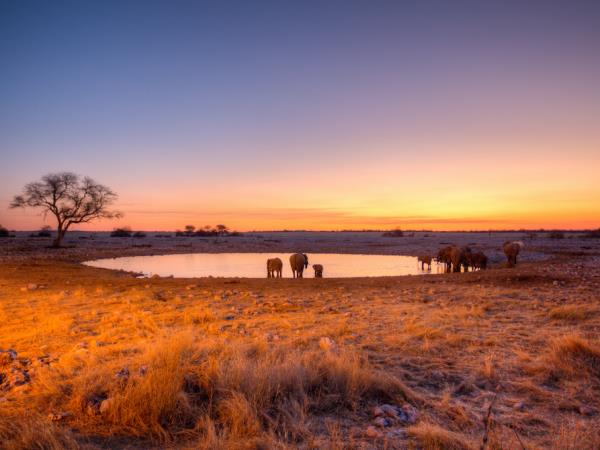
2. The trip includes Etosha National Park and Sossusvlei, where clients have to pay entrance fees. CHIWANI has built a waterhole around the camps to ensure a herd of 18 elephants have enough to drink in the Twyfelfontein Area. THE GONDWANA COLLECTION have established different private nature parks all over the country, including the Kalahari Desert. Especially in the south, in the Fish River Canyon area, consequently, red hartebeest, wildebeest, plains zebra, and giraffe were gradually re-introduced, boosting landscape restoration.
3. The trip includes Etosha National Park and Sossusvlei, where clients have to pay entrance fees.
4. We support TOSCO, Tourism Supporting Conservation, as well as the Desert Lion Conservation.
5. We present every group that travels with us the TOSCO guidelines on how to travel responsibly.
6. We provide the best local guides for our guided tours through Namibia.
7. We have two main invasive species in Namibia, Prosopis and cacti. We have numerous organisations (such as N-BIG, BOTSOC, NIASWG + BUTOVAL) that are running projects to keep these species under control. These species increase the extinction risk of other trees in Namibia, as they consume a substantial amount of ground water. Although they're packed with nutrients for livestock, they are essentially harmful toward the ecosystem.
People
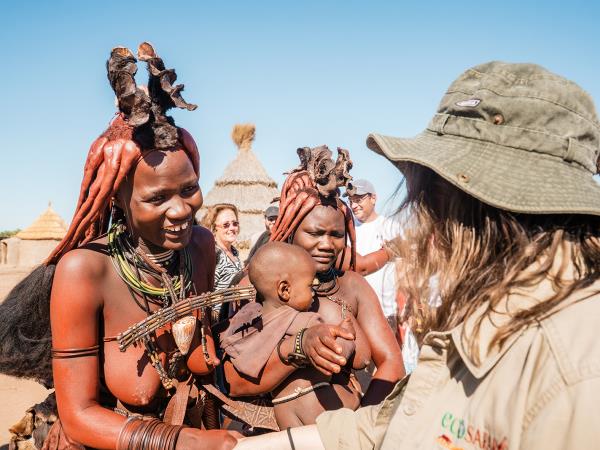
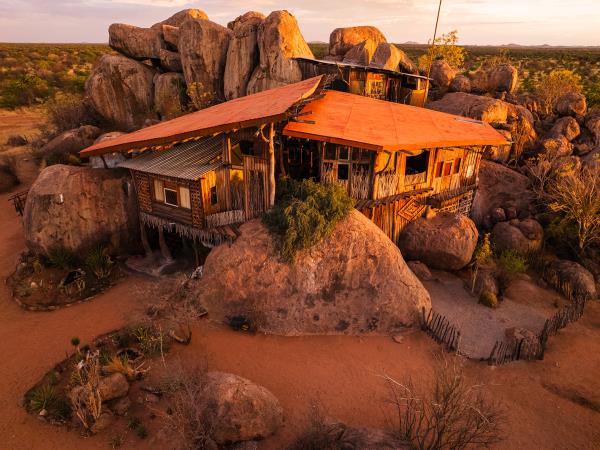
LOCAL ECONOMY1. All the accommodations are locally owned, except ZANNIER SONOP. OKONJIMA is owned by a Danish-English family, but who have lived in Namibia since 1970. MOUNT D'URBAN and ONJOWEWE is especially notable because it is run by the family who owns the farm on which the property is built, they also run it. ONJOWEWE also established their own local Himba village many years ago, when one of the brothers of the owner, formed close relationships with a local Himba who had fled together with her clan, from Angola to Namibia during the war. They moved to his family farm (Onjowewe) in the early 2000s.
2. We do employ local guides to do our guided tours for our clients. We also always recommend to them to go the local Craft Market in Windhoek. We only encourage very local interactions when it comes to villages, not those where you can only find tour busses. We also put in our roadblocks, spots around the country they can visit for an immersive experience. We mostly send our clients on the Elephant Tracking excursion in the Huab River, where they will then stop in the small village of De Riet, here they can visit the 'Tourist Center' to refresh, and support local crafts. We also support the local rangers in the Torra Conservancy. We book the Rhino Tracking with local rangers for our clients.
INCLUSIVITY & DIVERSITY
1. In our office, and that of our partners, we are an estimate of 80% Namibians that are employed.
2. We work closely with TOSCO, who has worked hard with locals to establish a 'business' for the villages. Where they plant beautiful gardens and tend to them, which they then sell to the local lodges. They have also worked with villages in the north to create local essential oils using 'MYRRH' which they then sell to the visitors. Our 'goodies' that we provide our clients, are handcrafted by a local Namibian who does not have a job, but benefits from the crafts he sells to us which we then gift to the clients. We also personalise these gifts with the clients' names.
3. We are all paid fairly.
4. Our workplace is diverse and equal employment is practiced.
5. This trip and any other trip we offer, is LGBTQ+ friendly.
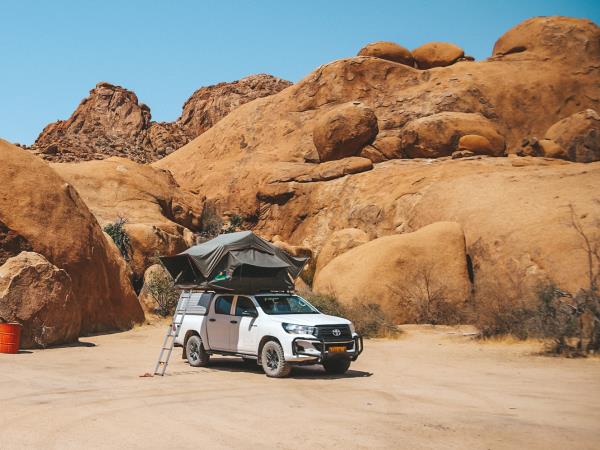
6. Our trips are tailored for people who have limited mobility, vision, hearing or cognitive issues. However, a camping trip such as this one, is not recommended to someone with limited mobility, as you are sleeping on the roof of your car.
Popular similar vacations
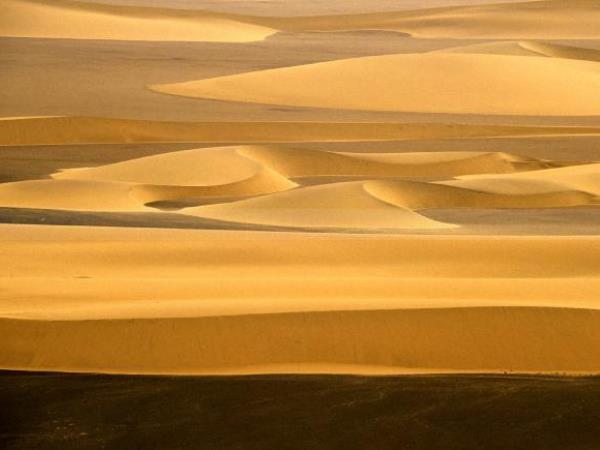
Namibia self drive safari
From £2450 14 days excluding flights
An iconic self-drive safari through north and south Namibia
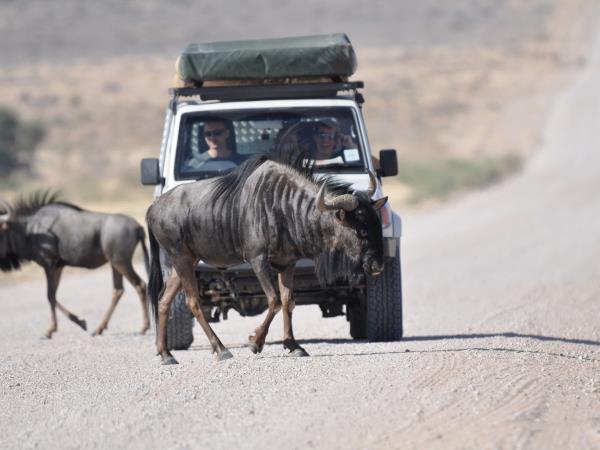
Namibia highlights self drive
From £3310 - £3425 12 days excluding flights
See Namibia's highlights on this tailor-made self-drive
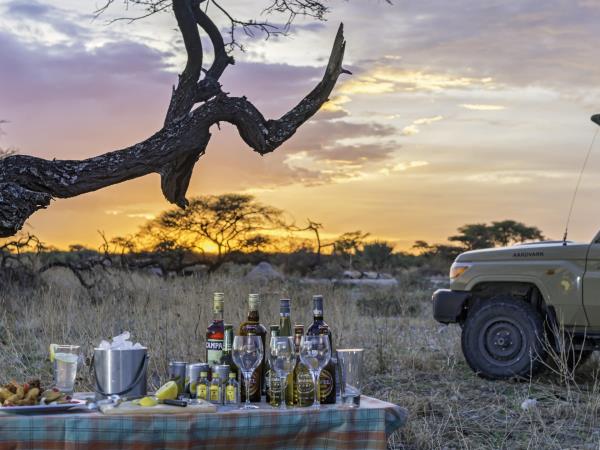
Namibia, Chobe and Victoria Falls vacation
From £3230 - £3895 13 days excluding flights
Self-drive adventure through Namibia + Chobe and Vic Falls