Africa’s top museums & galleries
The next few years might be the best ever time to see Africa’s greatest art – past and present – in situ.
It took seven years for Ethiopian artist Elias Sime to build Zoma Museum. The museum is not your conventional affair – no grand hallway or turnstiles. It was created out of mud and straw its walls hand-shaped into marvellous, contorting patterns. The museum hides in a deep and twisting garden of endemic plants – textures within textures.
It sits in Addis Ababa’s Mekanisa district, on the opposite side of town from the capital city’s ethnographic and national museums. These older museums are small, their most famous contents being a cast of the skeleton of Lucy – one of our earliest ancestors. Zoma represents something else. It is part of the many exciting newer museums and galleries that are springing up in Africa.
It took seven years for Ethiopian artist Elias Sime to build Zoma Museum. The museum is not your conventional affair – no grand hallway or turnstiles. It was created out of mud and straw its walls hand-shaped into marvellous, contorting patterns. The museum hides in a deep and twisting garden of endemic plants – textures within textures.
It sits in Addis Ababa’s Mekanisa district, on the opposite side of town from the capital city’s ethnographic and national museums. These older museums are small, their most famous contents being a cast of the skeleton of Lucy – one of our earliest ancestors. Zoma represents something else. It is part of the many exciting newer museums and galleries that are springing up in Africa.

Africa’s under-represented cultures
Africa holds only 0.9 percent of the world’s museums, and their global reputation has been much maligned. Ask Google about Africa’s best museums, and Google will tell you that ‘people also asked: are there any museums in Africa?’ For a long time, much of the continent’s most-praised art museums focused on Classical Mediterranean culture – that of Egypt, Tunisia and Algeria – over other art. ‘Best of’ lists of the continent’s museums always include apartheid and slavery museums and not institutions which celebrate the creative lives of African people.
None of the 70 most-visited museums in the world are on the African continent; nor are any of the top 100 most-visited art museums. The UK has 39 museums for every one million of its inhabitants, and five of the top 20 most-visited museums in the world are in London. Meanwhile, 23 African countries have fewer than one museum for every one million people.
African’s history is the oldest in the world. At just over three million years old, Lucy is a spring chicken. In Chad, you can see the Toumai skull – a representative of the last common ancestor of humans and chimpanzees; it is seven million years old.
But huge swathes of African art are missing from the picture.
None of the 70 most-visited museums in the world are on the African continent; nor are any of the top 100 most-visited art museums. The UK has 39 museums for every one million of its inhabitants, and five of the top 20 most-visited museums in the world are in London. Meanwhile, 23 African countries have fewer than one museum for every one million people.
African’s history is the oldest in the world. At just over three million years old, Lucy is a spring chicken. In Chad, you can see the Toumai skull – a representative of the last common ancestor of humans and chimpanzees; it is seven million years old.
But huge swathes of African art are missing from the picture.
Whose art is this?
Part of the problem is that Africa does not own many of its own artefacts. In 2018, a report commissioned by French president Emmanual Macron estimated that 90 percent of the continent’s art is outside of Africa.
You see African art, instead, in European auctions – in 2023 a mask from Gabon that inspired Modigliani and Picasso was picked up by an English couple, and sold by a dealer for £4m. You see it in France’s Quai Branly Museum (70,000 objects), and England’s British Museum. This art was stolen; spoils of war and conquest. When Italian grave robber Giuseppe Ferlini brought Sudanese treasures from the Pyramids of Meroe back to Europe in the 19th century, they were seen as too ‘advanced’ and dismissed as forgeries until finally finding a home in Germany. It’s commonly thought that it was only during the Siege of Benin that Europeans became aware of the extraordinary artistry of the Kingdom of Benin – just as they destroyed most of it.
The return of Africa’s art has been subject of a decades-long battle and remains a bitter debate. Thanks to legislation which dictates how it operates, the British Museum states it cannot return objects – like the famous Benin bronzes, of which it owns over 900 – to Nigeria, but can instead only loan them.
You see African art, instead, in European auctions – in 2023 a mask from Gabon that inspired Modigliani and Picasso was picked up by an English couple, and sold by a dealer for £4m. You see it in France’s Quai Branly Museum (70,000 objects), and England’s British Museum. This art was stolen; spoils of war and conquest. When Italian grave robber Giuseppe Ferlini brought Sudanese treasures from the Pyramids of Meroe back to Europe in the 19th century, they were seen as too ‘advanced’ and dismissed as forgeries until finally finding a home in Germany. It’s commonly thought that it was only during the Siege of Benin that Europeans became aware of the extraordinary artistry of the Kingdom of Benin – just as they destroyed most of it.
The return of Africa’s art has been subject of a decades-long battle and remains a bitter debate. Thanks to legislation which dictates how it operates, the British Museum states it cannot return objects – like the famous Benin bronzes, of which it owns over 900 – to Nigeria, but can instead only loan them.
Longstanding credentials & emerging art scenes
Many countries in Africa have longstanding artistic credentials, but these often fly under the radar for casual tourists. West Africa has had an exciting contemporary art scene for years. Ghana’s Pan African Heritage Museum has ‘opened’ online; you can visit the virtual museum for $10 a day, and the bricks-and-mortar museum, when it opens, will be set over four hectares. In Dakar, Senegal, the IFAN Museum of African Arts has been open since the 1960s and has since been joined by newer institutions. Dak’Art Biennale, a contemporary art exhibition that runs across the city, has been around since 1990. The city’s Museum of Black Civilisations opened in 2018.
In 2017, Zeitz Museum of Contemporary Art Africa, known as MOCAA, opened in Cape Town, South Africa. When it opened, it was the first ever major institution to be dedicated to African art in Africa and across the diaspora. I visited in early 2018, lured in by its fantastic interior; the building is housed in a transformed former grain silo that made many architects’ ‘best buildings of the year’ lists.
Other countries have exciting emerging scenes. Togo’s Palais de Lomé opened to the public in 2019. The palace that once housed the country’s colonial governors is now an art space, featuring a sculpture park among acres of botanic gardens. In Antananarivo, Madagascar, a massive new art foundation, Fondation H, opened in 2023, joining the pre-existing Hakanto Contemporary. The country is building a new national academy dedicated to arts and culture. In 2023, Somalia had its first contemporary art exhibition in 30 years, held in Mogadishu.
In 2017, Zeitz Museum of Contemporary Art Africa, known as MOCAA, opened in Cape Town, South Africa. When it opened, it was the first ever major institution to be dedicated to African art in Africa and across the diaspora. I visited in early 2018, lured in by its fantastic interior; the building is housed in a transformed former grain silo that made many architects’ ‘best buildings of the year’ lists.
Other countries have exciting emerging scenes. Togo’s Palais de Lomé opened to the public in 2019. The palace that once housed the country’s colonial governors is now an art space, featuring a sculpture park among acres of botanic gardens. In Antananarivo, Madagascar, a massive new art foundation, Fondation H, opened in 2023, joining the pre-existing Hakanto Contemporary. The country is building a new national academy dedicated to arts and culture. In 2023, Somalia had its first contemporary art exhibition in 30 years, held in Mogadishu.
Heritage under construction
In the 2020s, a whole slate of museums and galleries are set to open on the continent. Giza’s Grand Egyptian Museum gets the headlines – the museum will be the biggest in the world, at 81,000m2, with over 100,000 objects. A history buff friend, who went when just the entrance hall was open, described it as “the most beautiful museum I’ve ever visited”.
In 2021, in a landmark move, France returned 26 treasured items from the royal court to Benin. They had been in storage in Quai Branley, and are set to be part of a new museum in Abomey. Four major new museums are planned in the country across four cities. Germany announced restitutions to Cameroon and Namibia in 2022.
The Edo Museum of West African Art in Nigeria will show 300 objects, including a small collection of repatriated Benin bronzes from Benin City, modern-day Nigeria.
In 2021, in a landmark move, France returned 26 treasured items from the royal court to Benin. They had been in storage in Quai Branley, and are set to be part of a new museum in Abomey. Four major new museums are planned in the country across four cities. Germany announced restitutions to Cameroon and Namibia in 2022.
The Edo Museum of West African Art in Nigeria will show 300 objects, including a small collection of repatriated Benin bronzes from Benin City, modern-day Nigeria.
Morocco cultural tour
Come and see Morocco's kaleidoscope of colours
From
US $1296 to US $2020
15 days
ex flights
Ghana, Togo and Benin vacation, gold and magic
Traditional villages and voodoo in Ghana, Togo and Benin
From
£3699 to £4065
14 days
ex flights
Ethiopia vacations, tailor made
Discover the natural beauty and culture of Ethiopia
From
£3975
14 days
ex flights
Transatlantic slave trade tour, Ghana
Historical and cultural tour of Ghana
From
US $2400 to US $3450
8 days
ex flights
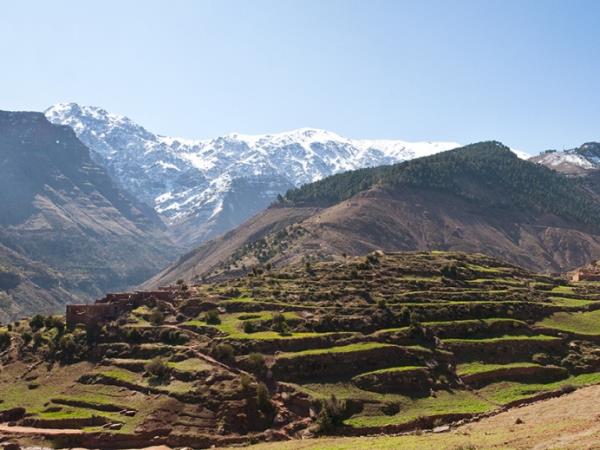
Morocco vacation, central highlights
A relaxing journey through Morocco's hidden heartlands.
From
£1295 to £1450
15 days
ex flights
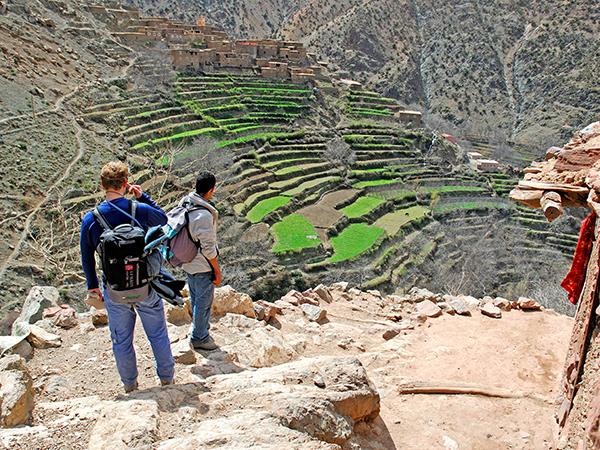
Atlas Mountains trekking and Marrakech
The very best way to explore Morocco’s Atlas Mountains
From
€1520 to €1605
8 days
ex flights


Contact Us
Call us for a chat about our vacations. We are happy to discuss your vacation and help in any way we can. No bots, queues or awful hold music.

1-866-821-6866
Call toll free
Calling from outside the USA

Africa’s contemporary art
And, whilst artworks from centuries past might have left the continent, artistry never did. Since the 1960s – the so-called years of independence – there have been several modern art movements in Africa. Contemporary art is becoming an exciting career in many big African cities – there are artists collectives, new galleries and art fairs.
But there’s a risk that Africa’s newer art is leaving the country. In Accra, gallerists found that 90 percent of their art was being sold to foreign investors. Museums contain priceless treasures – but keeping heritage where it belongs comes at a cost.
There is amazing scope for African countries to open more and more museums to tell its stories – but the money will often come from outside of the continent. France loaned €30m to Benin. Ethiopia’s new Museum of Art and Science was built thanks to significant Chinese investment in the country; China also funded Dakar’s massive Museum of Black Civilisations.
The common gripe about certain African museums and galleries is that their success depends on their location, and their financial backers. The lack of funding in Nairobi, for example, sees them falling into disrepair; some galleries have poor security, empty rooms, and a lack of interpretation available for what’s on the walls. This is all a question of funding. New investment in new spaces show that art can be presented in vibrant spaces deserving of its beauty. The art has always been here; it just needs a space – and, whether it will be shown within hand-crafted walls or dappled sculpture gardens, time and money will tell.
But there’s a risk that Africa’s newer art is leaving the country. In Accra, gallerists found that 90 percent of their art was being sold to foreign investors. Museums contain priceless treasures – but keeping heritage where it belongs comes at a cost.
There is amazing scope for African countries to open more and more museums to tell its stories – but the money will often come from outside of the continent. France loaned €30m to Benin. Ethiopia’s new Museum of Art and Science was built thanks to significant Chinese investment in the country; China also funded Dakar’s massive Museum of Black Civilisations.
The common gripe about certain African museums and galleries is that their success depends on their location, and their financial backers. The lack of funding in Nairobi, for example, sees them falling into disrepair; some galleries have poor security, empty rooms, and a lack of interpretation available for what’s on the walls. This is all a question of funding. New investment in new spaces show that art can be presented in vibrant spaces deserving of its beauty. The art has always been here; it just needs a space – and, whether it will be shown within hand-crafted walls or dappled sculpture gardens, time and money will tell.
Great cities in Africa for galleries & museums
Accra
Ghana’s capital has long been considered one of the hubs for art in West Africa, starting with artists who rose to prominence in the 1960s after Ghana became independent. It’s only since around 2020 that being an artist is finally being seen as a valid and profitable profession, resulting in an explosion of creativity.
Curator Chantel Akworkor Thompson suggests starting at the established art museums, which present the older generations of artists. From here, you can start looking at the galleries and collectives. ADA is a contemporary gallery that seeks out emerging artists, whilst Gallery 1957 is a name with a nod to the year the country became independent from Britain.
Ghanian artists champion the new art scene. There’s Artists Alliance Gallery, founded by famous Ghanian artist Ablade Glover, featuring the work of himself and many others, and dot.ateliers, an artist residency founded by Amoako Boafo, one of the capital’s most successful contemporary artists.
Curator Chantel Akworkor Thompson suggests starting at the established art museums, which present the older generations of artists. From here, you can start looking at the galleries and collectives. ADA is a contemporary gallery that seeks out emerging artists, whilst Gallery 1957 is a name with a nod to the year the country became independent from Britain.
Ghanian artists champion the new art scene. There’s Artists Alliance Gallery, founded by famous Ghanian artist Ablade Glover, featuring the work of himself and many others, and dot.ateliers, an artist residency founded by Amoako Boafo, one of the capital’s most successful contemporary artists.
Dakar
Dakar’s first president after independence was Leopold Sedar Senghor, a poet and writer who poured resources into the arts. The legacy continues. There’s the Museum of Black Civilisations, which has room for tens of thousands of artworks, including artists yet to be discovered and pieces yet to be returned. There’s also a thriving modern art scene – including Dak’Art Biennale, an art fair. The prestigious Black Rock artist residency helps nurture new talent. It was set up by US artist Kehinde Wiley, who was among the first Black artists to receive a presidential commission when he made an official portrait of Barack Obama.
Johannesburg
I was shot in Joburg. That’s the name of a photography gallery in Johannesburg, one of many contemporary galleries in a city that is bursting with them. Then there’s the Melrose Gallery, which represents Esther Mahlangu, and Goodman Gallery, which was founded here during the apartheid era, where it defied segregation and now has branches in Cape Town and London, too.
Gallery MOMO was founded in 2002 and Joburg Contemporary Art Foundation (JCAF) opened in 2020 in an old electrical substation. Tours of the Braamfontein and Maboneng areas reveal the newest works of all: huge street art murals.
Gallery MOMO was founded in 2002 and Joburg Contemporary Art Foundation (JCAF) opened in 2020 in an old electrical substation. Tours of the Braamfontein and Maboneng areas reveal the newest works of all: huge street art murals.
Harare
Shona – the Zimbabwean sculptural movement of the 1960s and 1970s has left smooth marks on this pleasant, leafy city – there’s a sculpture park and two galleries associated with the movement. What’s more, the design of Harare’s national gallery (opened 1957) was inspired by Le Corbusier. Just a five-minute walk away is the contemporary First Floor Gallery.
But it’s hard to be an artist in Harare. Unemployment rates mean that artists can’t support themselves. The city has a few art collectives, and celebrity sales help raise profiles of Zimbabwean artists – Jay-Z and Kevin Hart both bought Moffat Takadiwa pieces, with Hart displaying his in his Hollywood office.
But it’s hard to be an artist in Harare. Unemployment rates mean that artists can’t support themselves. The city has a few art collectives, and celebrity sales help raise profiles of Zimbabwean artists – Jay-Z and Kevin Hart both bought Moffat Takadiwa pieces, with Hart displaying his in his Hollywood office.
Lagos
The largest, most commercial West African city, Lagos has an art scene to match. Whilst the Museum of West African Art will open in Benin City, Lagos has the ART X Lagos art fair, founded 2016, which by the 2020s featured over 30 galleries from over 40 countries exhibiting over 120 artists, and which continues to grow.
There are contemporary art galleries like O’DA Art Gallery, ko gallery, Tiwani Contemporary, SMO Contemporary Art, and Rele Gallery, which opened a London branch. Then there’s Yemisi Shyllon Museum of Art at the Pan-Atlantic University in Lagos, which hosts works by established and younger Nigerian artists.
There are contemporary art galleries like O’DA Art Gallery, ko gallery, Tiwani Contemporary, SMO Contemporary Art, and Rele Gallery, which opened a London branch. Then there’s Yemisi Shyllon Museum of Art at the Pan-Atlantic University in Lagos, which hosts works by established and younger Nigerian artists.
Marrakech
Alongside Tangiers, Casablanca and Rabat, Marrakech is considered one of Morocco’s art centers, but at first glance it’s not African art that grabs the headlines for tourists in Marrakech, but European influence – most famously, in the Majorelle Gardens designed and once owned by French fashion designer Yves Saint Laurent. Then there’s the Yves Saint Laurent Museum, devoted to the fashion designer’s work.
But there’s also the Museum of African Contemporary Art Al Maaden (MACAAL) and the first-of-its-kind 1-54 Contemporary African Art Fair, which comes annually to Marrakech, alongside London and New York.
But there’s also the Museum of African Contemporary Art Al Maaden (MACAAL) and the first-of-its-kind 1-54 Contemporary African Art Fair, which comes annually to Marrakech, alongside London and New York.
Nairobi
Flying the flag for East Africa, Nairobi isn’t always an easy city for visitors who stop en route to their safari, but as the commercial center of the region, it’s proven the locus of art for the east of the continent. Sudanese artist Eltayeb Dawelbait and Ethiopian artist Fitsum Berhe Woldelibanos have joined Kenyans like Boniface Maina and Michael Soi to work in the city. Nairobi’s East African Art Auction has occurred annually since 2013, hosted by influential art space Circle Art Gallery.
Whilst the scene isn’t as established as in Johannesburg, Accra or Lagos – there’s a lack of galleries and art schools, and the government doesn’t provide much funding for visual arts – it’s emerging apace. Witness Kibera Creative Arts, in Kibera, Africa’s largest underserved low-income neighbourhood; or the GoDown Arts Centre, an art collective housed in former car repair warehouse.
Whilst the scene isn’t as established as in Johannesburg, Accra or Lagos – there’s a lack of galleries and art schools, and the government doesn’t provide much funding for visual arts – it’s emerging apace. Witness Kibera Creative Arts, in Kibera, Africa’s largest underserved low-income neighbourhood; or the GoDown Arts Centre, an art collective housed in former car repair warehouse.
More Cultural Africa articles
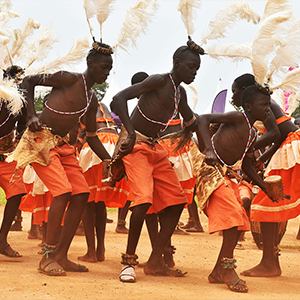
From Burundian drumming to Nollywood in Lagos, Africa’s culture is vast and varied.
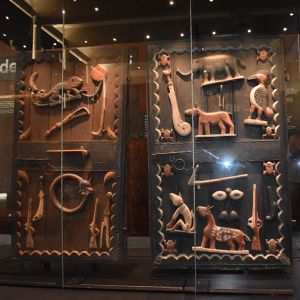
Most cultural vacations to Benin focus on visiting traditional villages over exploring its contemporary culture.
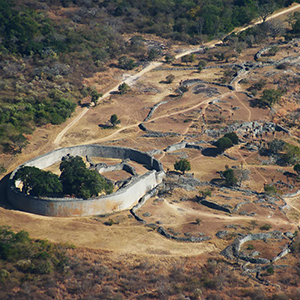
Discover the history and significance of Zimbabwe’s ancient capital.
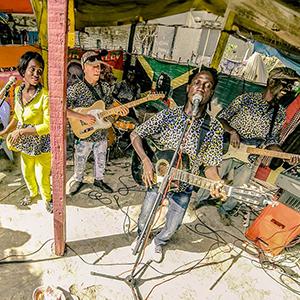
Read all about African music and discover how you can incorporate its sounds, traditions and its exuberant modern iterations into your next vacation.



.jpg)


