Baja California travel guide

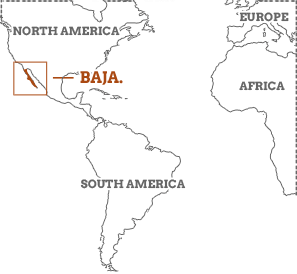
Driving down the 1,247km of Mexico’s Baja California peninsula, you’ll feel like you’re reaching the tip of the world. There are four desert regions along the way, supporting characteristic giant cacti, and a mountain range along Baja’s spine. But in these arid landscapes, you’re never far from the water; the peninsula measures just 40km at its narrowest point. And this is some water.
Each year, virtually all the grey whales in the world swim over 8,000km to congregate in the waters off Baja California. That’s some endorsement – but the destination lives up to it.
Jacques Cousteau referred to the Sea of Cortez, separating Baja from the mainland, as “the world’s aquarium.” Containing almost 3,000 marine species, including 900 fish and a third of the world’s marine mammal species, the description seems apt. Kayaking in these waters – from islet to islet – is an idyllic way to discover Baja’s marine life up close. But it’s the lagoons on the Pacific coast that provide the most spectacular draw, as they fill up with thousands of grey whales each year – a species so friendly they regularly approach boats and introduce their enormous babies to the wide eyed onlookers onboard. Find out more in our Baja travel guide.
Things to do in Baja California…

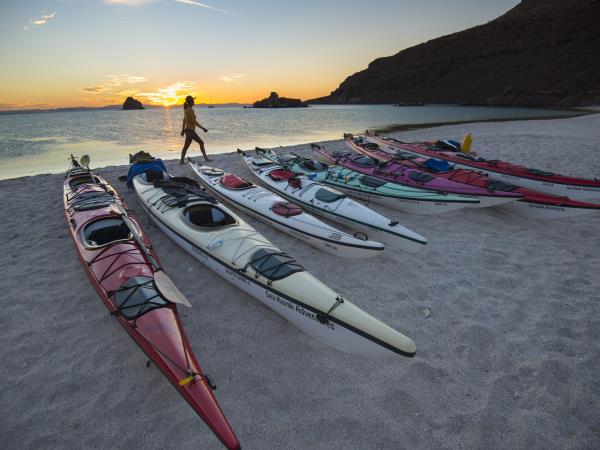
Baja California’s raison d’être for most tourists is the grey whale. Virtually every grey whale on Earth swims here to mate and give birth between February and March, clustering in sheltered lagoons. But this is no ordinary whale watching experience; the greys are known as “the friendly whale” and appear to see out boats to play with, meaning this is one of the most up close and personal whale encounters in the world. Dozens of islands and islets lie scattered between La Paz and Loreto in the tranquil Sea of Cortez, and one of the best ways to explore them is in a kayak. Multi-day kayaking trips take you from island to rocky island, with the opportunity to stretch your legs by trekking across the dunes, or cool off with a snorkel. Sea lions and pelicans frolic on the islands, while dolphins leap offshore. At night, far from light pollution, you can enjoy sleeping beneath bright stars – or swimming with glowing bioluminescence. Paddling is not the only way to island hop – small ship cruises in the Sea of Cortez are a super comfortable way to explore. With paddle boards, yoga mats, wetsuits and snorkels onboard, this doesn’t need to be the lazy option either – it just means you get to choose how active and adventurous you want each day to be, with the hot tub and massages definitely falling into the more relaxing end of the vacation spectrum.

Contact Us

Responsible Travel, Travel Team

Call us for a chat about our vacations. We are happy to discuss your vacation and help in any way we can. No bots, queues or awful hold music.

Responsible Travel, Travel Team

Things not to do in Baja California…

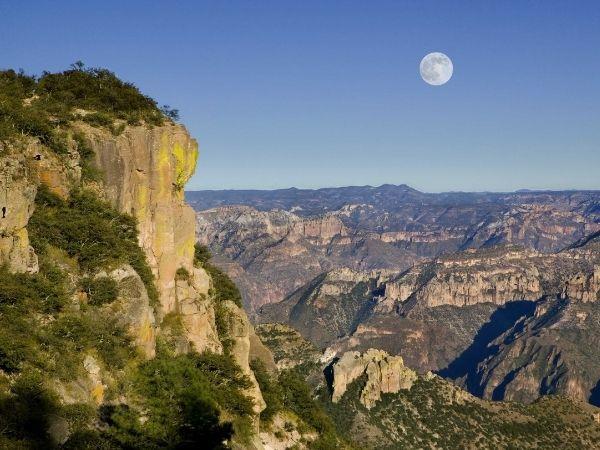
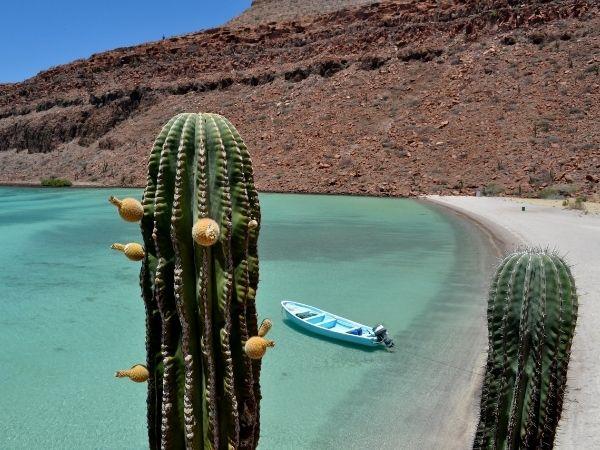
Spending all your time in “the world’s aquarium” is a thrilling prospect, but don’t overlook Baja’s land-based delights. This strange, coastal desert is dominated by the Sierra de la Giganta, whose highest peak reaches 1,176m. An extraordinary amount of otherworldly flora thrives in this virtually rain-free environment, including the giant cardón cactus, Dali-esque Boojum tree and “creeping devil” cactus that crawls slowly across the desert floor. Birdlife is abundant; with woodpeckers drilling into the cacti, roadrunners (actually cuckoos) dashing past, and ibis and giant kingfisher inhabiting the mangrove swamps.
Focus solely on the nature. The little town of Loreto and tiny whale camps offer great opportunities for meeting sudcalifornianos; this is Mexican village life at its best. Companies working here will employ bilingual, local guides, serve up traditional dishes made with local produce (including the incredible, abundant seafood) – or recommend local restaurants – and support craftspeople creating handmade textiles and jewellery.
Leave anything behind. Our vacation companies working in Baja have 'pack in – pack out' policies, meaning they take all their litter back out with them. They also travel in small groups and where possible, buy produce locally. Baja’s communities have worked hard to ensure that – despite an increase in visitors – Baja looks much the same as it did decades ago, with low impact eco camps instead of huge resorts, or simple spaces to pitch tents, and it’s everyone’s duty to help them preserve this fragile landscape and rich marine environment.

Marine wildlife in Baja California

Grey whales

The grey whales are Baja’s star attraction. Virtually every single one of these 15m, gentle giants migrates to Baja between January and March to mate and give birth – and they are known for their curiosity and friendliness towards the boats. Baja offers possible the closest whale encounters on the planet, as mothers nudge their days-old babies towards the waiting boats, and rub themselves against the hulls. Grey whales have an unusual feeding habit, turning on their sides to scoop up sediment from the seabed which they then filter through their baleen plates for tiny sea creatures.

Other whales

Traveling across the narrow Baja Peninsula, you arrive at the Sea of Cortez – which Jacques Cousteau called “the world’s aquarium.” Blue whales migrate to these deep waters each spring, along with fin, humpback, pilot and Bryde’s whales; sperm whales are resident year-round. Humpbacks are known for being particularly acrobatic, leaping out of the water and slapping their huge fins and flukes. The blue whale, reaching lengths of up to 30m, is the largest animal that has ever lived.

Whale sharks

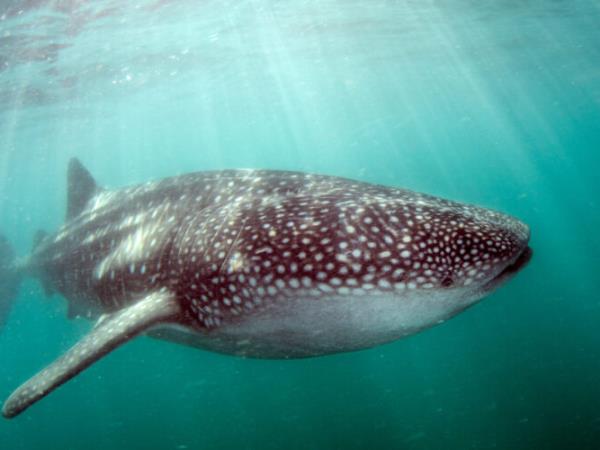
In Bahia de la Paz, on the eastern side of the peninsula, whale sharks migrate each year between October and March. The world’s largest fish – reaching up to 10m here – are not dangerous, and as well as viewing them from a boat, it may even be possible to swim alongside them as long as you keep your distance. If you want to learn more about this mysterious species, liveaboard research trips are available where you’ll be joined by a whale shark scientist, and can contribute to the collection of data as you learn how to identify and sex the sharks, measure them and learn about their behaviour and the threats facing them.

Other species

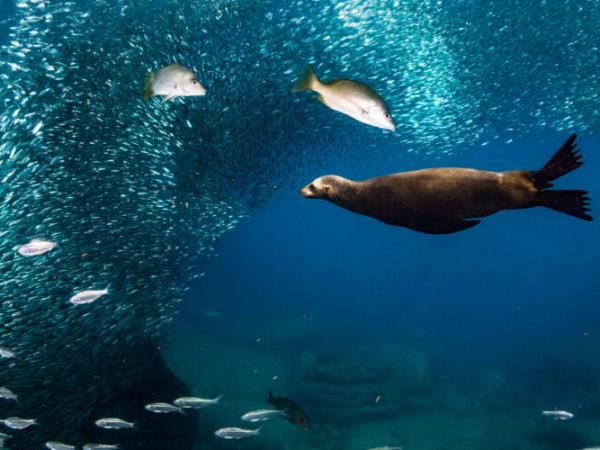
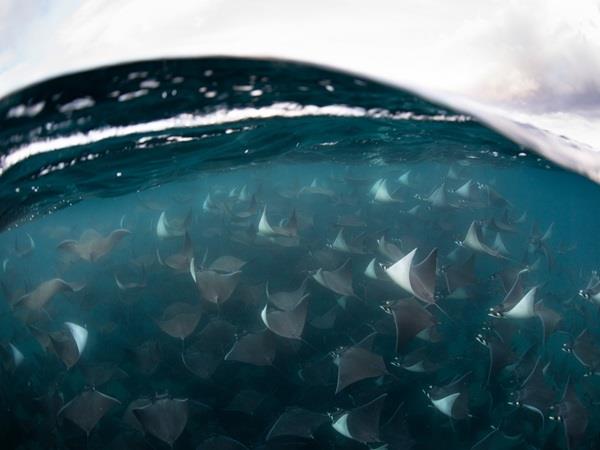
Boat trips around Baja are the marine equivalent of an African safari – you’ll be ticking off species at an incredible rate. Pods of dolphins whizz through the water, sea lions bob around your kayak, mobula rays soar above the waves and there is an incredible number of birds to observe on the beaches, cliffs and coves, including brown pelicans, boobies and hummingbirds further inland. Sea turtles also nest along the peninsula, with green, loggerhead, hawksbill, leatherback and olive ridley turtles visiting the beaches at different times of year. Come in November to February to see the huge leatherbacks – which measure around two metres and can weigh 900kg – hauling themselves ashore.
Written by Vicki Brown
Photo credits: [Page banner: ryan harvey] [Things to do: Mary Fairchild] [Other whales - Humpback: Max Goldberg] [Whale sharks: Brian Lauer] [Other species - sea lions: Jon DeJong]