Walking vacations in the Balkans
More than one of these mountainous nations can be explored at once, thanks to a series of cross-border long distance trails.
You’re on a ridge over a valley as smooth as green baize, an amphitheatre of ragged limestone peaks looking on. It’s quiet but loud – there’s no one else around, but there’s the whip of the wind, and, as you descend into the valley, insects fly ahead of you from the grass, birds call in the trees. Where are you? Kosovo? Montenegro? Albania? The beauty is, you’ve visited all three.
This is hiking in the Balkans, among mountains that form one of Europe’s last wilderness areas. The peninsula region has historically been under-explored by international tourists, and it’s only in the last twenty years that it has become open to increasing numbers of visitors.
On our mountainous Balkans walking vacations, expect wild landscapes with – unlike the Alps – very few ski lifts or cable cars in sight. “Montenegro is wild in all senses of the word – especially its nature and its landscapes,” says Emma Heywood, from our partner Undiscovered Balkans. “It’s also a country with some of the last surviving wildernesses in Europe… France just seems a bit tame in comparison, lovely as it is!”
Long distance walking trails celebrate, and strengthen, the relationships between these close-packed nations with their diverse Muslim and Christian Orthodox and Catholic populations. There’s the Peaks of the Balkans Trail – also sometimes known as the Balkans Peace Trail – linking Albania, Montenegro and Kosovo. Then there’s the newer High Scardus Trail, linking Albania, North Macedonia and Montenegro.
You’re on a ridge over a valley as smooth as green baize, an amphitheatre of ragged limestone peaks looking on. It’s quiet but loud – there’s no one else around, but there’s the whip of the wind, and, as you descend into the valley, insects fly ahead of you from the grass, birds call in the trees. Where are you? Kosovo? Montenegro? Albania? The beauty is, you’ve visited all three.
This is hiking in the Balkans, among mountains that form one of Europe’s last wilderness areas. The peninsula region has historically been under-explored by international tourists, and it’s only in the last twenty years that it has become open to increasing numbers of visitors.
On our mountainous Balkans walking vacations, expect wild landscapes with – unlike the Alps – very few ski lifts or cable cars in sight. “Montenegro is wild in all senses of the word – especially its nature and its landscapes,” says Emma Heywood, from our partner Undiscovered Balkans. “It’s also a country with some of the last surviving wildernesses in Europe… France just seems a bit tame in comparison, lovely as it is!”
Long distance walking trails celebrate, and strengthen, the relationships between these close-packed nations with their diverse Muslim and Christian Orthodox and Catholic populations. There’s the Peaks of the Balkans Trail – also sometimes known as the Balkans Peace Trail – linking Albania, Montenegro and Kosovo. Then there’s the newer High Scardus Trail, linking Albania, North Macedonia and Montenegro.

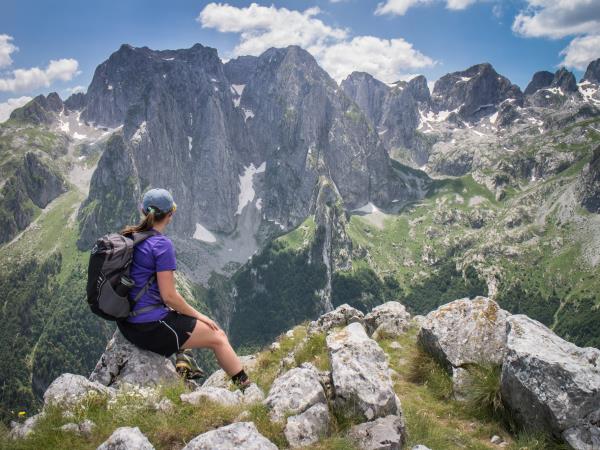
Walking vacation in Montenegro and Albania
Hike the most stunning peaks of Montenegro and Albania!
From
£1195 to £1245
8 days
ex flights
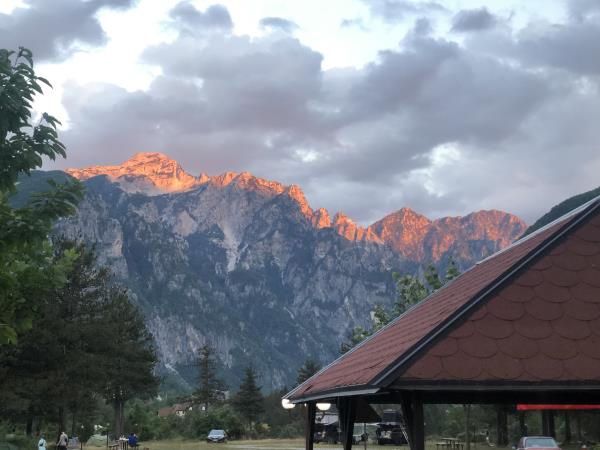
Accursed Mountains walking vacation, Albania
Hike everyday one Peak - in three different countries
From
£1350 to £1680
12 days
ex flights
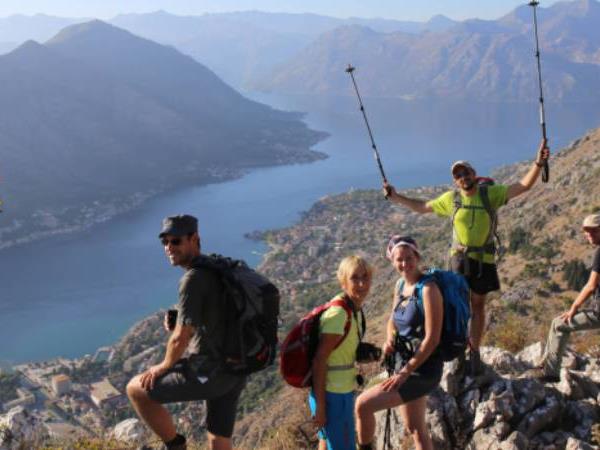
Balkans walking vacation
Challenging walks over passes and across borders
From
US $2680
8 days
ex flights


Contact Us
Call us for a chat about our vacations. We are happy to discuss your vacation and help in any way we can. No bots, queues or awful hold music.

1-866-821-6866
Call toll free
Calling from outside the USA

Walking vacations in the Balkans map: our best routes
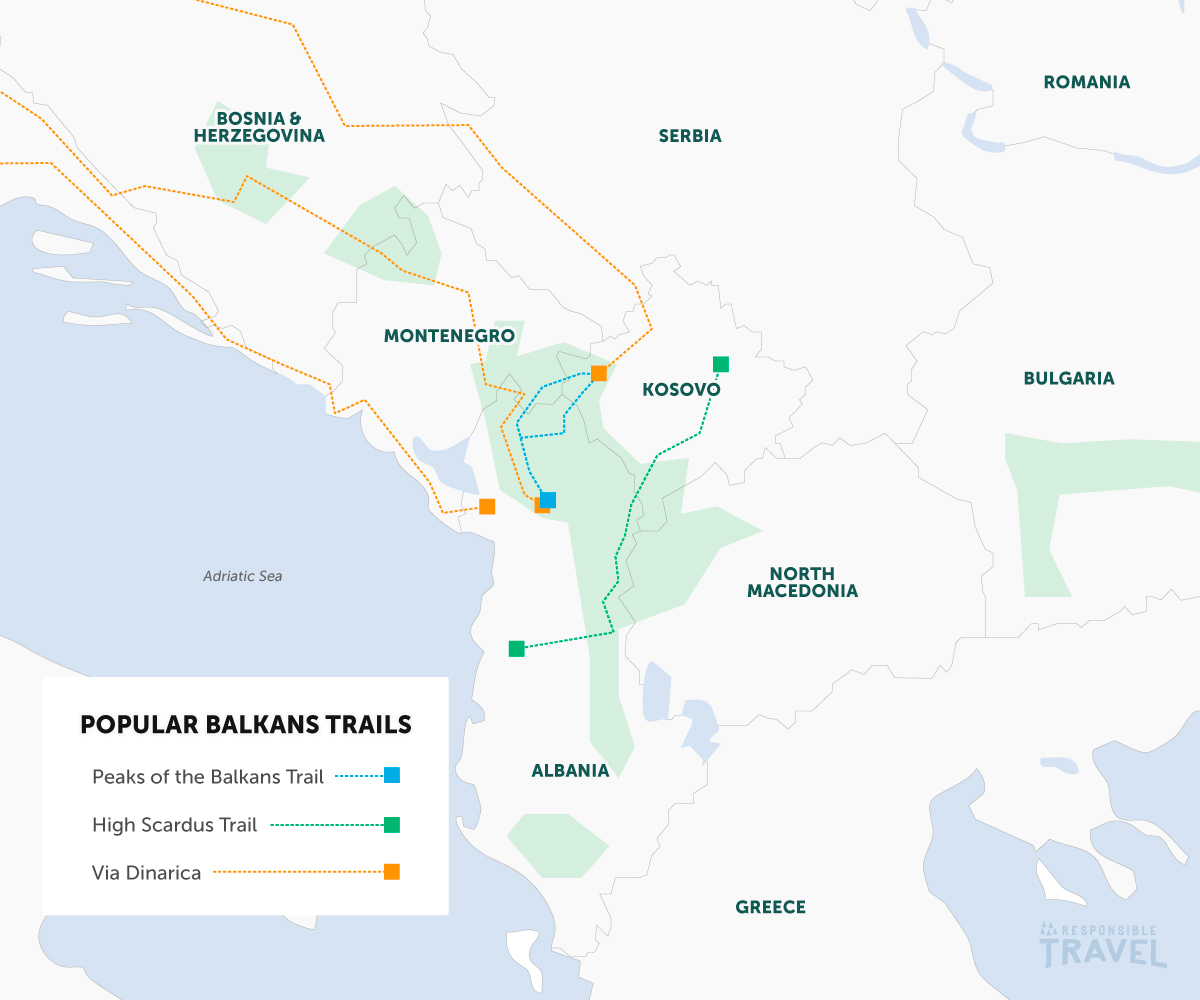
The Peaks of the Balkans Trail is 192km long and passes through Albania, Montenegro and Kosovo. The trail is a loop and can take two weeks to complete in its entirety.
The High Scardus Trail is the youngest and wildest long distance trail, most of the route set in Kosovo.
The Via Dinarica is a 2,000km-long whopper of a trail through the Dinaric Alps, following them from Slovenia through to Albania.
The High Scardus Trail is the youngest and wildest long distance trail, most of the route set in Kosovo.
The Via Dinarica is a 2,000km-long whopper of a trail through the Dinaric Alps, following them from Slovenia through to Albania.

These are muscular limestone landscapes – ‘Balkan’ derives from the word for mountain.![]()

What can you expect in the Balkans? Mountainous nations
What should you expect from walking in the Balkans? In a word: bulk. These are muscular limestone landscapes – ‘Balkan’ derives from the Turkic word for mountain. North Macedonia is the seventh most mountainous country in the world – beaten only by the likes of Bhutan. Montenegro is around 90 percent mountains. Many of the countries are small and are contained almost entirely within rocky ranges. This means that hikers can enjoy exploring multiple countries at once – plus the high mountains that serve as the natural borders between them.
Montenegro’s highest peak, Mount Kolata (2,534m), lies at the border with Albania. Mount Korab (2,764m) is on the border between Albania and North Macedonia, the highest peak in both. Then there’s Mount Trekufiri (2,366m), a mountain with a three-border summit shared between Albania, Montenegro and Kosovo. Ranges change names depending on who you talk to en route – the Accursed Mountains become the Albanian Alps, the Sar Mountains become the Sharr Mountains; in the ancient world, they were the Scardus Mountains.
Glorious as these limestone behemoths are, these aren’t the highest mountains in Europe. Many of the Balkans’ peaks can be scaled in summer by hikers with no mountaineering experience – and that’s part of the appeal.
Montenegro’s highest peak, Mount Kolata (2,534m), lies at the border with Albania. Mount Korab (2,764m) is on the border between Albania and North Macedonia, the highest peak in both. Then there’s Mount Trekufiri (2,366m), a mountain with a three-border summit shared between Albania, Montenegro and Kosovo. Ranges change names depending on who you talk to en route – the Accursed Mountains become the Albanian Alps, the Sar Mountains become the Sharr Mountains; in the ancient world, they were the Scardus Mountains.
Glorious as these limestone behemoths are, these aren’t the highest mountains in Europe. Many of the Balkans’ peaks can be scaled in summer by hikers with no mountaineering experience – and that’s part of the appeal.
The abundance of plum trees outside hints that there might be homemade raki served after dinner![]()
Crossing borders whilst walking in the Balkans
Just a few decades ago, long distance walking between Balkan countries wouldn’t have been possible. Albania only opened its borders to foreign nationals in 1990. In the 1990s, the Yugoslav Wars affected many countries in the area. You’ll walk on paths that were once used by people seeking secret ways out of their home countries. Now, you might find these same, once dangerous, borders marked with just a single stone.
Establishing long distance walking here was no mean feat; many trails had fallen into complete disuse due to decades of conflict. Creating the Peaks of the Balkans Trail involved a lengthy process of getting the respective border polices of different nations to agree to allow walkers to cross without passport checks. Now, when walkers reach the borders, they might be asked to show permits, whilst their luggage is transferred from Kosovan horses onto Albanian ones.
These areas are very isolated – there are no roads – and were once the preserve only of semi-nomadic shepherding communities, their flocks, and their bearlike Sharri dogs. Their existence here is fragile and vanishing. In the aftermath of the Kosovo war, many shepherding pastures were left ungrazed. Young people leave for the cities – others leave the countries altogether: Albania’s population plummeted when its borders opened.
Whilst shepherding declines, tourism represents a new opportunity for local businesses, and a way for young people to return home. Shepherds have started hosting hikers instead, as well as turning refuges into guest houses. Some of our vacations help local people apply for grants to set up their own tourism enterprises. You might stay in homestays, where the abundance of plum trees outside hints that there might be homemade raki served after dinner. Hiking tourism has helped bring about protections for nature, too – 40,000 hectares in north Albania have become a nature park as a result of NGO-funded sustainable tourism development.
Establishing long distance walking here was no mean feat; many trails had fallen into complete disuse due to decades of conflict. Creating the Peaks of the Balkans Trail involved a lengthy process of getting the respective border polices of different nations to agree to allow walkers to cross without passport checks. Now, when walkers reach the borders, they might be asked to show permits, whilst their luggage is transferred from Kosovan horses onto Albanian ones.
These areas are very isolated – there are no roads – and were once the preserve only of semi-nomadic shepherding communities, their flocks, and their bearlike Sharri dogs. Their existence here is fragile and vanishing. In the aftermath of the Kosovo war, many shepherding pastures were left ungrazed. Young people leave for the cities – others leave the countries altogether: Albania’s population plummeted when its borders opened.
Whilst shepherding declines, tourism represents a new opportunity for local businesses, and a way for young people to return home. Shepherds have started hosting hikers instead, as well as turning refuges into guest houses. Some of our vacations help local people apply for grants to set up their own tourism enterprises. You might stay in homestays, where the abundance of plum trees outside hints that there might be homemade raki served after dinner. Hiking tourism has helped bring about protections for nature, too – 40,000 hectares in north Albania have become a nature park as a result of NGO-funded sustainable tourism development.
Best time to go walking in the Balkans
You’ve got to wait for the snow to melt, so head to the Balkans for mountain walking from mid-June to mid-October, though some of our small group trips start out as early as May. Remote villages are often quiet over their isolated winters, families returning in the stable summer months to accommodate hikers in what are increasingly popular walking areas. Still, this is mountain walking where high ridges can be very exposed to the elements and weather can change quickly, even in the summer.
In summary
More Balkans articles
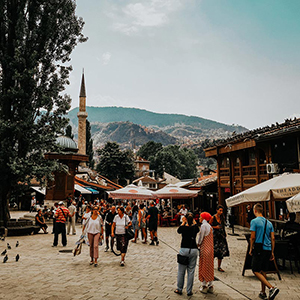
This collection of complex and culturally rich countries is packed with national parks, lakes, mountains and coastal gems.
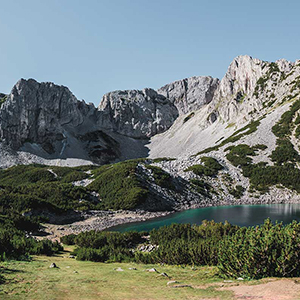
For hiking, spring and autumn are wonderful. Just avoid peak season in Dubrovnik and Bled.
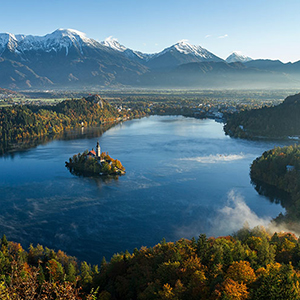
Our Balkans map and highlights explores the countries making up the region and some of the unmissable gems in each.
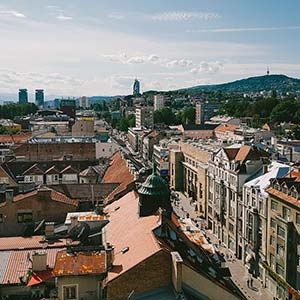
As you'd expect from a region that's been ruled over by a succession of empires, the cities are extraordinarily diverse.
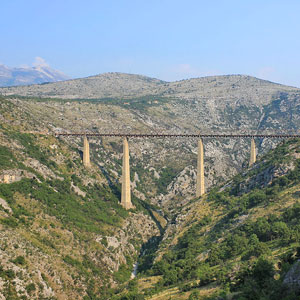
Balkans rail vacations take you on a winding route from Slovenia to Kosovo via a string of utterly underrated cities.
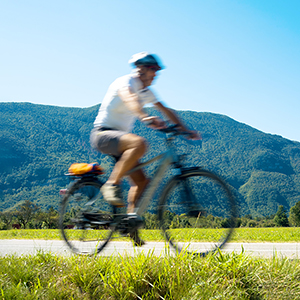
Cycling vacations explore some of Europe’s less-seen landscapes, as well as key cities as you cross borders.
It can be daunting to know where to start and what not to miss. To help, we’ve compiled some useful travel tips.
Our guide to responsible tourism in the Balkans explores the key issues to keep in mind.




.jpg)

