Self drive tours in Nova Scotia
I feel a funny kinship with Nova Scotia, living as I do in Bristol, England. Explorer John Cabot sailed from Bristol harbour on his 15th-century voyage, to explore Atlantic Canada, and some think he may have visited the peninsula. A replica of his boat is still here in our harbour. There’s even a pub near my house called the Nova Scotia.
A historic expedition route links us across the Atlantic. The other commonality? Tidal range.
Eastern Canada has bays with the highest tidal ranges in the world. In Nova Scotia’s famous Bay of Fundy, the sea can rise 15m in one fell swoop. And where is the second highest range after eastern Canada? Nowhere else but the Bristol Channel at Avonmouth.
A historic expedition route links us across the Atlantic. The other commonality? Tidal range.
Eastern Canada has bays with the highest tidal ranges in the world. In Nova Scotia’s famous Bay of Fundy, the sea can rise 15m in one fell swoop. And where is the second highest range after eastern Canada? Nowhere else but the Bristol Channel at Avonmouth.

Watch the tide roll in as you tuck into Nova Scotia’s answer to surf and turf: lobster and local beef.![]()

The difference is that at Burntcoat Head, Nova Scotia, you can ‘dine at the bottom of the sea’, thanks to enterprising restaurants, and watch the tide roll in as you tuck into Nova Scotia’s answer to surf and turf: lobster and local beef. It’s hard to imagine doing the same anywhere in the Bristol Channel. Surf and mud, more like.
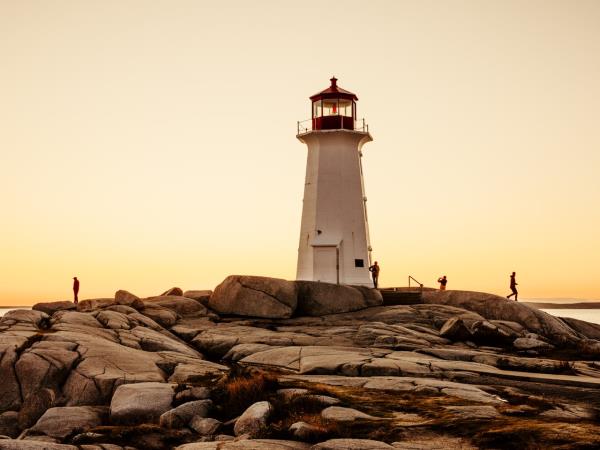
Traveling Nova Scotia by car means that you can get to the villages on the coast that make Nova Scotia great: the colourful towns of Peggy’s Cove, Mahone Bay, and UNESCO-listed Lunenburg. It also means you can go into the wilderness and drive the Cabot Trail, one of the greatest driving routes in the world.
Traveling Nova Scotia by car means that you can get to the villages on the coast that make Nova Scotia great: the colourful towns of Peggy’s Cove, Mahone Bay, and UNESCO-listed Lunenburg. It also means you can go into the wilderness and drive the Cabot Trail, one of the greatest driving routes in the world.

Nova Scotia: driving Canada’s quirky province
“It’s a really under-visited part of Canada,” says Simon Mills, from our Canada self drive experts Native Escapes.
Dining on the bottom of the sea is one curiosity in Canada’s second smallest province. When you’re not dining on the bottom of the sea, the whales are; the Bay of Fundy is one of the best places to see them. Local marine biology students might join you on your boat tour, so they can introduce you to the whales by their names.
After getting acquainted with cetaceans, you might learn to splice ropes with local fishermen, or try tubing – the art of relaxing in a rubber ring whilst a river bears you gently through the landscape.
Dining on the bottom of the sea is one curiosity in Canada’s second smallest province. When you’re not dining on the bottom of the sea, the whales are; the Bay of Fundy is one of the best places to see them. Local marine biology students might join you on your boat tour, so they can introduce you to the whales by their names.
After getting acquainted with cetaceans, you might learn to splice ropes with local fishermen, or try tubing – the art of relaxing in a rubber ring whilst a river bears you gently through the landscape.
A warm welcome
You don’t need to feel any kinship with Nova Scotia to be welcomed there. Hosting and feeding guests are high on the list of priorities. Behind clapboard walls are all manner of bakeries, breweries, tea rooms – and bed and breakfasts.
“Nova Scotia and neighbouring New Brunswick have a great network of boutique guest houses and B&Bs,” says Simon. Many of them are found along the coastal roads that link the towns and villages.
As for entertainment, the fiddle is the sound you’ll hear in Cape Breton’s pubs and roadside inns, brought over by Scottish settlers. Just under a third of Nova Scotians are Scottish and another third are English. And, much like in Britain, journey a few miles in the province and you may find the accent has changed.
“Nova Scotia and neighbouring New Brunswick have a great network of boutique guest houses and B&Bs,” says Simon. Many of them are found along the coastal roads that link the towns and villages.
As for entertainment, the fiddle is the sound you’ll hear in Cape Breton’s pubs and roadside inns, brought over by Scottish settlers. Just under a third of Nova Scotians are Scottish and another third are English. And, much like in Britain, journey a few miles in the province and you may find the accent has changed.
Listening to fiddle music in a cosy bar, you’re a captive audience, too full of lobster and famous Digby scallops to move.![]()
Peninsula landscapes
The Nova Scotians have a beautiful peninsula in their care. By car, you can get out of the glow of the town very fast – great if you want to stargaze. Acadian Skies and Mi’kmaq Lands, in southwestern Nova Scotia, is recognised as North America’s first official starlight destination. It’s found in Kejimkujik National Park and National Historic Site, a great place to discover more about the first people of Nova Scotia, the Mi’kmaq, who were here long before any European settlement.
Three quarters of the province is cloaked in forest, much of it part of the large forestry industry. This is blueberry and cranberry country. If you don’t see them on the bushes, you can order them on the menu – try blueberry grunt, which resembles a cobbler.
The forested hills undulate higher in the west, becoming the Cape Breton Highlands, where the province’s most famous driving route sits.
Three quarters of the province is cloaked in forest, much of it part of the large forestry industry. This is blueberry and cranberry country. If you don’t see them on the bushes, you can order them on the menu – try blueberry grunt, which resembles a cobbler.
The forested hills undulate higher in the west, becoming the Cape Breton Highlands, where the province’s most famous driving route sits.
The Cabot Trail
The Cabot Trail, a famous 298km-long road that rings Cape Breton Highlands National Park, is one of the world’s best scenic driving routes. You don’t need to be a racing driver to enjoy it; you just need to have an eye for beauty – but go easy on your brake pads. There’s a conveniently located brake shop at the bottom of one of trail’s steep hills for those who don't.
Our top trip
Nova Scotia self drive vacation
Get off the beaten track in captivating Nova Scotia
From
£4420
16 days
ex flights
Tailor made:
This trip can be tailor made throughout the year to suit your requirements
This trip can be tailor made throughout the year to suit your requirements
Contact Us

Call us for a chat about our vacations. We are happy to discuss your vacation and help in any way we can. No bots, queues or awful hold music.

1-866-821-6866
Call toll free
Calling from outside the USA


Practicalities
Tailor made routes
Self drive tours in Nova Scotia are tailor made. Our partners will work with you to create a personalised route that can be tweaked to your interests. Accommodation in Nova Scotia’s charming B&Bs is arranged for you, and there are many great restaurant recommendations to inspire you along the way.
“In Nova Scotia there’s so much to see in a two-week period,” says Simon. “People don’t realise how big it is.”
Most tours circumnavigate the coast, exploring the province’s three areas: Yarmouth (the one with the lighthouses), Halifax (the one with the biggest city), and Cape Breton (the one with the city-dwarfing wilderness area) in two weeks. Adding in New Brunswick, the province next door, and Prince Edward Island, makes for a more expansive exploration of Eastern Canada over the same time frame.
Whatever trip you do, your international flight is likely to arrive in Halifax: Nova Scotia’s capital and its largest settlement. Take a day here before you pick up your car to delve into Nova Scotia’s social history via remnants of the Titanic at the Maritime Museum, and the city’s excellent Museum of Immigration. As you ponder the oral histories and faded photographs on record here, keep a look out for Bristolians.
“In Nova Scotia there’s so much to see in a two-week period,” says Simon. “People don’t realise how big it is.”
Most tours circumnavigate the coast, exploring the province’s three areas: Yarmouth (the one with the lighthouses), Halifax (the one with the biggest city), and Cape Breton (the one with the city-dwarfing wilderness area) in two weeks. Adding in New Brunswick, the province next door, and Prince Edward Island, makes for a more expansive exploration of Eastern Canada over the same time frame.
Whatever trip you do, your international flight is likely to arrive in Halifax: Nova Scotia’s capital and its largest settlement. Take a day here before you pick up your car to delve into Nova Scotia’s social history via remnants of the Titanic at the Maritime Museum, and the city’s excellent Museum of Immigration. As you ponder the oral histories and faded photographs on record here, keep a look out for Bristolians.
When to go
May to October is the best time for self driving in Nova Scotia – this is the high season, when the most accommodation is open. May and October can still be chilly, with the average temperature in Halifax only around 10°C. Whale watching season in the Bay of Fundy runs between June and October, as whales start to arrive in the bay from June, with peak activity in August. That’s also, incidentally, a peak month for tourists, as the temperature reaches a daily average of around 19°C – the high for the province.
More Canada self drive articles
In Canada, self driving is one of the best ways to get around if you want to see multiple sights.
Our map and highlights help you make the choice on where to drive in Canada.
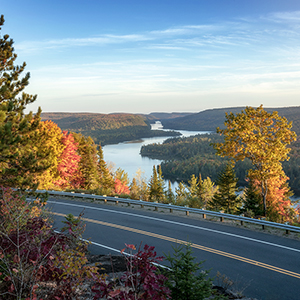
Quebec road trips: where you might come for the views but end up staying for the food.
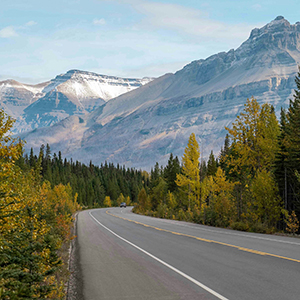
The open road awaits – read our guide to this iconic Canada adventure.