Transcaucasian Trail vacations
This 3,000km-long trail in the making has captured the imagination of the world. Even a short hike along part of it can support its vision for uniting and empowering local communities.
Early on a summer morning, the Adishchala River in Georgia's mountainous Svaneti region is low. As the day progresses and heats up, meltwater gushes through; the river grows faster and stronger. Men sit along the banks with their horses, offering to ferry hikers and their bags across.
The fluctuating river is just one of the idiosyncrasies of hiking on the Transcaucasian Trail – TCT to its fans – a long distance walking route that connects hikers with some of the most remote and beautiful scenery of the Caucasus region, the natural boundary that divides Europe from Asia.
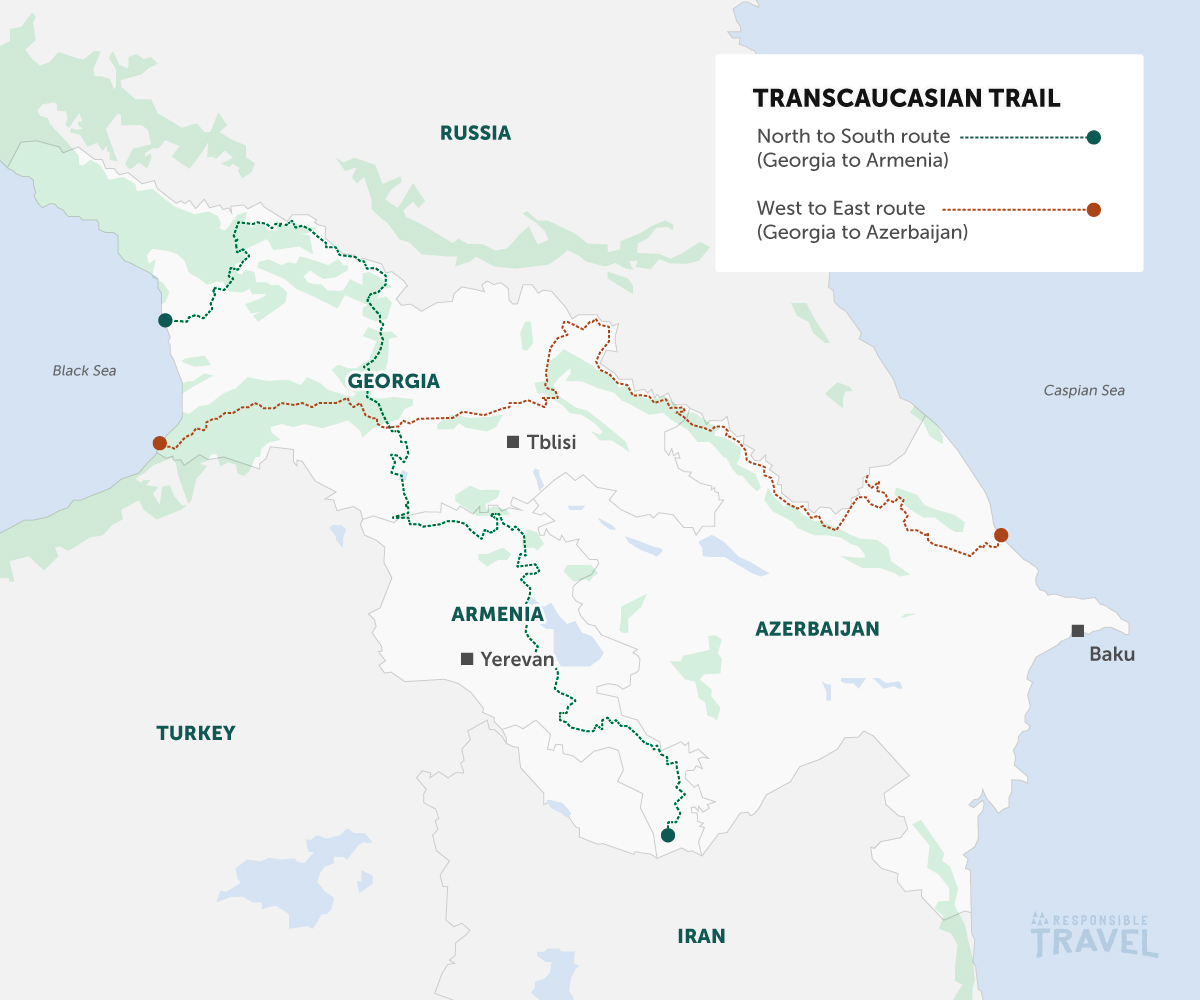
There was hiking in the region before the Transcaucasian Trail, of course, but this long-distance route – which was conceived in 2015 – aims to link diverse Caucasus regions between Russia and Iran, the Black Sea and the Caspian Sea. Hikers will eventually be able to follow two marked, 1,500km-long trails. First is a north-south route connecting the Greater and Lesser Caucasus Mountains, starting in Ajara, Georgia and ending on Armenia’s southern border with Iran. Second is an east-west route that goes into Azerbaijan. The first national section of the TCT opened at the end of 2021: an 827km route through Armenia. Smaller sections in Georgia and Azerbaijan followed.
When you walk on this trail, you cross some of the last truly wild areas of Europe. Alongside mountain regions that are fully isolated for six months of the year by snow, there are national parks with even fewer inhabitants. In the far south of Armenia, thru-hikers have to prepare for a three-day hike across Arevik National Park, where there are no water sources along the way. Our TCT vacations are a chance to get a taste of the route’s epic beauty – fully supported by guides and guidance.
Early on a summer morning, the Adishchala River in Georgia's mountainous Svaneti region is low. As the day progresses and heats up, meltwater gushes through; the river grows faster and stronger. Men sit along the banks with their horses, offering to ferry hikers and their bags across.
The fluctuating river is just one of the idiosyncrasies of hiking on the Transcaucasian Trail – TCT to its fans – a long distance walking route that connects hikers with some of the most remote and beautiful scenery of the Caucasus region, the natural boundary that divides Europe from Asia.
There was hiking in the region before the Transcaucasian Trail, of course, but this long-distance route – which was conceived in 2015 – aims to link diverse Caucasus regions between Russia and Iran, the Black Sea and the Caspian Sea. Hikers will eventually be able to follow two marked, 1,500km-long trails. First is a north-south route connecting the Greater and Lesser Caucasus Mountains, starting in Ajara, Georgia and ending on Armenia’s southern border with Iran. Second is an east-west route that goes into Azerbaijan. The first national section of the TCT opened at the end of 2021: an 827km route through Armenia. Smaller sections in Georgia and Azerbaijan followed.
When you walk on this trail, you cross some of the last truly wild areas of Europe. Alongside mountain regions that are fully isolated for six months of the year by snow, there are national parks with even fewer inhabitants. In the far south of Armenia, thru-hikers have to prepare for a three-day hike across Arevik National Park, where there are no water sources along the way. Our TCT vacations are a chance to get a taste of the route’s epic beauty – fully supported by guides and guidance.

Transcaucasian Trail map
What does walking the Transcaucasian Trail entail?
Fodder for thru-hikers
Walking the trail in its entirety is the preserve of ambitious thru-hikers who are willing to put in months of preparation, including sending themselves resupply packages. The 827km-long Armenia section takes six weeks. In sections without guest houses, hikers wild camp and must carry their gear, plus enough water where there are no water sources along the way.
“The infrastructure and services on the TCT are not developed for mass tourism and it is a bit rough around the edges – but that is a large part of the appeal,” says Gus Cheung, from our expert TCT walking partner, World Expeditions.
Our self guided and small group Transcaucasian walking vacations give you a taste of the trail without the hardship. “Going on an organised tour means that your logistics are taken care of. You can do the best parts of both trails in two and a half weeks, and you have the benefit of English-speaking walking guides,” says Gus.
“The infrastructure and services on the TCT are not developed for mass tourism and it is a bit rough around the edges – but that is a large part of the appeal,” says Gus Cheung, from our expert TCT walking partner, World Expeditions.
Our self guided and small group Transcaucasian walking vacations give you a taste of the trail without the hardship. “Going on an organised tour means that your logistics are taken care of. You can do the best parts of both trails in two and a half weeks, and you have the benefit of English-speaking walking guides,” says Gus.
Reaching the trailheads
Tusheti is one of Georgia’s most remote regions. Sitting in the northeast, on the border with Chechnya and Dagestan, it’s reached by a dirt track road with shrines along its length commemorating those who have died on the dangerous route in (some drivers drink to steel their nerves before they set out). For six months of the year, it is cut off by snow. Reaching regions like this under your own steam can be difficult – and high risk.
“Transport options are limited to reach the trail in both Georgia and Armenia,” says Gus. Going on an organised trek provides you with a reliable driver to reach the start – and a guaranteed seat on transport in high season where popular trekking routes will have very full buses.
“Transport options are limited to reach the trail in both Georgia and Armenia,” says Gus. Going on an organised trek provides you with a reliable driver to reach the start – and a guaranteed seat on transport in high season where popular trekking routes will have very full buses.

The TCT Georgia is understandably more popular than the TCT Armenia with its more European feel and stunning mountain scenery.![]()

Walking the Transcaucasian Trail, Georgia
“The TCT Georgia is understandably more popular than the TCT Armenia with its more European feel and stunning mountain scenery,” says Gus. This has had consequences: “I found the capital of Tbilisi in Georgia to be full of tourists with a European vibe – the word has definitely gotten out,” says Gus. “Consequently, the TCT hiking trails and sightseeing areas were more crowded in Georgia in comparison to Armenia.” Highlights include the popular Svaneti region, with its high altitude villages among toothy mountains and glaciers, and the lesser-explored Tusheti region, with more undulating rural landscapes.
Walking the Transcaucasian Trail, Armenia
Compared to Georgia’s peaks and peak crowds, “The Transcaucasian Trail (TCT) Armenia is more authentic, less developed and rustic with undulating hills,” says Gus. Highlights include Dilijan National Park, one of the greenest parts of the trail, and walking near Lake Sevan. You can walk the TCT in Armenia on our 10-day trip.
We also offer walks in Armenia that end over the borde in Tbilisi, Georgia, so you can continue walking in Georgia, creating a three-week walking itinerary across both countries.
We also offer walks in Armenia that end over the borde in Tbilisi, Georgia, so you can continue walking in Georgia, creating a three-week walking itinerary across both countries.
Finding forgotten paths
The Transcaucasian Trail connects you with a part of the world that hasn’t always been on the map. Long distance hiking routes are usually created through stitching together routes that already exist. In the Caucasus, finding routes to stitch together in the first place is a challenge. In the 20th century the Soviets built roads and 4x4 tracks. In their wake, the old trails, shepherding tracks, and paths between villages and monasteries, used by mules, horses and people on foot, soon faded away. Under Soviet occupation, the region’s best maps were made – but these were for official use only and kept under lock and key. Most are now very outdated.
To resurrect these walking trails, the TCT project called on the community. The Caucasus Conservation Corps offered path-making work experience to people from the region. This project helped develop the path, but also gave young people a foot in the door when it comes to establishing their own enterprises within the burgeoning trekking tourism industry.
To resurrect these walking trails, the TCT project called on the community. The Caucasus Conservation Corps offered path-making work experience to people from the region. This project helped develop the path, but also gave young people a foot in the door when it comes to establishing their own enterprises within the burgeoning trekking tourism industry.
The trail economy
The trail connects hundreds of villages and crosses farmland, grazing pasture and logging areas. A new ‘trail economy’ around the path helps small businesses. Walkers will find villages have plenty of guest houses established by local people – often parts of their own homes.
“This has meant quite a number of these villages and local residents, who mostly rely on agriculture, have other sources of income and employment,” says Gus. Employment opportunities are needed to retain the remaining local population in former mining areas and farming areas. “Many of the younger people have left and moved to the cities,” says Gus. Young local walking guides find seasonal work when they’re hired to accompany the groups.
Walking in the Svaneti region, you might see interpretative signage that gives you some more insight into the area – this has been made possible with funds from the trail. The same funds have helped install cameras in wildlife areas to track wildlife, identify poachers, and monitor hikers. In Azerbaijan, where hiking is a very new leisure activity, the trail can accelerate interest in the activity and launch the adventure tourism industry in its mountains.
“This has meant quite a number of these villages and local residents, who mostly rely on agriculture, have other sources of income and employment,” says Gus. Employment opportunities are needed to retain the remaining local population in former mining areas and farming areas. “Many of the younger people have left and moved to the cities,” says Gus. Young local walking guides find seasonal work when they’re hired to accompany the groups.
Walking in the Svaneti region, you might see interpretative signage that gives you some more insight into the area – this has been made possible with funds from the trail. The same funds have helped install cameras in wildlife areas to track wildlife, identify poachers, and monitor hikers. In Azerbaijan, where hiking is a very new leisure activity, the trail can accelerate interest in the activity and launch the adventure tourism industry in its mountains.
A united Caucasus
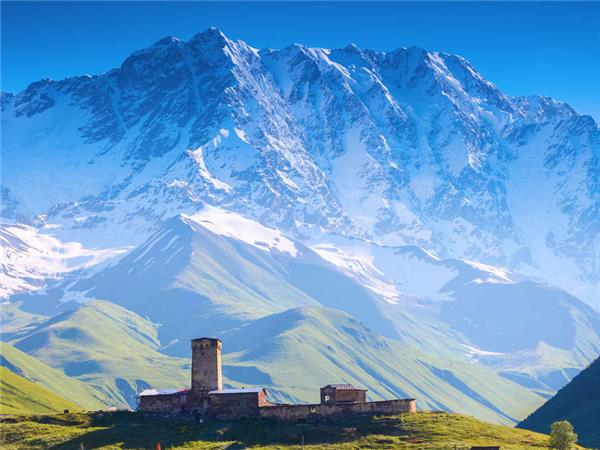
Walking in Georgia’s Svaneti region, you’ll get used to seeing tall, cuboid medieval defensive towers among village houses. The Caucasus is a diverse ethnic region with a history of antagonism between groups and areas. There are breakaway territories, frozen conflicts, and disputed areas like Nagorno Karabakh, fought over between Armenia and Azerbaijan. Connective trails can encourage collaboration between disparate places and peoples – between the hikers who meet on the trails; between workers from different communities who unite as they come and help maintain them, and between communities now linked along trail. The TCT also links 25 protected natural areas; tourism income helping secure these areas as long-term wildlife corridors.
A natural Caucasus
The Kabardian horse has a strong heart and lungs, and blood that can carry large amounts of oxygen, helping it thrive in elevated regions. Horses play an important role in the Caucasus, used by many local people as transport. As well as providing ad hoc help for travelers attempting to cross rivers, horsemen carry your packs on a Transcaucasian Trail self guided walking vacation through the Tusheti region of Georgia.
They’re not the only animals up here – hikers have to be wary of enormous, bear-fighting shepherd dogs who are the jealous guardians of mountain farms – and mindful not to ‘adopt’ friendlier trail dogs that follow them out of villages.
You’re less likely to spot Persian leopards, endangered Caucasian red deer, Syrian brown bears with their unusual white claws, bezoar goats, and Caucasian black grouse. Underfoot is a cornucopia of life – 25 percent of the plant species in the Caucasus are found nowhere else.
They’re not the only animals up here – hikers have to be wary of enormous, bear-fighting shepherd dogs who are the jealous guardians of mountain farms – and mindful not to ‘adopt’ friendlier trail dogs that follow them out of villages.
You’re less likely to spot Persian leopards, endangered Caucasian red deer, Syrian brown bears with their unusual white claws, bezoar goats, and Caucasian black grouse. Underfoot is a cornucopia of life – 25 percent of the plant species in the Caucasus are found nowhere else.
Hiking in the Caucasus vacation
Hiking in the gorges of Georgia's Greater Caucasus Mountains
From
US $1770 to US $1840
9 days
ex flights
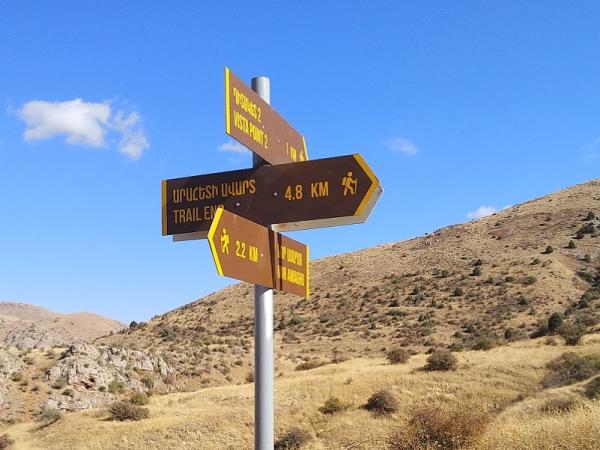
Transcaucasian trail walking vacation in Armenia
Discover beauty and tranquillity in the Armenian highlands
From
€1540
10 days
ex flights
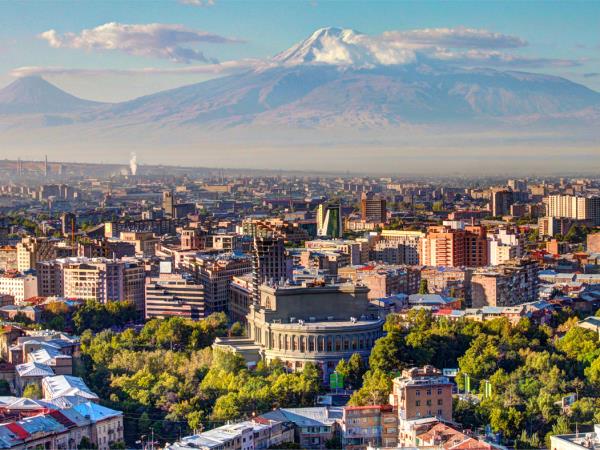
Armenia & Georgia hiking tour
Discover the culture & nature of Armenia and Georgia
From
£2130
11 days
ex flights
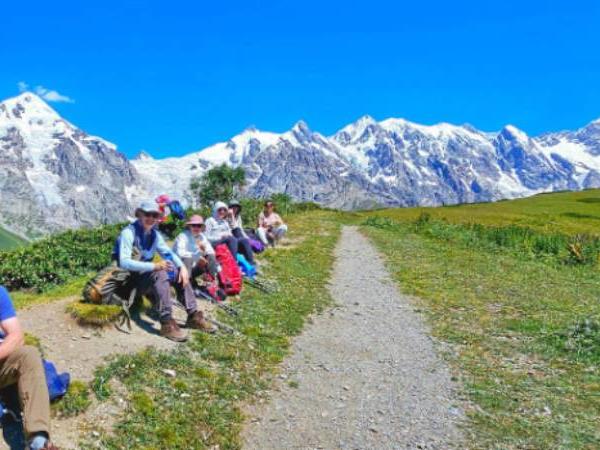
Transcaucasian Trail walking vacation, Georgia
Small group hiking adventure to the mountains of Georgia
From
US $2690
11 days
ex flights
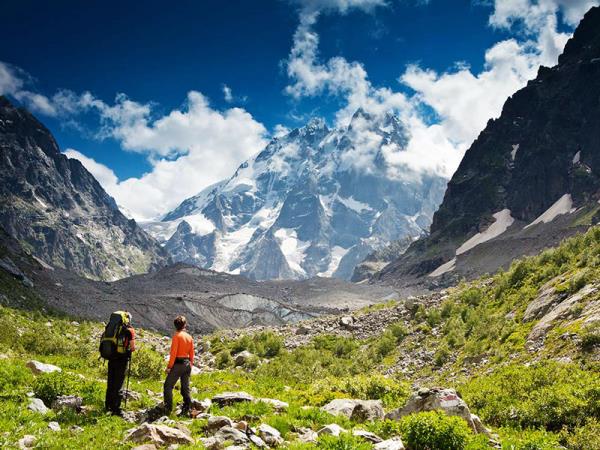
Armenia Georgia Azerbaijan hiking vacation
Get amazed by the scenery of the South Caucasus
From
£3330
18 days
ex flights
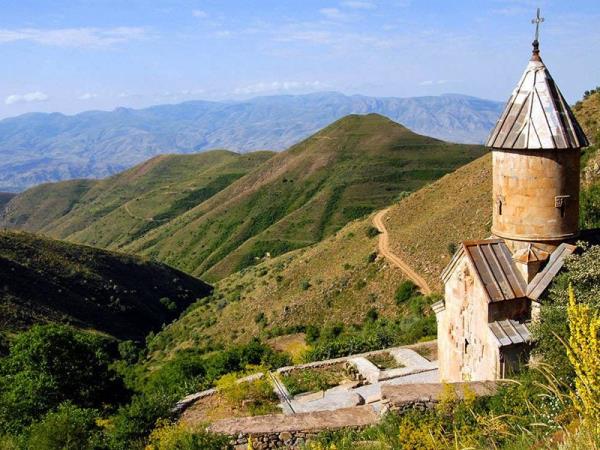
Armenia small group hiking vacation
Hike Armenia’s majestic trails,discover its ancient beauty
From
€1540
10 days
ex flights


Contact Us
Call us for a chat about our vacations. We are happy to discuss your vacation and help in any way we can. No bots, queues or awful hold music.

1-866-821-6866
Call toll free
Calling from outside the USA


TCT guided walking need to know…
More Caucasus articles
The best time to visit the Caucasus is either side of summer. Find out why.
Check out our Caucasus highlights to help you make the most of your time as you explore across borders.
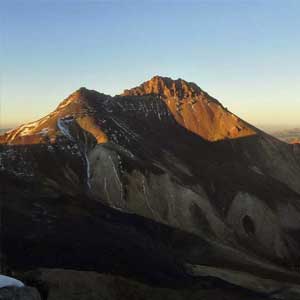
The Caucasus is a little slice of heaven for hikers, with sublime scenery and routes.
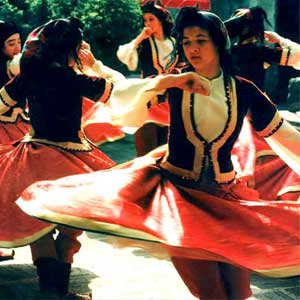
Buffeted by many influences, each of the Caucasus states has forged its own identity.