Guernsey tours

Guernsey has a certain Guernésiais quoi about it – its liminal location between the French and English coastlines creating a crossroads culture unique to the island.

This is where Victor Hugo wrote Les Miserables, where Norman words pop up in conversations, and where low-tide snails are a delicacy – and it’s also where you can have an afternoon tea in the old Government House, climb the 99 stairs up Victoria Tower, and eat fish and chips at a harbour pub.

“Guernsey has a pleasing feeling of independence about it,” says Chris Hendrie, from our Guernsey tour specialists McKinlay Kidd. A mix of Norman and English laws rule the island, and the official languages are English, Guernésiais and French. The word ‘Guernsey’ itself is thought to be Old Norse, named from when the Vikings permanently settled here.

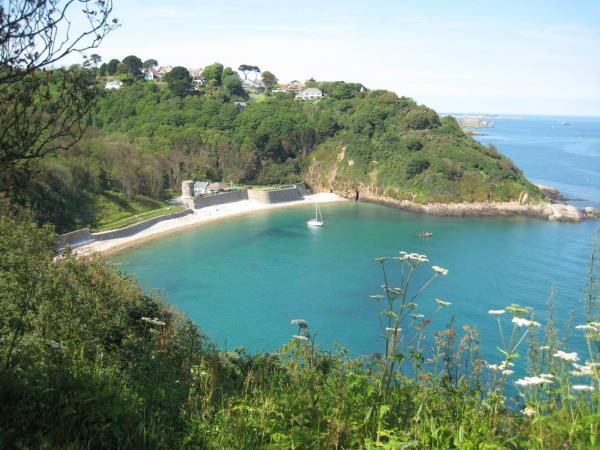
The scenery is also a melange – of pine cliffs and turquoise coves, long sweeps of sunset-facing sand, and rocky harbour towns, all transformed twice a day by some of the most dramatic tides in the world. Quiet country lanes called ruettes tranquilles meander through the rural interior, where pedestrians, cyclists and horses get priority. Look to the horizon, and you’ll glimpse the rest of Guernsey in the form of islets and islands like Herm and Sark.

Contact Us

Responsible Travel, Travel Team

Call us for a chat about our vacations. We are happy to discuss your vacation and help in any way we can. No bots, queues or awful hold music.

Responsible Travel, Travel Team
Guernsey has a pleasing feeling of independence about it.

Easy car-free exploring

Wherever you go, the welcome will be warm. “I found all the people I met disarmingly friendly,” says Chris. There’s a feeling of visiting a close-knit community, one that was forged by a storied history of invasion and settlement that included five years of occupation by German forces in World War II.

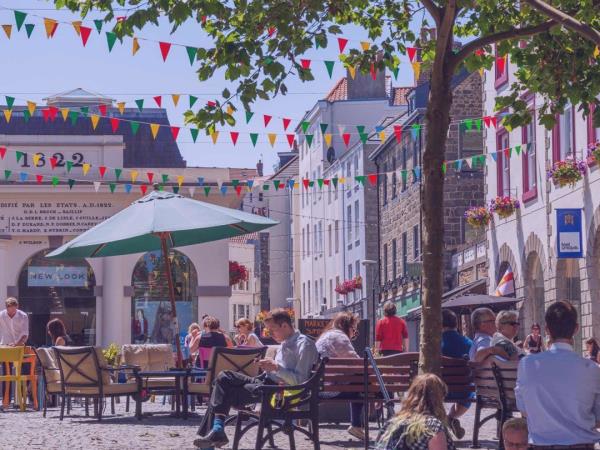
The compact nature of the island helps, too; Guernsey is only 16km from top to toe, making it ideal for car-free exploration. Most of our vacations start in the capital, St Peter Port, where cobblestone streets and rose-hued granite buildings are guarded by 800-year-old Castle Cornet. Mooch between the many restaurants, bars and shops – and trek uphill to Hauteville House, where an exiled Victor Hugo wrote Les Miserables. The house museum is an eye-opener, crammed with books, lavishly embroidered furniture, and chimneys caked in delft tiles.

From St Peter Port, buses criss-cross the island and the interior is laced with peaceful cycling and hiking-friendly lanes. “All of which are limited to 35mph,” says Chris, “which makes the number of Ferraris and Lamborghinis something of a puzzle.”

It’s not just the lie of the land that makes for easy connections. Our vacations are designed to connect you with local communities – whether that’s cider farmers and wildlife guides or indie shopkeepers and guest house hosts.

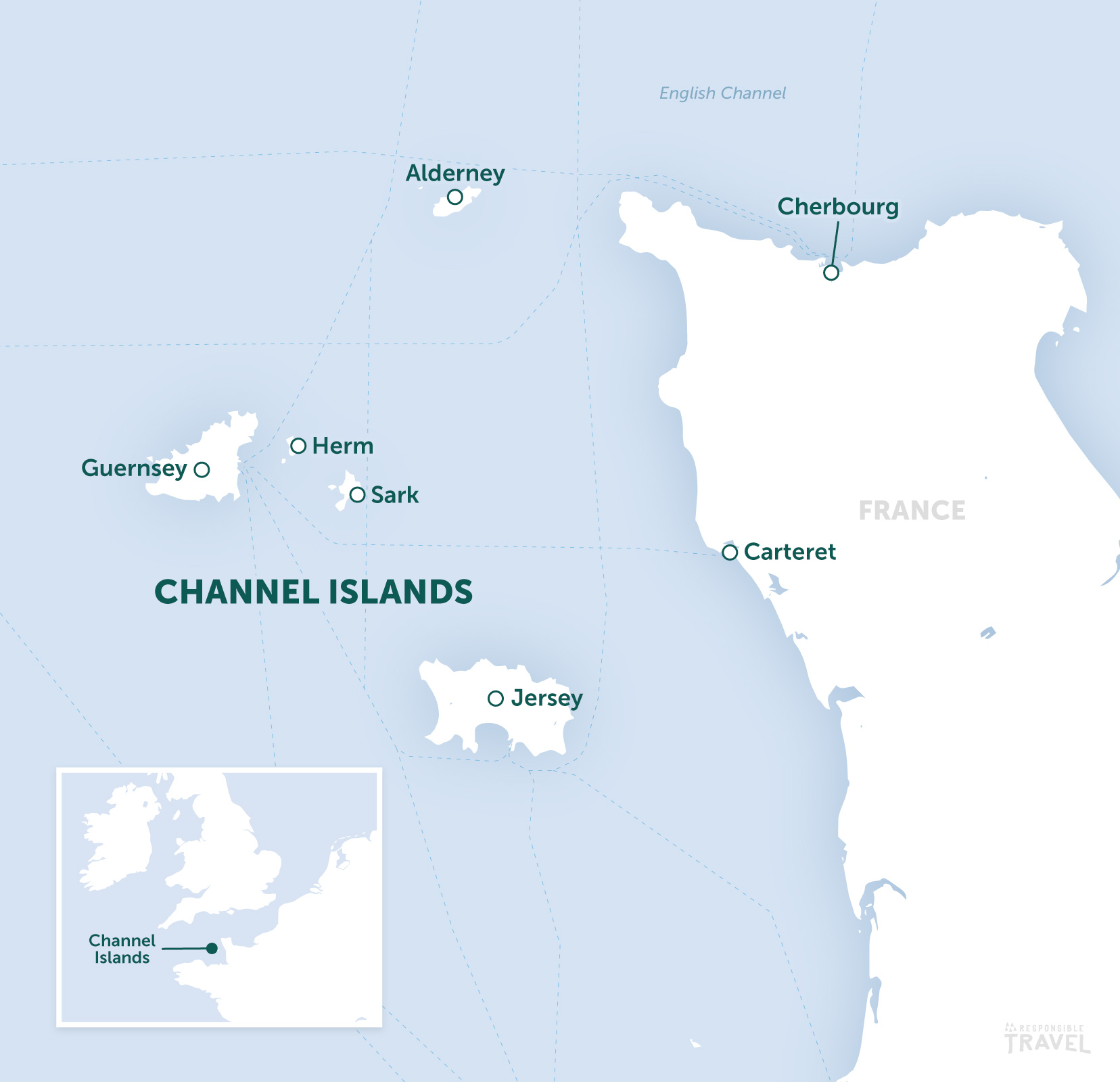
Channel Islands map

Channel Islands map: Guernsey, Jersey, Alderney, Herm & Sark

Island-hopping on the Bailiwick of Guernsey

The Bailiwick of Guernsey goes beyond Guernsey itself to neighbouring islands, including Sark, Herm and Alderney. “Sark and Herm are vehicle-free, so wonderfully serene,” says Chris, “while Alderney is home only to residents’ vehicles, with no car ferry service available, contributing to its own unique atmosphere.” They might be grouped under the name of Guernsey, but each island is unique, right down to having their own endangered languages, Sercquiais and Auregnais.

Herm

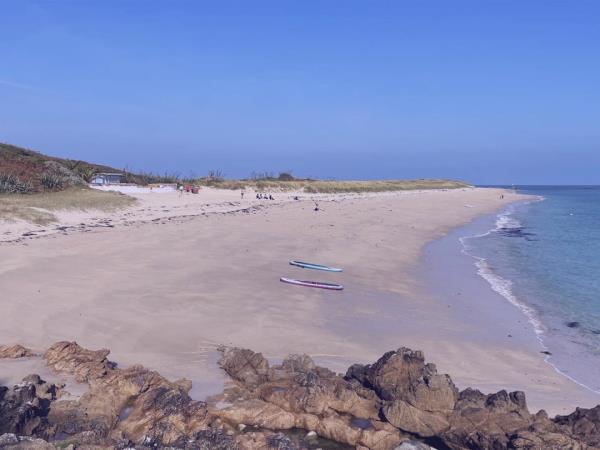
Herm is closest to Guernsey proper, just a 20-minute boat trip away from St Peter Port. At only 2km², this tiny isle makes a great mini adventure, with a harbour town, beaches, an easy coast path, and tideline activities like kayaking, coasteering and wildlife watching. Puffins turn up to bring up their chicks in peace in spring and summer; seals pop their heads up all year round. The beaches are well worth a pause, from swim-friendly Shell Beach to wild Oyster Point.

Sark

Sark is a 30-60-minute ferry ride away from Guernsey island. This island is where the drama lies – namely, while walking the high-rise Le Coupee isthmus that connects Big Sark and Little Sark. Back at sea level, there are chances to explore narrow sea caves by boat and kayak, go canyoning, and browse rockpools for starfish and shrimp. With no cars on Sark, most local people breeze from A to B by bike – follow in their tracks along the cottage-lined lanes and woodland paths.

If staying overnight, keep your eyes on the skies in search of shooting stars and the Milky Way. No streetlights mean no light pollution, and Sark was the first island in the world to be designated a Dark Sky Sanctuary.

Alderney

Alderney is an hour’s scenic ferry ride from Guernsey island, and well worth the trip. Here, we can take you out in the company of wildlife rangers from the Alderney Wildlife Trust, who’ll reveal all about Les Etacs, one of the largest bird colonies in the Channel Islands, as well as how to spot the island’s rare blonde hedgehog. “The rangers are all longstanding residents of the island, passionate about Alderney’s history, heritage and ecology,” says Chris. “There’s no better guide to help bring the story of Alderney to life.”

The island also has plenty of signposted footpaths, including a 16km coastal trail. “My favorite thing is to stock up from one of the excellent bakeries in St Anne’s and take off for the better part of a day,” says Chris, “discovering the centuries of fortifications – from Roman to German – and to watch the seabirds swoop along the coastline.”
Photo credits: [Page banner: Laurent Renault] [Pleinmont cliffs: Enrapture Captivating Media] [Herm: Unukorno] [Alderney: Getty Images / Unsplash+]