BEST TIME TO VISIT THE DOLOMITES

Sunny and snowy in winter, a cool refuge from Italy’s heat in summer, the Dolomites are the perfect year-round destination
There’s no best time to visit the Dolomites; the region delights all year. While the rest of Italy sizzles from July to September, temperatures here rarely top 25°C, with the odd thundery downpour – perfect for an active summer break. To avoid the crowds, visit in May, June or autumn, when it’s cool and settled. There’s snow from December to April and it can drop to -10°C, but the dry air makes this surprisingly comfortable. As with any mountains, it’s cooler the higher you climb, so pack layers but also shades. The Dolomites has sun eight days in 10 – more than any other range in the Alps.

A month by month guide on when to go to the Dolomites

January in the Dolomites

  • Popular time
  • Winter sports
  • Clear blue skies
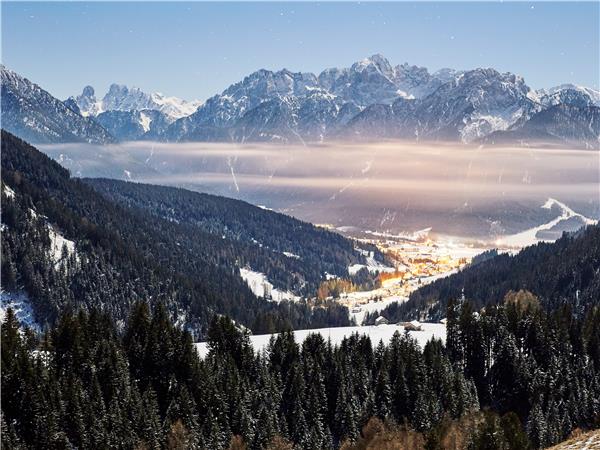
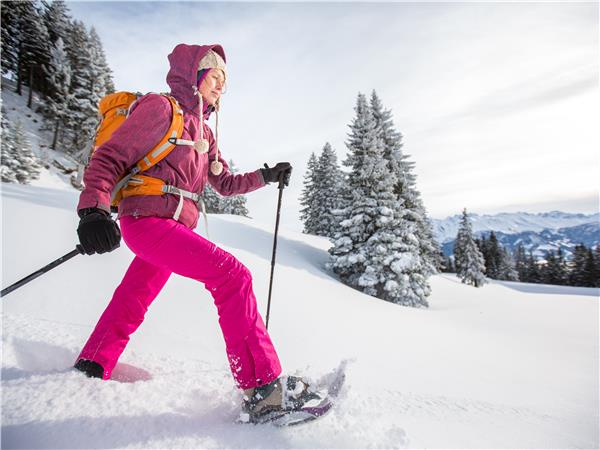
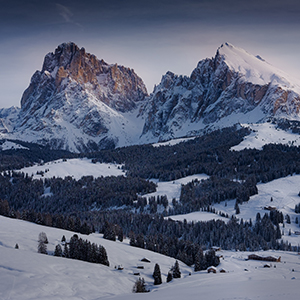
  • It’s a peak month for winter sports in the Dolomites in January – not just glitzy downhill skiing at Cortina, but snowshoeing vacations, which run from now until March. Or try winter photography: the mountains tend to be dry and sunny, and the light is good all day. Winter is the Dolomites’ second and less popular tourist season after summer, getting a quarter of the visitor numbers.
    January is a great month for our cross country skiing vacation in the Dolomites

    February in the Dolomites

  • Winter sports
  • Clear blue skies
  • Days getting longer
  • The winter season continues in the Dolomites in February, but days are getting longer. You can snowshoe or cross country ski and expect good snow and generally dry weather, as well as lots of crisp blue skies to enjoy as you do. Don’t forget the other big perk of going in winter – the comforting mountain food. South Tyrol cuisine, often produced locally and organically, means speck and strudel.


    March in the Dolomites

  • Last month for winter sports
  • Getting warmer
  • Snow varies year to year
  • March means spring in other parts of Italy, but there’s still snow here in the north. It’s the end of the winter season in the Dolomites in March. This is the last month for snowshoeing and cross country skiing before the snow cover becomes more unreliable next month. Temperatures hit highs of 6°C and lows of -3°C. Mountain hares, alpine foxes and ermines are moulting their white winter coats.


    April in the Dolomites

  • Snow starts to melt
  • Quiet time
  • Closed lifts, hotels and restaurants
  • Spring is in the air and marmots emerge from hibernation in the Dolomites in April. Skiing is over; most of the ski lifts – including chairlifts, gondolas and cable cars – close early this month. It’s a quiet time on the mountains as snow cover blocks the trails. Plus, alongside lifts, hotels and restaurants may also be closed. Temperature averages rise to highs of 10°C and lows of 1°C.


    May in the Dolomites

  • Walking trips start
  • Weather warms
  • Snow at high altitude
  • Many of our small group walking vacations start in the Dolomites in May, but the season only truly begins next month as stubborn snow persists, making some trails – especially higher ones – inaccessible. Via ferrata (climbing on fixed ladders and cables on the mountainside) may be possible towards the end of the month on south-facing slopes. The maximum day temperature is 15°C.


    June in the Dolomites

  • Summer season begins
  • Walking vacations
  • Beautiful wildflower meadows
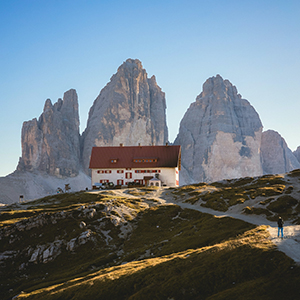
  • The summer season officially starts on the 20 June for hikers, most lifts and hotels are open, and you’ll see fantastic carpets of wildflowers when you walk. Summer typically means highs of 19°C and brief afternoon thunderstorms, which are common in alpine areas at this time of year. There is still some snow high up in the Dolomites in June, so not all rifugios will be open.
    June is a good month for our Dolomites walking vacation
    The vast snowy landscapes – fields of snow punctuated by dramatic, sharp-edged peaks – were truly memorable
    – our Paul Chinnock

    July in the Dolomites

  • High-altitude hiking
  • Warm with summer storms
  • Popular time to visit
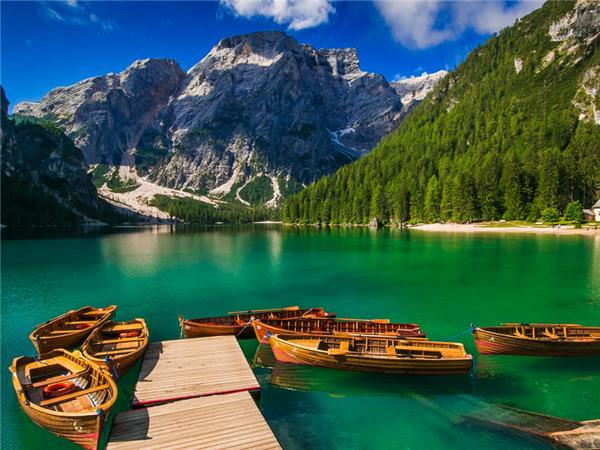
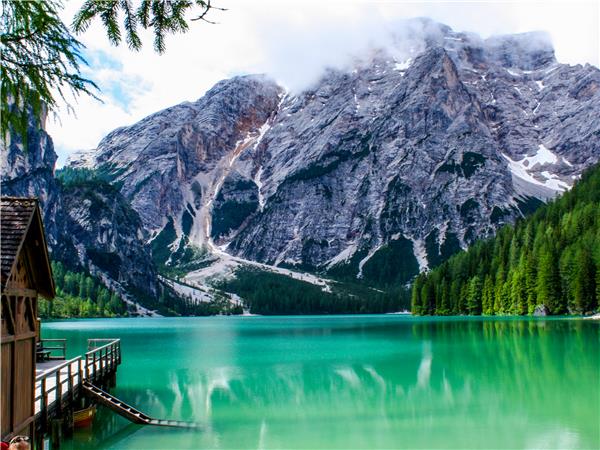
  • Tourists have long escaped the summer heat in the Dolomites in July, thanks to comfortable lows of 10°C and highs of 21°C. The snow has melted off the high peaks, allowing higher altitude hiking, and all rifugios are open, but mountain streams remain ice cold. Trails are busy and there are traffic restrictions in place at popular areas like Lake Braies. Wildflower meadows are cut this month to make fragrant hay.


    August in the Dolomites

  • Summer celebrations
  • Walking vacations
  • Busy school vacations
  • The mid-month Ferragosto festival, European summer vacations and good hiking conditions mean the Dolomites in August are at their busiest. Whilst there are crowds on the popular trails, there are also lots of festivities, from outdoor concerts to folklore festivals and traditional costume processions. Summer afternoon storms are common in August – but don’t let that rain on your parade.


    September in the Dolomites

  • Settled weather – and alpenglow
  • Great time for hiking
  • Quieter than summer
  • Take lots of photographs of the enrosadira – or alpenglow – in the Dolomites in September. As the sun takes a lower path through the sky, the famous light becomes more beautiful. The official hiking season traditionally runs until 20 September, but warm weather can outlast the usual dates. It’s the last month for some walking trips, and some rifugios shut their doors at the end of the month.


    October in the Dolomites

  • Autumn colour
  • Settled weather
  • Quiet and some closures
  • The marmots start their long hibernation in the Dolomites in October. Though this is a quieter time of year, mountains reach an autumnal peak: thousands of larch trees turn bright yellow. The weather is generally settled, with highs of 13°C. You will still find a few small group walking trips, but chairlifts and gondolas are closing, as are most rifugios and some accommodation.
    October is a great time for our photography vacation in the Dolomites

    November in the Dolomites

  • Christmas markets begin
  • Very quiet
  • Many facilities closed
  • Christmas markets start in mountain villages in the Dolomites in November. This month is between the two main tourist seasons: chairlifts and gondolas up the mountains have closed, and some restaurants and hotels shut their doors, too. Whilst autumn can be a period of stable weather, it can also turn around this time, and trails can be slippery and wet. It is cold; the average daily high is 6°C.


    December in the Dolomites

  • More reliable snow
  • Cross country skiing
  • Popular Christmas period
  • Proper snow starts in the Dolomites in December but this is the sunniest range in the Alps and there are plenty of dry days with blue skies. Downhill skiers crowd the resorts towards the end of the month; Christmas and New Year are a busy time of year. Our cross country skiing vacations start around the middle of December and take you to quieter areas.

    Dolomites Weather Chart

     
    MIN °C
    MAX °C
    RAIN (mm)
    JAN
    -7
    1
    30
    FEB
    -6
    3
    28
    MAR
    -3
    6
    43
    APR
    1
    10
    54
    MAY
    5
    15
    80
    JUN
    9
    18
    92
    JUL
    10
    21
    101
    AUG
    10
    20
    100
    SEP
    9
    18
    77
    OCT
    2
    13
    66
    NOV
    -2
    6
    64
    DEC
    -6
    2
    25

    Contact Us

    Responsible Travel, Travel Team

    Call us for a chat about our vacations. We are happy to discuss your vacation and help in any way we can. No bots, queues or awful hold music.

    Responsible Travel, Travel Team

    Best times to visit the Dolomites for festivals & events

    Sellaronda Skimarathon (March)

    It takes place at night, lasts for 42km, and the prize money is over €20,000 – the Sellaronda Skimarathon sees world-class ski tourers compete in pairs on a gruelling endurance race. They climb in their skis with skins on, take the skins off to ski downhill, tackle dry sections in their ski boots, carrying their skis, and use a bungee cord to pull each other along as they go. The Dolomites has long had a reputation for hosting professional athletes for winter sports, including Ski World Cups and Winter Olympics; this extraordinary race is among its most famous.

    Sacred Heart (usually June – Sunday after Corpus Christi)

    If you spend a summer evening in a mountain village in the Alta Pusteria region, look up on the hillside and you might see fires burning. These are sacred heart fires – torches and bonfires lit to form religious symbols on the hills to mark the anniversary of a 1796 battle in the Napoleonic Wars, in which soldiers from the South Tyrol unexpectedly defeated the French after asking for divine intervention. They follow a long tradition of solstice fires that are burnt in the summer.

    Sellaronda Bike Day (June & September)

    For much of the summer the scenic roads through the Dolomites are the domain of motorists, motorcyclists – and traffic jams, too. But for two days a year some of the best driving routes are closed to motorised vehicles and instead cyclists can enjoy them – and they do. Around 20,000 cyclists come to the Sellaronda Bike Day to enjoy the mountainous routes. There are 58km of roads open, taking the fittest to an altitude of 1,800m.

    Coppa d’Oro delle Dolomiti (late July)

    Beautiful vintage cars, beautiful backdrops – and a few fiendishly hairpin turns: the Coppa d’Oro delle Dolomiti is a classic car race taking place over three days in July along all the best driving routes in the area. The original race was stopped because it was too dangerous; cars take greater care now – not least because some of these Ferraris are worth millions.

    Ferragosto (15 August)

    Ferragosto is a public vacation celebrating the Assumption of the Virgin Mary in the Catholic calendar. Italians typically take weeks off around this time, or sometimes the whole month. The Dolomites become busy with Italian families here to enjoy the fresh air and cool temperatures. Whilst it’s a busy month in the area, there’s also a lovely festive atmosphere.

    Gran Festa del Desmontegar (September)

    When the cattle are driven down the mountainside after a summer grazing on the sweet meadows in the high Dolomites, they’re greeted with celebration. Farmers in traditional folk costumes crown their herd with headdresses of greenery and hang their necks with huge bells, and everyone comes together to mark their safe return to the village. Transhumance – the moving of livestock between high and low pastures – has been happening here for centuries.

    Torggelen (October)

    Lucky for you, the Dolomites doesn’t have four seasons to enjoy – but five. As chestnuts fall from the trees in the valleys, and the grapes are harvested, South Tyrol celebrates Torggelen – a ‘fifth season’ that marks the harvest. It’s a great time to spend the evenings eating dumplings and speck (local ham) as the nights draw in. Farms will welcome customers for tastings and to buy local produce.

    Our travelers also ask…

    What is the best month to visit the Dolomites?

    Some of the best months to visit the Dolomites are June or September, outside the busy July-August season. The official summer season runs from the 20 June to the 20 September; this is the period when you can expect the most facilities to be open and trails clear of snow.

    What is the best month to hike in the Dolomites?

    September is the best month to hike in the Dolomites. There are snow-free trails, many rifugios and other facilities are open, and you can expect very settled weather but fewer crowds than very busy (and occasionally stormy) July and August. Climate change is extending the season beyond the tourism season end, which was traditionally 20 September.

    What is the driest month in the Dolomites?

    December is the driest month in the Dolomites. The mountains receive little precipitation in winter compared to summer – and it falls as snow, not rain. The dry conditions and clear skies make the Dolomites cold in winter, but it means plenty of sunny days. In fact, the Dolomites are drier than other ranges in the Alps as they are protected from northern winds by other mountains. Summer is the wettest season, and July and August the wettest months, but rain tends to fall as a short afternoon shower or thunderstorm. The wet weather is nothing of concern; these are by far the most popular months to visit for excellent alpine hiking.

    When not to visit the Dolomites?

    November or April are less optimal months for visiting the Dolomites. Whilst the Dolomites are lovely year-round, with something to recommend each season, November and April sit awkwardly between the extremely popular summer hiking season and the winter sports season. Between these tourism seasons, lifts are closed, as are lots of facilities for visitors, making it harder to get around and do activities in the mountains.
    Written by Eloise Barker
    Photo credits: [Page banner: jyl4032] [Intro: Ales Krivec / Unsplash+] [Paul Chinnock quote: Daniel Seßler] [Our travelers also ask: Erik Rosner]