


How beehive fences help reduce conflict between elephants & humans

Buzz off elephants, get your lunch somewhere else

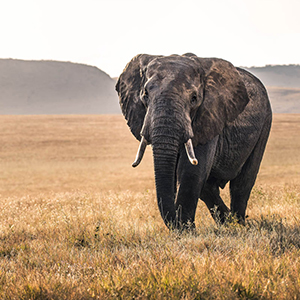
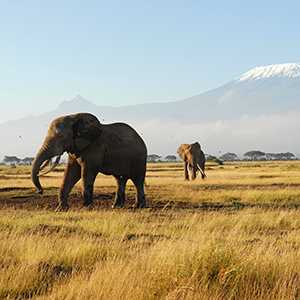
There’s not much that scares an elephant. But a bee does. Even though your typical African elephant weighs about 25 million times as much as a honeybee, and has a hide that’s 3cm thick, it will take the long way round if it means avoiding a sting on the sensitive end of its trunk.

Which is why bee fences are such a brilliantly simple idea for reducing conflict between elephants and humans. These are strings of beehives placed on cables around farms in countries such as Kenya. The elephant approaches, perhaps looking to raid the farmer’s crops. It disturbs the cable, the bees emerge, the elephant legs it in the other direction, and everyone comes out of the encounter happy. Except the bees. But they’ll calm down.

Plus, bee fences have other useful benefits. They pollinate crops, and farmers can sell the honey and wax they produce.

Bee fences are the brainchild of Dr Lucy King, who has run several projects in Kenya with the help of Oxford University, Scottish charity Save the Elephants and Disney’s Animal Kingdom. So successful have they proved (preventing up to 86 percent of elephant incursions during peak crop season) that they have now started other projects in countries including Tanzania, Uganda and Sri Lanka.

How conflict between elephants and humans affects conservation

For an elephant conservation project to succeed, people and elephants must be able to live alongside each other, so reducing conflict between them is vital. But clashes are getting more common, putting both human and elephant lives at risk.

Elephants kill hundreds of people every year, while in just one African national park, South Africa’s Kruger, some 200 elephants were culled between 2020 and 2025 because they posed a danger to nearby human communities.

Why do elephants and humans come into conflict?

Elephants and people come into conflict with each other principally because of human communities expanding into and fragmenting elephant habitat. Just a few elephants can scoff a farm’s entire crops for the year in one night. But trying to stop them is risky and often results in people being injured or killed.

In Kenya, the population has more than tripled in four decades. That means more roads, more railways, more settlements, affecting elephants’ vital rangelands and forcing them into increased contact with people.

Illegal livestock grazing, and periods of drought that are worsened by the climate crisis, also deplete elephants’ food sources, which encourages them towards crops.

Why beehive fences won’t end conflict between elephants and humans

Beehive fences sadly don’t represent a complete solution to conflict between elephants and humans because they won’t work everywhere. Bees require a nearby water source, and not every community has the means to look after them. More frequent droughts will mean that hive populations fall, reducing their effectiveness. And elephants are famously intelligent– over time, they may figure out ways to avoid the hives and reach the crops they want.

Instead, beehive fences and other nature-based solutions are becoming part of a conservation toolkit, combined with non-lethal tactics. And engagement between conservationists and communities is increasingly at the core of that strategy.

Bee the change
You can donate to Save the Elephants to support their research, anti-poaching efforts and conservation projects.

Contact Us

Responsible Travel, Travel Team

Call us for a chat about our vacations. We are happy to discuss your vacation and help in any way we can. No bots, queues or awful hold music.


Responsible Travel, Travel Team
Photo credits: [Page banner: akshay sant] [Beehive fence: Kengee8] [Elephant damages: Ganesh Raghunathan]