Hiking the Wadi Rum Trail in Jordan
It’s hard to describe the sheer scale and beauty of Wadi Rum until you’re standing on top of the highest mountain in Jordan, taking in ochre peaks and plains and the seemingly infinite haze of the horizon. Every few minutes, the light shifts, dipping everything into a different desert palette.
“The desert has a personality of its own. It’s not just scenery – it’s history, silence and space,” says Anthony Horrobin, from our Jordan hiking specialist Encounters Travel. “You’re not distracted; you’re not rushed. You just exist. That’s rare these days.”
You’ll find that the luxury of just existing is plentiful on our walking tours of the Wadi Rum Trail – a 120km circular hiking route run and maintained by local Bedouin tribes.
While most people whizz through the desert wilderness by jeep en route to Petra, our vacations on the Wadi Rum Trail give you the chance to slow down and tune in as you hike along rock bridges, through fortress-like canyons, past petroglyph-scoured cliffs, across red desert plains, and into cracked-open siqs.
“The desert has a personality of its own. It’s not just scenery – it’s history, silence and space,” says Anthony Horrobin, from our Jordan hiking specialist Encounters Travel. “You’re not distracted; you’re not rushed. You just exist. That’s rare these days.”
You’ll find that the luxury of just existing is plentiful on our walking tours of the Wadi Rum Trail – a 120km circular hiking route run and maintained by local Bedouin tribes.
While most people whizz through the desert wilderness by jeep en route to Petra, our vacations on the Wadi Rum Trail give you the chance to slow down and tune in as you hike along rock bridges, through fortress-like canyons, past petroglyph-scoured cliffs, across red desert plains, and into cracked-open siqs.

From the panoramic to the personal
“When you walk, the desert becomes personal,” says Anthony. “You see small details, you feel distance, you move at the pace of the landscape.”Those details include the unexpected spray of bright white chamomile flowers sprouting from the red sand. The scrawl of petroglyphs across a rock face; a finch flickering between rocks and an eagle briefly eclipsing the sun. The transformation of desert colours under racing clouds and the constant arcing sun.
Walk with a local Bedouin guide, and Wadi Rum becomes even more personal. That sprouting plant isn’t just chamomile – it’s babunij, which is dried for calming, headache-relieving tea. The Nabataean and Thamudic petroglyphs aren’t just works of art – they reveal how camels have long been the trusty steeds of the desert and show the early formation of an alphabet. That isn’t just a particularly pretty finch – it’s a Sinai rosefinch, the national bird of Jordan. And the eagle becomes even more regal when you learn how important it was to the Nabataeans who built nearby Petra – a representation of the god Dushara, ready to whisk expired souls up to heaven.

When you walk, the desert becomes personal. You see small details, you feel distance, you move at the pace of the landscape.![]()

Hiking guides could be from any of the Bedouin clans of Wadi Rum, offering you a hyperlocal perspective, as well as an overview of Jordan and the Arabian Peninsula as a whole. “They grew up here – this is home for them,” says Anthony. “You’re treated like a guest.”
Indeed, you are a guest. The Wadi Rum Trail was plotted, and is now run and maintained, by a collective of Bedouin tribes – including the Zalabieh, Huwaitat, Anaza and Tarabin – who have used the routes for centuries for shepherding and hunting, trade and travel, and the Hajj pilgrimage to Mecca.
As well as sharing their expertise, local guides ensure safe and comfortable passage while hiking the rugged canyons and desert of the wilderness. If the weather scuppers wild camping, or if a trail is blocked, they’ll find alternative paths and accommodation. They’re tuned into the signs of the desert – as well as their GPS. This confidence is shared as generously as the food and campfire stories, inviting you to fleetingly experience the connection Bedouins have with their lands – their deera.
Indeed, you are a guest. The Wadi Rum Trail was plotted, and is now run and maintained, by a collective of Bedouin tribes – including the Zalabieh, Huwaitat, Anaza and Tarabin – who have used the routes for centuries for shepherding and hunting, trade and travel, and the Hajj pilgrimage to Mecca.
As well as sharing their expertise, local guides ensure safe and comfortable passage while hiking the rugged canyons and desert of the wilderness. If the weather scuppers wild camping, or if a trail is blocked, they’ll find alternative paths and accommodation. They’re tuned into the signs of the desert – as well as their GPS. This confidence is shared as generously as the food and campfire stories, inviting you to fleetingly experience the connection Bedouins have with their lands – their deera.
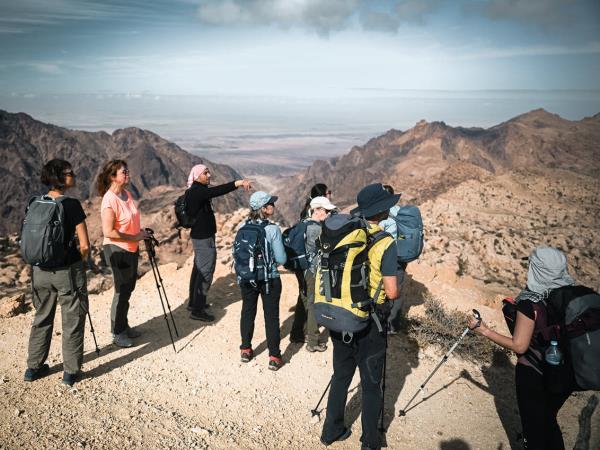
Jordan trekking vacation, Dana to Petra
Best hike in Jordan along the Jordan Trail!
From
US $1595 to US $1695
9 days
ex flights
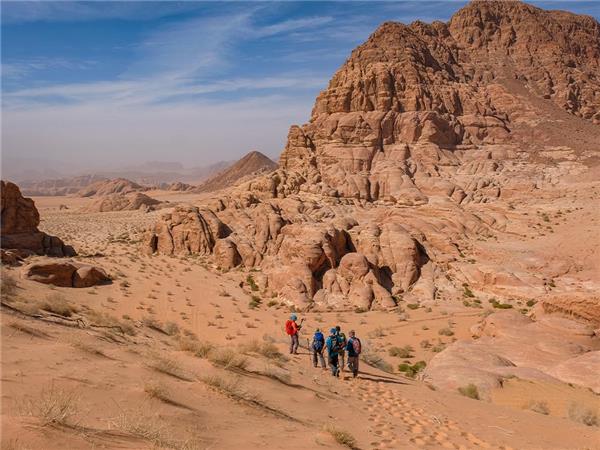
Trekking vacation in Jordan
Trek around Jordan and discover Amman, Petra and Wadi Rum
From
US $1696 to US $2295
8 days
ex flights
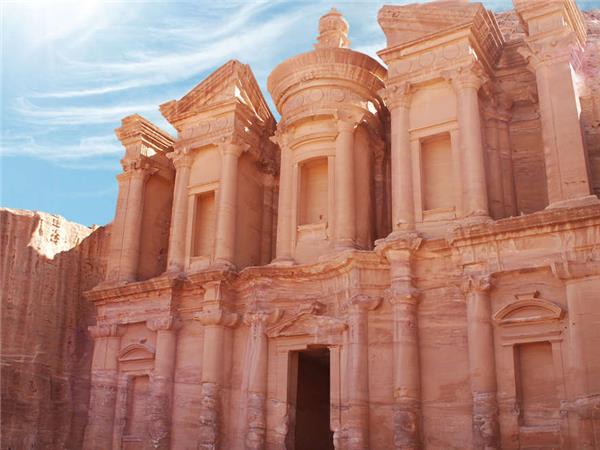
Walking vacation in Jordan
Walk through some of the world's most iconic historic sites
From
US $1440 to US $1750
8 days
ex flights
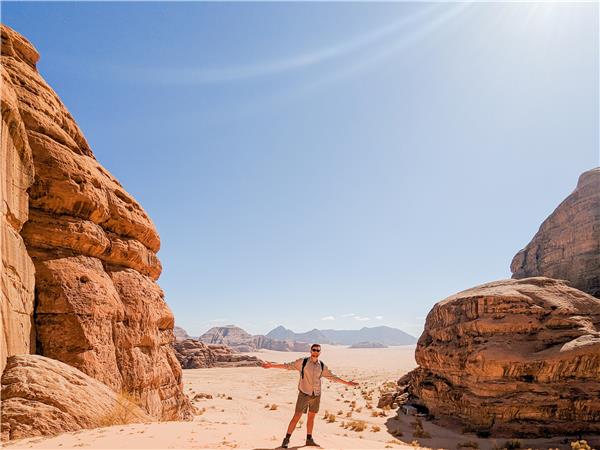
Petra and Wadi Rum trekking vacation
Some of the most spectacular desert scenery in the world
From
US $1535 to US $1985
8 days
ex flights
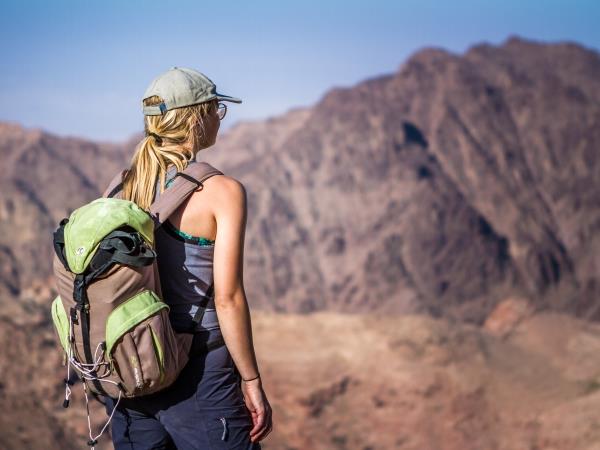
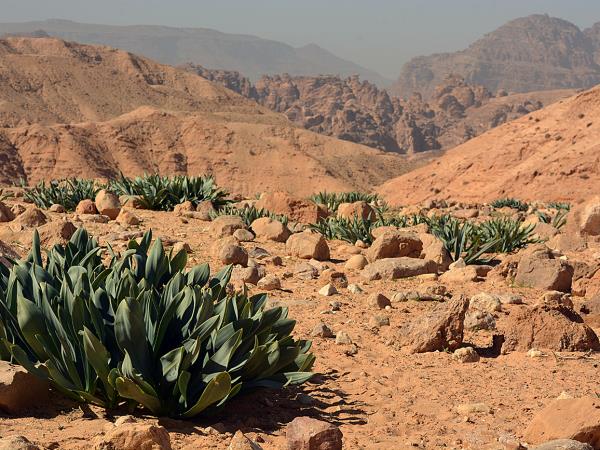
Jordan hiking vacation, Petra to Wadi Rum
Hike desert wonderlands and sleep under the stars
From
US $1855
8 days
ex flights


Contact Us

Call us for a chat about our vacations. We are happy to discuss your vacation and help in any way we can. No bots, queues or awful hold music.

1-866-821-6866
Call toll free
Calling from outside the USA


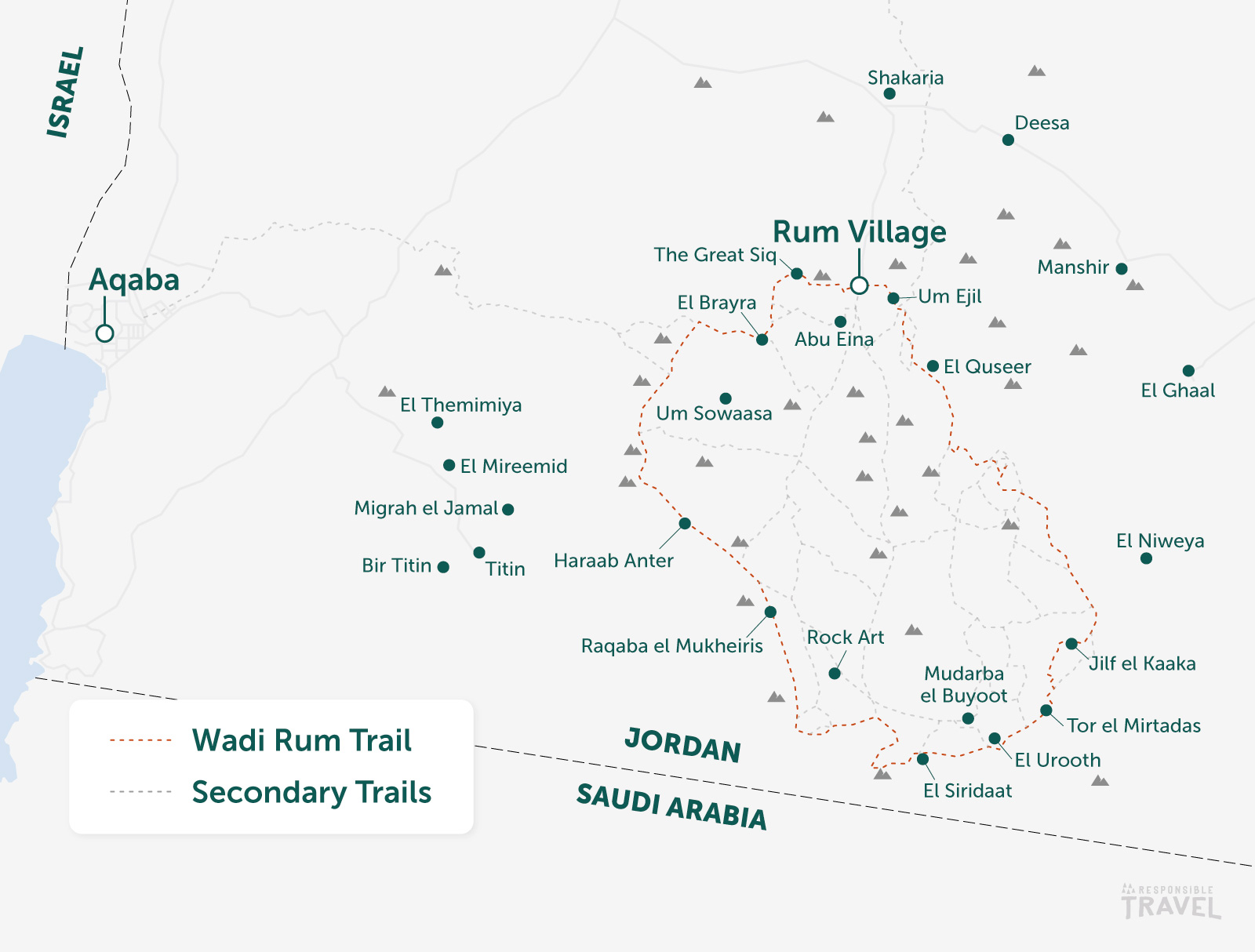
Wadi Rum Trail map
What is the Wadi Rum Trail?
The Wadi Rum Trail is a 120km circular hiking route with a series of secondary paths that branch off into the desert, far away from the well-worn jeep tracks. You can walk a section of the Wadi Rum Trail as part of a longer vacation or sign up to our multi-day hikes that focus on the long-distance route.
You can also walk the Wadi Rum Trail independently… but we don’t recommend it. For starters, you’ll lose out on the expertise and company of local guides. Plus, Wadi Rum is a rocky desert wilderness with sections that include abseiling, scrambling and rock climbing. When you go with a guide, they’ll help you take on the challenge safely – or they’ll find another way. For every abseil, there’s an easier detour.
You can also walk the Wadi Rum Trail independently… but we don’t recommend it. For starters, you’ll lose out on the expertise and company of local guides. Plus, Wadi Rum is a rocky desert wilderness with sections that include abseiling, scrambling and rock climbing. When you go with a guide, they’ll help you take on the challenge safely – or they’ll find another way. For every abseil, there’s an easier detour.
A community-run trail connecting the old routes
The Wadi Rum Trail was created in 2023 by a bunch of Bedouin and British friends – and it was forged with purpose. Right from the beginning, the founders wanted to link spectacular desert paths and celebrate traditional Bedouin routes. They also wanted to share Wadi Rum with tourists while protecting and bolstering it. Visitors are encouraged to slow down, learn about desert culture, and stay longer. When you spend more time – and money – in the area, the benefits stay local. It helps create more jobs, supports communities that can miss out on tourism income, and inspires younger generations to remain in the region.The grand finale of the Bedouin Trail
The Wadi Rum Trail is part of the larger Bedouin Trail. Running for around 1,200km between Petra in Jordan and Luxor in Egypt, it’s the first official hiking route to stretch between Asia and Africa, linking the Wadi Rum Trail with the Sinai Trail (opened in 2015) and the Red Sea Mountain Trail (opened in 2019).
However, after 10 years of community-led work on the transnational trail, the Egyptian government changed tack in 2024. Security agencies obstructed hiking permit access on the Sinai Peninsula, making it near-impossible to walk the Sinai and Red Sea Mountain trails. Bedouins, historically excluded by the Egyptian state, were effectively barred from taking tourists hiking on their trails.
Jordanian authorities have made similarly destructive decisions in the name of tourism, evicting the Bdoul community from their historic homes in Petra. Bedouin-led hiking, on the other hand, seems to be something they’re getting behind, with permits easily accessible and a visitor center marking the start of the Wadi Rum route.
However, after 10 years of community-led work on the transnational trail, the Egyptian government changed tack in 2024. Security agencies obstructed hiking permit access on the Sinai Peninsula, making it near-impossible to walk the Sinai and Red Sea Mountain trails. Bedouins, historically excluded by the Egyptian state, were effectively barred from taking tourists hiking on their trails.
Jordanian authorities have made similarly destructive decisions in the name of tourism, evicting the Bdoul community from their historic homes in Petra. Bedouin-led hiking, on the other hand, seems to be something they’re getting behind, with permits easily accessible and a visitor center marking the start of the Wadi Rum route.
Camping under the stars… & meteor showers
In the end, some of the most memorable moments might not be walking the Wadi Rum Trail at all, but the camping in between. Anthony’s vacation highlight?
“Definitely the nights near Jabal Umm ad Dami,” says Anthony. “No lights. No noise. Just fire, tea or a beer, and stars. Sitting with the Bedouin team, listening to stories, eating – it’s the kind of moment that stays with you even years later.”
Thanks to guides who have the timings fine-tuned, you’ll get to the planned camping spot before dark each day, just in time to admire the shadows stretching out across the sand. You’ll be off-grid, but you’ll also be near some of the most spectacular rock formations in Wadi Rum. Tents are provided; friendships are formed quickly over prepping the camp, food and fire.
“Definitely the nights near Jabal Umm ad Dami,” says Anthony. “No lights. No noise. Just fire, tea or a beer, and stars. Sitting with the Bedouin team, listening to stories, eating – it’s the kind of moment that stays with you even years later.”
Thanks to guides who have the timings fine-tuned, you’ll get to the planned camping spot before dark each day, just in time to admire the shadows stretching out across the sand. You’ll be off-grid, but you’ll also be near some of the most spectacular rock formations in Wadi Rum. Tents are provided; friendships are formed quickly over prepping the camp, food and fire.
No lights. No noise. Just fire, tea or a beer, and stars. Sitting with the Bedouin team, listening to stories, eating – it’s the kind of moment that stays with you even years later.![]()
After dark, the sounds of the desert are amplified. At first, it might seem like silence. But then, you’ll tune into the subtleties – the wind; a faraway animal cry; the crackling fire. Camping is the perfect way to mull over the beauty and challenges of the day and find out more about the hike tomorrow. Plus: “If you look up, the sky is unreal,” says Anthony. “No filters needed.”
The next morning, you’re gone, packed up and heading on to the next section of the trail, only leaving imprints soon wiped away by the desert wind.
“The people and the silence,” says Anthony, recalling his lasting memories of walking the Wadi Rum Trail. “Time spent with the Bedouins and time away from noise both stay with you long after you leave.”
The next morning, you’re gone, packed up and heading on to the next section of the trail, only leaving imprints soon wiped away by the desert wind.
“The people and the silence,” says Anthony, recalling his lasting memories of walking the Wadi Rum Trail. “Time spent with the Bedouins and time away from noise both stay with you long after you leave.”
Practicalities & tips
More Jordan walking articles
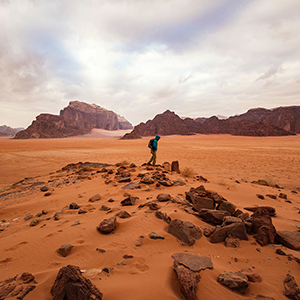
Absolutely sabulous: discover desert walking in Jordan with our travel guide.
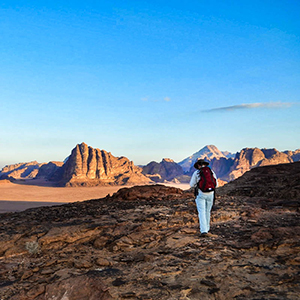
Step back in time as you trek along the same trails used by the earliest settlers in Jordan.
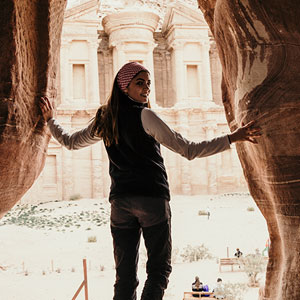
It’s not just local Bedouin shepherds that benefit when they guide your Dana to Petra hike.