Field guide courses

Doing a field guide course could be your first step towards a career pivot into conservation, or it could just be the wildest few months of your life.

The low morning sun makes it easy to spot the tracks – but whose are they? A leopard, yes, but male or female? What direction were they going, and how fast? Were they dragging a fresh kill along with them? Were they followed?

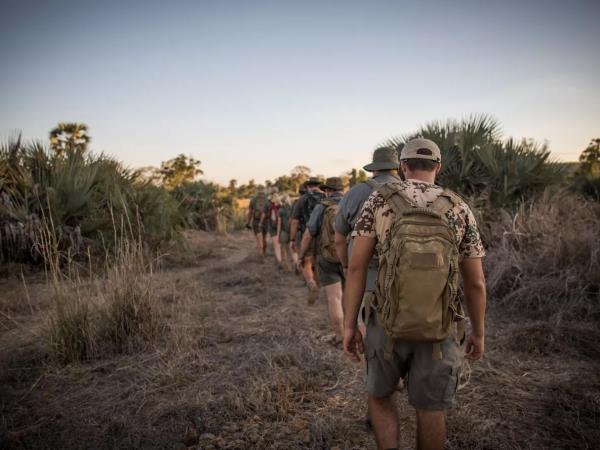
‘Track and sign,’ as it’s called, is on the syllabus in these intense field guide courses where you spend weeks in the Southern African wilderness.

It’s not just spoors you learn as a field guide, but astronomy, taxonomy, conservation, weather patterns, the name of every tree, and the call of every bird. You learn how to shoot a rifle, and how to drive off road (and get a car out when it gets stuck in sand). You learn how giraffe saliva covers the leaves of trees where they feed, and recognise the marks the smallest dung beetle makes in the earth as it moves.

You’ll be able to explain the six kingdoms and grassland succession, name the brightest star in the sky and the phases of the moon. There is no more thorough introduction, in terms of syllabus and nature immersion, to becoming a guide.
Springhare poo comes in cuboids, giraffe poo tends to be scattered, because it drops from a height. Lion poo is dark with the blood of its prey.
“It was two of the best months of my life, I fell in love with South Africa,” Daniel Kaul, managing director of our partner Natucate, did a two month guiding course on a whim, and it changed the direction of his whole enterprise; he decided to focus on offering more courses in Southern Africa.

The one year field guide course involves 335 days of training and teaches you how to be a Southern African-accredited field guide with an internationally recognised qualification from the Field Guides Association of Southern Africa (FGASA). Alumni go on to found their own travel companies or pivot their careers to work in conservation.

There are shorter courses too: a two month field guide course gives you FGASA Field Guide Level 1. You could also do a basic 1 month field guide training – taking an exam at the end of this course also gives you a guiding qualification, FGASA’s NQF2, the minimum needed to be employable as a guide. Wildlife enthusiasts can also ask about shorter courses – just for fun.
If you see elephants in the morning and the same elephants two days later in the evening you get a completely different understanding of wildlife.

What is the one-year field guiding course like?

The one-year course is an intense learning experience for people who are passionate about nature and prepared to rough it in the wilderness. It involves an initial training phase in wilderness camps, and then a four-month internship in which you work as a guide.

The learning starts before you go out in the bush, as complex topics like taxonomy might be better if you have a head start reading up before you depart. There are hundreds of bird calls to learn – and it’s best to revise them before you arrive, as playing bird calls from your phone in the bush, which could confuse or distress resident birds, is a big no-no.

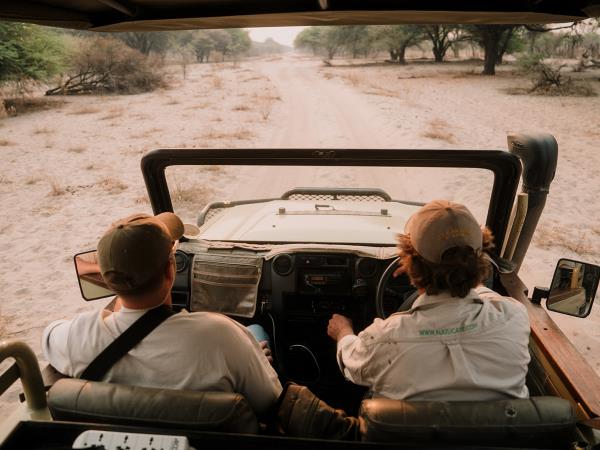
Arriving with a bag filled with khaki-coloured clothes and stacks of books on bushveld trees and birds, the first thing you learn is days and days of wilderness first aid, before you start game drives and walks. It’s not long before your instructor cedes the wheel and you and your course mates take it in turns to drive.

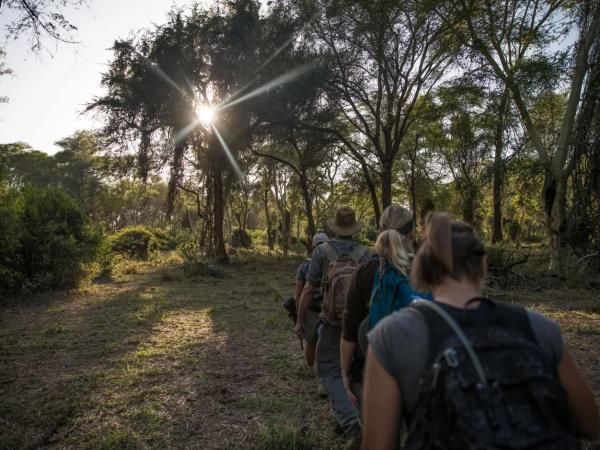
You’ll stay in various wilderness locations, chosen for their differences. None of the camps are fenced – you are simply outside for months and animals might sleep against your tent, or try and raid your supplies.

You’ll wake up every day before the sun, to beat the heat and catch animals at their most active on your game drives and walks – and the low angle of the sun makes it easier to spot animal tracks. It can be over 40°C at certain times of year, and you’re going out every day.

“We want people to slow down and learn from nature,” says Daniel, “If you see elephants in the morning and the same elephants two days later in the evening you get a completely different understanding of wildlife.”

There are both practical and written exams – and these are taken in English. You’ll regularly head to a shooting range to practice advanced rifle handling, an essential safety item which you’ll carry just in case, but hopefully never have to employ in the field. However, your final shooting exam will simulate charging animals for you to subdue, just in case. Exams might also involve a game drive where you, the driver, must stop to identify every tree you see, and every bird.
Being a good guide is about being empathetic, not just being able to shoot a rifle and drive a vehicle.

What makes a good guide?

“When they arrive they look like tourists”, says Daniel of the students who arrive for the field guide courses. “Neat hair, clean clothes… as they connect with nature they start wearing flip flops, they don’t shave, they don’t look fancy anymore – now they change from tourists to connecting with nature and understanding the wilderness. After the course they can read the patterns, can read animal movements and understand how everything is interconnected.”

The actual list of requirements to join a course like this are not long: most importantly, you need to be able to commit the time – and the finances – to a long course of this type. You need to be willing to cohabit with your course-mates. Practically, you need to be up for being able to walk around 5km a day, possess a driving licence, and speak English well, as courses and exams are in English.

Learning facts aside, taking on a course is all about attitude. It’s passion that gets trainees through – and makes good guides.

“For me a good guide is about being empathetic, not just being able to shoot a rifle and drive a vehicle,” says Daniel. “Forget the old-school macho guide in South Africa with big muscles and short pants who drinks whisky out of a boot. To see people who grow during the course, who are very empathic – who see how tourism works. That’s what’s outstanding for me.”

Animals will pass through your camp in the night – luckily, with your training in the field, you’ll be able to identify not just what, but who they were. You’ll be sharing a tent, and taking it in turns to help with chores around camp.

“If you’re stressed you can’t leave camp,” Daniel points out. “You can’t go jogging, or for a walk. If you’re staying six months that’s a social challenge. We speak with prospective students about that. You need to think about your social battery and take your own time: it’s a marathon.”

But you’ll make some interesting friends and companions. “We’ve had couples form, we’ve had babies, especially on the longer courses,” says Daniel. You’re sharing incredible experiences together: you get lost, you get stuck in the mud, you come across a predator, you almost get charged by something large and horned – but in learning how to respond to each situation, you bond as a group.

Responsible courses

These courses aren’t just about understanding the savannah, but protecting it. As well as practical skills like learning to drive a 4x4 in a way that doesn’t damage the environment, you’re also learning about the smallest animals in the ecosystem. Our partners are pushing for more conservation to be covered on courses, too.

A course like this owes much to San bushmen – the original master trackers – and other Indigenous knowledge. Tracking might be one of the earliest sciences, and many of the signs that rangers have adopted to signal different animals: a crooked finger to indicate a sharp-beaked hawk, an upturned, cupping hand for a tortoise have a long history. As a newcomer in the territory, you won’t be able to compete with local knowledge.

Daniel feels strongly that doing a course like this as a western person, you should not expect to be hired as a guide – when jobs like that should go to local people. The course notes are realistic about the fact that you will be unlikely to be hired as a guide in South Africa when a job could be done by a South African.

Daniel has seen thousands of alumni over 13 years of offering this course and whilst many do become guides, many others pivot their careers into conservation and ecology afterwards or set up their own travel operators. In an ideal world, this field guide course creates tour leaders who then work alongside local guides – enhancing the experience, not replacing local jobs but adding new ones.

“I have students who do the course after school and their parents paved out their career for them in the IT profession or the stock exchange,” says Daniel. “They go on a course as a gap year and changing career – we have people who studied conservation afterwards, forestry afterwards – they come to understand what their passion is.”

After a year

Ultimately it’s not just the facts you’ve learnt that make the difference, but what you’ve experienced. Daniel points out that anyone can learn the gestation of an elephant (22 months) with AI. Knowledge isn’t enough: “the course also gives you an understanding of how to connect with people,” – not just the person you’re sharing a tent with, not just the guests you might end up inspiring, running your very own safari company, but connect with the citizens of the world – the one we all share.

Contact Us

Responsible Travel, Travel Team

Call us for a chat about our vacations. We are happy to discuss your vacation and help in any way we can. No bots, queues or awful hold music.

Responsible Travel, Travel Team

Your questions answered about field guide courses

What is a field guide course?

A field guide course gives you the skills you need to work as a guide on safari, and safely take guests out on safari drives for their vacations. You get a professional qualification at the end of a guide course. In South Africa, this is a qualification recognised by the Field Guides Association of Southern Africa (FGASA). There are courses of different lengths, depending on the level of qualification you seek.

How should you prepare for a field guide course?

With the large time and financial commitment involved in long courses, make sure you speak to the course provider to ensure you’re embarking on the course that’s right for you. You’ll need some time to prepare for long courses – as well as background reading, Daniel points out there are other considerations. “What do you do with your car, your flat? You need to sort your insurance, then you need a student visa,” he says. “I did the course without preparation and that was a nightmare for me. I want our courses to prepare as much as possible before – so you enjoy more and learn more.”

What skills do field guides learn?

You will learn everything about the African bush, from its animals and plants, and how they co-exist, how you can track each animal, and learn its calls. You’ll learn how the seasons affect life here – and how climate change is affecting life here too – and you’ll learn about conservation. By the end of the course you should be able to identify every tree, every bird call, and every animal you see, know how to shoot a rifle, drive a 4x4 and perform first aid. You’ll also learn how to impart knowledge and enthusiasm about the natural world to others.

Who can do a field guide course?

There are few requirements for enrolling on a field guide course. You can be any age or background but you do need to be able to speak English well, have a driving licence, and be fit enough to do short walks in the bush in heat. Ask providers for the course that’s the right fit: some attract younger gap year students, whilst others have a wider range of ages.

What can you do after a field guide course?

You shouldn’t expect to find full time employment as a guide in a country like South Africa if you are not South African and course providers should be realistic about your chances in the job market. Many course graduates use the course as a springboard into the tourism industry, or into conservation. They may go on to found their own travel companies or do further study in conservation, or go on to do more intense field guide courses, like a walking guide course. Once you start appreciating the natural world in this depth, it’s hard to stop.
Written by Eloise Barker
Photo credits: [Page banner: Joe Ross] [Elephants: Lilishia Gounder] [Guides: Joe Ross] [Bush walk: Joe Ross]