Volcanoes in Nicaragua
Welcome to Cordillera de los Maribios, Nicaragua’s volcano strip. You can’t miss it – a volcanic mountain range that runs parallel to the Pacific coast, decorating the Continental Divide with several of the country’s most spectacular active volcanoes. Witnessing their bubbling mud pools, rainforests, lava lakes and lunar slopes is the highlight of our vacations to Nicaragua – and each is unique.
Take San Cristobal, in the north-west. “It’s like a moonscape, but you’ve got trees coming out of the ash,” says Rafe Stone, from our Nicaragua specialists Pioneer Expeditions. “They look dead; they’re all branches. It’s really weird, like a surreal, otherworldly, Dali-esque landscape.”
Elsewhere, there’s the bird-filled rainforests of Madera and Concepcion – twin volcanoes that make up Ometepe Island in Lake Nicaragua, a body of water so big that when Spanish conquistadors arrived in the 16th century, they thought they’d hit the sea. Mombacho sits on the northern shore; a huge collapse thousands of years ago flung rock across the water, creating the 365 islands of Isletas da Granada. Cerro Negro, meanwhile, is known for volcano boarding down the ashy slopes. Masaya is pure drama; expect night-time outings to watch the lava light show.
Take San Cristobal, in the north-west. “It’s like a moonscape, but you’ve got trees coming out of the ash,” says Rafe Stone, from our Nicaragua specialists Pioneer Expeditions. “They look dead; they’re all branches. It’s really weird, like a surreal, otherworldly, Dali-esque landscape.”
Elsewhere, there’s the bird-filled rainforests of Madera and Concepcion – twin volcanoes that make up Ometepe Island in Lake Nicaragua, a body of water so big that when Spanish conquistadors arrived in the 16th century, they thought they’d hit the sea. Mombacho sits on the northern shore; a huge collapse thousands of years ago flung rock across the water, creating the 365 islands of Isletas da Granada. Cerro Negro, meanwhile, is known for volcano boarding down the ashy slopes. Masaya is pure drama; expect night-time outings to watch the lava light show.

Culture & climate on the Continental Divide
The Continental Divide isn’t just a spectacular strip of volcanic scenery. It also has a hand in shaping climates and cultures across Nicaragua. On the west side, the Pacific coast is a long, wild coastline with surf beaches, Hispanic towns and a calmer wet season. Go east, and vast expanses of mangroves and lagoons stretch to the Caribbean Sea where, outside the hurricane season, calmer seas are the scene for scuba diving and boat trips. It’s also a center of Afro-Nicaraguan culture, including the Creole Corn Islands – think lobster on every menu and beachside lodges set amongst coconut palms.Our vacations pair you with guides for some or all of the trip, depending on your preference. They’ll help with the practical things: checking volcano trekking conditions, recommending which gear to bring, and pointing the way when the footpath signs fail. And there’s more: they’ll also point out blue jays, hummingbirds and eagles, and tell the millennia-old ceremonial stories behind the spirals and circles carved into the basalt rock.
And you never know – reaching a volcano peak might come with rum-shaped rewards.
“The guide had carried this huge watermelon and a bottle of rum in his backpack all the way up there,” says Rafe, remembering climbing Maderas. “So when we got up the top, the guide got a machete out, got a watermelon out, and cut it for us and we sat there with watermelon and rum.”
It’s easy to connect with people in Nicaragua – especially when you travel on our small group and private tailor made tours. It also helps that international tourist numbers are low and visitors are encouraged; the welcome and warmth of guides and hosts remains with you long after you leave.
“I think there’s something about a country that’s been through a long civil war,” says Rafe. “It was a long time ago now but coming out of that into peacetime and then embracing tourists – the country feels at times like a big community. People are very laid-back in Nicaragua.”
Openness and chats are encouraged but – as when visiting other countries with authoritarian regimes – it’s best to be mindful when discussing politics. President Daniel Ortega has been in power since 2007, pushing Nicaragua into its biggest human rights crisis since the civil war, with the government persecuting critics, journalists and Indigenous leaders. Read up on the current state of affairs and avoid starting political conversations in public; listening goes a long way in Nicaragua.
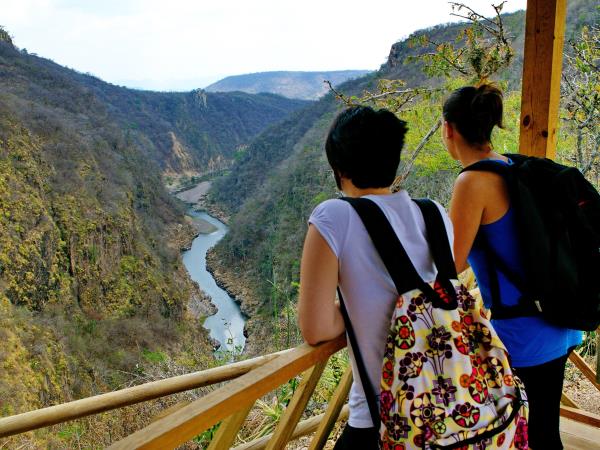
Best of Nicaragua overland vacation, tailor made
Colonial cities, volcanoes and jungle wilderness
From
US $4010 to US $4370
14 days
ex flights
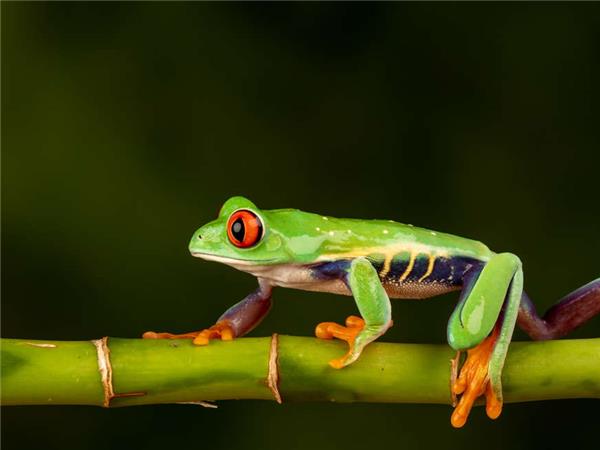
Nicaragua tours, small group
The 'Land of Lakes and Volcanoes' vacation in Nicaragua
From
US $2660 to US $3050
13 days
ex flights
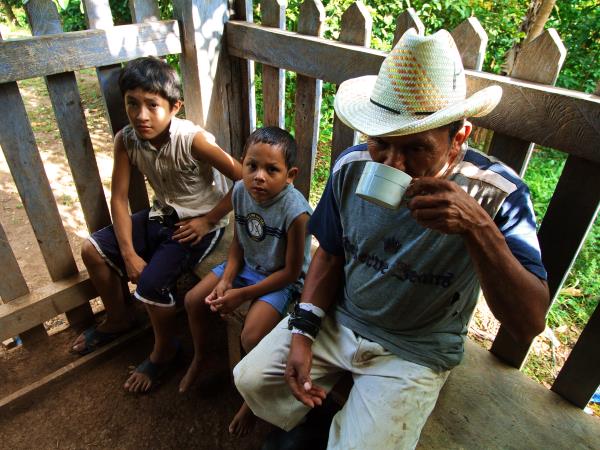
Nicaragua vacation, Cobbled Streets to Coral Reefs
Visit Nicaragua's cities, homestays, volcanoes, and islands
From
£2390
10 days
ex flights
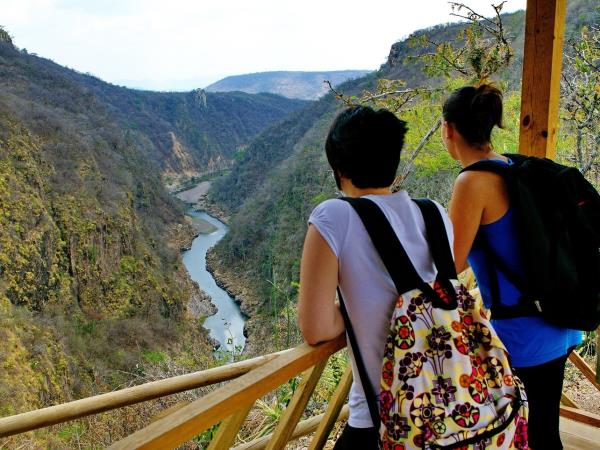
Family vacation in Nicaragua, tailor made
A great adventure experience with your family in Nicaragua.
From
US $2075
12 days
ex flights
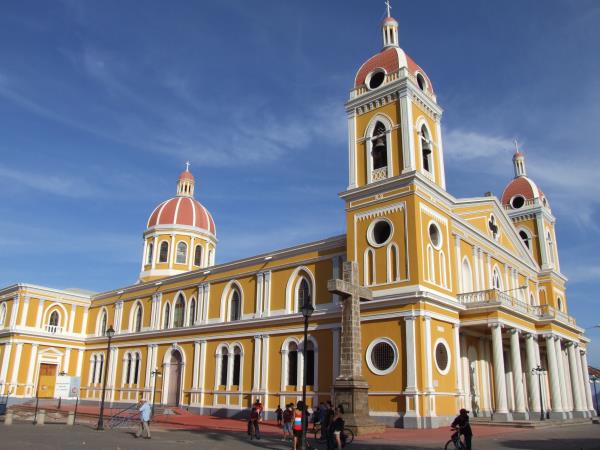
Nicaragua vacations, tailor made tour
An insight into Nicaragua's fascinating and tumultuous history
From
£5150
13 days
inc UK flights
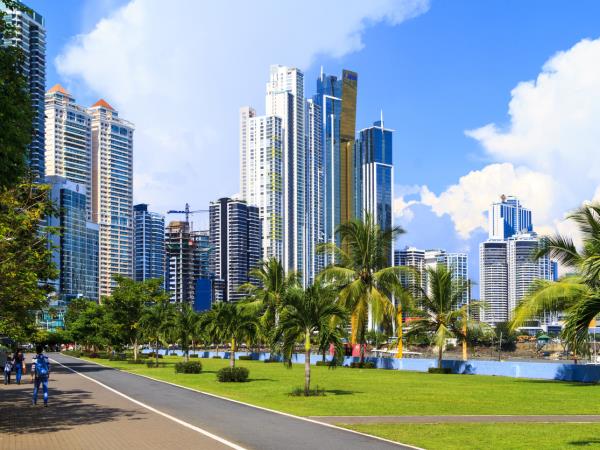
Panama and Nicaragua small group tour
Panama & Nicaragua, cultures, rainforests & volcanoes
From
£6095
24 days
ex flights


Contact Us
Call us for a chat about our vacations. We are happy to discuss your vacation and help in any way we can. No bots, queues or awful hold music.

1-866-821-6866
Call toll free
Calling from outside the USA

Nicaragua volcanoes map
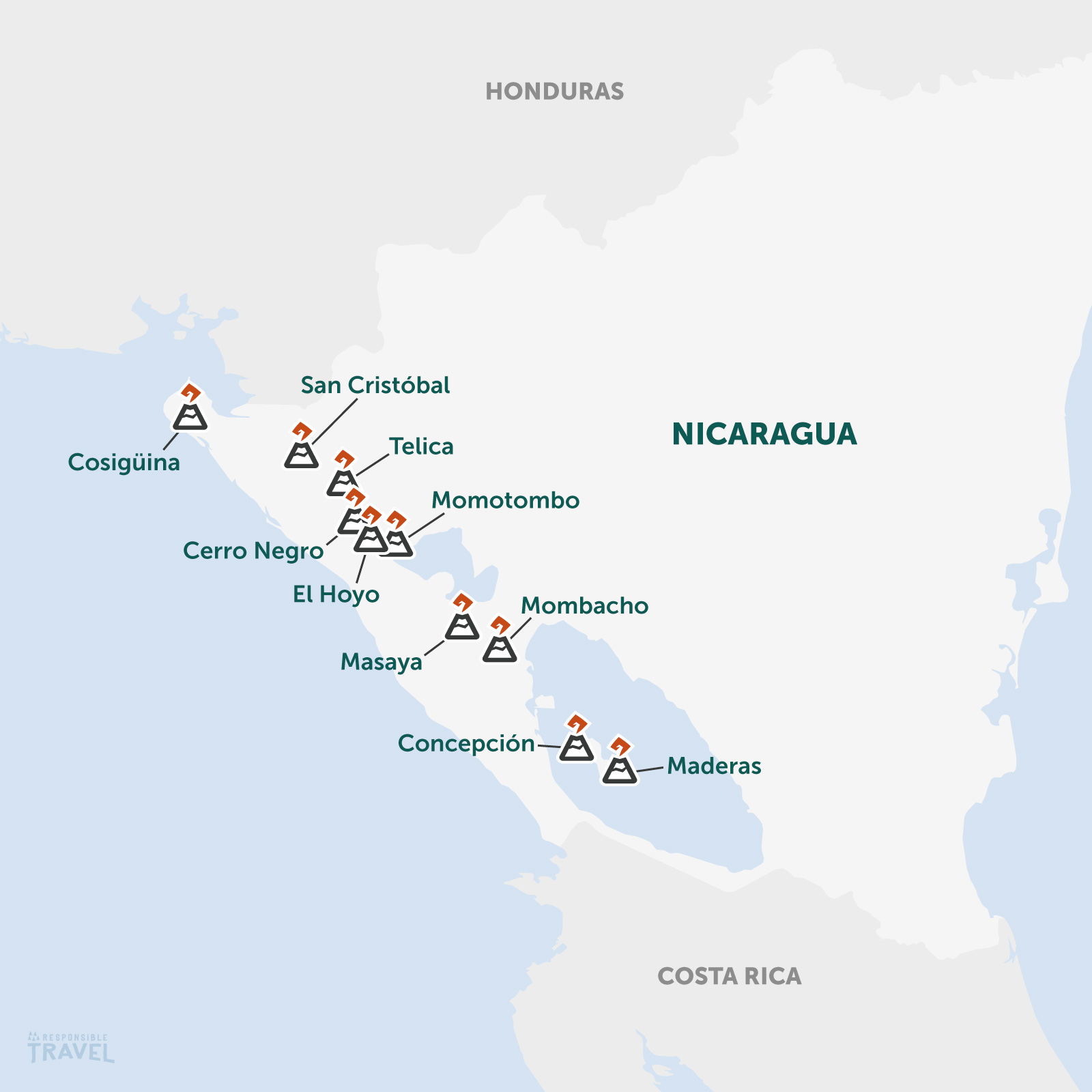
Best volcanoes to visit in Nicaragua
Maderas
“I love Maderas,” says Rafe. “It’s not just a hike for hike’s sake.” Maderas (1,394m) is the most accessible of the twin volcanoes that form Ometepe Island on Lake Nicaragua. You can explore a coat of tropical cloud forest, as well coffee farms and pre-Columbian petroglyphs of concentric circles and animal heads. Then there’s the wildlife: howler monkeys swing through canopies, luminous blue morpho butterflies flicker through foliage, and woodpeckers and the omnipresent white-throated magpie jay dart between branches. “Occasionally the trees open up and you get these wonderful views of Concepcion,” says Rafe.
Wander around the lower slopes to San Ramon Waterfall, which cascades down for 50m into a pool ideal for a cool-down dip. Alternatively, make for the top of Maderas for a swim in the crater lake – a challenging 6-7-hour trek that includes some steep and slippery scrambles. Our vacations base you in a family-run hotel in the foothills with views over Lake Nicaragua.
Wander around the lower slopes to San Ramon Waterfall, which cascades down for 50m into a pool ideal for a cool-down dip. Alternatively, make for the top of Maderas for a swim in the crater lake – a challenging 6-7-hour trek that includes some steep and slippery scrambles. Our vacations base you in a family-run hotel in the foothills with views over Lake Nicaragua.
Concepcion (Omeyatecihua)
Most people admire the photogenically symmetrical Concepcion (1,610m) – or Omeyatecihua in the Indigenous Nawat language – from afar. Unlike its sleeping sister, Madera, Concepcion is actively growing, last erupting in 2024. Traveling with a guide who is tuned into all the warnings from the Nicaraguan Geosciences Institute that monitors the volcanoes is essential. Getting to the top is doable, but a tough hike for experienced trekkers up for a challenge. “There’s a lot of scree and it’s three steps forward, two steps backwards,” says Rafe. “But when you get to the top, the views are stunning.”
Masaya (Popogatepe)
The most famous volcano in Nicaragua is Masaya – a smoking jumble of craters and calderas sat between the capital city of Managua and Granada. It’s not trekkable, continually streaming sulphur dioxide into the sky, but it is home to Nicaragua’s first and largest national park. Here, our trips can take you walking on nature trails through the lowland forest and to the market towns that live in Masaya’s shadow. Make sure to view the lava tubes and caves that glow with red-hot lava, which doubles as a bubbling heat lamp for the bats that snooze nearby.
Cerro Negro
You might have heard of dune boarding, but what about volcano boarding? That’s your route down when you hike up Cerro Negro – a volcano with slopes so covered in rock ash that, rather than hike back down, our adventure tours offer the chance to surf or sledge to the bottom. This is still an active volcano, mind you, so expect to be kitted out in bright orange safety jumpsuits and goggles. “It’s great fun,” says Rafe. “I don’t know any other country where you can do that. It’s a real buzz.” It’s also a beautiful sight. The red-black cone of Cerro Negro is set amongst bright green hills. The lovely city of Leon makes a great base – and adds another reason to visit.
San Cristobal (Tepemesquián)
San Cristobel is the tallest volcano in Nicaragua, reaching 1,745m and crowned by a crater half a kilometre wide. It’s also one of the most active volcanoes in Nicaragua, with a plume of smoke and ash that follows the sweep of the prevailing winds. Opt for an easier hike on the lower slopes or go right for the top, through those Dali-esque, lunar landscapes. Just be warned: it’s tough going, especially the last 100m or so, which finishes with a zigzagging slippery scramble for the crater. “But it’s so rewarding,” says Rafe – and that reward is a panorama over north-west Nicaragua and over the border into Honduras.
El Hoyo
El Hoyo is a 1,050m-high volcanic complex easily recognised by the opal-shaped hole – or hoyo – on the side. The main crater is a 700m-wide cavern, plus you have the chance to see both old and new fumaroles seeping sulphurous gases. El Hoyo is easily reached from Leon and Managua, which makes it a popular spot for hiking, camping and catching dreamy sunset scenes over Lake Managua.
Telica
Telica is one of the liveliest volcanoes in Nicaragua, rumbling to life in 1999 after a few centuries of dormancy. The smoking, cracked-open crater is easily reached from Leon via San Jacinto, a little town with a big volcanic field of roiling, boiling mud pools. Wander the fumaroles, try volcano boarding, find out about the geothermal energy produced here, and learn about the 1856 Battle of San Jacinto – now a national vacation which celebrates the end of American mercenary and colonist William Walker’s expeditions into Central America. It’s an easy hike to the top of Telica; take your pick of trails for far-ranging views over San Jacinto and neighbouring volcanoes.
Mombacho & Isletas de Granada
Mombacho is perhaps most famous for the archipelago it created when it erupted thousands of years ago – the 365 islands of Isletas de Granada of Lake Nicaragua. The volcano is less visited, which is great for those interested in exploring the slopes and surrounding nature reserve in peace. Hiking trails to the crater range from moderate to challenging. If you fancy taking it easy, there’s plenty of accompanying cloud forest to wander, all filled with bird and orchid species only found on Mombacho. Recycled military jeeps run up and down the mountain too, stopping about 300m below the peak.
Got the volcano bug? Onwards: to El Salvador & Costa Rica
“Nicaragua combines so well with neighbouring countries,” says Rafe. When it comes to volcano viewing, that’s especially true of El Salvador, which is a (very exciting) boat trip across the Gulf of Fonseca away. Here, you’ll find lots of climbable volcanoes, plus national parks such as Cerro Verde stocked with viewpoints and nature trails. Costa Rica is another great option – the Arenal Volcano region is packed with swimmable hot springs, wildlife river cruises and waterfall walks.
More Nicaragua articles
Luscious, lava and littoral sums up Nicaragua quite neatly. A "poor man's Costa Rica" this is not.
The largest country in Central America, Nicaragua has heaps of highlights.