Culture in Pakistan: cuisine, traditions, festivals
The most memorable stories, the ones that really speak to you and hold your attention, are those that center around local people. Our cultural vacations in Pakistan introduce you to artisans, activists and creators, giving you a deeper understanding and a more nuanced picture of the country. They explore the role of women in society through encounters with campaigners and entrepreneurs, giving them a platform to share their life experiences; they immerse you in centuries-old community festivals, and they introduce you to traditional craftsmanship, from truck painting to heritage architecture, that vacations like ours help sustain.

Pakistan cultural highlights
Pakistani arts & crafts
Stories are the lifeblood of the Qissa Khawani Bazaar in Peshawar, the Bazaar of Story Tellers, which is often a highlight of our southern Pakistan cultural tours. In centuries past, travelers on the Silk Road would rest here and share information, advice, warnings and tales of the road with each other. They could also pick up supplies before continuing their journeys. Stallholders set out beautifully carved clay pots, heaped trays of spices, huge platters of fried fish and roasted chicken, handwoven rugs, assorted kitchen utensils and more. Ornate brass samovars heat water to fill the teapots that hang from the ceilings until they are called into service. It’s a great place to spend a morning, people-watch and, yes, share a few stories.
In Taxila, 160km east of Peshawar, our vacations take you to a truck painting workshop. Commonly known as ‘jingle trucks’ because of the chains that are hung from their bumpers, these colourful lorries are a Pakistani institution. Many of the elaborate designs have a spiritual or storytelling significance. They’re like tattoos in that the driver will give an indication of what they want, and then the artist is free to go ahead and create. Poetic verses and political messaging are popular. Seeing one of these moving works of art as you travel around Pakistan is a delight. Watching the artists themselves at work is fascinating.
In Taxila, 160km east of Peshawar, our vacations take you to a truck painting workshop. Commonly known as ‘jingle trucks’ because of the chains that are hung from their bumpers, these colourful lorries are a Pakistani institution. Many of the elaborate designs have a spiritual or storytelling significance. They’re like tattoos in that the driver will give an indication of what they want, and then the artist is free to go ahead and create. Poetic verses and political messaging are popular. Seeing one of these moving works of art as you travel around Pakistan is a delight. Watching the artists themselves at work is fascinating.

People on vacation want experiences and storytelling.![]()

– Saadia Baber, Xperience Pakistan
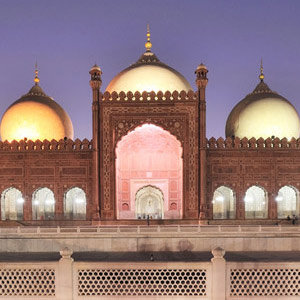
We have cultural tours that focus on shopping, handicrafts and architecture. Havelis are handsome old townhouses, often built around a courtyard. Many have been restored and now have different uses, for instance as coffee houses that both cater to Pakistan’s booming coffee scene and also help this cultural heritage to evolve and survive. The seven havelis that make up the Sethi Mohallah (a neighbourhood built by a prominent family of Punjabi merchants) in the early 20th century are a prime example.
“When we were young my grandfather lived there and we would go and stay the night,” says Saadia Baber, the founder of our partner Xperience Pakistan. “I remember we’d moan because we were jealous of the modern houses. Now it's a museum and used for film productions and photo shoots. When I take my kids there, I show them where I used to play hide and seek, and I feel so privileged.”
“When it comes to interior design, when it comes to architecture, we've got some incredible designers, many of them female,” Saadia continues. “The trips I organise aren't just about having a vacation, they're about opening people's minds to show them a holistic perspective of Pakistan, especially its creativity.”
During Covid when people were unable to travel, Saadia developed a range of scents to evoke memories of Pakistan. “One is infused with jasmine, the national flower of Pakistan. In the evenings you smell it everywhere because everyone has it in their gardens. Another one uses rose petals. Punjab is known for its roses and that scent emulates the rose petal bracelets everyone wears at weddings in Pakistan.”
For a more contemporary take on Pakistani culture, you can tune into Coke Studio, a long-running television programme that acts as a showcase for Pakistani musicians from across the country to perform everything from Sufi to bhangra, folk to hip hop, classical to pop.
“When we were young my grandfather lived there and we would go and stay the night,” says Saadia Baber, the founder of our partner Xperience Pakistan. “I remember we’d moan because we were jealous of the modern houses. Now it's a museum and used for film productions and photo shoots. When I take my kids there, I show them where I used to play hide and seek, and I feel so privileged.”
“When it comes to interior design, when it comes to architecture, we've got some incredible designers, many of them female,” Saadia continues. “The trips I organise aren't just about having a vacation, they're about opening people's minds to show them a holistic perspective of Pakistan, especially its creativity.”
During Covid when people were unable to travel, Saadia developed a range of scents to evoke memories of Pakistan. “One is infused with jasmine, the national flower of Pakistan. In the evenings you smell it everywhere because everyone has it in their gardens. Another one uses rose petals. Punjab is known for its roses and that scent emulates the rose petal bracelets everyone wears at weddings in Pakistan.”
For a more contemporary take on Pakistani culture, you can tune into Coke Studio, a long-running television programme that acts as a showcase for Pakistani musicians from across the country to perform everything from Sufi to bhangra, folk to hip hop, classical to pop.
Pakistani cuisine
Pakistani cuisine is diverse and packed with flavour and aroma. It’s a meat-heavy diet, with barbecue dishes and kebabs popular, but vegetarians and vegans will have little difficulty traveling here. Food is often spicy, but not to the point of being fiery, with strong regional differences.
They’re living the chai life over in Pakistan. Tea is integral to culture here – chai dhabas, where commuters will pause for a paratha washed down with a steaming cup of tea poured from an old, enamelled teapot, are an institution in cities like Karachi, a brief moment in the day to connect and share a few words of greeting with your fellow travelers. Some people will drink gallons of the stuff over the course of the week.
“At home we had these double doors that opened into the garden and when it rained, we would sit there and have chai and pakoras,” says Hira Aftab, co-founder of our partner The Hybrid Tours, who organise a cultural tour in northern Pakistan taking in the spring cherry blossom season. “It’s a national thing. If it rains in Pakistan, you're having chai, pakora, samosa. And on family vacations there's always going be some kind of halwa puri (a typical vegetarian breakfast) with sweetened semolina and chickpeas and there's going to be this bread and you won't need anything else to eat for the rest of the day.”
For Saadia, what often surprises her guests is the diversity of traditional Pakistani food. “In the north it’s soup-based, quite bland, but the further south you go the spicier it gets and each city has its own spice blend. Karachi is known for 15 types of biryani. Lahore never sleeps, you can find somewhere good to eat at 3am.”
They’re living the chai life over in Pakistan. Tea is integral to culture here – chai dhabas, where commuters will pause for a paratha washed down with a steaming cup of tea poured from an old, enamelled teapot, are an institution in cities like Karachi, a brief moment in the day to connect and share a few words of greeting with your fellow travelers. Some people will drink gallons of the stuff over the course of the week.
“At home we had these double doors that opened into the garden and when it rained, we would sit there and have chai and pakoras,” says Hira Aftab, co-founder of our partner The Hybrid Tours, who organise a cultural tour in northern Pakistan taking in the spring cherry blossom season. “It’s a national thing. If it rains in Pakistan, you're having chai, pakora, samosa. And on family vacations there's always going be some kind of halwa puri (a typical vegetarian breakfast) with sweetened semolina and chickpeas and there's going to be this bread and you won't need anything else to eat for the rest of the day.”
For Saadia, what often surprises her guests is the diversity of traditional Pakistani food. “In the north it’s soup-based, quite bland, but the further south you go the spicier it gets and each city has its own spice blend. Karachi is known for 15 types of biryani. Lahore never sleeps, you can find somewhere good to eat at 3am.”
Women-centerd culture in Pakistan
Our tours take you to meet Pakistani women and hear their stories in their own words. “We're not saying everything here is perfect,” says Hira. “There’s a lot of navigating patriarchal social and cultural norms. But there are so many women breaking glass ceilings. Women here don’t need saving, they're already doing the work.”
Our tours can introduce you to women who are part of the fashion scene, who are part of the climate change movement. They talk to inspirational figures like Mahnoor Omar, who challenged the Pakistani government over the tax on period products so that women could afford this basic hygiene. “None of those perspectives can be got from a guidebook or a textbook,” points out Hira. “We want to use our vacations as a platform to amplify the voices of people who are facing these cultural issues head on.”
Saadia is keen to champion women in business wherever she can, from the Hunza Valley to Lahore. “We always go to eat at a bakery there called Go Flour. The founder trains up women from low-income backgrounds. They work with her for six months with the view that by the end they can either go on and set up their own business or they've got the skills to go and work with hotel chains, bigger restaurants. I think she has about eight branches now.”
Our tours can introduce you to women who are part of the fashion scene, who are part of the climate change movement. They talk to inspirational figures like Mahnoor Omar, who challenged the Pakistani government over the tax on period products so that women could afford this basic hygiene. “None of those perspectives can be got from a guidebook or a textbook,” points out Hira. “We want to use our vacations as a platform to amplify the voices of people who are facing these cultural issues head on.”
Saadia is keen to champion women in business wherever she can, from the Hunza Valley to Lahore. “We always go to eat at a bakery there called Go Flour. The founder trains up women from low-income backgrounds. They work with her for six months with the view that by the end they can either go on and set up their own business or they've got the skills to go and work with hotel chains, bigger restaurants. I think she has about eight branches now.”
Pakistani hospitality
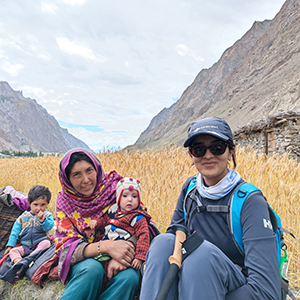
Mehman Nawazi is the tradition of hospitality, and Pakistani people are known for the generosity with which they welcome strangers. On our cultural trips you will stay in locally owned mountain lodges, hotels and guest houses which ensures that as much money as possible remains in communities. And on some tours, such as those in the Hunza Valley, you may be invited into a family’s home to share a meal and learn a little about their lives and culture. Our trips ensure that visits take place in conjunction with the hosting community and that hospitality is fairly compensated.
It's quite powerful to visit people in their homes because you are seeing them how they choose to be defined![]()
“It's quite powerful to visit people in their homes because you are seeing them how they choose to be defined,” says Hira. “We never want people to think they're being forced to share something or to make their culture performative for people. When we create our vacations we very openly say to people, ‘this is what we want to do, this is our idea, help us shape it. If you think that there's something we can do better, tell us and we'll change it.’ If you want to visit, you meet people on their terms. You don't bring your own and then try to dictate to them.”
Pakistani cultural festivals
Pakistan has a vibrant cultural calendar with festivals and events throughout the year. Some of the most interesting to attend are those of the Kalash community in rural areas of the Chitral region, whose celebrations are often informed by the seasons and their pagan beliefs.
Chilam Joshi, in mid-May, marks the start of spring, while Uchal heralds the start of the wheat and barley harvest. Our cultural vacations bring you into the heart of Kalash festivals such as Chilam Joshi, Uchal or the winter solstice in December, with local guides accompanying you so that you feel more like a welcomed guest than just a spectator.
Chilam Joshi, in mid-May, marks the start of spring, while Uchal heralds the start of the wheat and barley harvest. Our cultural vacations bring you into the heart of Kalash festivals such as Chilam Joshi, Uchal or the winter solstice in December, with local guides accompanying you so that you feel more like a welcomed guest than just a spectator.
The Shandur Polo Festival is like the Glastonbury of Pakistan.![]()
In July, the Shandur Pass that links Chitral with Gilgit-Baltistan shakes to the thunder of hooves as the Shandur Polo Festival gets underway. The three-day event sees top teams from Gilgit and Chitral facing off in an aggressive, fast-paced and inevitably action-packed spectacle, which is rivalled for drama by the mountainous backdrop of the Karakoram and Hindu Kush ranges. “The Shandur Polo Festival is like the Glastonbury of Pakistan,” says Saadia. “It’s a massive sport here but you're not going there just for the polo because at night in the campsites you've got the food, you've got the dancing, you've got singing, campfires and everything.”
Cultural events are not always well-advertised online, and scheduling tends to be a little erratic, so it’s worth talking to your tour operator in the weeks and months before you travel, to see what Pakistani festivals are on and where.
Cultural events are not always well-advertised online, and scheduling tends to be a little erratic, so it’s worth talking to your tour operator in the weeks and months before you travel, to see what Pakistani festivals are on and where.
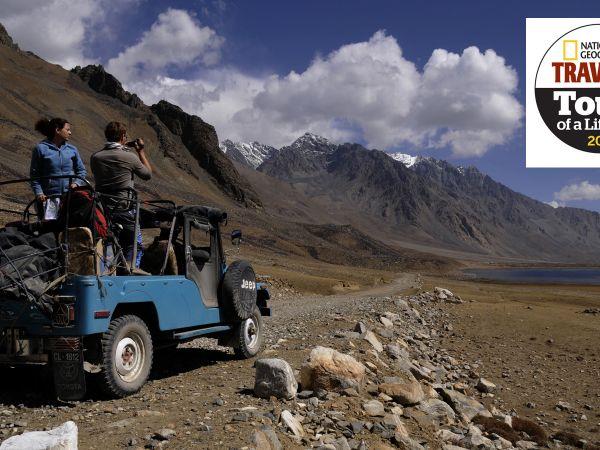
Hindu Kush tour in Pakistan
Experience the incredible scenery & culture of the HinduKush
From
US $4809 to US $5223
15 days
ex flights
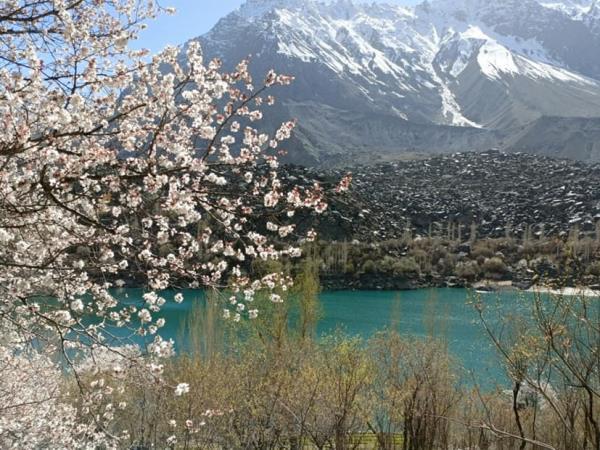
Hunza and Skardu cultural tour, Pakistan
Experience the rich cultural heritage of Karakoram valleys
From
US $3000
14 days
ex flights

Nangma and Thallay La trek in Pakistan
Off the beaten track to Nangma and Thallay La
From
US $2600
15 days
ex flights
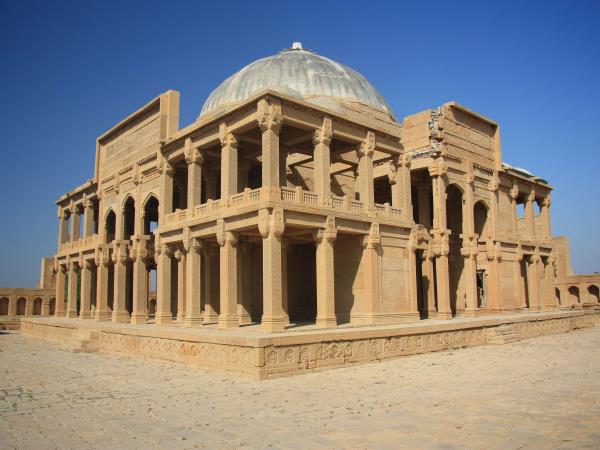
Indus Valley tour in Pakistan
Vast deserts, ancient civilisations and Indus River Dolphins
From
£3425 to £3649
16 days
ex flights
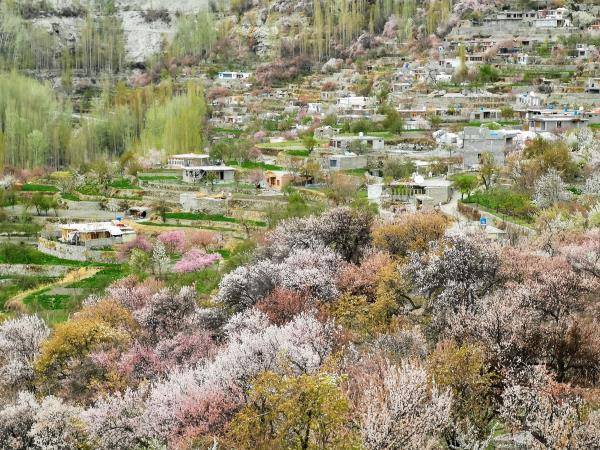
Hunza Valley cultural tour in Pakistan
Cultural trip to pristine Hunza Valley
From
US $1890
9 days
ex flights
Skardu Karakoram vacation, Pakistan
Cultural Adventure Vacation in Skardu Karakoram
From
US $2150
9 days
ex flights


Contact Us
Call us for a chat about our vacations. We are happy to discuss your vacation and help in any way we can. No bots, queues or awful hold music.

1-866-821-6866
Call toll free
Calling from outside the USA

Key cultural destinations in Pakistan
Major cultural destinations in Pakistan include the Hunza Valley in the northern Gilgit-Baltistan region, the Kalash valleys in neighbouring Chitral and cities such as Lahore.
Hunza Valley
Moving east from Chitral, crossing the historic and scenic Shandur Pass, home to the highest polo ground in the world, you enter the region of Gilgit-Baltistan. Here, you can spend time in the spectacularly picturesque Hunza Valley, walking through villages and orchards with a local historian, visiting ancient sites such as the Altit and Baltit forts, or a carpet-weaving workshop run by women from the shepherding Wakshi community.
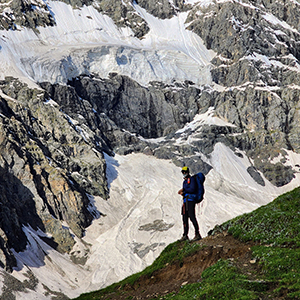
Due to its reliance on glaciers for water, Pakistan will be significantly affected by a warming climate. In the Hunza Valley our cultural vacations meet local activists to learn about their work helping communities develop resilience and adapt to the threat of landslides as the ice melts.
Due to its reliance on glaciers for water, Pakistan will be significantly affected by a warming climate. In the Hunza Valley our cultural vacations meet local activists to learn about their work helping communities develop resilience and adapt to the threat of landslides as the ice melts.
Kalash Valleys
Alcohol consumption is widely prohibited in Pakistan, but wine has been made in the Kalash valleys of Pakistan’s northerly Chitral district for thousands of years. Known for its tangy sharpness, Kalash wine is not particularly strong, but it serves an important function in purification rituals at festivals such as Chilam Joshi.
The animist, polytheist beliefs and ancestor worship practised by the Kalash, Pakistan’s smallest ethnic group who consider themselves descendants of Alexander the Great, make these valleys and the villages within them one of the country’s most distinctive cultural travel destinations.
Lahore
Cosmopolitan and progressive where Peshawar to the north is more socially conservative, Lahore is the capital of Pakistan’s Punjab province. Our cultural trips will typically focus on the Walled City, where you will find many significant landmarks from restored Mughal baths to ancient mosques, havelis and the sprawling, opulent Lahore Fort. “We try and visit Lahore on a Saturday and Sunday, when the fort comes to life,” says Saadia. “They do an evening show with dancing, plays and music.”
Soak up modern Pakistani culture at the Alhamra Arts Council, an award-winning performance and exhibition space, with an architectural style reminiscent of the Mughal Empire and a constantly changing roster of music, art and theatre.
Soak up modern Pakistani culture at the Alhamra Arts Council, an award-winning performance and exhibition space, with an architectural style reminiscent of the Mughal Empire and a constantly changing roster of music, art and theatre.
More Pakistan articles
Traveling in winter is generally a no-no as much of the landscape is covered in snow.
Pakistan is profound. Overcome media and myths to go and explore this extraordinary country...
Look beyond the headlines and you’ll find a fascinating and welcoming country.