Language vacations in Tenerife
“¡Agüita!”
It’s a well-worn Canarian phrase – and a measure of how far you’ve come when you exclaim it while watching a surfer slice across a roiling Atlantic roller. ¡Agüita!: not ‘little water’, as the literal translation implies, but a Canarian expression of surprise or admiration: ‘wow!’ or ‘goodness!’
Chances are, like much of your newfound vocabulary, you didn’t just learn it in the classroom. You learnt it while exploring Tenerife – while marvelling at the Milky Way arching above Mount Teide or while spotting a humpback whale breach off the coast. Or maybe after trying a glass of the local malvasia or salt-encrusted papas arrugadas for the first time – both well-deserving of an approving “¡Agüita!”
This is the magic formula of our language vacations in Tenerife: they weave together expert Spanish teachers and real-world practice, plus time to rest, absorb what you’ve learned, and settle into the pace of island life.

Learn Spanish and yoga in Tenerife
Learn Spanish, explore North Tenerife, relax with yoga
From
€1850
8 days
ex flights
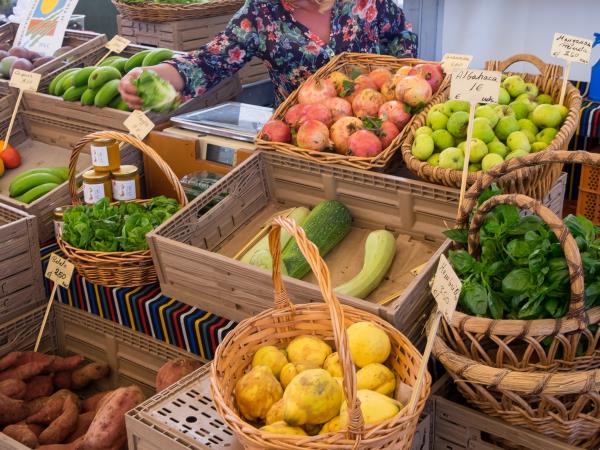
Learn Spanish in Tenerife
Speak Spanish daily while living Tenerife’s local life
From
€1850
8 days
ex flights
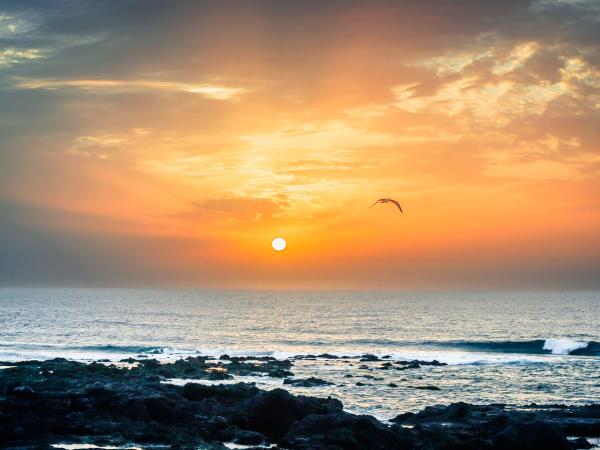
Tenerife vacation with Spanish lessons
Exclusive Spanish immersion vacation in the real Tenerife
From
€1105 to €1250
6 days
ex flights


Spanish teachers of many talents: immersive language learning at its finest
Our courses are led by experts in teaching, linguistics, guiding – and in Tenerife itself. Teachers are people who have followed their passions and combined what they love with what they do best. Sara Garcia, founder of our partner Spanish by Immersion, has lived in many European cities to study and teach – but Tenerife kept calling her back.
“I’d been working in tourism in big companies, but it wasn’t giving me what I wanted,” says Sara. “I really like helping people and guiding people, and education… and I really like history, culture and linguistics – so why not combine them?”
You’ll also be supported by local people. “Local people are really patient all the time,” says Sara. That’s important, because this isn’t your typical classroom learning. You’ll spend mornings in class and afternoons out and about, practising what you’ve learnt while walking, stargazing, feasting and beach-hopping.
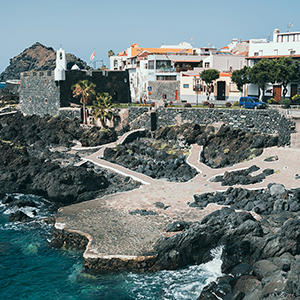
This is where our multi-talented teachers become invaluable. You’ll go through the basics – but you’ll also pick up words that don’t appear in your standard Duolingo Spanish course. For instance, mirador will come up again and again in Tenerife, but there’s no better way to understand its meaning than by standing on the Mirador de San Pedro, looking out over the crashing ocean below. You’ll soon learn that mirador means viewpoint: mirar (to look at) and -dor (place) – but you’ll also get a real feeling of its Latin root mirari: ‘to wonder’.
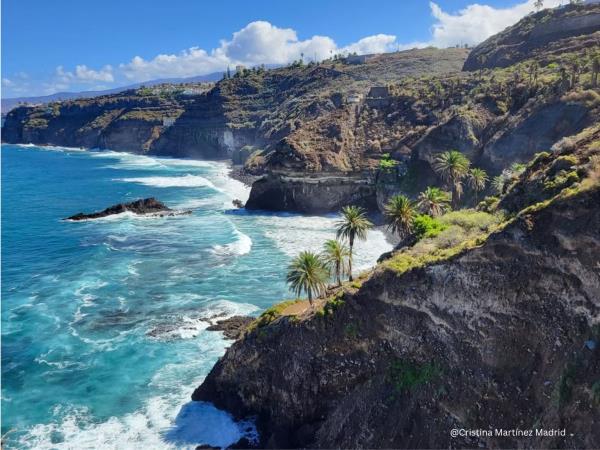
Meanwhile, piratas – pirates – is an important one for a trip to Rambla de Castro, a sea of old, towering Canary palms and the bright yellow splash of a 16th-century merchant’s estate. With the wide-ranging views, it’s easy to understand why watchtowers were planted on the coast to deter raiders.
As the days go on, you’re encouraged to get stuck in and practise Spanish while walking along the coast or tasting the island wine. “Sometimes it’s more like history or nature lessons in Spanish,” says Sara. “This is learning by doing… You are within the context, and that is full immersion in the culture.”
There’s another way of learning for those who are interested – through yoga. Sara is also a certified instructor. “I really enjoy the yoga lessons because we study the body parts and the body movements, and then we do the yoga lesson,” says Sara. “I have that perspective of combining everything, even breathing and slowing down.”
If there’s one thing that learning languages does, it’s reveal the joy and satisfaction of slow, immersive travel. “You move a little fast,” says Sara, remembering living in cities like Malaga, Amsterdam, Berlin and London. “Something that Tenerife taught me was to slow down, and I guess I transmit that in my tours. There’s a reason for short distances. Every day there is a different activity – but not in a rush.”
Contact Us
Call us for a chat about our vacations. We are happy to discuss your vacation and help in any way we can. No bots, queues or awful hold music.

1-866-821-6866
Call toll free
Calling from outside the USA

A warm welcome to northern Tenerife
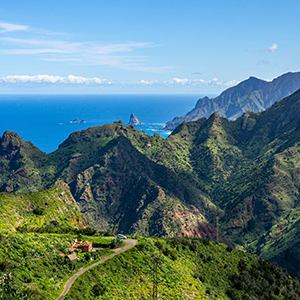
Most of our vacations are based in northern Tenerife, where the coast cracks into a lightning strike of jagged cliffs, hidden bays, salt-swept palm trees and viewpoints that place you right in the middle of the geological drama. “The landscape is amazing,” says Sara.
The towns and villages are a world away from the big beach resorts of the south-west, giving you the chance to learn Spanish to the rhythm of everyday life on Tenerife. You’ll stay in small hotels in rural villages such as Icod el Alto. “It’s a completely untouristy place,” says Sara. It’s also a coastline that’s a few degrees cooler and breezier than the south-west, making it more pleasant for exploring in increasingly sizzling summers.
Plus, while staying in a lesser-trod part of Tenerife, you’re still in easy reach of some of the most spectacular parts of the island, such as Teide National Park. It’s a great base for combining nature, culture and walking with language lessons.
By the end of the week, you’ll know ¡Agüita!, but also all the other itas that have welcomed you in Tenerife. In Spain, an ita at the end of a word makes it small – but in the Canary Islands there’s a different underlying meaning that’s used much more than in mainland Spain.
“-ita means that something is small, but it’s also appreciative,” says Sara. “It makes everything appreciative.” So casita isn’t simply a small house – it’s a cosy, welcoming house. It works with names too: Maria might be Mariquita to closest friends and family.
This softening and warming of language is what makes Canarian Spanish distinctly affectionate – and it’s this warm sense of welcome that you’ll carry with you long after the final chao.
Practicalities
What is a language vacation in Tenerife like?
Our language vacations in Tenerife balance classroom and real-world learning, which our teachers reckon is the best way to teach Spanish. It’s also the most fun. For every morning you spend in the classroom, you’ll have an afternoon out and about doing an activity, practising what you’ve learned with restaurant workers, vineyard owners, astronomers and tour guides. Trips are based in towns like La Orotava, where there are more residents than tourists. You’ll often meet the teacher before the trip starts via a video chat so they can get a sense of your language levels, interests and aims.
Why choose Tenerife for a Spanish language vacation?
For starters, some of our best Spanish teachers are based in Tenerife. Secondly, because it’s Tenerife: you’ll be learning amongst volcanic vineyards, 16th-century city streets, palm beaches, craggy coastlines and starry skies. The island’s standing as a popular vacation spot means many budget airlines fly there, so flights can be a bargain, especially in spring and autumn. Plus, although Tenerife is home to almost a million people, it retains a relaxed, friendly small-town feel – with restaurateurs, farmers and shopkeepers sharing seemingly infinite warmth and encouragement for people willing to learn their language.
Should I go for tailor made or small group Spanish classes?
We offer both tailor made and small group Spanish language courses in Tenerife, so you can choose the style of trip that suits you best. Small group vacations depart on set dates, usually in the summer months. Group sizes lean towards tiny – often no more than four people – so that lessons can be tailored to a range of experience levels and interests. Meanwhile, tailor made language vacations can be booked for any date and can accommodate private small groups or one-to-one Spanish tuition for individuals.
More Tenerife articles
Start exploring the largest of the Canary Islands with our guide taking you from north to south.