Isle of Man vacations
Vacation with wallabies: this is an island of an unexpected nature.
The Isle of Man’s most surprising resident isn’t the famous, tailless Manx cat. Actually, this resident has a very long tail indeed. It’s a wallaby. In the 1970s, two red-necked wallabies escaped from Curraghs Wildlife Park and they’ve thrived on the island ever since. Well over 500 wallabies live happy, mainly nocturnal, lives in the island’s north-west Curragh area.
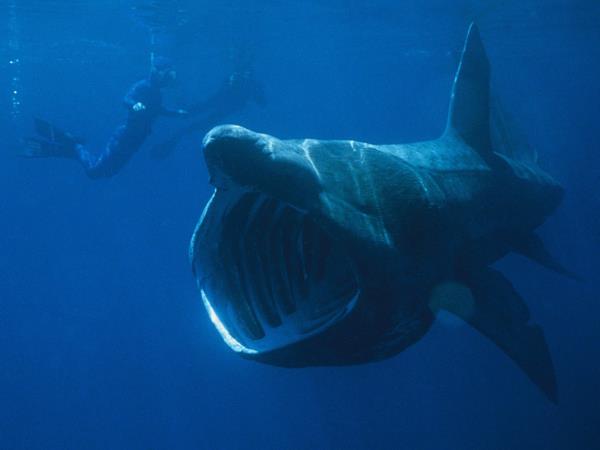
The Isle of Man’s next most surprising resident is the world’s second largest shark – this is considered one of the best places in the world to see basking sharks. These bucket-mouthed plankton eaters, globally vulnerable, come so close that walkers might even see them from the shore.
Our walking vacations and wildlife trips are two fascinating ways to see the island’s wild side. Read on to find out about how to have a great vacation to the Isle of Man.
The Isle of Man’s most surprising resident isn’t the famous, tailless Manx cat. Actually, this resident has a very long tail indeed. It’s a wallaby. In the 1970s, two red-necked wallabies escaped from Curraghs Wildlife Park and they’ve thrived on the island ever since. Well over 500 wallabies live happy, mainly nocturnal, lives in the island’s north-west Curragh area.
The Isle of Man’s next most surprising resident is the world’s second largest shark – this is considered one of the best places in the world to see basking sharks. These bucket-mouthed plankton eaters, globally vulnerable, come so close that walkers might even see them from the shore.
Our walking vacations and wildlife trips are two fascinating ways to see the island’s wild side. Read on to find out about how to have a great vacation to the Isle of Man.

British wildlife tour on the Isle of Man
A short weekend wildlife adventure to the Isle of Man
From
£950
4 days
ex flights
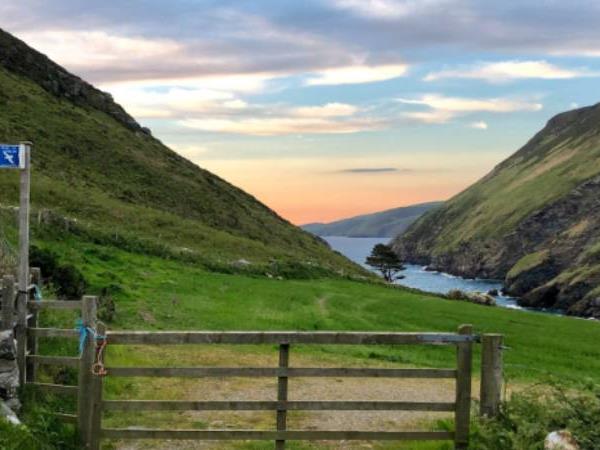
Isle of Man coastal path walking vacation
Walk Raad ny Foillan, Way of the Gull
From
US $1990 to US $1040
9 days
ex flights


Contact Us

Call us for a chat about our vacations. We are happy to discuss your vacation and help in any way we can. No bots, queues or awful hold music.

1-866-821-6866
Call toll free
Calling from outside the USA


Introducing the island
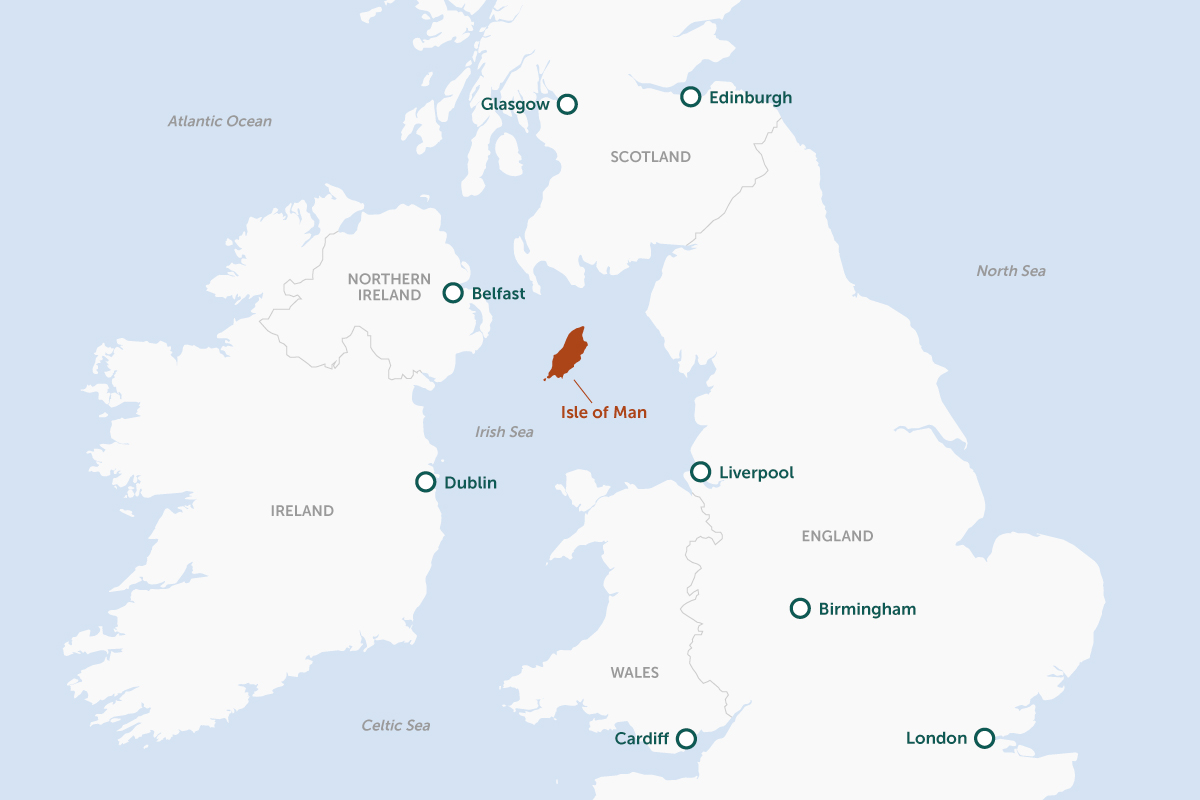
The Isle of Man isn’t part of the UK. Like Jersey and Guernsey, it’s a self-governing crown dependency. Its parliament, the Tynwald, was founded by Vikings, making it the longest continually run parliament in the world.
As well as being the first parliament to give some women the vote, the Tynwald dictates that the highest income tax rate remains around 20 percent (wildlife haven it may be; the Isle of Man is also a tax haven), and allows the TT, the world’s most dangerous motorbike race, to take over the island’s roads for two weeks each summer.
The island’s population is just over 80,000 people, of which just over 2,000 are Manx-speaking – a figure that’s risen from a historic low in the 1950s.
The island is emphatically not part of the UK, but it gets predominantly UK visitors, who are visiting friends and family, or here for a vacation. This has been the case since Victorian times. A historic horse-drawn tram still takes tourists along the promenade in the Bay of Douglas, as it has done for well over a hundred years.
“I think people don’t really consider the Isle of Man,” says John Mullen, a guide at our partner Walkers’ Britain. “It gets bad weather like Ireland and north of England. But again, rather like Ireland, it’s glorious when the sun’s out. But people generally want to go somewhere sunny. Doing a long-distance walk, for instance, is a labour of love if you don’t love mixed weather.”
But for those who brave the wind and changeable weather, there’s a lot to be curious about, not least Manx bonnag, the island’s specialty spiced soda bread. Fairies exist here – the mooinjer veggey, or little people. Inland, tour buses often slow down at the island’s famous Fairy Bridge, so that tourists can say hello to them. But they’re nothing compared to the wildlife.
As well as being the first parliament to give some women the vote, the Tynwald dictates that the highest income tax rate remains around 20 percent (wildlife haven it may be; the Isle of Man is also a tax haven), and allows the TT, the world’s most dangerous motorbike race, to take over the island’s roads for two weeks each summer.
The island’s population is just over 80,000 people, of which just over 2,000 are Manx-speaking – a figure that’s risen from a historic low in the 1950s.
The island is emphatically not part of the UK, but it gets predominantly UK visitors, who are visiting friends and family, or here for a vacation. This has been the case since Victorian times. A historic horse-drawn tram still takes tourists along the promenade in the Bay of Douglas, as it has done for well over a hundred years.
“I think people don’t really consider the Isle of Man,” says John Mullen, a guide at our partner Walkers’ Britain. “It gets bad weather like Ireland and north of England. But again, rather like Ireland, it’s glorious when the sun’s out. But people generally want to go somewhere sunny. Doing a long-distance walk, for instance, is a labour of love if you don’t love mixed weather.”
But for those who brave the wind and changeable weather, there’s a lot to be curious about, not least Manx bonnag, the island’s specialty spiced soda bread. Fairies exist here – the mooinjer veggey, or little people. Inland, tour buses often slow down at the island’s famous Fairy Bridge, so that tourists can say hello to them. But they’re nothing compared to the wildlife.
Wildlife on the Isle of Man

Despite not being part of the UK, the Isle of Man is everything the UK should be when it comes to its wildlife.![]()

This was the first nation in the world to become a UNESCO Biosphere Reserve in its entirety.
The island is just 53km long and 22km wide. It sits in the Irish Sea, where shallow, nutrient-rich water attracts heaps of marine life, including 24 of the 26 European species of whales and dolphins, and basking sharks.
Martin Royle, founder of our partner Royle Safaris, runs wildlife watching expeditions all over the world. In his opinion, the Isle of Man is underrated, "basking sharks (the second large fish in the world) are seen more and better in the Irish Sea than anywhere else in the world during the summer months," he says, "Huge, gentle animals glide in from unknown winter haunts to spend the summer skimming under the surface feeding on the massive plankton blooms we have in the Irish Sea. It's the largest aggregation of this species in the world. People travel to Mozambique, Yucatan or Western Australia to swim with whale sharks: just travel to the Isle of Man for a very similar experience."
If you don’t see sharks, you might see Risso’s, common and bottlenose dolphins, and minke whales – and if not these, then almost certainly some harbour seals and grey seals; the British Isles host 95 percent of Europe’s grey seal population. The seas around the island are harvested for shellfish – look out for wild queen scallops on the menus.
The Isle of Man contains an important wetland area, has unspoilt habitats including vital peat reserves, grasslands and has plans to replant its first temperate rainforest (rainforests were removed across the British Isles by early farming). It’s even got a fantastic variety of lichens – because the air is remarkably unpolluted.
Birds – including Europe’s second largest roost of hen harriers – descend on the island at certain times of year. You might spot Arctic skuas, northern gannets and Manx shearwaters – the latter named because of the way they fly, skimming close to the sea surface.
The UK is often decried for being the most nature depleted place on the planet. The Isle of Man presents a different vision for these islands, which – with their moderate climate, nutrient-rich seas, massive coastline, and important bird migration routes – should be a haven.
The island is just 53km long and 22km wide. It sits in the Irish Sea, where shallow, nutrient-rich water attracts heaps of marine life, including 24 of the 26 European species of whales and dolphins, and basking sharks.
Martin Royle, founder of our partner Royle Safaris, runs wildlife watching expeditions all over the world. In his opinion, the Isle of Man is underrated, "basking sharks (the second large fish in the world) are seen more and better in the Irish Sea than anywhere else in the world during the summer months," he says, "Huge, gentle animals glide in from unknown winter haunts to spend the summer skimming under the surface feeding on the massive plankton blooms we have in the Irish Sea. It's the largest aggregation of this species in the world. People travel to Mozambique, Yucatan or Western Australia to swim with whale sharks: just travel to the Isle of Man for a very similar experience."
If you don’t see sharks, you might see Risso’s, common and bottlenose dolphins, and minke whales – and if not these, then almost certainly some harbour seals and grey seals; the British Isles host 95 percent of Europe’s grey seal population. The seas around the island are harvested for shellfish – look out for wild queen scallops on the menus.
The Isle of Man contains an important wetland area, has unspoilt habitats including vital peat reserves, grasslands and has plans to replant its first temperate rainforest (rainforests were removed across the British Isles by early farming). It’s even got a fantastic variety of lichens – because the air is remarkably unpolluted.
Birds – including Europe’s second largest roost of hen harriers – descend on the island at certain times of year. You might spot Arctic skuas, northern gannets and Manx shearwaters – the latter named because of the way they fly, skimming close to the sea surface.
The UK is often decried for being the most nature depleted place on the planet. The Isle of Man presents a different vision for these islands, which – with their moderate climate, nutrient-rich seas, massive coastline, and important bird migration routes – should be a haven.
People travel to Mozambique, Yucatan or Western Australia to swim with whale sharks: just travel to the Isle of Man for a very similar experience![]()
What are wildlife vacations on the Isle of Man like?
This Isle of Man is small, so our wildlife vacations are usually short breaks. Split your time between sea and land; you might spend a day boat-based, so that you can search for marine life like basking sharks and dolphins. You’ll then spend a day on land, exploring key wildlife sites like Ayres National Nature Reserve, an area of coastal dunes, Ballaglass, a forest glen, and the Ballaugh Curraghs, a wetland area. There are also nature reserves and the Calf of Man island bird sanctuary.
Birdlife can be seen from land and sea, and even when you’re on land you’re never far from the coast and should keep your eyes peeled for sea life – especially seals. You’ll be accompanied by a zoologist or naturalist at all times, usually one who knows the area very well, as well as where you’re most likely to see which species.
Birdlife can be seen from land and sea, and even when you’re on land you’re never far from the coast and should keep your eyes peeled for sea life – especially seals. You’ll be accompanied by a zoologist or naturalist at all times, usually one who knows the area very well, as well as where you’re most likely to see which species.
Walking on the Isle of Man
A joker might quip that everything on the Isle of Man has an unusual number of appendages – the cats don’t have tails and the triskelion flag has 50 percent more legs than the average person. The rare breed Manx Loaghtan sheep, introduced here by Vikings, has four horns (or even six), but never two. Everything’s just a little bit… odd.
You might wish you had a few spare legs on a walking vacation. This small island features the Way of the Gull, a 158km long-distance walk created in the 1980s that allows you to track all the way around the island’s coast – tackling tide tables to cross the beaches, and following the undulations of coastal fells and dunes.
“It’s a very pretty walk and there’s nice variety on it,” says John, who wrote the guide and mapped the route of our coastal path walking vacation “It sees as much of the coast as it can do. You’ve got the towns, like Ramsey, Castletown and Douglas, and then in-between you’re going across high moorlands and hills and tall cliffs. It’s really pretty.”
The coast is very unspoilt and undeveloped. “You’ve got some nice features, like the Calf of Man,” says John. “There’re nearly always seals bobbing around there and the current rips around in-between during the tides. I’ve never seen a basking shark out there, but I’ve seen dolphins.”
The path also picks up the Herring Road, a 23km walking route between Castletown and Peel.
More recently, the island has opened a series of Summit Walks – eight walks that cover the island’s tallest hills. These inevitably include the highest peak on the island, Snaefell. Climb here (or take the mountain railway up) to find one of the windiest places in the British Isles and, famously, to get views over seven kingdoms. Two are sea and sky, the other five are Wales, Northern Ireland, Ireland, Scotland and England.
You might wish you had a few spare legs on a walking vacation. This small island features the Way of the Gull, a 158km long-distance walk created in the 1980s that allows you to track all the way around the island’s coast – tackling tide tables to cross the beaches, and following the undulations of coastal fells and dunes.
“It’s a very pretty walk and there’s nice variety on it,” says John, who wrote the guide and mapped the route of our coastal path walking vacation “It sees as much of the coast as it can do. You’ve got the towns, like Ramsey, Castletown and Douglas, and then in-between you’re going across high moorlands and hills and tall cliffs. It’s really pretty.”
The coast is very unspoilt and undeveloped. “You’ve got some nice features, like the Calf of Man,” says John. “There’re nearly always seals bobbing around there and the current rips around in-between during the tides. I’ve never seen a basking shark out there, but I’ve seen dolphins.”
The path also picks up the Herring Road, a 23km walking route between Castletown and Peel.
More recently, the island has opened a series of Summit Walks – eight walks that cover the island’s tallest hills. These inevitably include the highest peak on the island, Snaefell. Climb here (or take the mountain railway up) to find one of the windiest places in the British Isles and, famously, to get views over seven kingdoms. Two are sea and sky, the other five are Wales, Northern Ireland, Ireland, Scotland and England.
What are walking vacations on the Isle of Man like?
The Way of the Gull is a challenging walk, with some long days. You can tackle it on a nine-day self guided trip, featuring seven walking days, but you may be walking up to 32km some days. Whilst it leaves out the Isle of Man’s highest peak, Snaefell, which is inland, some coasts are a climb. “There are steep hills on it and steep cliffs,” says John.
You can also go on a small group walking vacation, featuring day walks around a few of the island’s cultural curiosities, including the Laxey Wheel – a historic, still-working water wheel. Routes follow footpaths, disused railway lines and the island’s green lanes, which are popular with gravel bikers, too. On the one hand there are lots of vantage points for spotting seals and other marine life on the coast, and then there are paths that plunge you into secret, fairy-filled glens.
You can also go on a small group walking vacation, featuring day walks around a few of the island’s cultural curiosities, including the Laxey Wheel – a historic, still-working water wheel. Routes follow footpaths, disused railway lines and the island’s green lanes, which are popular with gravel bikers, too. On the one hand there are lots of vantage points for spotting seals and other marine life on the coast, and then there are paths that plunge you into secret, fairy-filled glens.
Practicalities
How to get to the Isle of Man
You can get to the Isle of Man Sea Terminal at Douglas by ferry from the UK and Ireland. The Isle of Man Steam Packet departs from Heysham (Lancashire), Liverpool, Dublin and Belfast, and the journey takes between 2 hours 20 minutes and 3 hours 45 minutes, depending on from where you depart. The island is served by cruise ships and also has an airport at Ronaldsway. It takes just over an hour to fly to the Isle of Man from London.Best time to visit the Isle of Man
The best time to visit the Isle of Man is from May to September. One of the Manx Gaelic names for the basking shark hints at when you should visit if you want to see them – sharkagh souree means summer shark. They’re most commonly seen in June and July, off the island’s south-west coast. This is also peak season for tourists. The winters can be quite windy and wet.
Other travel tips
More UK articles

Read about things to do in the UK and our travel advice before making your mind up on the best time to visit.
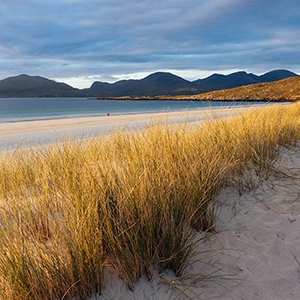
Explore the UK across England, Scotland, Northern Ireland and Wales by reading our UK travel guide.
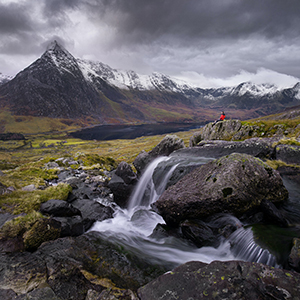
Our UK map and highlights show you why city breaks don’t even tell half the story.
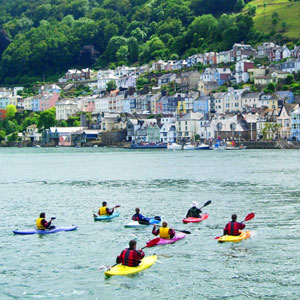
UK adventure vacations deliver both impressive natural beauty and intrepid activities.
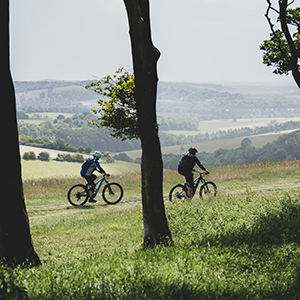
Less about racing for the finish line, more about connecting with the areas you’re passing...
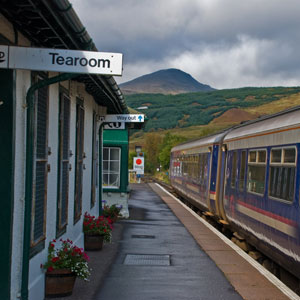
Sit back and let the scenery wash over you like a spring shower: there are Victorian viaducts and ancient hedgerows.
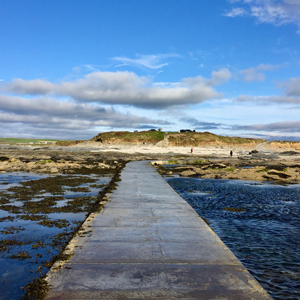
Yes, the UK can be crowded, but you can escape the masses in pursuit of relaxation.
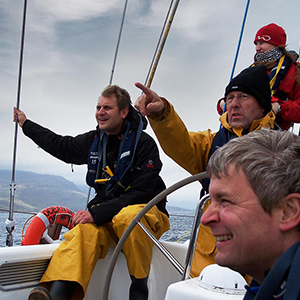
These trips aren’t just about the views – they’re about forging strong bonds with your shipmates too.
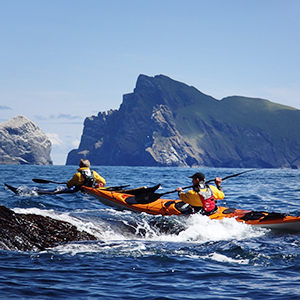
Take advantage of the dramatic coasts off England, Scotland and Wales.
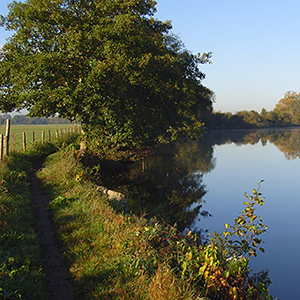
Pilgrimage paths, coast-to-coast treks and island explorations - and more in store...
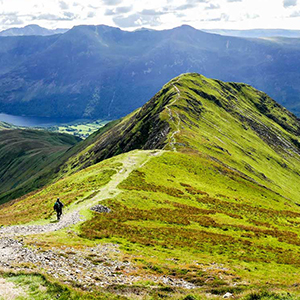
Connect with the places you’re walking through and the people that live in them...
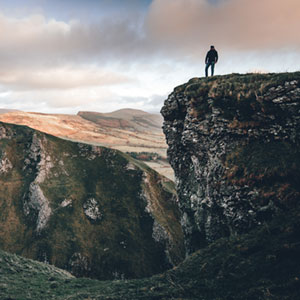
The best things in life ought to be a bit less free - UK national parks face a crisis of purpose, funding and governance.
Join a sociable small group and your solo travels won't be on lonely roads.
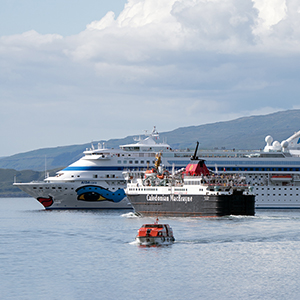
Avoid cruise ships and be aware of UK's dwindling biodiversity on your vacation.