Walking in the Western Ghats

Hikers in India always seem bound for the Himalayas – overlooking their older, more biodiverse cousin, the Western Ghats. Known locally as the Sahyadri, these mountains chase down the west side of the Indian peninsula for 1,600km, starting in Gujarat in the north and curling to a stop at India’s southern tip, rarely venturing more than 50km away from the coast.

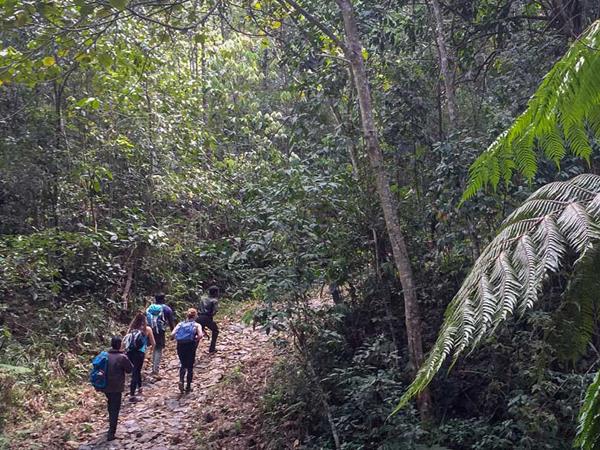
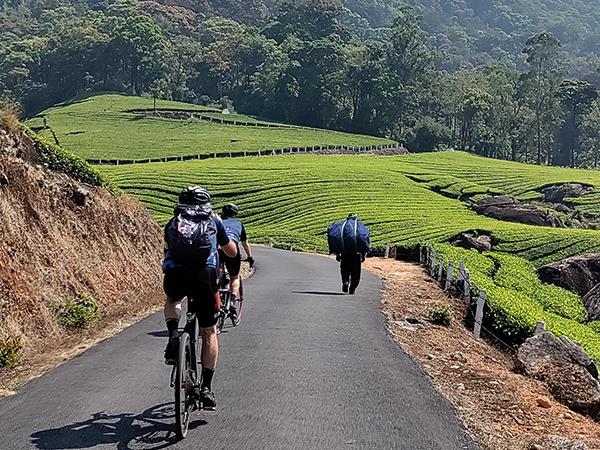
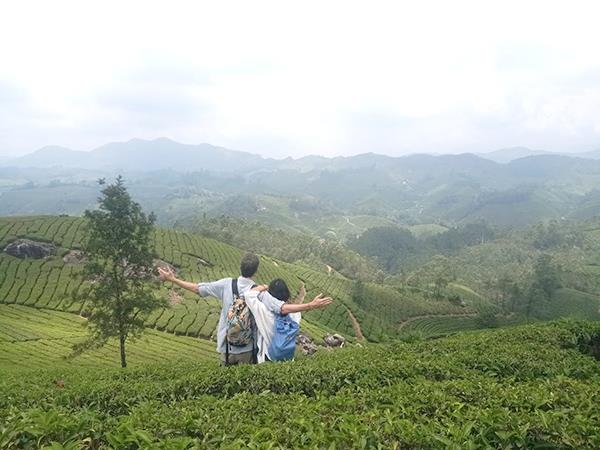
Our walking tours in the Western Ghats focus on the hiking paths of the south, in Karnataka, Kerala and Tamil Nadu. This is the way for high-altitude tropical rainforests, tea estates, snaking lakes, rolling grassland, shola cloud forests, villages (or kudis), plains and cardamom forests – and all in one of the most biodiverse places on the planet.
Here, you find wildlife every day while you walk... It’s an eye-opening trek.
You don’t find any wildlife in the Himalayas,” says Thomas Zacharia, from our partner Kalypso Adventures, who runs our top walking trips. “Here, you find wildlife every day while you walk. Today, a couple traveling with us went for a hike in Periyar Tiger Reserve. They saw elephants, gaur, bears and leopards on the walk. It’s an eye-opening trek – this is what you don’t see in North India.”

Thomas would know – he’s been walking in the Western Ghats for over 40 years and designed our vacations here for more than 20. A former engineer in the Indian Navy, he spent his free time off base walking in the forest and followed it up with fieldwork for the Kerala Forest Department.

“We started so many of these trekking routes,” says Thomas. “We partnered up with the forest department, local communities and local planters to let us pass through… It’s very cooperative.”

Paths through ancient mountains & biodiversity hotspots

The Western Ghats are one of the world’s first mountain systems, thought to have been formed when the supercontinent of Gondwana broke up around 130 million years ago. It’s an original in more ways than one, celebrated as one of the planet’s 36 biodiversity hotspots – and with a UNESCO World Heritage stamp to go with it.

“It’s got a tremendous amount of endemism,” says Thomas. “Some wildlife isn’t found anywhere but here. Similarly, butterflies, dragonflies and reptiles – they’re all in huge numbers and they’re still recording new species almost every year.”

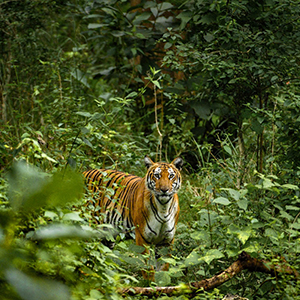
All our walking vacations include a trip to one of the eight tiger reserves in the Western Ghats, including Periyar Tiger Reserve. On foot, tiger sightings are rare – perhaps a good thing – but you can also hop in a jeep for tiger tracking that covers more ground. Flying squirrels, leopards and packs of wild dogs are more common. You can also see lion-tailed (and lion-maned) macaques, sloth bears, goat-like Nilgiri tahrs, gaur, Indian wild dogs and Malabar giant squirrels with multicoloured fur coats that need to be seen to be believed.

“My favorite is elephants,” says Thomas. Around 30 percent of the world’s population of Asian elephants live in the Western Ghats. “They’re great animals and there are herds of them all across the foothills of the Western Ghats. Our guides can smell elephants; they can feel elephants.”

Great guides mean great sightings – but they can also help you avoid sightings when needed. Bumping into a tiger might sound risky, but really it’s the lone tuskers and elephants with babies who won’t hesitate about telling you where to go.

The documentation & destruction of the Western Ghats

“These mountains have been forested for millennia,” says Thomas. “The first shock came from the British.”

British colonial rule started in the 18th century – and one of the first things they did was log it all, including tracks and walking paths. “In our system, we didn’t document,” says Thomas. “We passed it down... But when the British came, they documented everything. The birds, the animals, the migratory paths, the trees – everything was mapped.”

The early 1800s was the time of the Great Indian Arc of the Meridian, when Colonel William Lambton started a survey of India to work out the curvature of the earth. You might not have heard of Lambton, but you have probably heard of the assistant who succeeded him and completed the task: George Everest. The original maps are still in Mysore.

“There’s very little difference in what we can do with the latest technology and what those soldiers did with a sexton then,” says Thomas. “They were the first ones to map out this huge mountain system.”

The Opium Wars put a stop to tea being shipped from China to Britain, so the Crown eyed up their other colonies for tea growing potential. “That’s the time when the real destruction of the Western Ghats started,” says Thomas. “Before that it was completely forested. Elephants used to move over 600km; now they can’t move 100km because it’s tea plantations and roads.”

Plantation owners chipped away at the forest throughout the narrow states of Kerala and Tamil Nadu, pushing Indigenous people out and into forced labour, before expanding their plantations into Karnataka, Goa and Maharashtra.

“What we are seeing right now is fragmentation,” says Thomas. That fragmentation has also pushed hungry big cats dangerously close to people. “Tigers used to travel large distances. If they come now, they are shot.”
That’s the most important part of the Western Ghats – the biodiversity in sheer numbers.

The future: tiger reserves & community-driven conservation

Historically reserved for hunting and the timber industry, wildlife sanctuaries are now strictly protected zones – and each with a story of their own. Our walking vacations take you through Nagarahole Tiger Reserve, which segues smoothly into Wayanad Wildlife Sanctuary and Bandipur Tiger Reserve – a vast ecological corridor where wildlife and walkers can roam.

“When you walk through forest areas and other undisturbed areas which are protected, you get to see the biodiversity,” says Thomas. “Thousands of square kilometres of forest land where animals can move around freely… That’s the most important part of the Western Ghats – the biodiversity in sheer numbers.”

Periyar Tiger Reserve is another highlight – one of the largest parks in India. Hikes here reveal more than the potential for pawprints and the flicker of a tail receding into the forest. It’s also part of Project Tiger, which funds community safeguarding of the forest. That means you’ll get to walk in the company of Indigenous and local people who know the wildlife, ecosystem and villages well.

“Some poachers have converted to protectors for a livelihood,” says Thomas. “It’s a community-driven participatory management of the forest. It’s a big success that’s run by the forest department; we support it full-heartedly.”

Contact Us

Responsible Travel, Travel Team

Call us for a chat about our vacations. We are happy to discuss your vacation and help in any way we can. No bots, queues or awful hold music.

Responsible Travel, Travel Team

Walking with the experts of the Western Ghats

The perks of traveling with our Western Ghats walking experts: they’ll invite you into their network of trusted guides and accommodation hosts who they’ve known for years. Interested in finding the violet kurinji that only flowers every 12 years? Fancy seeing how the nutmeg in your kitchen cupboard is produced? Their little black book of contacts has the answer.

Wildlife your thing? Our wildlife vacations in the Western Ghats are walking vacations in all but name. Our tours put you in touch with highly qualified botanist tour leaders and wildlife experts who’ll give you the best chance of seeing whirlwinds of butterflies and the mountain plants they depend on. You can also combine walking, wildlife and culture.

“We ensure the guide is either from the local tribe or the local community,” says Thomas. “The money goes to them. We don’t bring guides from Cochin. They’re all local.”

In Periyar Tiger Reserve, you can walk with a guide from the Mannan tribe who understands the movement of animals in the park and can spot an elephant before you know it’s there. “Even if you go two feet away, you can’t make elephants out. They’re very silent,” says Thomas. “But the Mannan can. It comes out of being in that place for long enough – they know the sounds of the forest; the rhythm of the forest. That’s an incredible thing.”
As a horticulturist I enjoyed seeing how tea and cardamom were grown and harvested as well as cloves, cinnamon and vanilla… I had the most authentic experience of all my overseas travels as I was able to see local flora and fauna up close.
– our traveler Pam Campbell
For Thomas, some of his best memories are of walking with Indigenous Muthuvan mountain guides. “We always noticed they never got tired,” says Thomas. “I saw one guy bending down, taking a small leaf and eating it. He said, ‘You eat this and you never get tired.’ It’s a medicinal plant found only at about 7,000 feet. They have learned to live there and they have been doing it all their life… This original knowledge, original medicine, is with them.”

“These guides take you through these paths and whatever they know, they pass it on,” adds Thomas. “Their knowledge is amazing, which is never documented… The Indigenous Peoples here have their own ways of living.”

Tourism is a major source of income for local guides. Our partners work with local Eco Development Committees (EDCs), which support conservation projects and reserves. That might mean offering young people guiding training to help increase employment options, or it might mean funding whatever the community requires – road maintenance, new water reservoirs and renewable energy installations. The money brought in by tourism helps keep these projects going.

“We encourage this,” says Thomas. “It is a win-win on both sides. Those local community members win, the forest department wins, we win… The people remain, saying their children are all being supported… so that is very exciting for me.”

Practicalities

Our tours usually start in a big city such as Kochi. Transfers are included, as well as the expertise of local guides, accommodation, meals and some trekking gear if needed. Our partners will include a packing list that’s well worth a peruse. Walks in the Western Ghats are usually rated moderate to challenging – think 12km distances and mountainous terrain with good fitness required. Prepare for some steep climbs, but always in the company of great guides who encourage you to take as long as you need. Most of our walking vacations are tailor made and can be shaped to your interests, time and budget. That means our specialists get to know your reasons for traveling a little better – and might even throw in some surprises along the way. The most memorable part of the vacation for our traveler Matthew Wright? “Candlelit dinner in the bush as they heard it was our honeymoon.” Accommodation includes small hotels, camping, wildlife lodges and mountain resorts. Most meals are included and mid-trek picnics are usually vegetarian – perhaps chapati flatbread and potato curry with a boiled egg, juice and local fruit like sweet oranges and jackfruit. “The curry isn’t spicy, but it’s full of spices,” says Thomas, “so it’s beautiful to sit in the middle of the forest and eat lunch.” Our partners ensure waste is kept to a minimum: water bottles are refilled from large reusable containers and food scraps are composted.
Photo credits: [Page banner: Prateek Rungta] [The Western Ghats: Ameya Clicks] [Biodiversity: Jessupaul] [Tea plantation: Aswin Karuvally]