Best time to visit the Yucatán

Arguably, the best time to visit the Yucatán is November, at the tail end of hurricane season, when the crowds are thinner and the weather comfortably dry and cool.
The Yucatán has a tropical climate with daytime temperatures rarely dipping below 25°C. Weather-wise, the dry high season winter months of December to April are the best time to visit, when calm skies and clear, more predictable seas make for the best snorkelling, diving and fishing. However, accommodation rates are significantly higher, and you’ll pay a premium on air fares and hotel rooms. Bear in mind that March to early April is Spring Break territory – when hordes of US college students head for the Yucatán. So, steer clear of the Riviera Maya if you want to avoid all the booze-fuelled partying.
In July and August, it’s very hot and humid throughout the peninsula, and very busy too, with both Mexicans and Europeans flocking to coastal resorts. Mid-April to mid-July and September to November are low season, and much quieter, but be aware that the rainy season (with occasional accompanying hurricanes) runs from June to October. If you’re keen on swimming with whale sharks, the best time to go is from June to September, when they arrive in the waters to feed and mate.

Tulum, Yucatan Weather Chart

 
MIN °C
MAX °C
RAIN (mm)
JAN
18
29
71
FEB
18
30
53
MAR
19
31
37
APR
21
33
45
MAY
22
33
108
JUN
23
33
187
JUL
23
33
130
AUG
22
33
145
SEP
23
32
226
OCT
22
31
202
NOV
20
30
103
DEC
18
29
92

Yucatan travel advice

Rafe Stone, from our partner Journey Latin America:

When to visit

“I enjoy the Yucatán in December as the weather becomes less humid after the green season rain. It’s always hot in the Yucatán so there’s plenty of sunshine still whilst the jungle clad areas that cover the whole peninsular are still lush with beautiful tropical plants and trees from the rainy season.”

Watching wildlife

“One of the highlights in the wildlife calendar in the Yucatán is Whale Shark season traditionally from May to mid-September. Better to head to quieter Isla Holbox in the Mexican Gulf rather than going from Cancún.

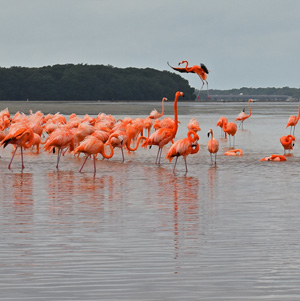
Carry on round the peninsular to Celestun where flocks of bright flamingos gather to feed in the shallows. This generally happens from November to March but they are there at other times of year.

This one’s not for the faint hearted but near the town of Katemo, in the north of the Yucatán, there’s a cave where the yellow–red rat snakes live (they’re not venomous)! They prey on rodents, lizards and other small animals but in this cave, they can be seeing preying on and eating the bats out of the air on their way en masse in and out of the cave.”

Responsible travel

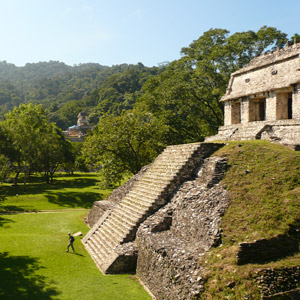
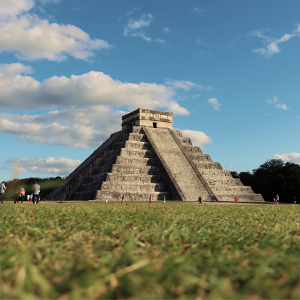
“The Yucatán is a fascinating, mystical place where Mayan ruins from different periods are peppered throughout the peninsular. Often these sites are so remote they receive little funding, get neglected or even looted. Whilst we all love hidden gems some of these places need funding and donations to survive so visit with care. Don’t climb pyramids and donate where donations are asked for. Using local Mexican guides and eating locally also helps the local economy.”

Our top trip

Mexico adventure vacation in the Yucatan Peninsula

Mexico adventure vacation in the Yucatan Peninsula

Mayan ruins, cenote swims, flamingos & local cuisine

From US $4680 to US $4950 8 days ex flights
Small group travel:
2026: 21 Nov
2027: 23 Jan, 20 Feb, 20 Mar, 24 Apr, 22 May, 20 Nov, 4 Dec

Contact Us

Responsible Travel, Travel Team

Call us for a chat about our vacations. We are happy to discuss your vacation and help in any way we can. No bots, queues or awful hold music.

Responsible Travel, Travel Team

TIPS FROM OUR TRAVELLERS

At Responsible Travel, we think the best people to advise our travelers are often... other travelers. They always return from our tours with packing tips, weather reports, ideas about what to do – and opinions about what not to.

We have selected some of the most useful Yucatán travel tips that our guests have provided over the years to help you make the most of your vacation – and the space inside your suitcase.
Brilliant overall except they don't seem to cater very well for vegetarians. I ate more pasta as the vegetarian Mexican food was not filling.
– Fahmida Choudhury, on a Mexico small group vacation, culture & beach
“Be ready for temperature variations - from cold/nippy to warm/hot! – For vegetarians, be ready for limited eating options; – for those who haven't had Mescal in the past, don't be worried – it tastes great, as do the salted and fried crickets served alongside! – for all, most mobile phone cameras are inadequate to capture the majesty of the various archeological sites and wonders you will see.” – Sharma, on a Mexico small group vacation, culture & beach

"Remember to give yourself some time to sit and watch and think. There is so much to do that sometimes I found it necessary to opt out of the adventurous stuff and just wander around. " – Hannah Noel-Paton, on a Mexico small group vacation, culture & beach

Responsible tourism in the Yucatán

The mega-resort town of Cancún is a prime example of the tourist industry’s ills. Mexico’s answer to Magaluf, it’s full of gated concrete resorts that market cheap all-inclusive vacation deals that not only keep money out of the local economy, but nature and local people out of tourism. The big bucks and unsustainable practices continue with golf courses – an area of irresponsible tourism that’s not often talked about. There are plenty in the Yucatán Peninsula and unless they are fairly managed (which is a rarity), they can cause herbicides, pesticides and contaminated water to seep into the natural environment. And don’t forget the excess water and indeed land usage.

It goes without saying that it’s best steer clear of these, and head for calmer, less showy climes, but don’t assume that just because a hotel is away from the major resort towns, it must be more responsible. While ecotourism has admirable beginnings (the word ecotourism was, in fact, coined in Mexico in 1983, by government urban developer and environmentalist Héctor Ceballos-Lascurain) many businesses have since jumped on the eco bandwagon, including many in the Yucatán, so beware of businesses calling themselves ‘eco’ just because they are rural, remote or rustic.
You should also try to read up on and support the indigenous Maya people living in the Yucatán. While many have rejected traditional rural ways of life to work in the big resort towns of Cancún or Playa del Carmen, others are starting artisan workshops and community-based tourism businesses. Support them whenever you can by buying local crafts or staying in locally run guesthouses. For most Maya, nature, earth and landscape are the pillars of their belief systems and being stewards of the earth is a responsibility they take seriously, something from which we can gain a wealth of knowledge.
Written by Nana Luckham
Photo credits: [Page banner: Pascal] [Palm trees: Tristan Ferne] [Ruins: Hernan Garcia Crespo] [Mayan woman: Stefano Ravalli] [Yucatan jungle: Thomas Schlosser] [Fahmida Choudhury quote: Gustavo Andrade]