Bhutan Jomolhari Base Camp trek
Price
US $4599 excluding flights
Duration
11 Days
Type
Small group
More info
Not Included
Alcoholic drinks
Tips
Souvenir items
Travel insurance

Description of Bhutan Jomolhari Base Camp trek
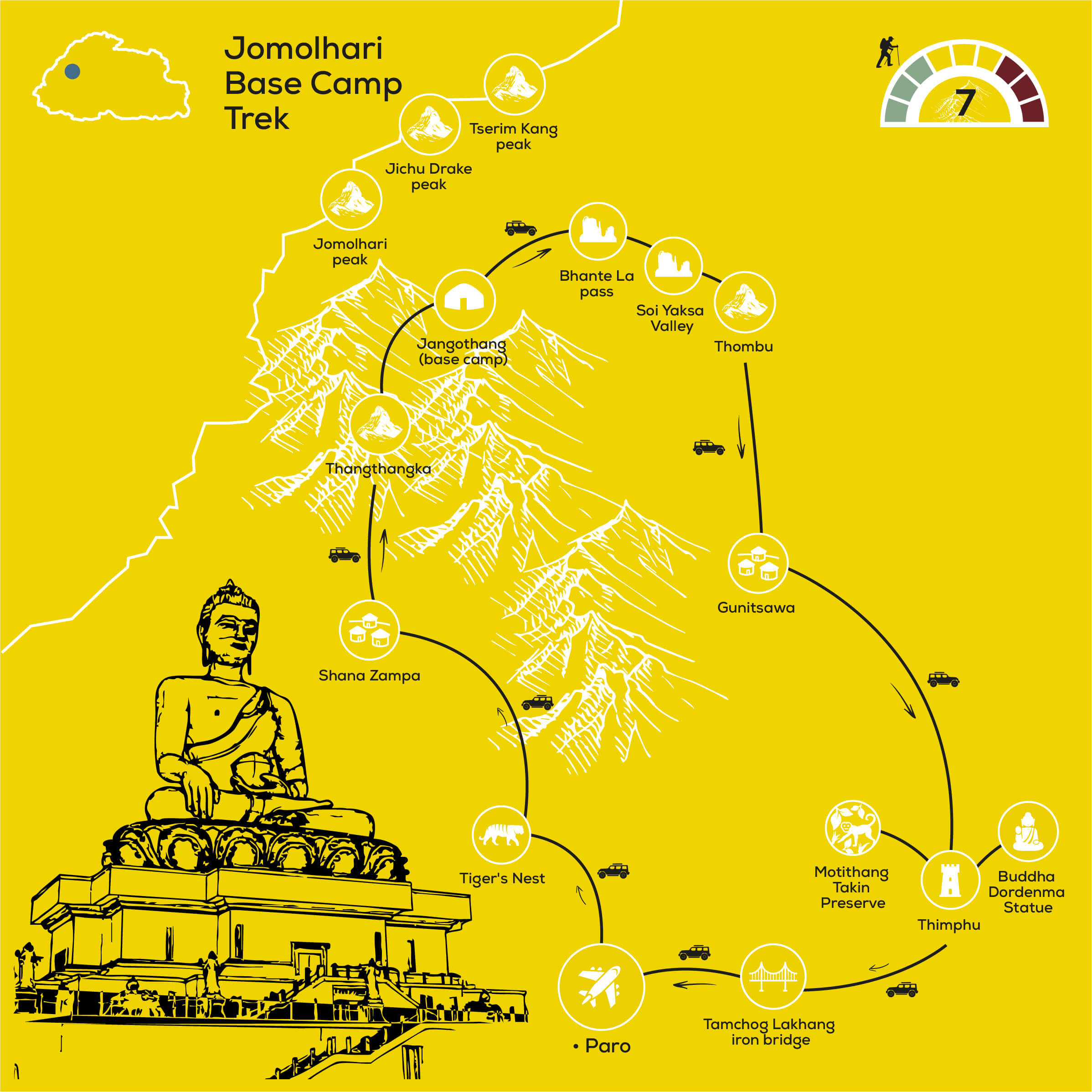
Map
Price information
US $4599 excluding flights
Not Included
Alcoholic drinks
Tips
Souvenir items
Travel insurance
Check dates, prices & availability

Travel guides

Our guide shares insights into what hiking here entails, as well as practical information.
Be part of a pack on your next outing. These small group walks promise fun and friendship on the trail.
Responsible Travel
As the pioneers of responsible tourism, we've screened this (and every) vacation so that you can travel knowing we've worked to maximise the benefits of your vacation to local people and places, and minimise any negative impacts.
Planet
CARBON REDUCTIONThis journey has been designed to minimise operational carbon emissions while still enabling access to one of the Himalayas’ most remote trekking regions. International flights are required to reach Bhutan; however the itinerary is structured to reduce additional aviation impact. There are no internal flights. All travel between Paro and Thimphu is completed overland by shared vehicle, limiting per-person transport emissions.
Once the trek begins, the journey is almost entirely human-powered. Travelers move on foot along established mountain trails for the duration of the Jomolhari Base Camp route, with pack animals used to transport camping equipment, food supplies and expedition infrastructure. This long-established trekking model significantly reduces reliance on motorised transport in fragile high-altitude environments. Multiple consecutive trekking days ensure that the core of the experience operates with minimal fuel consumption.
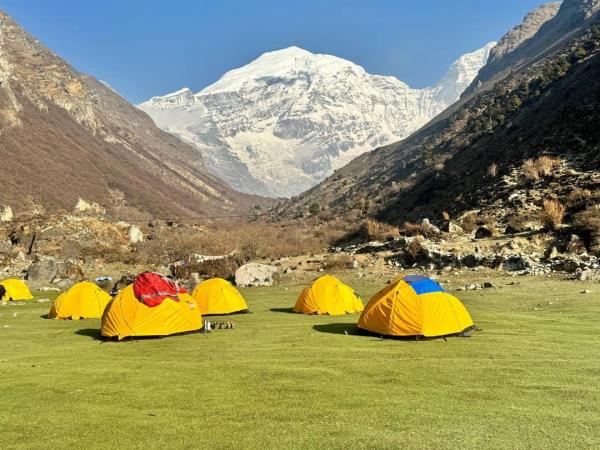
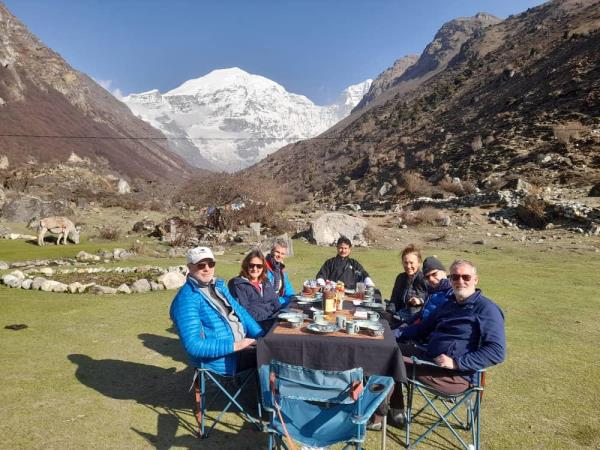
Accommodation choices also support lower-carbon operations. In Paro and Thimphu, travelers stay in small, locally run hotels rather than large international chains. These properties typically operate on a smaller energy footprint and use locally sourced materials. In rural areas, overnight stays take place in fully serviced expedition campsites or traditional trekking camps, which operate without permanent built infrastructure.
Camping operations are designed to be low impact and temporary. Expedition camps are dismantled fully after use, with no fixed structures left behind. Waste generated during the trek is packed out and returned to designated disposal points in settled areas.
Food provision throughout the journey prioritises locally sourced produce wherever logistics allow. Trekking crews purchase fresh produce from regional markets wherever possible, reducing food miles while supporting Bhutanese agriculture. Vegetarian meals are widely available and form a regular part of the trekking menu, lowering the carbon intensity of expedition catering.
Travelers are also encouraged to minimise their environmental impact by using reusable water bottles and filtration systems and avoiding single-use plastics as much as possible.
ENVIRONMENT AND WILDLIFE
Bhutan is globally recognised for its constitutional commitment to environmental protection, with more than 50% of the country designated as protected land. The Jomolhari Base Camp trek operates within this wider conservation framework, passing through areas that form part of Bhutan’s network of national parks and biological corridors. Trekking permits and park entry fees are mandatory and contribute directly to conservation management, ranger patrols, and habitat protection.
Group sizes are deliberately small to reduce trail erosion, campsite pressure and wildlife disturbance. Established trekking routes and designated camping areas are used throughout, preventing the creation of new paths or informal camp zones in sensitive alpine ecosystems.
Strict waste management protocols are followed. All non-biodegradable waste is packed out by the support team. Camps are dismantled leaving no trace, and grey water disposal is managed away from natural water sources.
The trek passes through habitats that support species such as Himalayan blue sheep, marmots, lammergeiers and rare snow leopards. While wildlife sightings cannot be guaranteed, guides are trained to maintain appropriate viewing distances and prevent disturbance.
Pack animals used on the trek are locally owned horses and yaks, managed by experienced highland herders. Their use reflects traditional mountain livelihoods rather than tourism-specific animal industries.
Accommodation partners in urban areas are selected partly on their environmental practices. While renewable energy infrastructure is still developing in Bhutan’s tourism sector, many small hotels operate with reduced energy demand, limited single-use plastics and locally appropriate waste systems. Water refill stations are commonly provided to discourage bottled water consumption.
Travelers receive guidance before the trek, covering wildlife etiquette, litter protocols and water conservation. The aim is not only to reduce impact during the trip, but to foster greater awareness of the ecological value of Bhutan’s mountain landscapes.
People
CARBON REDUCTIONThis journey has been designed to minimise operational carbon emissions while still enabling access to one of the Himalayas’ most remote trekking regions. International flights are required to reach Bhutan; however the itinerary is structured to reduce additional aviation impact. There are no internal flights. All travel between Paro and Thimphu is completed overland by shared vehicle, limiting per-person transport emissions.
Once the trek begins, the journey is almost entirely human-powered. Travelers move on foot along established mountain trails for the duration of the Jomolhari Base Camp route, with pack animals used to transport camping equipment, food supplies and expedition infrastructure. This long-established trekking model significantly reduces reliance on motorised transport in fragile high-altitude environments. Multiple consecutive trekking days ensure that the core of the experience operates with minimal fuel consumption.
Accommodation choices also support lower-carbon operations. In Paro and Thimphu, travelers stay in small, locally run hotels rather than large international chains. These properties typically operate on a smaller energy footprint and use locally sourced materials. In rural areas, overnight stays take place in fully serviced expedition campsites or traditional trekking camps, which operate without permanent built infrastructure.
Camping operations are designed to be low impact and temporary. Expedition camps are dismantled fully after use, with no fixed structures left behind. Waste generated during the trek is packed out and returned to designated disposal points in settled areas.
Food provision throughout the journey prioritises locally sourced produce wherever logistics allow. Trekking crews purchase fresh produce from regional markets wherever possible, reducing food miles while supporting Bhutanese agriculture. Vegetarian meals are widely available and form a regular part of the trekking menu, lowering the carbon intensity of expedition catering.
Travelers are also encouraged to minimise their environmental impact by using reusable water bottles and filtration systems and avoiding single-use plastics as much as possible.
ENVIRONMENT AND WILDLIFE
Bhutan is globally recognised for its constitutional commitment to environmental protection, with more than 50% of the country designated as protected land. The Jomolhari Base Camp trek operates within this wider conservation framework, passing through areas that form part of Bhutan’s network of national parks and biological corridors. Trekking permits and park entry fees are mandatory and contribute directly to conservation management, ranger patrols, and habitat protection.
Group sizes are deliberately small to reduce trail erosion, campsite pressure and wildlife disturbance. Established trekking routes and designated camping areas are used throughout, preventing the creation of new paths or informal camp zones in sensitive alpine ecosystems.
Strict waste management protocols are followed. All non-biodegradable waste is packed out by the support team. Camps are dismantled leaving no trace, and grey water disposal is managed away from natural water sources.
The trek passes through habitats that support species such as Himalayan blue sheep, marmots, lammergeiers and rare snow leopards. While wildlife sightings cannot be guaranteed, guides are trained to maintain appropriate viewing distances and prevent disturbance.
Pack animals used on the trek are locally owned horses and yaks, managed by experienced highland herders. Their use reflects traditional mountain livelihoods rather than tourism-specific animal industries.
Accommodation partners in urban areas are selected partly on their environmental practices. While renewable energy infrastructure is still developing in Bhutan’s tourism sector, many small hotels operate with reduced energy demand, limited single-use plastics and locally appropriate waste systems. Water refill stations are commonly provided to discourage bottled water consumption.
Travelers receive guidance before the trek, covering wildlife etiquette, litter protocols and water conservation. The aim is not only to reduce impact during the trip, but to foster greater awareness of the ecological value of Bhutan’s mountain landscapes.
Popular similar vacations
Small group tour to Bhutan
From US $3495 - US $4870 7 days excluding flights
Discover Bhutan's beauty, history and adventures
Buddhist Bhutan cultural tour, Black necked Crane Festival
From US $3775 11 days excluding flights
Discover Bhutan's highlights and rare black-necked cranes