Which Canary Island is best for walking?
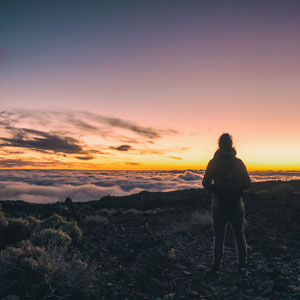
I’ll never forget reaching the top of a ridge on La Gomera and seeing the even higher summit of Mount Teide on neighbouring Tenerife, sitting in vignette in the middle of the sky. Its lower slopes hidden in heat haze and cloud, the peak floated above us like another planet.
One of the great pleasures of walking the Canary Islands is feeling the presence of the proximate islands around you – you’re not quite as alone on the precipitously steep coastlines as you think. But this can be agonising, too. With many of the islands a short flight or ferry ride from each other, have you picked the right island to hike in the first place, or should you hop to the next one over?
Our guide weighs up the different islands and helps you pick the best Canary Island for walking. The best news: many are easily twinned – so you can see La Gomera from Tenerife, and then Tenerife from La Gomera, then hop to La Palma, or visit La Graciosa from Lanzarote. A long-distance walking trail, the 560km-long GR131, links seven of the islands by footpath, proving that there’s no truly bad choice.
One of the great pleasures of walking the Canary Islands is feeling the presence of the proximate islands around you – you’re not quite as alone on the precipitously steep coastlines as you think. But this can be agonising, too. With many of the islands a short flight or ferry ride from each other, have you picked the right island to hike in the first place, or should you hop to the next one over?
Our guide weighs up the different islands and helps you pick the best Canary Island for walking. The best news: many are easily twinned – so you can see La Gomera from Tenerife, and then Tenerife from La Gomera, then hop to La Palma, or visit La Graciosa from Lanzarote. A long-distance walking trail, the 560km-long GR131, links seven of the islands by footpath, proving that there’s no truly bad choice.

Our top trip
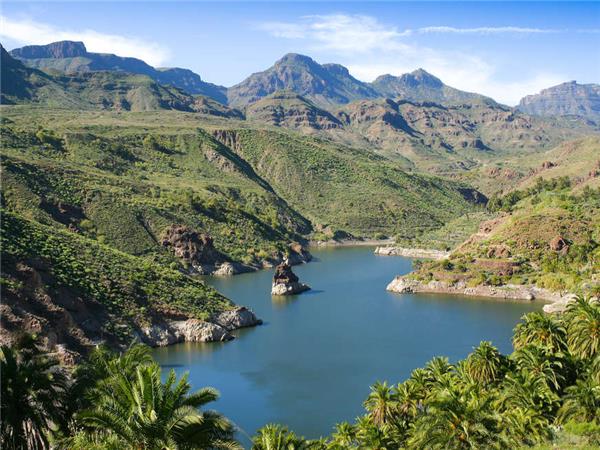
Gran Canaria walking tours, Canary Islands
This unique volcanic island reveals unexpected variety
From
US $1280 to US $1690
8 days
ex flights
Small group travel:
2026: 17 Oct, 21 Nov, 19 Dec
2027: 9 Jan, 23 Jan, 13 Mar, 27 Mar, 9 Oct, 30 Oct, 6 Nov, 20 Nov
2026: 17 Oct, 21 Nov, 19 Dec
2027: 9 Jan, 23 Jan, 13 Mar, 27 Mar, 9 Oct, 30 Oct, 6 Nov, 20 Nov
Contact Us

Call us for a chat about our vacations. We are happy to discuss your vacation and help in any way we can. No bots, queues or awful hold music.

1-866-821-6866
Call toll free
Calling from outside the USA


Gran Canaria
In a nutshell: Our most popular choice for walking vacations, and one of the best Canary islands for hiking, Gran Canaria is among the more mountainous islands in the archipelago and offers great scenic variety.
Notable walking areas: Barranco de Guayadeque – a canyon and natural park where there are cave dwellings left by the Guanche people, the archipelago’s original inhabitants; Pico de las Nieves, the island’s 1,942m high point; the Roque Nublo – a prominent rock formation that gives you a thumbs up as you walk below its distinctive silhouette.
When you’re not walking: Head into town for Canarian architecture, markets and museums: Las Palmas for Vegueta, its scenic old town; Galdar for its combined archaeological museum and park.
Walk this way: Gran Canaria walking tour
Notable walking areas: Barranco de Guayadeque – a canyon and natural park where there are cave dwellings left by the Guanche people, the archipelago’s original inhabitants; Pico de las Nieves, the island’s 1,942m high point; the Roque Nublo – a prominent rock formation that gives you a thumbs up as you walk below its distinctive silhouette.
When you’re not walking: Head into town for Canarian architecture, markets and museums: Las Palmas for Vegueta, its scenic old town; Galdar for its combined archaeological museum and park.
Walk this way: Gran Canaria walking tour
Tenerife
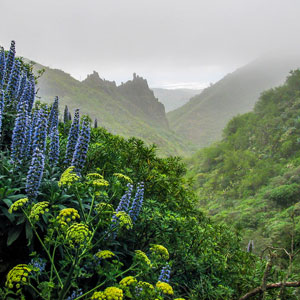
In a nutshell: Popular with our travelers for the variety of walking on the island, plus how easily it can be combined with La Gomera in one trip. Don’t go unprepared – some of the most popular walks need pre-booked permits.Notable walking areas: Mount Teide dominates. The highest mountain in Spain offers a huge caldera, with kilometres of walking around its richly forested lower slopes, and its barren, eerie upper reaches. Then there’s the Anaga Rural Park in the far northwest, where there are magical, mist-drenched walks in laurel forest, and rugged coastal scenery.
When you’re not walking: Attain Teide’s chilly summit by cable car, or investigate the pilot whales off the coast of Los Gigantes, a Whale Heritage Area.
Walk this way: Combine Tenerife and La Gomera on our eight-day walking vacation
La Gomera
In a nutshell: In an orange peel, actually: La Gomera is made up of radiating valleys, sometimes described as being akin to segments of an orange. There are juicy routes (with plenty of climbing) up into the high central forest of the island. In fact, there are few things to do here except the magnificent walks; visitors might spend time on Tenerife too, where there is more variety – and in any case, this is where the nearest airport sits.Notable walking areas: Garajonay National Park, and the climbs up to reach this crowning cloud forest from the valleys.
When you’re not walking: Listen for the whistle. To communicate through its challenging geography, La Gomera’s shepherds developed a complex whistling language, the eloquence of which needs to be heard to be believed.
Walk this way: Enjoy our self guided walking vacation on La Gomera
Lanzarote
In a nutshell: The most easterly island – 140km off Africa – might seem small and arid, but it’s a biosphere reserve, with a unique volcanic landscape. Lanzarote is great for coastal walking and more leisurely walks. You won’t find cloud forests – it’s too dry and windy here for abundant vegetation. Expect walking without much shade, but with uninterrupted views of the landscape.
Notable walking areas: Timanfaya National Park– walk here to see the geological chaos inflicted on the island by 18th and 19th-century volcanic eruptions.
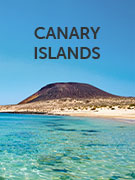
When you’re not walking: The island of La Graciosa is a great place to visit for the day, or you could admire Lanzarote’s artistic side: influential Lanzarote artist Cesar Manrique designed lots of the tourist sights.
Walk this way: Lanzarote walking vacation
Notable walking areas: Timanfaya National Park– walk here to see the geological chaos inflicted on the island by 18th and 19th-century volcanic eruptions.
When you’re not walking: The island of La Graciosa is a great place to visit for the day, or you could admire Lanzarote’s artistic side: influential Lanzarote artist Cesar Manrique designed lots of the tourist sights.
Walk this way: Lanzarote walking vacation
La Palma
In a nutshell: Clouds come pouring over the jagged teeth of La Palma’s famous Caldera de Taburiente, a temporary softening influence on a dramatic landscape. Lesser internationally known or visited than other islands, La Palma has beautiful walking trails that often follow its plentiful rivers and waterfalls. Like La Gomera, there are fewer good beaches than other islands, and less tourist infrastructure.Notable walking areas: Caldera de Taburiente, which helps the island earn its ‘isla bonita’ title, with high point Roque de los Muchachos, from which you can see Tenerife, El Hierro and La Gomera. Ruta de la Volcano – the volcanoes route in the south of the island – introduces you to exciting geology.
When you’re not walking: Explore capital Santa Cruz de La Palma’s old town
Walk this way: Canary Islands cultural and walking tour, including La Palma
Other Canary Islands for walking
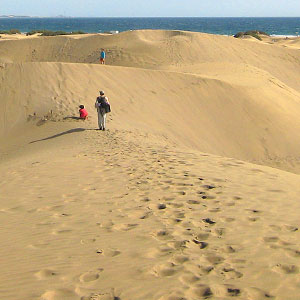
What about the rest? The lack of direct flights makes El Hierro, the far-west, tiny island hard to reach – in fact, for a period of history, it was thought to teeter on the edge of the world. Once you’re here there is surprising walking variety, including dramatic escarpment walks, and the island has a long-term commitment to a sustainable tourism development plan. La Graciosa is even smaller, a speck next to Lanzarote with no paved roads and just four main walking trails. Fuerteventura is sparsely populated and less developed than its neighbours, with lots of protected areas. There’s not much variety in the landscape; instead there are atmospheric deserts and windswept beaches.
More Canary Islands walking articles
To mystical laurel forests, volcanic valleys and vineyards, and villagers that still fish for a living.
Mule tracks and petrified lava rivers lead from whitewashed village to sandy coast.
On Gran Canaria walks, aim for volcanic canyons and wave-sculpted coastlines.