Walking the Dalmatian Coast
In the spring, on Croatia’s Dalmatian Coast, butterflies follow you through fields of wildflowers. In the summer there are plenty of shady spots for an afternoon picnic, and in the autumn the sea is wonderfully warm, perfect for a late-afternoon dip.

There’s no denying this region gets busy in high season between June and September, yet it’s still perfectly possible to escape the crowds, especially when you’re on one of our walking vacations.![]()

The Dalmatian Coast is a narrow strip of land stretching from the island of Rab in the north of the country to the Bay of Kotor in the south, via Dubrovnik and Split. There are almost 80 islands off the coast, among them Hvar, Korcula, Brac and Mljet, that are easily accessible by public ferries. Here, you’re never far from a view of the sea, a secluded beach, or a peaceful picnic spot.
Soaking up the coast’s balmy Mediterranean climate you will of course spend time in the tourist-thronged confines of Dubrovnik and island ports. But our walking vacations here can also help you leave them behind, taking you through olive groves and lavender distilleries, oyster farms and vineyards, and the hazy agricultural landscapes of the Konavle countryside dotted with old villages and Roman ruins. Sure, you’ll frequently bump into other walkers, but you won’t literally be bumping into people, as you can’t avoid while sightseeing in Dubrovnik.
And while you might have less choice over where to eat in the countryside than you would if you stayed in the cities, you certainly won’t go hungry, with plenty of konobas to stop at along the way. These small, often family-run restaurants typically offer a short menu where the daily specials lean heavily on fresh, local produce. When I contact Dalibor Rudan, the founder of our partner Fiore Tours, to talk about the vacations he organises for us on the Dalmatian Coast, he’s busy at the height of peak season. Then I ask him for a few examples of the meals people are likely to enjoy while walking… and he takes the time to give me a whole list. 101 reasons to walk in Dalmatia, and all of them delicious.
“You will see crni rizot (black risotto) made with squid ink on the menu of every seafood restaurant along the coast,” says Dalibor. Brudet, a seafood stew, is common too: “Every family has their own way of making it.” Gregada is a powerfully flavoured fish stew made with salted anchovies, garlic and capers, especially popular on the central Dalmatian islands such as Hvar. “And all over the Dalmatian Coast you can taste a Croatian classic, which is grilled fish with blitva (Swiss chard). Dalmatian people eat so much chard that sometimes they are called blitvari.” Then there is pasticada, perhaps the most famous Croatian dish – beef marinated in vinegar overnight and then braised for hours with red wine and served with homemade gnocchi.
Soaking up the coast’s balmy Mediterranean climate you will of course spend time in the tourist-thronged confines of Dubrovnik and island ports. But our walking vacations here can also help you leave them behind, taking you through olive groves and lavender distilleries, oyster farms and vineyards, and the hazy agricultural landscapes of the Konavle countryside dotted with old villages and Roman ruins. Sure, you’ll frequently bump into other walkers, but you won’t literally be bumping into people, as you can’t avoid while sightseeing in Dubrovnik.
And while you might have less choice over where to eat in the countryside than you would if you stayed in the cities, you certainly won’t go hungry, with plenty of konobas to stop at along the way. These small, often family-run restaurants typically offer a short menu where the daily specials lean heavily on fresh, local produce. When I contact Dalibor Rudan, the founder of our partner Fiore Tours, to talk about the vacations he organises for us on the Dalmatian Coast, he’s busy at the height of peak season. Then I ask him for a few examples of the meals people are likely to enjoy while walking… and he takes the time to give me a whole list. 101 reasons to walk in Dalmatia, and all of them delicious.
“You will see crni rizot (black risotto) made with squid ink on the menu of every seafood restaurant along the coast,” says Dalibor. Brudet, a seafood stew, is common too: “Every family has their own way of making it.” Gregada is a powerfully flavoured fish stew made with salted anchovies, garlic and capers, especially popular on the central Dalmatian islands such as Hvar. “And all over the Dalmatian Coast you can taste a Croatian classic, which is grilled fish with blitva (Swiss chard). Dalmatian people eat so much chard that sometimes they are called blitvari.” Then there is pasticada, perhaps the most famous Croatian dish – beef marinated in vinegar overnight and then braised for hours with red wine and served with homemade gnocchi.

Walking the islands of the Dalmatian Coast
The Elaphiti Islands lie just off the coast of Dubrovnik. The second largest is Lopud, and the walk around it is a favorite of Dalibor’s. “The trail goes all around the island, along the steep coast, then arriving at the secluded sandy beach of Sunj. Then it goes uphill passing by ruins of old churches, a fortress with a spectacular view, and ends in Lopud town. It’s an interesting trail, easy to follow, and not demanding.”A little further north, shrouded with forest and scattered with tiny hamlets, the much larger island of Mljet has a national park. “There are two salt lakes in the national park,” says Dalibor. “You can walk or cycle all around them and take a boat to visit a small island with a monastery. The walking is easy and on flat terrain. From the lakes you can take a hiking trail to the peak of Montokuc (at 256m, the highest mountain in the national park), for a spectacular view of the lakes, sea, and surrounding islands.”
You can also swim in the lakes, and hire bikes or kayaks, if you fancy giving your feet a rest. Mljet is just a 90-minute catamaran journey from Dubrovnik, and in summer it serves as a handy base for exploring the city while dodging the cruise ‘n’ coach trip crowds.
Ferry timetables to the Dalmatian islands are seasonal. Islands such as Korcula, Hvar and the Elaphiti archipelago will have several daily crossings from the mainland between late spring and late September, and a reduced schedule outside that. The island ports are crammed with tourists in summer, but walking tours quickly depart for more rural climes.
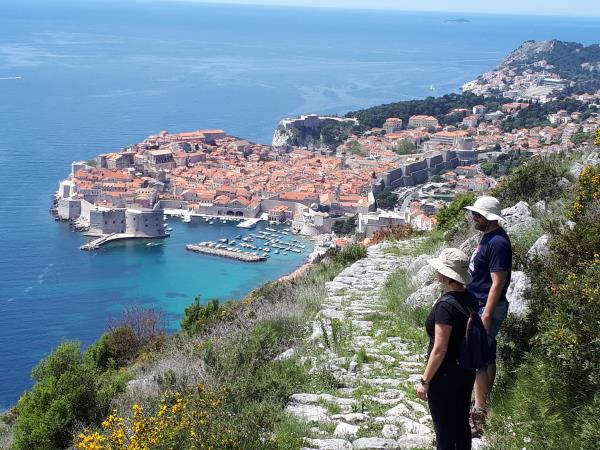
Croatian coast walking tours, self guided
A 7 day walking vacation on the Dalmatian coast
From
€985 to €1600
7 days
ex flights
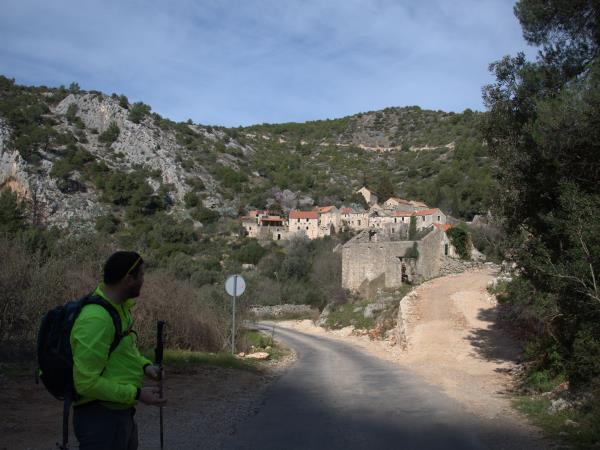
Split to Dubrovnik walking vacation, Croatia
Self guided walking tour in Dalmatia from Split to Dubrovnik
From
€1460 to €1860
7 days
ex flights
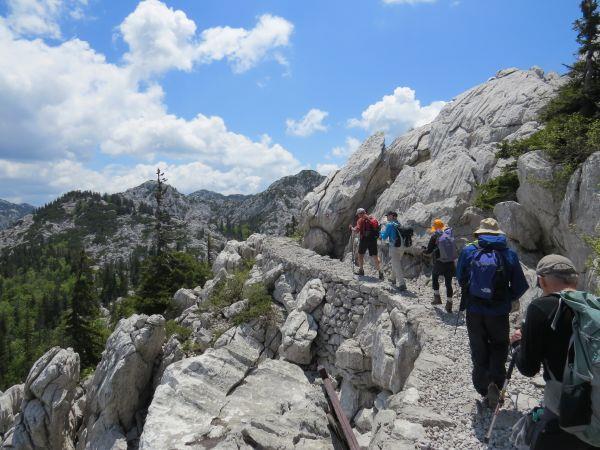
Northern Croatia hiking vacation
Walking vacations in Northern Croatia, coasts and canyons
From
€2390 to €2450
8 days
ex flights
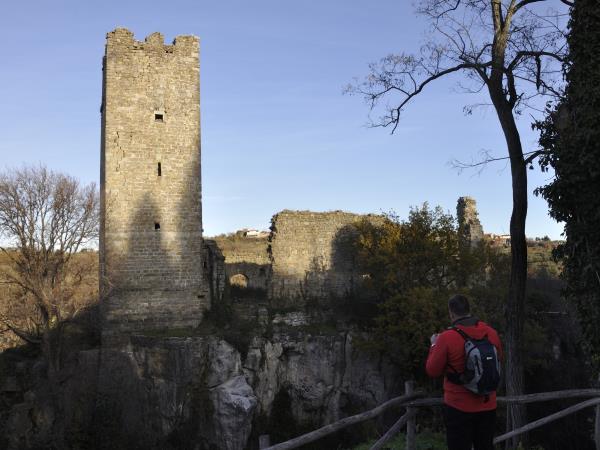
Croatia self guided hiking vacation, Istria region
Explore the untouched Istrian Peninsula on this hiking tour
From
€890 to €1390
7 days
ex flights
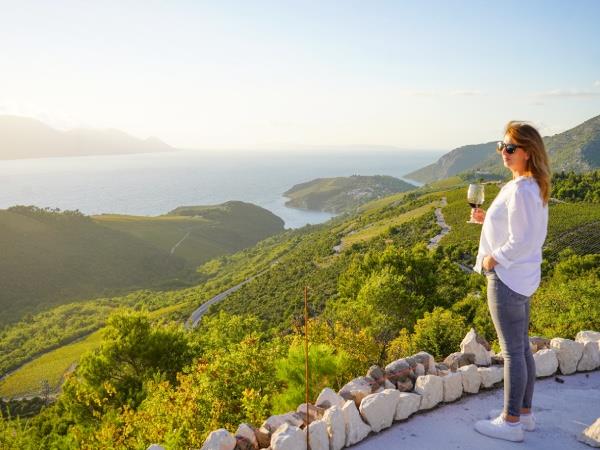
Luxury Croatia walking and wine vacation
Easy walking with top quality gastronomy and wine
From
£1695
6 days
ex flights
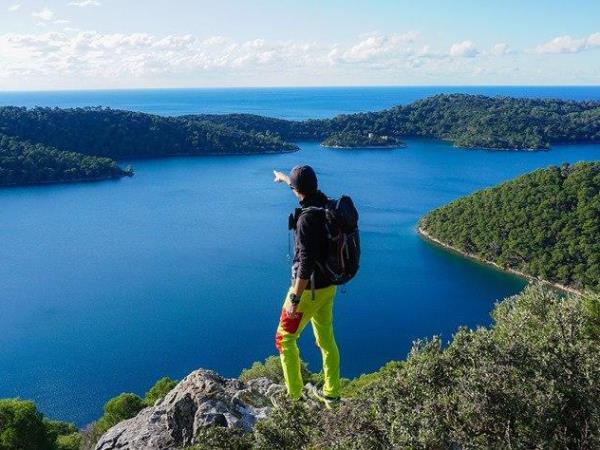
Split to Dubrovnik self-guided walking tour
Discover the hidden beauties of the Adriatic!
From
€1753 to €2609
8 days
ex flights


Contact Us

Call us for a chat about our vacations. We are happy to discuss your vacation and help in any way we can. No bots, queues or awful hold music.

1-866-821-6866
Call toll free
Calling from outside the USA


Practicalities
Duration
Our tailor made, self-guided vacations are usually around a week-long. You can add a day in here or there if you want to break up the walking or spend a little more time getting to know somewhere.
Accommodation
Your hotels will be locally owned wherever possible, and you’ll stay in towns where there will be many options for dinner. Staying and eating local ensures that as much money as possible from your vacation stays in the local economy, the antithesis of the massive cruise ships that you’ll often see anchored in places like Dubrovnik and the Bay of Kotor.
How fit do I need to be?
Our vacations aren’t very demanding physically, and regular walkers shouldn’t have much difficulty with daily distances up to around 16km per day, with some gentle ascents and descents involved. You’ll walk with just a daypack – luggage can be reliably transferred between hotels ahead of you.
When to go
You can walk the Dalmatian Coast between April and early November. The weather is delightfully and reliably warm, sunny and dry from June to September. In early spring and late autumn you may encounter a bit of rain, but the temperature remains pleasantly mild, and hotels and restaurants benefit from some out-of-season income too.
More Croatia walking articles
Step inside our Croatia walking travel guide and ponder where to wander.
Discover our top trails in Croatia, including the national parks of Risnjak, Plitvice, Velebit and Mljet Island.





.jpg)