Culture in Guatemala: festivals, coffee and Maya communities
The most memorable cultural experiences tend to be those that feel natural, while also giving you a sense of place. When we show you around Guatemala, two things are key. First is the importance of local guides, sometimes from the very communities you’re visiting. Not only are they passionate and knowledgeable storytellers, but they’re indispensable for bridging the language gap and helping conversations along.
Second is the importance of taking your time, so you can really immerse yourself in ways of life here, whether that be helping with the preparations for a local festival, taking part in a Maya ceremony or simply watching people go about their business in the city streets, while you enjoy a steaming cup of Guatemalan coffee.
Second is the importance of taking your time, so you can really immerse yourself in ways of life here, whether that be helping with the preparations for a local festival, taking part in a Maya ceremony or simply watching people go about their business in the city streets, while you enjoy a steaming cup of Guatemalan coffee.

If you slow down, if you take longer in one country, you can better get to grips with modern culture there. Guatemala should be the poster child for slow travel.![]()

On our Guatemala cultural tours, we include carefully chosen experiences designed to give you an insightful take on the country. Most vacations here tend to take in a handful of key destinations such as Antigua, Lake Atitlan and Tikal, which makes it even more important to seek out culturally enriching encounters. And when the opportunity arises, particularly if you stay for longer than a week, we take you off the beaten track to places most travelers never reach.
“I always think that if you slow down, if you take longer in just one country, you can better get to grips with modern culture there. Guatemala should be the poster child for slow travel,” says Simon Forster, co-founder of our partner The Beyond Tourism Co. One of his favorite travel memories is watching the sun set at the Maya city of Yaxha, in northern Guatemala, with just a guide and the wildlife in the trees for company.
Steve Wilson, founder of our partner LiNGER, who create bespoke sabbaticals and experiential vacations, agrees, feeling that staged cultural visits tend to be boring and uncomfortable.
“When you’re staring in on a culture from the outside it can be awkward. Inauthentic music and dance performances are put a lot of people off,” he says. “Instead, we aim for more natural encounters. The best way can be to build it around a physical activity like a hike that passes through a village where you stop for refreshments. Local people may be shy, but if you get someone there who speaks good English, a storyteller who likes to share, the conversation flows, and it feels comfortable on both sides.”
“I always think that if you slow down, if you take longer in just one country, you can better get to grips with modern culture there. Guatemala should be the poster child for slow travel,” says Simon Forster, co-founder of our partner The Beyond Tourism Co. One of his favorite travel memories is watching the sun set at the Maya city of Yaxha, in northern Guatemala, with just a guide and the wildlife in the trees for company.
Steve Wilson, founder of our partner LiNGER, who create bespoke sabbaticals and experiential vacations, agrees, feeling that staged cultural visits tend to be boring and uncomfortable.
“When you’re staring in on a culture from the outside it can be awkward. Inauthentic music and dance performances are put a lot of people off,” he says. “Instead, we aim for more natural encounters. The best way can be to build it around a physical activity like a hike that passes through a village where you stop for refreshments. Local people may be shy, but if you get someone there who speaks good English, a storyteller who likes to share, the conversation flows, and it feels comfortable on both sides.”

Guatemala cultural experiences
Exploring Maya culture
Around 40 percent of Guatemala’s Indigenous population are Maya people. Theirs is a ‘living, breathing’ culture, one that avoided being integrated or subsumed by the European cultures that began colonising parts of South America from the late 15th century onwards, but that has by no means been protected from persecution. Hundreds of thousands of Maya people were killed by US-backed government forces in the Guatemalan Civil War during the 20th century, and while exploring their culture is a major attraction for tourists, Maya people continue to face exclusion and discrimination.You will frequently see Maya people wearing traditional clothing in villages and markets along the tourist trail, but the more remote you go, the further into the highlands, the more you’ll see inhabitants wearing these colourful, handwoven garments as part of their everyday life.
Guatemala’s Maya people are made up of many different groups. Among them are the Ixil, who were particularly persecuted during the Guatemalan genocide. One hundred kilometres north of Chichicastenango, the town of Nebaj is a little way off the regular tourism route. Here, our Guatemala culture vacations allow you to stay on a working dairy farm in an Ixil community for a few days, spending your time walking in the mountainous countryside, calling in on villages and weaving cooperatives and getting a feel for rural highland life.
Further north, the Candelaria Caves and their karst formations are believed by the K’iche’ people to be an entrance to the underworld. One of the largest cave systems in Latin America, this is a fascinating place to take a tour with a Maya guide, who can explain how the caves are still used for rituals.
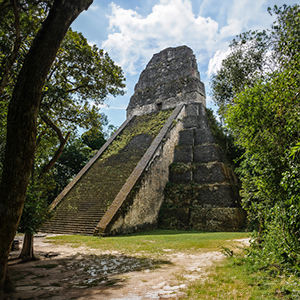
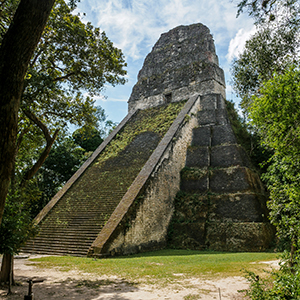
The ruins of Tikal, once a major Maya city, are an immensely popular visit. The site was ‘rediscovered’ by archaeologists in the 19th century (local people never forgot it was there). Nearby you’ll find similarly fascinating ruins, with fewer visitors. “Tikal is fantastic, but you've also got other sites like Yaxha, which are in the same region, and far less developed, less curated,” says Simon. “It’s more visceral, you feel like these explorers would have when they came upon these places buried in the jungle. And then the next day you go to Tikal for more of a historical induction into the Maya world. Combined, they make this really wonderful experience.”
Our tours can also visit Ixmiche, another significant Maya site but 600km south of Tikal, close to Guatemala City. “Especially for families, we find that brief, participatory and hands-on cultural experiences work well, such as a shaman ceremony we organise at Iximche,” says Steve. “It feels personal and a bit different to the regular tourist thing.”
Our tours can also visit Ixmiche, another significant Maya site but 600km south of Tikal, close to Guatemala City. “Especially for families, we find that brief, participatory and hands-on cultural experiences work well, such as a shaman ceremony we organise at Iximche,” says Steve. “It feels personal and a bit different to the regular tourist thing.”
Cultural festivals
Festivals and events are a great way to explore Guatemalan culture, so it’s always worth looking into whether your trip coincides with any. Among the most well-known are the celebrations of Semana Santa, the week leading up to Easter. These are a fascinating and exuberant blend of Catholic and Maya traditions featuring large street processions around the country. Floats bearing religious depictions are carried over beautiful floral works of art.
“Semana Santa is a particularly good festival to attend,” recommends Steve. “The processions walk along carpets of coloured sawdust and flower petals, and if you go a few days early you can actually help spread them. That’s something that’s done anyway, so it’s not staged.”
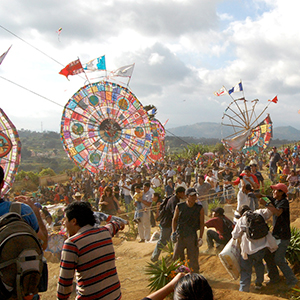
On November 1 every year the town of Sumpango, 15km north of Antigua, is all a-flutter with a centuries-old kite festival celebrating the Day of the Dead. These huge kites, decorated with religious and folkloric themes, can take a month or longer to make, and are viewed as a way of communicating with people’s ancestors.
And in February look out, or rather listen out, for the National Marimba Day celebrations. Similar in appearance to a xylophone, the marimba arrived in Maya culture from Africa via the transatlantic slave trade. During the Guatemalan genocide the colonial authorities tried to stamp out performances of marimba music, seeing it as a relic of ‘pagan’ religions, but people continued to play it in secret, and it is now the national instrument.
“Semana Santa is a particularly good festival to attend,” recommends Steve. “The processions walk along carpets of coloured sawdust and flower petals, and if you go a few days early you can actually help spread them. That’s something that’s done anyway, so it’s not staged.”
On November 1 every year the town of Sumpango, 15km north of Antigua, is all a-flutter with a centuries-old kite festival celebrating the Day of the Dead. These huge kites, decorated with religious and folkloric themes, can take a month or longer to make, and are viewed as a way of communicating with people’s ancestors.
And in February look out, or rather listen out, for the National Marimba Day celebrations. Similar in appearance to a xylophone, the marimba arrived in Maya culture from Africa via the transatlantic slave trade. During the Guatemalan genocide the colonial authorities tried to stamp out performances of marimba music, seeing it as a relic of ‘pagan’ religions, but people continued to play it in secret, and it is now the national instrument.
Coffee touring
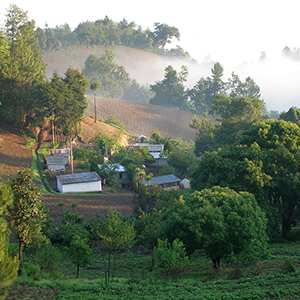
Guatemala has a mature and highly regarded coffee industry, helped along by the high altitude climate and fertile volcanic soil. If you’re partial to a brew, then touring a coffee plantation can be a highlight of our cultural vacations in Guatemala. On some trips you will be welcomed by an organisation that works with coffee-farming communities to help improve their economic opportunities. A local farmer shows you around, explaining the process from bean to cup and finishing up with a taste of the good stuff in their own home. You’ll never buy a jar of instant again.
You've just got to adjust your setting regularly.![]()
The importance of local guides
In a country like Guatemala, where you’ve got many different indigenous communities and languages, and not a great deal of English spoken, the value of traveling with a local guide cannot be overstated. “They’re all specialists in their own areas and very passionate about them,” says Simon. “So, for instance, the guides up in Flores, a lot of them are Maya, they have a very unique insight into the cultural aspects of that part of the country. They take you into the villages, into local restaurants and you talk to people and they translate. And that's where guides can be really important because you can actually have a conversation.”
Guatemala’s multifaceted culture reflects its complex topography, from highlands and mountains where the air is cool and thin, to lowlands of jungle, rivers and coast. “There are times you can feel like you've gone into another country, but you haven't,” adds Steve. “You've just got to adjust your setting regularly to a different people and community and culture.”
Guatemala’s multifaceted culture reflects its complex topography, from highlands and mountains where the air is cool and thin, to lowlands of jungle, rivers and coast. “There are times you can feel like you've gone into another country, but you haven't,” adds Steve. “You've just got to adjust your setting regularly to a different people and community and culture.”
Guatemala tailor made vacations
Explore the very best of Guatemala's nature and culture
From
US $2160
11 days
ex flights
Guatemala vacation, Tikal and beyond
2 week Guatemalan adventure - fascinating people, landscapes & history
From
US $4478 to US $5037
16 days
ex flights
Guatemala vacation, small group
Explore the beauty and colour of ancient Central America
From
US $3240 to US $3680
15 days
ex flights
Guatemala 17 day vacation, tailor made
Private, comprehensive trip exploring Guatemala's highlights
From
£4650
17 days
ex flights
Guatemala luxury tailor made vacation
Immersive Guatemala through culture, nature and connection
From
US $5195
9 days
ex flights
Mexico, Guatemala and Belize vacation
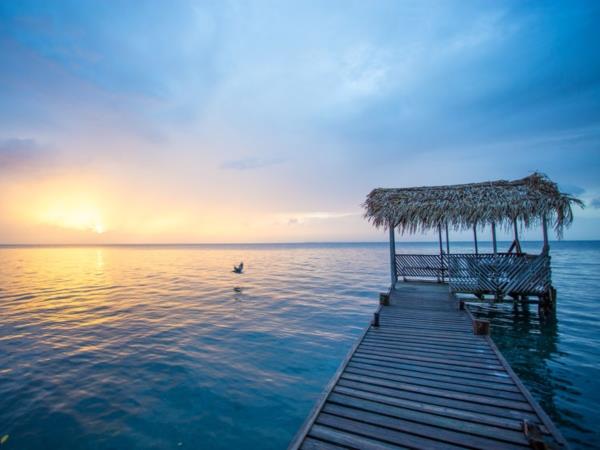
Take in the unique charms of Mexico, Guatemala and Belize.
From
£3349
24 days
ex flights


Contact Us
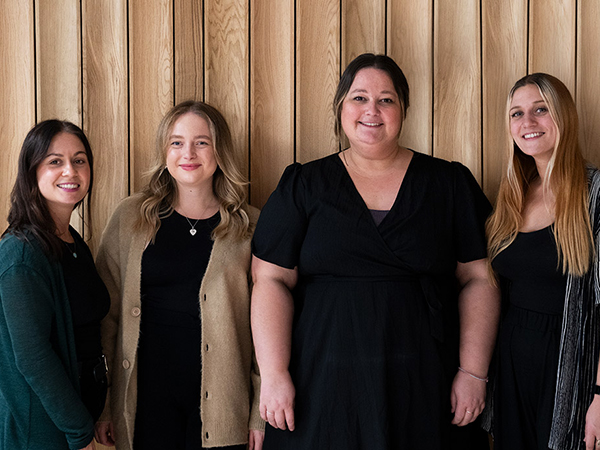
Call us for a chat about our vacations. We are happy to discuss your vacation and help in any way we can. No bots, queues or awful hold music.

1-866-821-6866
Call toll free
Calling from outside the USA

Key destinations on Guatemala cultural tours
What I love about Guatemala is you really feel like you've gone somewhere different.![]()
Antigua
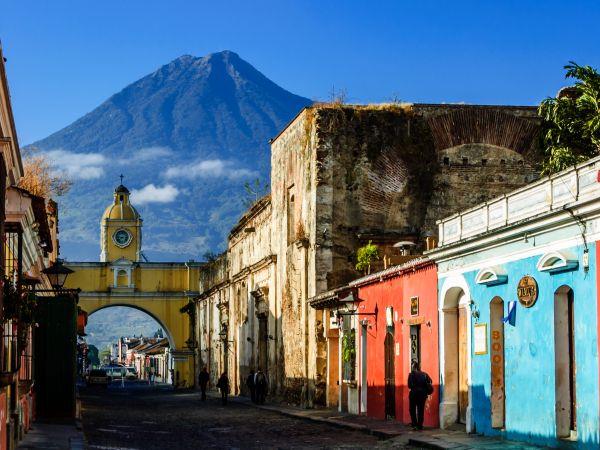
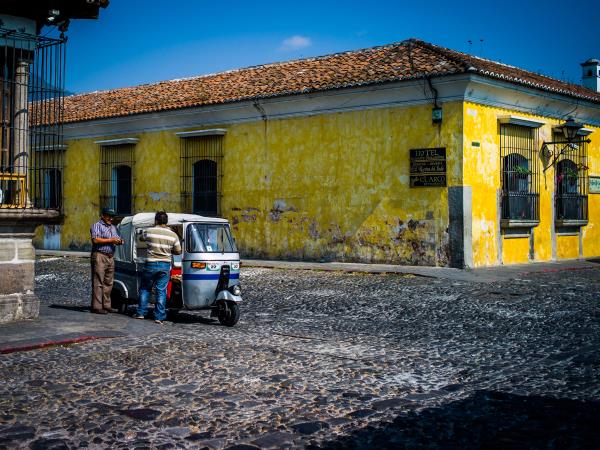
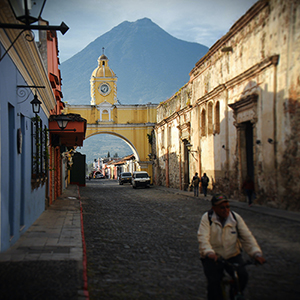
“What I love about Guatemala is you really feel like you've gone somewhere different,” says Steve Wilson. “I love places where you think, oh, I could live here a stint, enjoy the cafe culture and people-watching, and Antigua in particular is a gem for that.” Fringed with volcanoes, and known for its Spanish colonial architecture, the small highland city of Antigua was once Guatemala’s capital and is the first place many travelers arrive.
“People always love the walking tour in Antigua,” says Simon Forster. “It's a couple of hours with a guide, you go around the markets and he knows everybody… It's a nice introduction to Guatemala so we always do it on the first day you get there.”
Antigua is also a great place to explore aspects of contemporary Guatemalan culture. The National Museum of Art Guatemala charts 3,000 years of history, with wood carvings from the ancient Maya city of Tikal alongside contemplative works from modern artists such as Martin Wannam and Naufus Ramírez-Figueroa. Meanwhile families, and anyone with a sweet tooth should make a beeline for Antigua’s main plaza, where the Choco Museum not only explains Guatemala’s cacao producing heritage, but also lets you learn how to make your own chocolate from bean to bar.
“People always love the walking tour in Antigua,” says Simon Forster. “It's a couple of hours with a guide, you go around the markets and he knows everybody… It's a nice introduction to Guatemala so we always do it on the first day you get there.”
Antigua is also a great place to explore aspects of contemporary Guatemalan culture. The National Museum of Art Guatemala charts 3,000 years of history, with wood carvings from the ancient Maya city of Tikal alongside contemplative works from modern artists such as Martin Wannam and Naufus Ramírez-Figueroa. Meanwhile families, and anyone with a sweet tooth should make a beeline for Antigua’s main plaza, where the Choco Museum not only explains Guatemala’s cacao producing heritage, but also lets you learn how to make your own chocolate from bean to bar.
Lake Atitlan
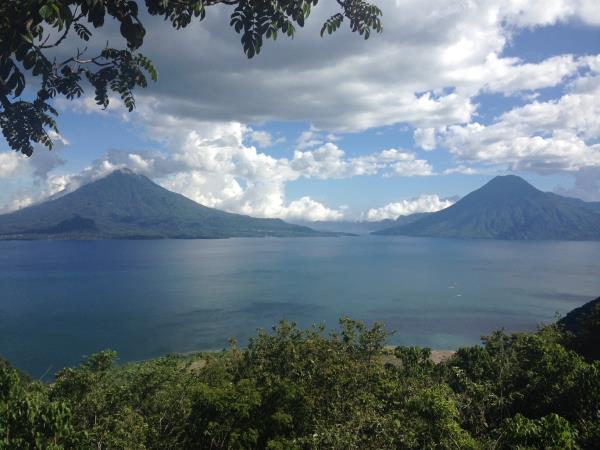
Ninety kilometres west of Antigua, Lake Atitlan is home to a Maya saint by the name of Maximon. A wooden effigy of this be-hatted, womanising idol is passed around the community, with a rotating cast of households charged with his safekeeping. Offerings are laid at his feet, usually a glass of moonshine, a cigarette or money, and his guardians sit alongside him, often enjoying a drink and a smoke themselves.
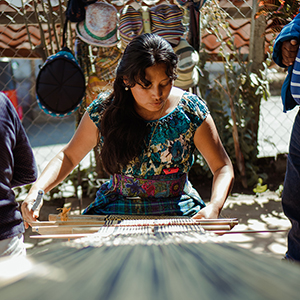
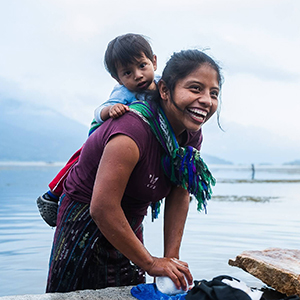
You may meet Maximon on our cultural vacations in Guatemala, but the main reason to visit Lake Atitlan is to visit the artisanal colony of San Juan La Laguna, where there are a number of workers’ cooperatives keeping traditional handicrafts alive, from textiles to pottery and naif painting, chocolate to medicinal tea. Frequently these are family run, and they provide guided tours.
“A lot of the art and textiles that you find in the markets around Guatemala are made here,” says Simon. “You spend the day at the lake and have lunch with a Maya family. They’ve got a temple there and you can learn about how they celebrate their religion. And you can visit the women’s textile cooperative to see hand weaving and the natural dye process.”
Other trips may feature a hike around Indian Nose Peak, a mountain that has significance for Tz’utujil and Kaqchikel Maya communities who live around the lake. They continue to perform rituals and ceremonies on the mountain, and guided hikes can explore its role in their culture. Our vacations often financially contribute to an NGO, Creative Projects Guatemala, that supports various projects including an art school and gallery in Lake Atitlan helping young local artists to connect with and showcase their cultural heritage.
You may meet Maximon on our cultural vacations in Guatemala, but the main reason to visit Lake Atitlan is to visit the artisanal colony of San Juan La Laguna, where there are a number of workers’ cooperatives keeping traditional handicrafts alive, from textiles to pottery and naif painting, chocolate to medicinal tea. Frequently these are family run, and they provide guided tours.
“A lot of the art and textiles that you find in the markets around Guatemala are made here,” says Simon. “You spend the day at the lake and have lunch with a Maya family. They’ve got a temple there and you can learn about how they celebrate their religion. And you can visit the women’s textile cooperative to see hand weaving and the natural dye process.”
Other trips may feature a hike around Indian Nose Peak, a mountain that has significance for Tz’utujil and Kaqchikel Maya communities who live around the lake. They continue to perform rituals and ceremonies on the mountain, and guided hikes can explore its role in their culture. Our vacations often financially contribute to an NGO, Creative Projects Guatemala, that supports various projects including an art school and gallery in Lake Atitlan helping young local artists to connect with and showcase their cultural heritage.
Chichicastanago
Just 75km north of Lake Atitlan, the mountain town of Chichicastanago hosts a market that has become very popular with tourists but also serves as a congregation point for Maya peoples such as the K’iche’. The streets are lined with the handicrafts you would expect to find, including textiles, clothing and leatherwork, as well as fresh fruit and vegetables brought down from the surrounding villages by farming families.
“Many visitors don’t realise how important the market is in terms of faith, though,” says Simon. “On one side you have a Catholic church and on the other side you've got a Maya temple and it's a really significant crossroads of religions. Our guides explain this fascinating element to you.” Guides are also aware of which stalls are genuinely run by local people in this increasingly touristic market, helping you spend money where it can make more of a difference to highland communities.
“Many visitors don’t realise how important the market is in terms of faith, though,” says Simon. “On one side you have a Catholic church and on the other side you've got a Maya temple and it's a really significant crossroads of religions. Our guides explain this fascinating element to you.” Guides are also aware of which stalls are genuinely run by local people in this increasingly touristic market, helping you spend money where it can make more of a difference to highland communities.
Livingston
The Garifuna are an Afro-Caribbean people who live predominantly in coastal parts of Central America. In Guatemala, they are principally found in the town of Livingston, at the mouth of the River Dulce. Spending time here allows you to explore one of Guatemala’s more unusual locales, with a distinctive Caribbean vibe – seafood and reggae play a big part in life here. Our cultural vacations often support an indigenous-owned and -run organisation called Ak’ Tenamit which hosts students from disadvantaged communities around the country and provides them with educational and vocational development.
More Guatemala articles
The best time to visit Guatemala is during the dry season, in November to April.
Learn about Central America’s most diverse nation, exploring sacred lakes, vast ruins and Maya culture.
Travelers and vacation experts have shared with us their top Guatemala travel tips, from culture to Quetzals.
Guatemala and Mexico can be easily combined when you travel as part of a small group tour.
We explore the key landmarks, wildlife and why visiting Tikal with an expert guide is essential.
The country has had to cope with poverty, inequality, a civil war and lingering violence.




_-_123.jpg)