Visiting Tikal, Guatemala
Tikal in Guatemala was one of the largest, most powerful and most impressive Maya cities, built from around 400BC and abandoned to the jungle by the late 10th century. Though many of its secrets have yet to be revealed, Tikal’s ruins offer evidence of the early Maya people’s skill in architecture, astronomy and water management. Today, this vast site with its tall stone temples that rise out of the tree canopy is one of the most renowned places to visit in Guatemala, and exploring Tikal with a knowledgeable local guide is essential for truly understanding its significance.
You hear Tikal before you see it. Or rather, you hear the jungle that envelops this ancient Maya city, which lay hidden among the trees for centuries. The yelps of yellow-beaked toucans, the chattering calls of parrots in answer and loudest of all the deep, guttural boom of the howler monkeys among the branches make for a nerve-jangling experience for the uninitiated.
Set within the thickly forested Tikal National Park in northern Guatemala, Tikal was for several centuries one of the largest and most powerful Maya cities, with as many as 90,000 people thought to have lived there at its peak. It is thought to have had political, cultural and economic links with other sizeable settlements such as Teotihuacan in Mexico and Copan in Honduras.
The city was abandoned in the late 10th century, likely because overpopulation was putting too great a strain on resources, and left to the jungle. Though local Maya communities in the area always knew of its existence, it wasn’t until the mid-19th century that archaeological expeditions brought Tikal back to wider notice.
You hear Tikal before you see it. Or rather, you hear the jungle that envelops this ancient Maya city, which lay hidden among the trees for centuries. The yelps of yellow-beaked toucans, the chattering calls of parrots in answer and loudest of all the deep, guttural boom of the howler monkeys among the branches make for a nerve-jangling experience for the uninitiated.
Set within the thickly forested Tikal National Park in northern Guatemala, Tikal was for several centuries one of the largest and most powerful Maya cities, with as many as 90,000 people thought to have lived there at its peak. It is thought to have had political, cultural and economic links with other sizeable settlements such as Teotihuacan in Mexico and Copan in Honduras.
The city was abandoned in the late 10th century, likely because overpopulation was putting too great a strain on resources, and left to the jungle. Though local Maya communities in the area always knew of its existence, it wasn’t until the mid-19th century that archaeological expeditions brought Tikal back to wider notice.
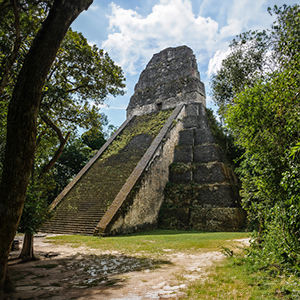
Tikal’s ancient and mysterious stone temples pierce the jungle canopy – on our vacations in Guatemala you can take in a spectacular sunset over the trees from on high. At ground level, shaded paths lead you between structures, some of which have been excavated, others still resemble innocuous hills. Because only around a third of the site has so far been uncovered, Tikal has many secrets yet to reveal. What we do know already, however, is amazing.
Perhaps the most consequential find in Tikal to date is a complex system of water management comprising reservoirs to collect rainwater, dams and a mineral filtration mechanism to remove contaminants. Despite there being no lakes or rivers in the immediate area, it’s been estimated that this system could have provided clean drinking water for up to 250,000 people.
Our Guatemala tours contribute to the preservation of Tikal, and other Maya sites, through the payment of entrance fees. They also create employment for local guides, who in turn help you to gain a deeper understanding of these sites, and to visit them in a considerate way. This is particularly important because Maya people continue to use Tikal for private ceremonies including weddings and funerals. You may be able to watch one from a distance, and a guide can often explain what you are seeing.
The Maya Biosphere Reserve, which contains several national parks, including Tikal National Park, faces a range of environmental threats, including deforestation for illegal logging and ranching, and poaching. Tourism here plays a small but valuable role in proving to authorities that there is value in protecting these vital ecosystems rather than allowing them to be despoiled.
Perhaps the most consequential find in Tikal to date is a complex system of water management comprising reservoirs to collect rainwater, dams and a mineral filtration mechanism to remove contaminants. Despite there being no lakes or rivers in the immediate area, it’s been estimated that this system could have provided clean drinking water for up to 250,000 people.
Our Guatemala tours contribute to the preservation of Tikal, and other Maya sites, through the payment of entrance fees. They also create employment for local guides, who in turn help you to gain a deeper understanding of these sites, and to visit them in a considerate way. This is particularly important because Maya people continue to use Tikal for private ceremonies including weddings and funerals. You may be able to watch one from a distance, and a guide can often explain what you are seeing.
The Maya Biosphere Reserve, which contains several national parks, including Tikal National Park, faces a range of environmental threats, including deforestation for illegal logging and ranching, and poaching. Tourism here plays a small but valuable role in proving to authorities that there is value in protecting these vital ecosystems rather than allowing them to be despoiled.

Exploring Tikal
Tikal is enormous – covering over 16km² and containing more than 3,000 structures from pyramids, temples, palaces, ballcourts and plazas to small residential dwellings. You should devote at least five hours to do the site justice.
There are several main complexes including the Great Plaza, the Plaza of the Seven Temples, the North Acropolis, and the Lost World (Mundo Perdido). Each was built during a different period and therefore has its own distinctive architectural style.
There are several main complexes including the Great Plaza, the Plaza of the Seven Temples, the North Acropolis, and the Lost World (Mundo Perdido). Each was built during a different period and therefore has its own distinctive architectural style.
The Great Plaza, in the center of Tikal, would have been used for ceremonies and festivals, while the North Acropolis is thought to have served as a funerary and burial site for the city’s royal rulers. These are some of the most studied areas – much of Tikal remains shrouded in forest, awaiting time and funding to peel away its secrets.
One of the largest sites is the Lost World, which served as an astronomical complex. Here is where you will find, and perhaps climb up alongside, the colossal Lost World Pyramid. Thirty metres up, you can get a true sense of Tikal’s extraordinary scale. The sunsets are magnificent and on a clear day you can see as far as Mexico and Belize.
As you roam Tikal, all around you is a cacophony of noise – not from tour guides with loudspeakers, but wildlife. All manner of creatures big and small abound in the jungle, and frequently make an appearance. With spider and howler monkeys swinging in the tree branches, tapirs, wild pigs and anteaters snuffling around, and prolific, colourful birdlife – you never know what will cross your path.
While Tikal’s architecture is undeniably impressive, exploring the ancient Maya city in the company of an expert guide is a way to put these structures in context, learning the meanings behind what you’re seeing as well as fascinating stories of what life would have been like for Tikal’s inhabitants. Our traveler Lori Seller found that “tour leader Alejandro went above and beyond. He was absolutely a terrific leader. His background in archaeology made our visits to Mayan ruins particularly informative.”
Appreciating what the Maya people accomplished here all those years ago can give one a feeling of hope. While such an advanced civilisation collapsing through unsustainable resource consumption has obvious parallels with our own predicament in the 21st century, if we consider what the Maya were able to achieve in astronomy, in engineering, in construction – it also shows that where there’s a will, there’s a way.
One of the largest sites is the Lost World, which served as an astronomical complex. Here is where you will find, and perhaps climb up alongside, the colossal Lost World Pyramid. Thirty metres up, you can get a true sense of Tikal’s extraordinary scale. The sunsets are magnificent and on a clear day you can see as far as Mexico and Belize.
As you roam Tikal, all around you is a cacophony of noise – not from tour guides with loudspeakers, but wildlife. All manner of creatures big and small abound in the jungle, and frequently make an appearance. With spider and howler monkeys swinging in the tree branches, tapirs, wild pigs and anteaters snuffling around, and prolific, colourful birdlife – you never know what will cross your path.
While Tikal’s architecture is undeniably impressive, exploring the ancient Maya city in the company of an expert guide is a way to put these structures in context, learning the meanings behind what you’re seeing as well as fascinating stories of what life would have been like for Tikal’s inhabitants. Our traveler Lori Seller found that “tour leader Alejandro went above and beyond. He was absolutely a terrific leader. His background in archaeology made our visits to Mayan ruins particularly informative.”
Appreciating what the Maya people accomplished here all those years ago can give one a feeling of hope. While such an advanced civilisation collapsing through unsustainable resource consumption has obvious parallels with our own predicament in the 21st century, if we consider what the Maya were able to achieve in astronomy, in engineering, in construction – it also shows that where there’s a will, there’s a way.
Guatemala tailor made vacations
Explore the very best of Guatemala's nature and culture
From
US $2160
11 days
ex flights
Guatemala vacation, Tikal and beyond
2 week Guatemalan adventure - fascinating people, landscapes & history
From
US $4478 to US $5037
16 days
ex flights
Guatemala 17 day vacation, tailor made
Private, comprehensive trip exploring Guatemala's highlights
From
£4650
17 days
ex flights
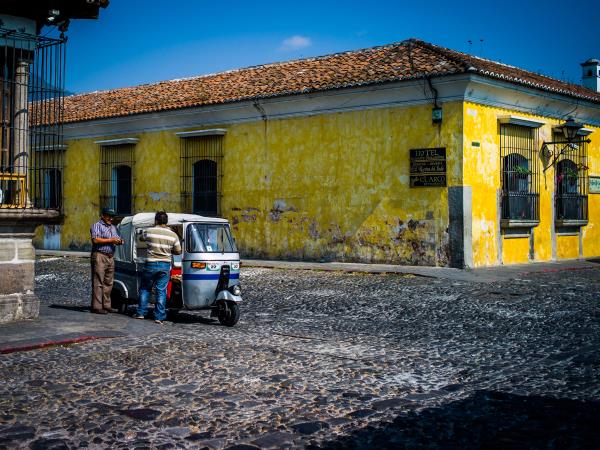
Guatemala luxury tailor made vacation
Immersive Guatemala through culture, nature and connection
From
US $5195
9 days
ex flights
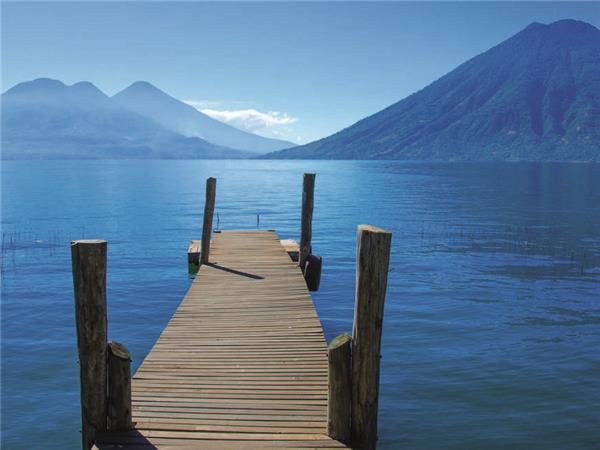
Guatemala vacation, small group
Explore the beauty and colour of ancient Central America
From
US $3240 to US $3680
15 days
ex flights
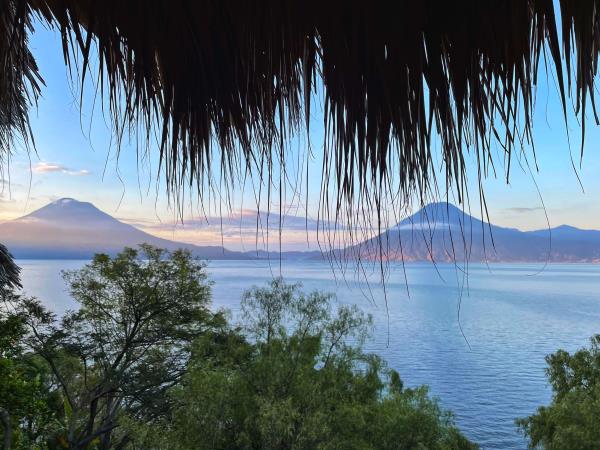
Guatemala yoga retreat
Renew your spirit while immersed in nature and local culture
From
US $2695
6 days
ex flights


Contact Us
Call us for a chat about our vacations. We are happy to discuss your vacation and help in any way we can. No bots, queues or awful hold music.

1-866-821-6866
Call toll free
Calling from outside the USA


Our travelers also ask…
How do you get to Tikal?
You get to Tikal from the nearby town of Flores, which is the capital of Peten, Guatemala’s northernmost department. The old town is on an island on Lake Peten Itza, connected to the mainland by a causeway. Tikal is a 90-minute drive from Flores, and if you make an early start, you can be in the ruins in time to watch a spectacular sunrise from above the treetops.Flores has a small airport, and some people do opt for an early morning flight up, but this is exhausting. You’re much better off spending a few days in Flores because there are several other Maya sites in the area.
Can you climb the temples in Tikal?
You can climb some of the structures in Tikal but others are clearly marked No Climbing because they are unsafe or at risk of being damaged. Temple IV, the tallest structure in Tikal, cannot be climbed, but there is a steep wooden staircase next to it that visitors can use. You can also climb Temple II, and the Lost World Pyramid.
How do you avoid the crowds at Tikal?
The best way to avoid the crowds at Tikal is to visit during the low season, between May and October. Otherwise, make an early start from Flores which will enable you to get a head start on large coach groups. Although Tikal is a huge site, its most well-known areas do get busy. Our vacations use experienced local guides who deliberately choose routes and viewpoints that are not as crowded, helping to reduce the strain on these fragile ancient ruins.
Are there any other Maya sites near Tikal?
There are several other notable Maya sites close to Tikal that make for an interesting comparison. Yaxha, with more than 500 different structures connected by several causeways, lies 30km southeast of Tikal. Structure 216 is a gigantic stepped pyramid – if you’re able to climb to the top, the sunsets from the summit are out of this world.
Uaxactun is 25km directly north of Tikal, a city with which it once went to war. From a lookout tower you can actually see the tips of Tikal’s temples. There is a Maya community in the vicinity that makes its living from collecting tree sap which is sold for export, often to make chewing gum. Our Guatemala vacations will sometimes visit these ‘chicleros’ to learn about their work and lives.
Further away, 116km and a three-hour drive south of Flores, Aguateca is a fascinating site. Only accessible by boat across a lagoon, and surrounded by a defensive wall, the city was home to the politically powerful elites. Yet it was hurriedly abandoned in an invasion, with many family possessions and handicrafts such as ceramics, leather goods and wood carvings left scattered around their residences, Pompeii-style. Aguateca is one of the best-preserved Maya ruins in Guatemala and the visitor center contains a number of interesting archaeological finds.
Uaxactun is 25km directly north of Tikal, a city with which it once went to war. From a lookout tower you can actually see the tips of Tikal’s temples. There is a Maya community in the vicinity that makes its living from collecting tree sap which is sold for export, often to make chewing gum. Our Guatemala vacations will sometimes visit these ‘chicleros’ to learn about their work and lives.
Further away, 116km and a three-hour drive south of Flores, Aguateca is a fascinating site. Only accessible by boat across a lagoon, and surrounded by a defensive wall, the city was home to the politically powerful elites. Yet it was hurriedly abandoned in an invasion, with many family possessions and handicrafts such as ceramics, leather goods and wood carvings left scattered around their residences, Pompeii-style. Aguateca is one of the best-preserved Maya ruins in Guatemala and the visitor center contains a number of interesting archaeological finds.
More Guatemala articles
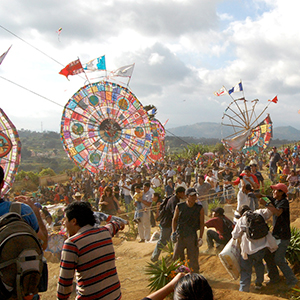
The best time to visit Guatemala is during the dry season, in November to April.
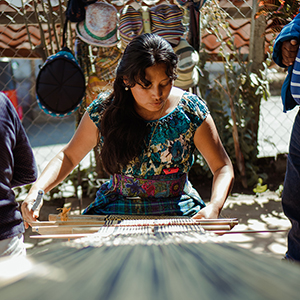
Learn about Central America’s most diverse nation, exploring sacred lakes, vast ruins and Maya culture.
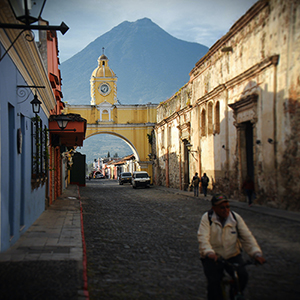
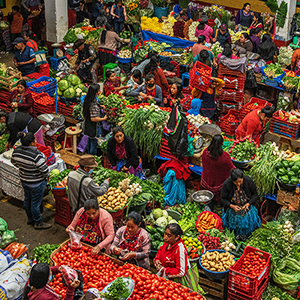
From cigarette-smoking Maya gods to kite-flying festivals, we show you what not to miss in Guatemala.
Travelers and vacation experts have shared with us their top Guatemala travel tips, from culture to Quetzals.
Guatemala and Mexico can be easily combined when you travel as part of a small group tour.
The country has had to cope with poverty, inequality, a civil war and lingering violence.