Walking in the Japanese Alps
When you stay the night in a Buddhist monastery on Mount Koya, Japan’s most sacred mountain, it’s expected that you will follow the monastic routine; the monks have their minds on higher matters than providing guests with a detailed pillow menu.
During the daytime you’re at liberty to explore the peaceful courtyards, shrines, temples and pilgrimage trails in the area, as well as the vast cemetery where some 200,000 gravestones are laid out among the cedar trees. But come nightfall, the rituals take over.
First – freshen up. Wander down corridors lit by candle-lanterns to take a bath in a handsome wooden tub. Bathing areas are communal, but gender separated. Afterwards – mealtime. Join your fellow guests on the tatami mats for a homecooked vegetarian meal. The monks grow their own vegetables, and they’re also excellent cooks, always a winning combination. Then, bedtime – sleep comfortably on a futon mattress, and next morning you’ll be woken early to join the monks at prayer. Kneeling or sitting, it’s easy to drift off into a meditative state during half an hour of rhythmic choral chanting, sutras and clapping.
During the daytime you’re at liberty to explore the peaceful courtyards, shrines, temples and pilgrimage trails in the area, as well as the vast cemetery where some 200,000 gravestones are laid out among the cedar trees. But come nightfall, the rituals take over.
First – freshen up. Wander down corridors lit by candle-lanterns to take a bath in a handsome wooden tub. Bathing areas are communal, but gender separated. Afterwards – mealtime. Join your fellow guests on the tatami mats for a homecooked vegetarian meal. The monks grow their own vegetables, and they’re also excellent cooks, always a winning combination. Then, bedtime – sleep comfortably on a futon mattress, and next morning you’ll be woken early to join the monks at prayer. Kneeling or sitting, it’s easy to drift off into a meditative state during half an hour of rhythmic choral chanting, sutras and clapping.

Walking lets you interact more with communities; it just breaks down barriers.![]()

Though Mount Koya is not itself in the Japanese Alps, its location just south of Osaka and the fact that you can enjoy experiences such as a night in a mountain monastery makes it an obvious extension when walking on Honshu, Japan’s largest island.
Elsewhere on our Japanese Alps walking vacation you might visit a wasabi farm, and wander the fields and admire the water wheels (actually constructed for an Akira Kurosawa film, but wonderfully photogenic none the less). There are noodle-making workshops given by local experts, too, and tours of miso and sake breweries.
Sam McManus is the founder of our partner YellowWood Adventures who run some of our small trip and tailor made vacations in Japan. His earliest travels in Asia were inspired by his passion for kung fu and he once spent a year living on Kyushu, the most southerly of Japan’s four main islands. On weekends he would catch a train into the countryside – “I couldn’t read the kanji so I didn’t really know where I was going” – and anywhere that looked nice, he would get off and hike. “I met a chap once who said to me ‘if you want to know a country you have to walk through it on your own two feet.’ And it’s true, seeing somewhere through the window of a bus is a very different experience to walking into a village and sitting down for coffee with someone. Walking lets you interact more with communities; it just breaks down barriers.”
Elsewhere on our Japanese Alps walking vacation you might visit a wasabi farm, and wander the fields and admire the water wheels (actually constructed for an Akira Kurosawa film, but wonderfully photogenic none the less). There are noodle-making workshops given by local experts, too, and tours of miso and sake breweries.
Sam McManus is the founder of our partner YellowWood Adventures who run some of our small trip and tailor made vacations in Japan. His earliest travels in Asia were inspired by his passion for kung fu and he once spent a year living on Kyushu, the most southerly of Japan’s four main islands. On weekends he would catch a train into the countryside – “I couldn’t read the kanji so I didn’t really know where I was going” – and anywhere that looked nice, he would get off and hike. “I met a chap once who said to me ‘if you want to know a country you have to walk through it on your own two feet.’ And it’s true, seeing somewhere through the window of a bus is a very different experience to walking into a village and sitting down for coffee with someone. Walking lets you interact more with communities; it just breaks down barriers.”

Adventures ancient & modern
Japan has over 16,000 mountains, many of them active volcanoes. The Japanese Alps are actually three connected ranges that rise diagonally across Honshu, through prefectures including Nagano, Toyama, Gifu, Yamanashi and Shizuoka.
The Northern (Hida) Alps are encompassed by the Chubu-Sangaku National Park. Black bears and wild monkeys roam here – hikers are recommended to tie a small bell to their packs to warn animals of their approach. The Hida Alps are among the most popular walking areas in Japan but you’re exposed to changeable weather as they’re sandwiched between the Sea of Japan and the Pacific Ocean.
Further south, the Central (Kisa) Alps are not as tall as their northern neighbours, but they are cut through by plunging valleys including the Kisa Valley. The precious cypress forests here were historically used for construction materials, and wood was transported along the Nakasendo Way, an iconic long-distance route that runs between Edo (now Tokyo) and Kyoto and is a highlight of walking in the Central Alps.
Then to the southeast there are the Southern (Akaishi) Alps. Less accessible than the northern and central ranges, many of the Southern Alps lie within the Minami Alps National Park, which is a good starting point for walks. The Minami Alps are a UNESCO Biosphere Reserve, and apart from buses and taxis no vehicles may enter. Nature has been allowed to flourish, and walkers might see ptarmigans, goat-like serows, deer, monkeys or bears.
The Northern (Hida) Alps are encompassed by the Chubu-Sangaku National Park. Black bears and wild monkeys roam here – hikers are recommended to tie a small bell to their packs to warn animals of their approach. The Hida Alps are among the most popular walking areas in Japan but you’re exposed to changeable weather as they’re sandwiched between the Sea of Japan and the Pacific Ocean.
Further south, the Central (Kisa) Alps are not as tall as their northern neighbours, but they are cut through by plunging valleys including the Kisa Valley. The precious cypress forests here were historically used for construction materials, and wood was transported along the Nakasendo Way, an iconic long-distance route that runs between Edo (now Tokyo) and Kyoto and is a highlight of walking in the Central Alps.
Then to the southeast there are the Southern (Akaishi) Alps. Less accessible than the northern and central ranges, many of the Southern Alps lie within the Minami Alps National Park, which is a good starting point for walks. The Minami Alps are a UNESCO Biosphere Reserve, and apart from buses and taxis no vehicles may enter. Nature has been allowed to flourish, and walkers might see ptarmigans, goat-like serows, deer, monkeys or bears.
Off the beaten (cultural) track
When you walk in the Japanese Alps you’re getting into some wildly beautiful places, but you’re rarely in the middle of nowhere, in areas of complete wilderness. “In Japan it’s natural that people want to see the big-name places, too, like Kyoto,” says Sam. “Many will know that these cities do get busy but perhaps they forget until they get there. And then very quickly, after a day or so, they think ‘I need to get away from all these other people!’” he laughs. “But what we can do is use the cities as points on which we can hang the rest of the trip.”
Dipping in and out of cities such as Tokyo, Nagano, Kyoto and Osaka does allow for some fascinating contrasts between the urban and rural environments, but the focus of a trip is to get you out into the Alps as much as possible. I suggest to Sam that with monastery stays, tours of wasabi farms and noodle-making classes – activities that show you fresh aspects of life in Japan – it’s as much the cultural experiences as the walking that can take you off the beaten track. “Yes,” he nods, “I think Japan has a lot of these quirky cultural nuances, and we wanted to include some of them because they’re what makes a trip different, makes it memorable for people."
Walking in the Japanese Alps can take you to the hot springs of Jigokudani Monkey Park, where you can watch as a troop of snow monkeys carries out their daily ablutions with great solemnity. While you can only watch the monkeys from a distance, later you can have a soak of your own in the ancient hot spring resort of Shibu Onsen, staying in a traditional ryokan inn. Wherever possible you’ll be staying in locally owned properties, which have a clear financial benefit for the communities you visit.
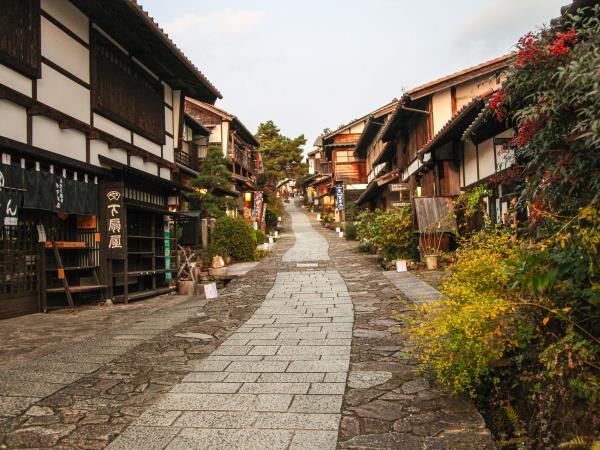
You can walk through the Kiso Valley on a stretch of the Nakasendo Trail between the post towns of Magome and Tsumago, communities that have been providing accommodation and food for travelers since the Edo period. I’ve walked this section myself, and can happily vouch for how beautiful it is, and how wonderfully atmospheric the wooden architecture of Magome and Tsumago.
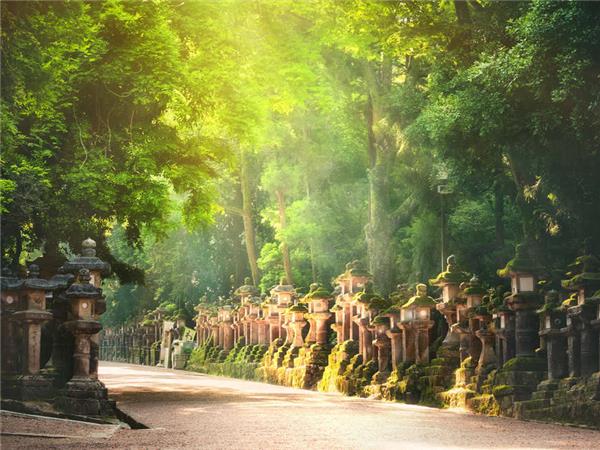
Tsumago is just a few hours by (bullet) train from Kyoto. From Japan’s former capital you can branch west to the lovely village of Kibune, and one of the most attractive walks in the Kansai region. The train to the trailhead passes between rows of maple trees that are stunning at the turn of summer to autumn. From Kibune there’s a stone path lined with lanterns up to the shrine, from where you hike to the Kurama-Dera temple through aromatic cedar forest.
Another day hike finds you in the mountains of Kamikochi, in the Northern Alps, where the highlights include a historic wooden suspension bridge, a looping trail around the Myojin pond (arrive early to see it shrouded in mist) and the Takezawa Marsh. It’s a short journey from there to the city of Matsumoto, where you might visit one of Japan’s finest historic castles, its black wooden keep earning it the sobriquet ‘Crow Castle’.
Dipping in and out of cities such as Tokyo, Nagano, Kyoto and Osaka does allow for some fascinating contrasts between the urban and rural environments, but the focus of a trip is to get you out into the Alps as much as possible. I suggest to Sam that with monastery stays, tours of wasabi farms and noodle-making classes – activities that show you fresh aspects of life in Japan – it’s as much the cultural experiences as the walking that can take you off the beaten track. “Yes,” he nods, “I think Japan has a lot of these quirky cultural nuances, and we wanted to include some of them because they’re what makes a trip different, makes it memorable for people."
Walking in the Japanese Alps can take you to the hot springs of Jigokudani Monkey Park, where you can watch as a troop of snow monkeys carries out their daily ablutions with great solemnity. While you can only watch the monkeys from a distance, later you can have a soak of your own in the ancient hot spring resort of Shibu Onsen, staying in a traditional ryokan inn. Wherever possible you’ll be staying in locally owned properties, which have a clear financial benefit for the communities you visit.
You can walk through the Kiso Valley on a stretch of the Nakasendo Trail between the post towns of Magome and Tsumago, communities that have been providing accommodation and food for travelers since the Edo period. I’ve walked this section myself, and can happily vouch for how beautiful it is, and how wonderfully atmospheric the wooden architecture of Magome and Tsumago.
Tsumago is just a few hours by (bullet) train from Kyoto. From Japan’s former capital you can branch west to the lovely village of Kibune, and one of the most attractive walks in the Kansai region. The train to the trailhead passes between rows of maple trees that are stunning at the turn of summer to autumn. From Kibune there’s a stone path lined with lanterns up to the shrine, from where you hike to the Kurama-Dera temple through aromatic cedar forest.
Another day hike finds you in the mountains of Kamikochi, in the Northern Alps, where the highlights include a historic wooden suspension bridge, a looping trail around the Myojin pond (arrive early to see it shrouded in mist) and the Takezawa Marsh. It’s a short journey from there to the city of Matsumoto, where you might visit one of Japan’s finest historic castles, its black wooden keep earning it the sobriquet ‘Crow Castle’.
Japan self guided trekking vacation, Nakasendo Trail
Self-guided walking along Japan’s ancient Nakasendo trail
From
US $1135 to US $1815
5 days
ex flights
Nakasendo Trail walking tour, Japan
Village-to-village walking on the historic Nakasendo trail
From
US $4440 to US $4915
12 days
ex flights
Kumano Kodo trekking vacation, Japan
Village to village walking in the sacred Kii Peninsula
From
US $3795
9 days
ex flights
Kumano Kodo trail walking vacation in Japan
1200-year-old Kumano Kodo walk, major pilgrimage destination
From
AU $2485 to AU $3070
7 days
ex flights
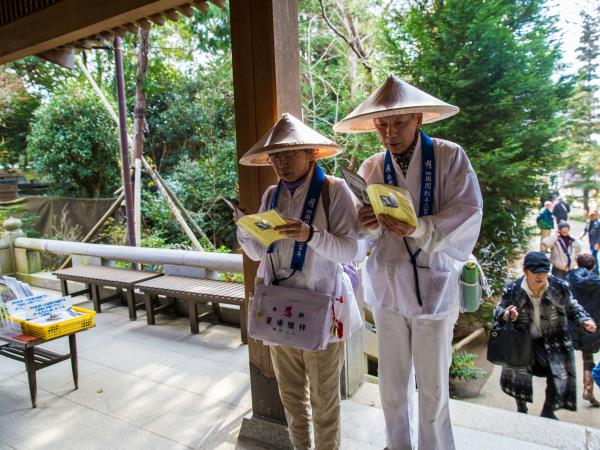
Shikoku Pilgrimage self guided walking tour, Japan
Shikoku 88 Pilgimage route self-guided walking
From
US $1360 to US $3365
10 days
ex flights
Kumano Kodo Trail Japan walking vacation
Hike on a highway once travelled by samurai
From
US $5900 to US $6470
12 days
ex flights


Contact Us
Call us for a chat about our vacations. We are happy to discuss your vacation and help in any way we can. No bots, queues or awful hold music.

1-866-821-6866
Call toll free
Calling from outside the USA


What does walking in the Japanese Alps involve?
Japanese Alps walks are typically around two weeks and can either be joined as part of a fully escorted small group tour (up to 12 people) or arranged bespoke as a tailor made tour. For the most part you’ll get around by public transport which is quite easy and also much more environmentally friendly than driving from place to place. You may also be provided with a pre-loaded travel card, allowing you to head out and do your own thing in the evenings when staying in the cities. Recommendations for local restaurants and other places to go will be in good supply.
When to walk
Trips generally take place in either the spring (March to May) or the autumn (September to November) – “we’re purposefully avoiding the busy summer season,” says Sam. Autumn in particular is very popular for walking in the Japanese Alps, when you might catch the magnificent foliage changes known as koyo. Expect temperatures around 10-20°C and weather that is broadly dry and sunny.
Fitness
Fitness-wise, regular or even semi-regular walkers should have little difficulty. There are some steep sections, but generally the daily walks are fairly short and on good terrain. “We rate it as intermediate but it’s at the very bottom of that grade,” says Sam, “nice and achievable.”
More Japan walking articles
Avoid the crowds and the rain; read on for more tips on getting your hiking timing right.
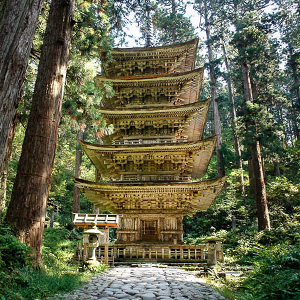
Open up a world of ancient long distance walking trails, summit seeking opportunities and city walking.
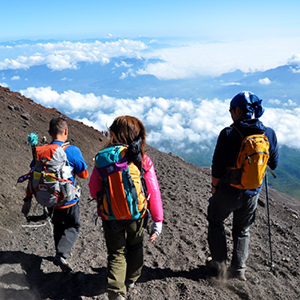
Featuring the iconic Nakasendo and Kumano Kodo long distance walking trails, and the top of Mount Fuji.
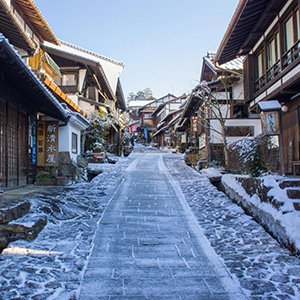
500km of feudal forays through mountains and valley, along ridges and through forests.
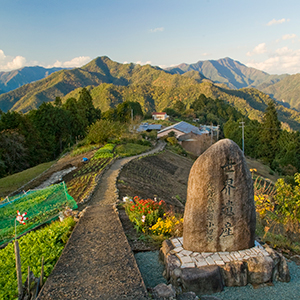
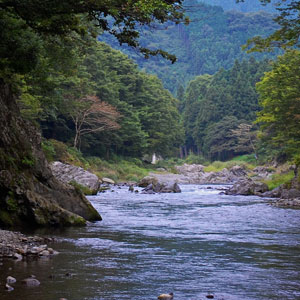
The epic Shikoku Pilgrimage trail loops around the smallest of Japan’s major islands.
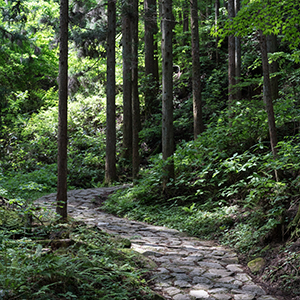
a fantastic way to delve deeper into the culture and traditions of Japan’s largest island.
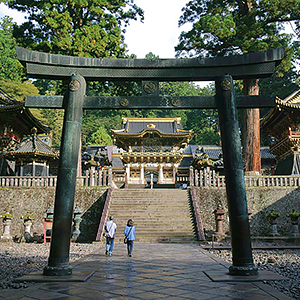
Explore some of Japan’s most attractive landscapes in a national park north of Tokyo.
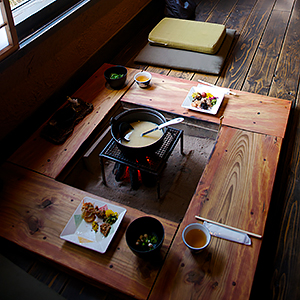
The biggest walking in Japan travel tip is to start reading all about it as soon as you can.




.jpg)
.jpg)
