North East India travel guide

The north east of India hardly feels like India at all. Linked to the rest of the country by just the northernmost strip of West Bengal, its remote states are bordered by Nepal, China, Bhutan, Myanmar and Bangladesh. Hundreds of local tribes and sub tribes call this region home, from indigenous animist communities in Meghalaya to one-time headhunters in Nagaland with facial tattoos. Up towards Tibet you’ll find momos on the menu and Buddhist monasteries with flapping prayer flags. In fact, the state of Arunachal Pradesh is claimed as South Tibet by China.
Forget any preconceptions of India – its North East states smash them all, with their fresh air, undiscovered landscapes and easygoing people.
North East India’s landscapes are as diverse as its culture. The Himalayas influence the geography of the northern states, where you’ll find lofty peaks and high passes, but in Meghalaya discover lush jungle where living root bridges span clear rivers. In Assam, meanwhile, there are tea plantations running down to lowland plains bordering the mighty Brahmaputra River, where one horned rhino graze. Find out more in our North East India guide.
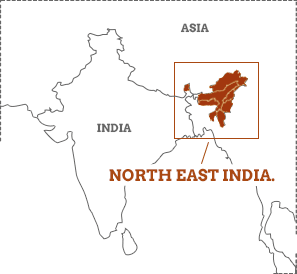
North East India is…

an unexplored corner of the subcontinent, jam-packed with natural and cultural treats.

North East India isn’t…

much like the rest of India at all.

Things to do in North East India…

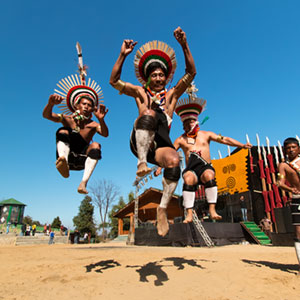
Discover local culture. North East India is one of the most culturally diverse places on the planet, home to hundreds of tribes and various communities and religions. Culturally sensitive organised tours allow you to meet local people, to understand everything from their faiths to their farming practices. Visit a Mising tribal village for an insight into rural life in Assam and stay with a Lepcha tribal family in western Sikkim, learning about how they keep bees. In Meghalaya, meet indigenous animist communities, and also the Khasi, who now practice Christianity, and have constructed extraordinary living root bridges in their sacred forests. In Nagaland’s Mon District, visit the Konyak Naga tribe, whose tribal elders have tattooed faces, and were once known to be fearsome head hunters. North East India is distinct from the rest of India and too remote to be on any tourist trail as yet. There’s little public transport and roads can be poor, so traveling as part of an organised small group or tailor made tour is the easiest way to get around. Specialist vacation companies will have built relationships with local people and tribal groups, too, providing introductions and insights that are hard to pull off as an independent traveler. Take in a festival – the perfect way to round off a culturally immersive tour of North East India. The region’s most famous extravaganza is Nagaland’s Hornbill Festival, each December, which brings together tribes from around the state to perform traditional dances, games and ceremonies.

Our top trip

Assam and Nagaland Hornbill Festival, India

Assam and Nagaland Hornbill Festival, India

Wildlife, tribes & rural life in Assam & Nagaland

From US $4095 14 days ex flights
Small group travel:
2026: 30 Nov

Contact Us

Responsible Travel, Travel Team

Call us for a chat about our vacations. We are happy to discuss your vacation and help in any way we can. No bots, queues or awful hold music.

Responsible Travel, Travel Team

Things not  to do in North East India…

Culturally immersive vacations like those running in North East India demand cultural sensitivity from you, the traveler. Don’t photograph anyone without first requesting their permission, and dress modestly when visiting remote villages. Don’t forget your walking boots. Most exploration of North East India involves a little hiking. Small group trekking vacations explore the Eastern Himalayas, but even cultural tours will include some tramping about, whether that’s through the sacred forests of the Khasi people in Meghalaya to see their amazing living root bridges, or simply to a monastery, lake or viewpoint. Trips to North East India go big on cultural immersion, exploring this region’s diverse tribes, religions and traditions, but don’t overlook the wildlife. In Sikkim, hike to Maenam Wildlife Sanctuary to see deer, fox and rare red Panda. In Assam, Kaziranga National Park has a thriving population of one-horned rhinos, as well as tigers. Elephant safaris still operate here, in Kaziranga’s Central Sector, although these are usually optional. At Responsible Travel, we no longer promote elephant rides in wildlife sanctuaries and parks, but currently make an exception for elephant safaris in national parks where other, more highly endangered species are involved, such as tigers and rhinos. Read about our stance on elephants and conservation. Don’t forget that Indian government permits are required for travel to Sikkim and Arunachal Pradesh. Allow at least three months to get one. Contact the respective state liaison office or the Bureau of Immigration – India for the latest guidance.
Written by Joanna Simmons
Photo credits: [Page banner: AditiVerma2193] [Is isn't: op john] [Local people: Jakfoto Productions]