Sailing expeditions
With more of us seeking ‘real’ adventure than ever before, it’s important that our sailing expeditions are welcoming to all, open to people from all walks of life, all ages and all genders.
Crew wanted
It’s not often in life that you see a sign like that, hanging on the railing of a massive, square-rigged boat, and are able to jump on board. But it happened to me. The boat was moored in Antwerp and departing to Aalborg the next day. I was on my summer vacations; I went and bought a multi-pack of clean underwear from a local department store and joined the crew.
On the first night, the German first mate took me on what he called a leine rund – a tour of the lines (ropes), so I knew which I would be pulling, and when. We had a safety briefing, and then the next morning we were underway, bound for Denmark.
The best thing about sailing expeditions is that they can require very little preparation or experience. I had my RYA Competent Crew, one of the lower UK sailing qualifications, but I didn’t even need that. Other adventures – mountaineering, or trekking – require a great deal of training. Sailing does not. Our adventurous sailing expeditions can be enjoyed by many – so long as you bring the right mindset. Faced with the open ocean, attitude really is everything.
Crew wanted
It’s not often in life that you see a sign like that, hanging on the railing of a massive, square-rigged boat, and are able to jump on board. But it happened to me. The boat was moored in Antwerp and departing to Aalborg the next day. I was on my summer vacations; I went and bought a multi-pack of clean underwear from a local department store and joined the crew.
On the first night, the German first mate took me on what he called a leine rund – a tour of the lines (ropes), so I knew which I would be pulling, and when. We had a safety briefing, and then the next morning we were underway, bound for Denmark.
The best thing about sailing expeditions is that they can require very little preparation or experience. I had my RYA Competent Crew, one of the lower UK sailing qualifications, but I didn’t even need that. Other adventures – mountaineering, or trekking – require a great deal of training. Sailing does not. Our adventurous sailing expeditions can be enjoyed by many – so long as you bring the right mindset. Faced with the open ocean, attitude really is everything.
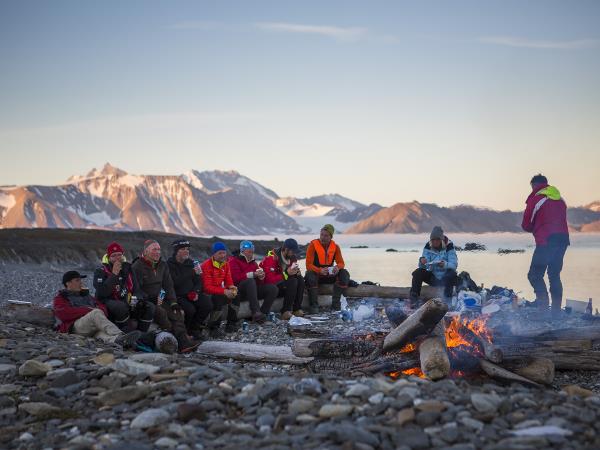
Arctic Circle sailing expedition, Spitsbergen
Unique opportunity to experience Arctic wildlife & scenery
From
NKr 72300
12 days
ex flights
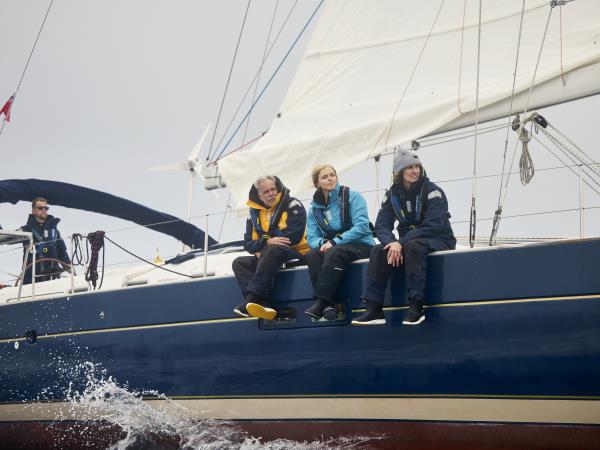
Sail the North Coast 500, Scotland
Adventure sailing around the north coast of Scotland
From
£2495
27 days
ex flights
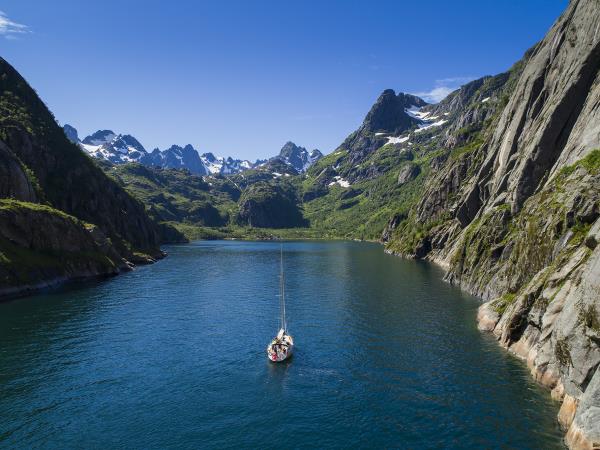
Lofoten islands sailing vacation, Norway
Lofoten’s mountains & Fjords are best explored by sailboat
From
NKr 27500
8 days
ex flights
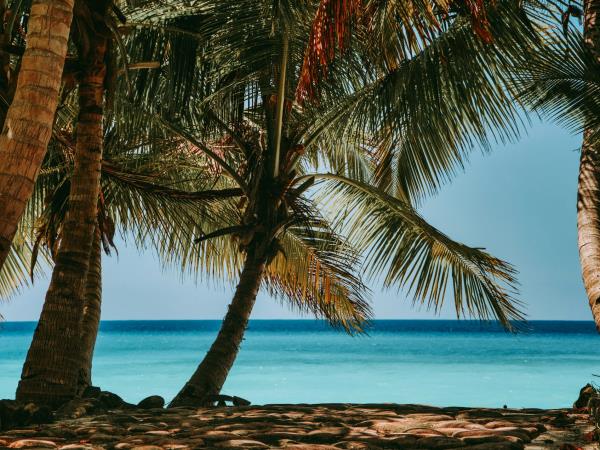
Madagascar to Zanzibar sailing expedition
An 850+ nautical miles ocean crossing adventure!
From
£3995
16 days
ex flights
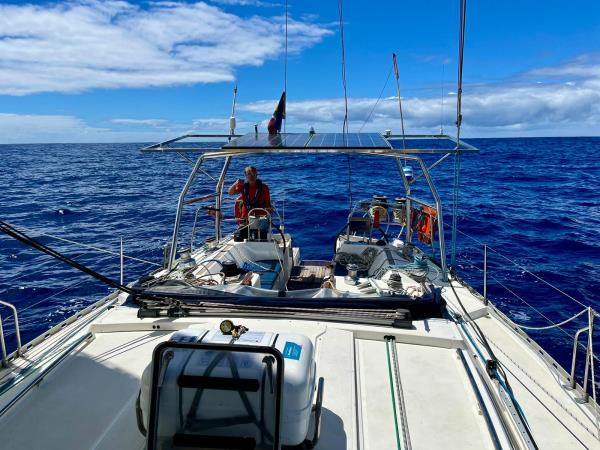
Sail across the South Atlantic Ocean
Epic Adventure Sailing! Cape Town to St Helena roundtrip
From
£7495
40 days
ex flights
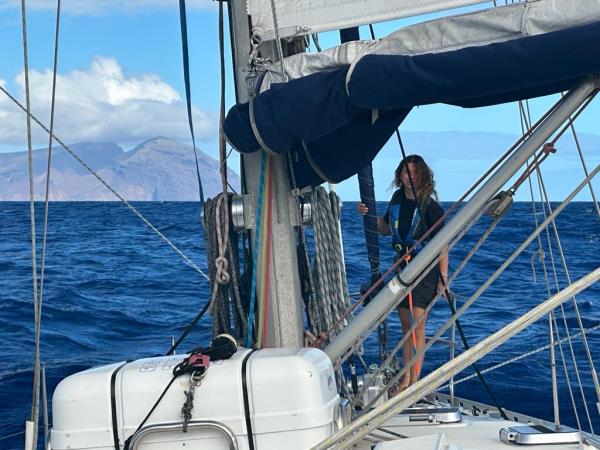
St Helena to Cape Town sailing expedition
Sail one of the most remote stretches of ocean on Earth
From
£5995
21 days
ex flights


Contact Us
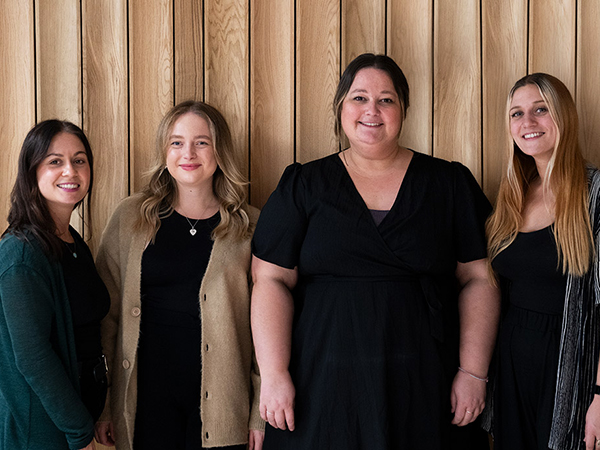
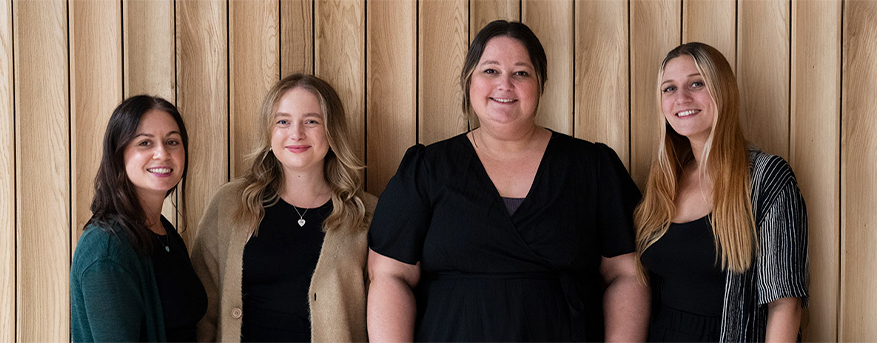
Call us for a chat about our vacations. We are happy to discuss your vacation and help in any way we can. No bots, queues or awful hold music.

1-866-821-6866
Call toll free
Calling from outside the USA


These are things you might have read about or dreamt about growing up – things that you couldn’t do on your own. But if you come with us, you can.![]()

Authentic adventures with ordinary people
Bruce Jacobs is managing director of our expedition sailing partner Rubicon 3.
“We allow people who are not full time nor professional nor experienced sailors to take part in more authentic adventures at sea,” he says. “Things like weaving your way through icebergs up in the Arctic or anchoring off a deserted island in the Caribbean, or crossing the Atlantic.
“These are things you might have read about or dreamt about growing up – things that you couldn’t do on your own. But if you come with us, you can.”
More and more of us are seeking proper adventures – daring expeditions are a fast-growing sector of the travel market. Think the kind where you don’t exactly know where you’ll end up, or when. Sailing expeditions, which cross between countries, seas, even oceans, are as about as intrepid as you can get.
“We allow people who are not full time nor professional nor experienced sailors to take part in more authentic adventures at sea,” he says. “Things like weaving your way through icebergs up in the Arctic or anchoring off a deserted island in the Caribbean, or crossing the Atlantic.
“These are things you might have read about or dreamt about growing up – things that you couldn’t do on your own. But if you come with us, you can.”
More and more of us are seeking proper adventures – daring expeditions are a fast-growing sector of the travel market. Think the kind where you don’t exactly know where you’ll end up, or when. Sailing expeditions, which cross between countries, seas, even oceans, are as about as intrepid as you can get.
What’s stopping you?
I went on to sail a lot more after my North Sea adventure. I got a job in the sailing industry for a few years afterwards. Despite this, I have always been hesitant to encourage people to follow in my footsteps.
For a long time, the sailing industry was male dominated. Boats are necessarily very hierarchical places with clear chains of command that can act quickly in any emergency – important because of the inherent dangers of being isolated at sea. These power imbalances are very easily open to abuse.
This year, for the first time, an all-female crew, sailing aboard sailing yacht Maiden, won the Ocean Globe Race. Achievements like this are helping bust stereotypes onboard.
Bruce’s team includes a group of skippers and mates who are 40 percent female, and they are working towards gender parity. ”We have more female customers than any other company," says Bruce. "We conduct our trips with enormous care and humanity to the individual. We are utterly focused on respecting our crew.”
Meanwhile, our expedition sailing partner Wavysail offer fully funded places on their expeditions to potential sailors from disadvantaged backgrounds. Often, people are not confident enough to jump into a sailing adventure – this programme allows their friends to nominate them. The company have partnered with the island of Saint Helena to give a fully funded place to a local person on their South Atlantic voyages.
For a long time, the sailing industry was male dominated. Boats are necessarily very hierarchical places with clear chains of command that can act quickly in any emergency – important because of the inherent dangers of being isolated at sea. These power imbalances are very easily open to abuse.
This year, for the first time, an all-female crew, sailing aboard sailing yacht Maiden, won the Ocean Globe Race. Achievements like this are helping bust stereotypes onboard.
Bruce’s team includes a group of skippers and mates who are 40 percent female, and they are working towards gender parity. ”We have more female customers than any other company," says Bruce. "We conduct our trips with enormous care and humanity to the individual. We are utterly focused on respecting our crew.”
Meanwhile, our expedition sailing partner Wavysail offer fully funded places on their expeditions to potential sailors from disadvantaged backgrounds. Often, people are not confident enough to jump into a sailing adventure – this programme allows their friends to nominate them. The company have partnered with the island of Saint Helena to give a fully funded place to a local person on their South Atlantic voyages.
What do sailing expeditions involve?
Sailing expeditions usually involve a few continuous days of sailing at sea. This is usually offshore sailing – also known as blue-water sailing – where you’ll lose sight of land, often for days on end. With nowhere to stop on the way, your boat is self-reliant and well provisioned with food and fuel.
Expeditions might sail from one country to another, or explore a region, like the Arctic, the Nordic fjords, or the Faroe Islands. “These are places where you really benefit from going by boat,” says Bruce. “The real majesty is revealed once you see them from a very slight distance. If you’re 100 metres from the hill you see the extraordinary shapes and colours, and the eagles circling.”
On the most extreme end of the spectrum, you might cross an ocean, or take on a challenging area – like the Bay of Biscay, a notoriously rough gulf between France and Spain.
Expeditions might sail from one country to another, or explore a region, like the Arctic, the Nordic fjords, or the Faroe Islands. “These are places where you really benefit from going by boat,” says Bruce. “The real majesty is revealed once you see them from a very slight distance. If you’re 100 metres from the hill you see the extraordinary shapes and colours, and the eagles circling.”
On the most extreme end of the spectrum, you might cross an ocean, or take on a challenging area – like the Bay of Biscay, a notoriously rough gulf between France and Spain.
How experienced do I need to be?
It’s better for you if you’ve had previous sailing experience before signing up to the longer offshore sailing trip – so you know if you’re going to enjoy being in a confined space, living on a slight incline, for a few weeks. Browse our sailing vacations for some inspiration.Most expedition sailing trips will include a day or two at the start to do some training all together– you’ll learn how to drop the anchor, work the winches, follow instructions, and generally come together as a crew.
Where to go on a sailing expedition
When you sail across the Artic Circle from south to north – from the Faroes up to Norway – you are enrolled into the Order of the Blue Nose.![]()
Arctic sailing
Sailing in northern waters might be calm, or it might feature gales – but you’ll be on a boat that can stand up to wind and waves, and in cosy oilskins that mean you can conquer the cold, whether you're exploring between Norway, Iceland and the Faroe Islands. A surprise is in store for the bold, as Bruce explains: “When you sail across the Artic Circle from south to north – from the Faroe Islands up to Norway – you are enrolled into the Order of the Blue Nose – it’s only for who cross the Arctic Circle by sea.”
Atlantic crossing
If you want to spot a very seasoned sailor, ask how many times they’ve crossed the Atlantic, the ultimate rite of passage. In the North Atlantic, the warm trade winds sweep you from and to the Caribbean on the standard trans-Atlantic route from the Canaries, or you might head further north to tackle our vacation on the northern route, via Canada. In the South Atlantic, stop at the tiny island of Saint Helena, a resting place for you, and for thousands of sea birds.
Tall ship sailing
Some tall ships have spent over a century on a circuit of the world’s ports, visiting different cities around the world, in near-constant motion during the summer months. Join in for a leg of one of their races, and find yourself aboard a historic square-rigged pirate ship, competing on the high seas against a fleet of magnificent vessels. The amateur crews who take part in the so-called ‘sail training’ are often international and from all walks of life.
The Canary Islands
Every year, boats gather at Gran Canaria’s docks to prepare to sail across the Atlantic. But these islands are not just a sailing hub, but well worth exploring in their own right. Crossing from mainland Spain to the Canaries is a tried and tested route, as is crossing from the Canaries to nearby Madeira; both involve dipping your toe in the Atlantic Ocean.
What are sailing expeditions like?
The most interesting thing about being onboard a boat is how quickly you adapt to a new normal. From the moment you join, your sleep cycle is now in shifts – you’ll take turns to keep watch – four hours on, four hours off is usual, but you may be given a less gruelling three hours on, six hours off.
You’re living life on a constant incline as the boat heels in the wind. Everything onboard is built to accommodate this – the bunks have lee cloths which prevent you falling out; the stove is on a gimbal and so is the compass, and there are locks on all the cupboards, so that cutlery doesn’t become airborne.
Everything below deck is designed to save space in a narrow hull. The heads (toilets) are cramped and involve a pump.
At night at the chart table, there’s a red light you can turn on, so you can preserve your night vision whilst studying the course.
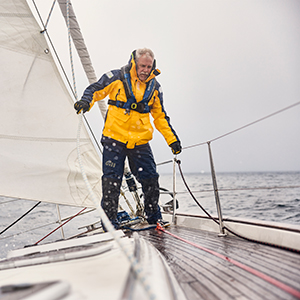
On cold night watches, you’ll learn to fall in love with your cosy oilskins and you’ll become obsessed with snacks. In my case, I became fixated on waiting until 5am, when I had promised myself some cinnamon toast. Cinnamon toast is sugar, butter and a sprinkle of cinnamon, quickly spread on toasted white sliced bread. I’ve tried to make it at home, on dry land, and it doesn’t taste the same at all.
Everything below deck is designed to save space in a narrow hull. The heads (toilets) are cramped and involve a pump.
At night at the chart table, there’s a red light you can turn on, so you can preserve your night vision whilst studying the course.
On cold night watches, you’ll learn to fall in love with your cosy oilskins and you’ll become obsessed with snacks. In my case, I became fixated on waiting until 5am, when I had promised myself some cinnamon toast. Cinnamon toast is sugar, butter and a sprinkle of cinnamon, quickly spread on toasted white sliced bread. I’ve tried to make it at home, on dry land, and it doesn’t taste the same at all.
Ok, your life story – shall we start at the beginning?![]()
What are they ~really~ like?
If it all sounds a bit grim, it’s because a sailing voyage is far greater than the sum of its parts.I’ve never been more frightened for my life, or more bored out of my skull, than when I’ve been at sea. And sometimes those experiences come a few hours apart. Experiences are extreme, but that also means that the joy is too.
Bruce agrees. “You have the manic intensity when heavy weather comes through and you change sails and lash things down and hang on… then 24 hours later you are completely becalmed – you don’t have that daily control over your life that you’re used to at home.”
You’ll experience something close to euphoria: “If you’ve been out soaking wet and you come in and there’s a hot cup of tea –you’ll feel a really intense happiness, well out of proportion with the circumstances.”
You’ll also find yourself forming intense bonds. One of the first long passages I went on – sailing from the French Riviera down to Barcelona – I came up for my first watch of the night, a shift from 4am to 8am. The first mate was standing at the helm in total darkness, and his voice came across the deck: “Ok, your life story – shall we start at the beginning?” Camaraderie forms fast in a crew.
On a lonely watch, when the skipper went below deck, I turned around and thought that a massive, bright yellow sail was bearing down on our boat, only to realise the next moment that it was the tip of a rising crescent moon coming up above the sea.
It’s just you, the crew and the sea, and there’s nothing else. This is what’s so profoundly interesting, and soul-searching, about heading off to seek for a whole other continent by sea.
Solo travelers welcome
Bruce reckons that 99 percent of his passengers travel solo, “And because everyone else is joining solo you have none of that lone traveler awkwardness” – a feeling that anyone who has joined a group who know each other can fully understand. Split into your watches, you’ll quickly make new friends. If you’re in a large crew on, say, a tall ship, you might not see much of the other watch as they’ll often be asleep when you’re awake.
Landfall
At some point, you’ll come up on deck, bleary-eyed for a morning watch. The night watch will point at the horizon, which they’ve been watching since dawn and you’ll turn and see, under a thin band of cloud – land, at last!
You might have a short wait for the customs officer, and then you’re properly on land – feeling your sea legs wobbling underneath you – a sure sign that you should book your next adventure, and fast.
You might have a short wait for the customs officer, and then you’re properly on land – feeling your sea legs wobbling underneath you – a sure sign that you should book your next adventure, and fast.
More Sailing articles
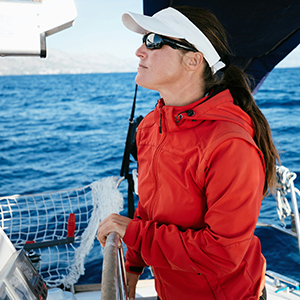
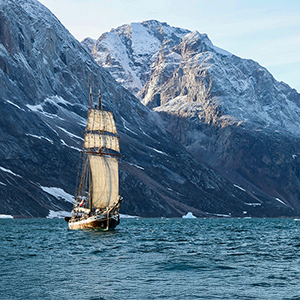
When you sail, the freedom of the seas is yours: hoist the sail and go wherever the wind takes you.
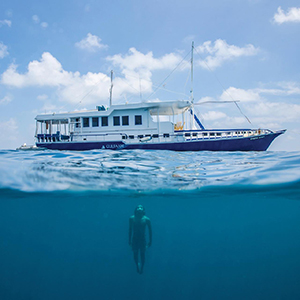
Seven seas – and dozens of vacations – here’s where you can go sailing with us.
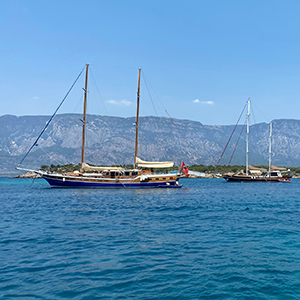
Our top 10 vacations are guaranteed to put wind in your sails, wherever in the world you wish to go.
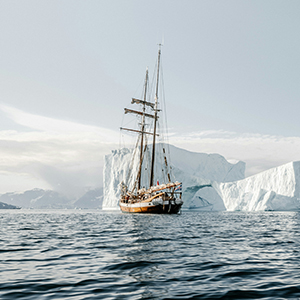
Sails up, engine off, there’s seemingly no ‘greener’ way to go, but how responsible are these trips really?
“All I ask is a tall ship and a star to steer her by” – But if you don’t know how to sail, you need something else, and that’s a skipper… luckily, we work with some fantastic ones.