Sailing vacations in the Arctic
Don’t just see the Arctic, help map it on our sailing expeditions.
“You can put people in two camps,” says our partner Marcin Sanetra from Sail Arctic “Some can go to the Arctic once, and that’s enough. The other group return again and again.”
Marcin is firmly in the second camp, having swapped years of Mediterranean sailing for his 11th season operating in Arctic waters.
“You need to put more effort in to sail in the Arctic but then this white and grey world recompensates you many times over. It’s good to feel it on your skin, see it with your eyes.”
Arctic sailing – sailing anywhere over around 66°N north – means sailing in areas like north Norway, around the Svalbard archipelago, and exploring parts of Greenland by boat – Scoresby Sound on the east coast is just over the polar latitudes. It means expedition vessels, oilskins and ice, sailing in a self-sufficient manner as there’s nowhere to stop for supplies on the way – and learning the difference between an iceberg and a growler.
“You can put people in two camps,” says our partner Marcin Sanetra from Sail Arctic “Some can go to the Arctic once, and that’s enough. The other group return again and again.”
Marcin is firmly in the second camp, having swapped years of Mediterranean sailing for his 11th season operating in Arctic waters.
“You need to put more effort in to sail in the Arctic but then this white and grey world recompensates you many times over. It’s good to feel it on your skin, see it with your eyes.”
Arctic sailing – sailing anywhere over around 66°N north – means sailing in areas like north Norway, around the Svalbard archipelago, and exploring parts of Greenland by boat – Scoresby Sound on the east coast is just over the polar latitudes. It means expedition vessels, oilskins and ice, sailing in a self-sufficient manner as there’s nowhere to stop for supplies on the way – and learning the difference between an iceberg and a growler.

Icebergs are 15m long or more – smaller slabs than this are known as bergy bits, and if it’s less than 5m long, it’s a growler.![]()

On one hand, sailing here can be challenge. Arctic winds can be strong and unpredictable, icebergs are often a threat, the tides can be strong. The landscape often means navigating narrow fjords – characteristic of polar landscapes – and ice can block ports and trap boats if it’s too thick to sail through. Sailors pore over online ice charts made by satellite, or even drone shots if there’s cloud cover, to see whether they can make safe passages before they set out.
In other ways, sailing in the Arctic isn’t as challenging as you might think – especially on our trips, which pair you with highly experienced skippers and guides. You can join an Arctic sailing expedition with no sailing experience. You’ll learn as you go, meaning that Arctic sailing is a fantastic prospect for anyone who wants to have a proper adventure, but doesn’t necessarily have the time, expertise, or superhuman fitness and resilience that many other expeditions necessitate.
“Water is water at the end of the day,” says our sailing expert Bruce Jacobs. “In some ways Arctic sailing is easier than other sailing voyages because you have 24 hours of sunlight. But you are out in nature, it’s remote and wild, there are no marinas, there’s nowhere to stop. You just have to be prepared and realistic for the reality of what that means – it’s brilliant.”
Going by boat is often the best way to get around in Arctic areas – providing easier access in Svalbard, for instance, than going overland where there are no roads, and lots of polar bears, or Greenland, where there are no roads, and lots of icecaps in the way. Sailing long passages gives you another strange benefit – the opportunity to see the sea in all lights, as you stand watch at different parts of the night. With the prospect of the midnight sun, this can be a very eerie experience.
Sailing can also give you a better view of the shore, especially when you’re sailing past huge cliffs or mountains. Bruce believes the Faroe Islands, just below the Arctic Circle, are uniquely appreciated from the deck of a boat. “The real majesty is seeing them from a very slight distance – it’s a destination where you need that perspective. If you’re 100m from the hill you see the extraordinary shapes and colours, and the eagles circling. If you’re walking on it, you don’t see that.”
Sailing can sometimes also be a pioneering way to discover a territory.
In other ways, sailing in the Arctic isn’t as challenging as you might think – especially on our trips, which pair you with highly experienced skippers and guides. You can join an Arctic sailing expedition with no sailing experience. You’ll learn as you go, meaning that Arctic sailing is a fantastic prospect for anyone who wants to have a proper adventure, but doesn’t necessarily have the time, expertise, or superhuman fitness and resilience that many other expeditions necessitate.
“Water is water at the end of the day,” says our sailing expert Bruce Jacobs. “In some ways Arctic sailing is easier than other sailing voyages because you have 24 hours of sunlight. But you are out in nature, it’s remote and wild, there are no marinas, there’s nowhere to stop. You just have to be prepared and realistic for the reality of what that means – it’s brilliant.”
Going by boat is often the best way to get around in Arctic areas – providing easier access in Svalbard, for instance, than going overland where there are no roads, and lots of polar bears, or Greenland, where there are no roads, and lots of icecaps in the way. Sailing long passages gives you another strange benefit – the opportunity to see the sea in all lights, as you stand watch at different parts of the night. With the prospect of the midnight sun, this can be a very eerie experience.
Sailing can also give you a better view of the shore, especially when you’re sailing past huge cliffs or mountains. Bruce believes the Faroe Islands, just below the Arctic Circle, are uniquely appreciated from the deck of a boat. “The real majesty is seeing them from a very slight distance – it’s a destination where you need that perspective. If you’re 100m from the hill you see the extraordinary shapes and colours, and the eagles circling. If you’re walking on it, you don’t see that.”
Sailing can sometimes also be a pioneering way to discover a territory.

Mapping uncharted territory
Some Arctic sailing locations are so remote that the charts are incomplete. In a world that seems entirely surveyed and mapped, to head into Arctic waters is to skate out of view – literally into uncharted territory. “We have a programme building nautical maps in Greenland,” explains Marcin. This project, which will help in “Building nautical knowledge for Greenlanders,” involves heading into Scoresby Sound to complete bathymetric (depth) charts using modern instruments – knowledge vital for passage making.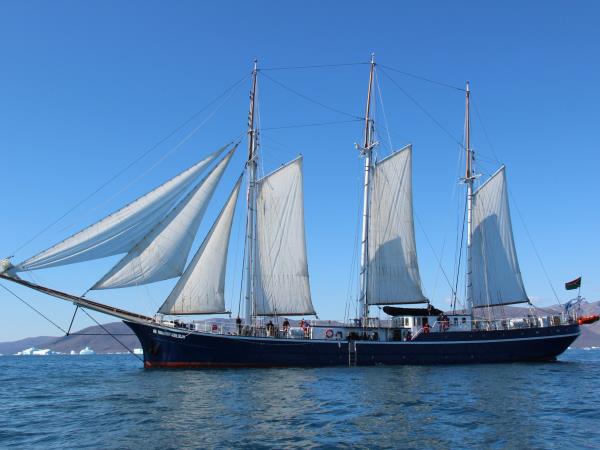
Arctic sailing voyages, North Spitsbergen
Spitsbergen tall-ship wildlife and natural history sailing
From
€3790 to €5350
8 days
ex flights
Arctic Circle sailing expedition, Spitsbergen
Unique opportunity to experience Arctic wildlife & scenery
From
NKr 72300
12 days
ex flights
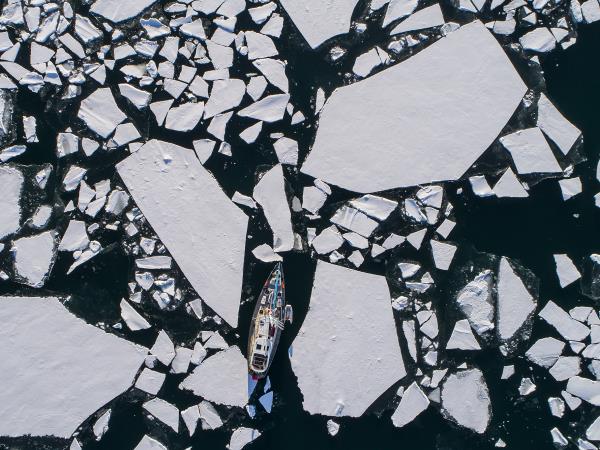
Svalbard summer sailing vacation
Discover the history, culture & wildlife of Northwest Svalbard
From
NKr 55500
8 days
ex flights
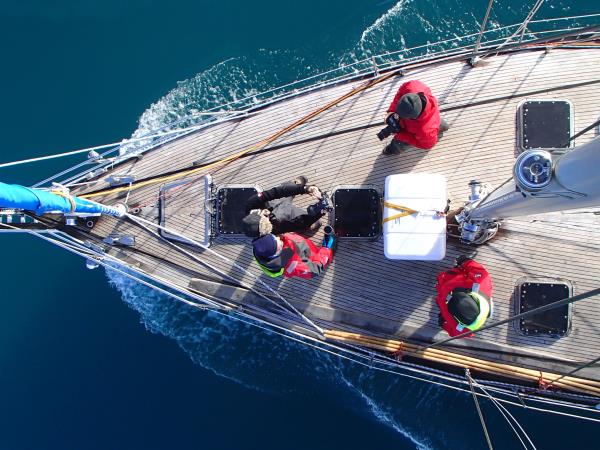
Arctic sailing safari
Navigate icy waters to spot polar bears and whales
From
€2415
7 days
ex flights
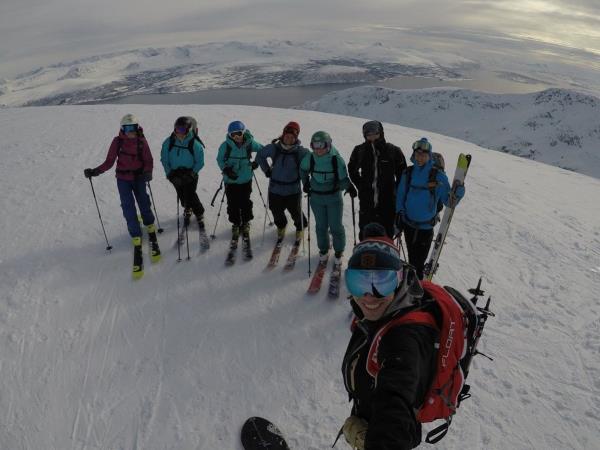
Svalbard sail & ski vacation
Wind-powered sailing meets epic ski touring in Svalbard
From
€4000
10 days
ex flights
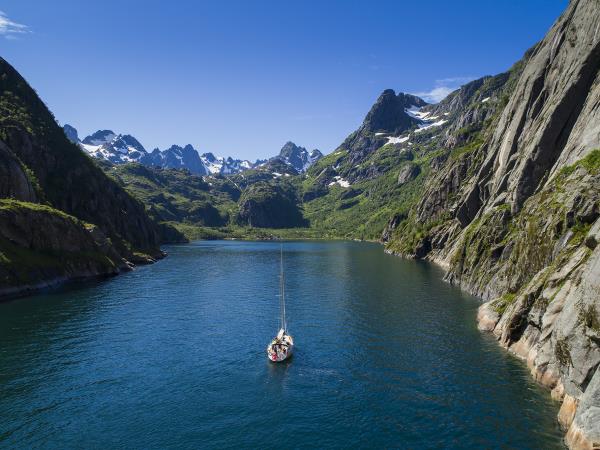
Lofoten islands sailing vacation, Norway
Lofoten’s mountains & Fjords are best explored by sailboat
From
NKr 27500
8 days
ex flights


Contact Us

Call us for a chat about our vacations. We are happy to discuss your vacation and help in any way we can. No bots, queues or awful hold music.

1-866-821-6866
Call toll free
Calling from outside the USA


Where to go sailing in the Arctic
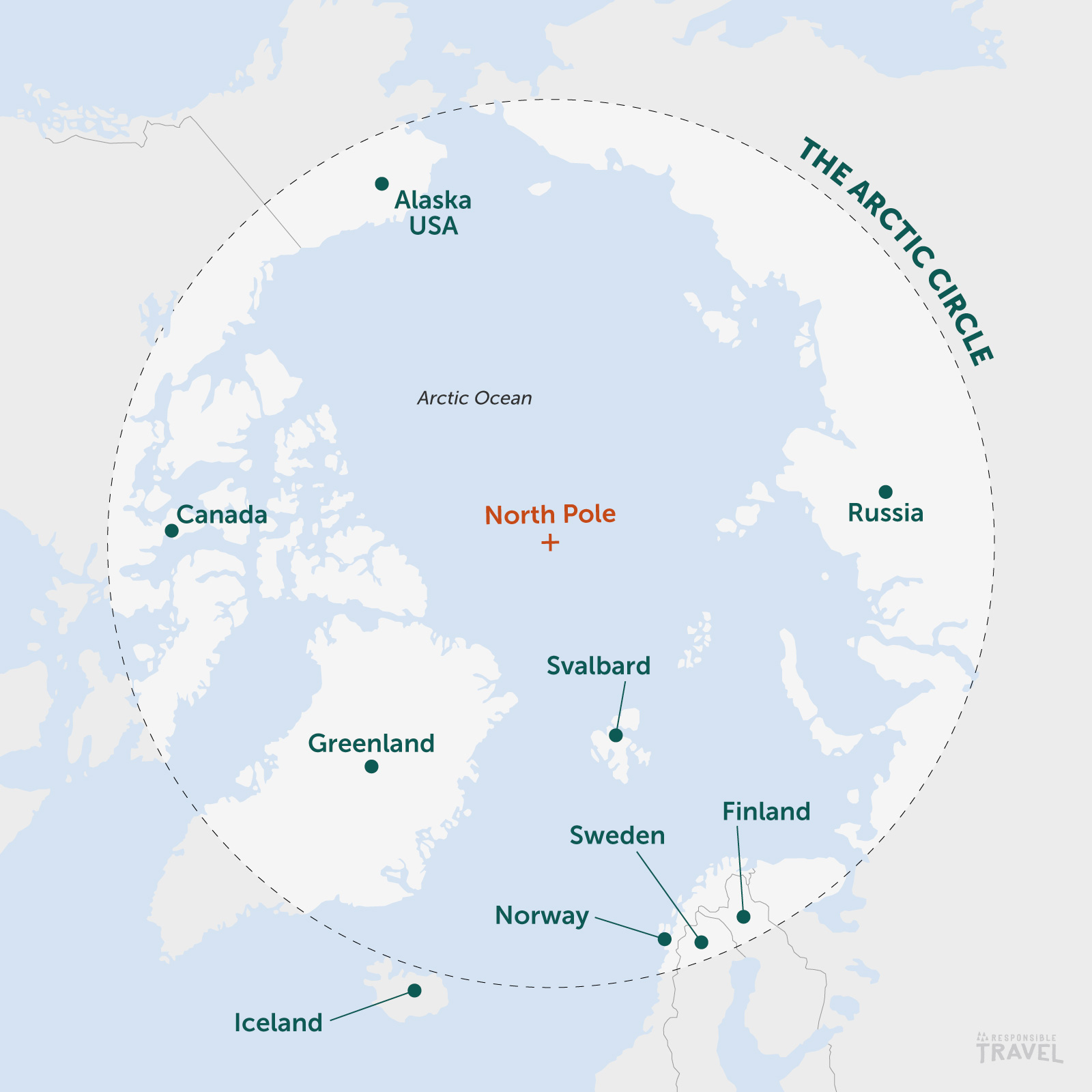
Some of our trips involve long blue water passages of ocean sailing, where you’ll sail continuously night and day, working in watches through the night to keep the boat on course. You might find longer passages between Iceland and Svalbard, Iceland and Greenland, or Northern Norway and Svalbard.
Other trips involve less continuous sailing and more opportunities to explore – coastal sailing in Svalbard or Northern Norway, for instance, involves going ashore each day to hike and explore, and even ski.
Other trips involve less continuous sailing and more opportunities to explore – coastal sailing in Svalbard or Northern Norway, for instance, involves going ashore each day to hike and explore, and even ski.
What to expect from Arctic sailing
Arctic sailing is a fantastic prospect for anyone who wants to have a proper adventure, but doesn’t necessarily have the time, expertise, or superhuman fitness and resilience that many other expeditions necessitate.![]()
You’ll sail in a small boat that has been fitted for expedition sailing. That means a steel or aluminium hull that’s properly insulated, heated by the engine and has advanced navigation systems. There’s very little space below deck – you’ll usually have a bunk in a shared cabin.
You can join a boat with no sailing experience. You’ll be given training on the first few days, so that you can become part of the crew.
“Almost everyone travels solo,” says Bruce. “It’s an amazing bonding experience. And there’s none of that awkwardness – literally zero – that you’d have on most other trips.”
Sailing in the Arctic usually happens in summer, where there’s more stable weather, warmer temperatures and when the chance of encountering sea ice is lower. If you’re above the Arctic Circle you can expect to see the midnight sun and get very long days. This is great for passage-making, but disconcerting when you’re trying to sleep.
In the Lofoten Islands, which lie just within the Arctic Circle in Northern Norway, the temperature reaches a high of 15°C in summer – helped by the warming Gulf Stream. In Scoresby Sound, Greenland, with its Arctic tundra climate, it’s more like 5°C.
When you join a crew, you’ll be assigned your own set of ‘foulies’ – wet weather gear – but you’ll want to bring your own layers for underneath to keep cosy. Look up battery-powered socks…
Speaking of which… you’ll be given a proper kit list – you may want to bring items like kneepads, which can make operations like manning the winches more comfortable, sea sickness tablets for any rough passages, eye drops to counter a whipping wind and your sailing logbook, to get your miles signed off. A washbag that hangs is useful in the shower, where there’s little space for a shelf.
Crucially, Arctic sailing isn’t about getting cold. One of our partners reported back from a trip where it was -12°C on deck, but below deck the crew were growing chives in the galley. In such cosy company, going once isn’t really enough for your Arctic exploration.
You can join a boat with no sailing experience. You’ll be given training on the first few days, so that you can become part of the crew.
“Almost everyone travels solo,” says Bruce. “It’s an amazing bonding experience. And there’s none of that awkwardness – literally zero – that you’d have on most other trips.”
Sailing in the Arctic usually happens in summer, where there’s more stable weather, warmer temperatures and when the chance of encountering sea ice is lower. If you’re above the Arctic Circle you can expect to see the midnight sun and get very long days. This is great for passage-making, but disconcerting when you’re trying to sleep.
In the Lofoten Islands, which lie just within the Arctic Circle in Northern Norway, the temperature reaches a high of 15°C in summer – helped by the warming Gulf Stream. In Scoresby Sound, Greenland, with its Arctic tundra climate, it’s more like 5°C.
When you join a crew, you’ll be assigned your own set of ‘foulies’ – wet weather gear – but you’ll want to bring your own layers for underneath to keep cosy. Look up battery-powered socks…
Speaking of which… you’ll be given a proper kit list – you may want to bring items like kneepads, which can make operations like manning the winches more comfortable, sea sickness tablets for any rough passages, eye drops to counter a whipping wind and your sailing logbook, to get your miles signed off. A washbag that hangs is useful in the shower, where there’s little space for a shelf.
Crucially, Arctic sailing isn’t about getting cold. One of our partners reported back from a trip where it was -12°C on deck, but below deck the crew were growing chives in the galley. In such cosy company, going once isn’t really enough for your Arctic exploration.
More Sailing articles
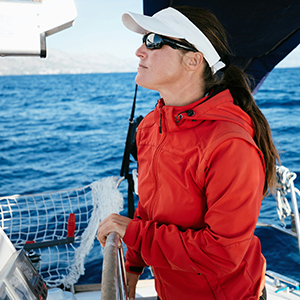
When you sail, the freedom of the seas is yours: hoist the sail and go wherever the wind takes you.
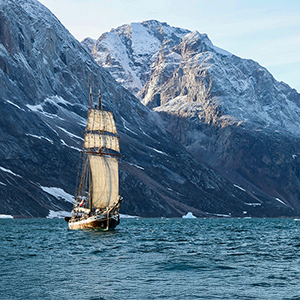
Seven seas – and dozens of vacations – here’s where you can go sailing with us.
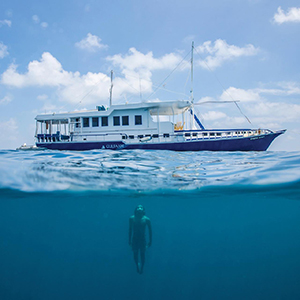
Our top 10 vacations are guaranteed to put wind in your sails, wherever in the world you wish to go.
Sails up, engine off, there’s seemingly no ‘greener’ way to go, but how responsible are these trips really?
Our sailing expeditions will have you crossing between countries and even continents.
“All I ask is a tall ship and a star to steer her by” – But if you don’t know how to sail, you need something else, and that’s a skipper… luckily, we work with some fantastic ones.