Ask who your sea kayakers are affiliated with.
The British Canoe Union, Irish Canoe Union, Canoe Wales and European Paddle Pass are some of the respected bodies you want to look out for. A good guide will have a level 3 qualification. If they only have level 1 or 2, they should only paddle in very sheltered and non-moving water, and no more than 50m from the shore.
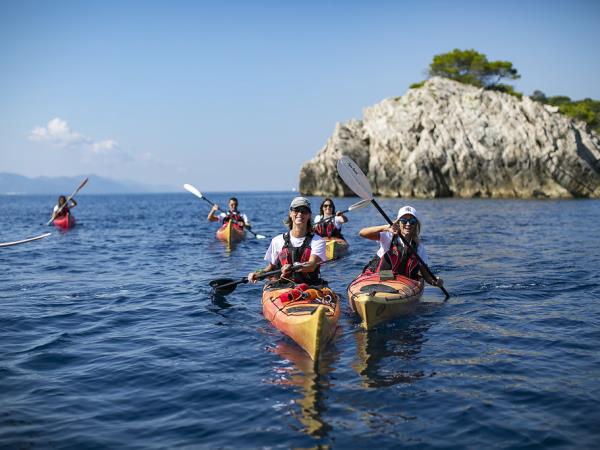
A good question to ask a sea kayaking company is "what are your sea kayaking guide's ratios?" In other words, how many people they will take out on the water for each guide. This applies to boats rather than people, and anything from one to eight boats per guide is acceptable. There is a bit more flexibility in a sheltered bay.
Good kit is important too and, again, if the sea kayaking company is associated with an official body, they are more likely to have that.
Helmets are a must when rocks and choppy water are going to be on your itinerary.
On long-distance sea kayaking trips good kayaking instructors will have made contact with coastguards to tell them your route and the number of people in the party.
If you are a nervous parent when you take your children on the water, don’t be embarrassed about that. It is normal.
Don’t be afraid to tell the guides what you feel your, or your child’s comfort levels are. They are professionals and know how to deal with every situation. So, if you get the wobbles because you think your child has gone too far, then tell your guide. Good ones will have a beady eye on all of you, and especially the children. And the top guides will also quietly reassure you from time to time.
If you worry that your child might get tired and not able to cope, all guides carry a rope and can give you a tow if necessary. This is normal and prevents exhaustion on the water.
In colder climates good quality wetsuits are not only good for comfort levels, but also for safety, as you don’t want to get hypothermia. You can easily sea kayak in the depths of winter, as long as you have the right gear.
If you are sea kayaking independently,
always check the weather conditions. Professional guides check in with coastguards and have good working relations with rescue teams on land. So, if you are going it alone you should gain expert weather advice before you go, and generally it is best not to go more than 400 metres from the shore, unless you are experienced.