Whale watching in South Africa

These gentle giants are seen as national treasures, with festivals in coastal communities celebrating their arrival every year![]()

“The closest I've ever come to a whale was by mistake,” says Phil Rendel. “I was windsurfing, and I didn’t realise until I saw the waterspout that I was next to a whale. Not knowing which way it was going to turn, I dropped the rig and just sat on the board in the ocean, listening to it breathe. It was probably only about 15 seconds until it dived, but it felt like much longer.”
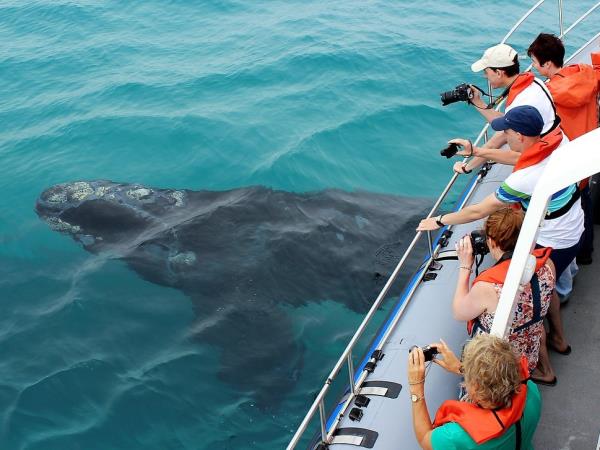
As the founder of our Southern Africa adventure specialists, Where It All Began, Phil is immensely knowledgeable not only about where and when to see whales, but also the inherent risks when wildlife and tourism intersect. “There's a group of southern right whales that spends time here between from July and December,” Phil says. “They’re performative and curious, approaching boats of all sizes. But they come to breed and calve, so there is clearly an ethical issue with going near them. The smallest boat engine will still affect an animal with such sensitive hearing, so it’s a good thing that the industry is tightly regulated.”
Whale watching in South Africa is indeed firmly monitored – these gentle giants are seen as national treasures, with festivals in coastal communities celebrating their arrival every year – but our vacations don’t just leave it to the authorities. They purposefully seek out boat tour operators that support conservation initiatives and educational projects that aim to clean and protect the ocean – sometimes working with students from disadvantaged backgrounds. Excursions will often be accompanied by professional marine biologists – “conducting proper, academic-level studies, not just tokenistic research,” Phil points out.
As the founder of our Southern Africa adventure specialists, Where It All Began, Phil is immensely knowledgeable not only about where and when to see whales, but also the inherent risks when wildlife and tourism intersect. “There's a group of southern right whales that spends time here between from July and December,” Phil says. “They’re performative and curious, approaching boats of all sizes. But they come to breed and calve, so there is clearly an ethical issue with going near them. The smallest boat engine will still affect an animal with such sensitive hearing, so it’s a good thing that the industry is tightly regulated.”
Whale watching in South Africa is indeed firmly monitored – these gentle giants are seen as national treasures, with festivals in coastal communities celebrating their arrival every year – but our vacations don’t just leave it to the authorities. They purposefully seek out boat tour operators that support conservation initiatives and educational projects that aim to clean and protect the ocean – sometimes working with students from disadvantaged backgrounds. Excursions will often be accompanied by professional marine biologists – “conducting proper, academic-level studies, not just tokenistic research,” Phil points out.

Which whale species can you see in South Africa?
You can see several whale species in South Africa. Bryde’s whales, which are typically solitary, are the only residents, but South Africa is on the migratory routes of southern right whales and humpbacks. You might also catch sight of minke and sperm whales, as well as orcas (not actually whales) and many other marine species, too, particularly dolphins. This amazing diversity, as well as the ease with which whales can be seen along the southern coast, makes South Africa one of the best places in the world for whale watching.
How to see whales in South Africa
The main issue with any form of wildlife tourism is how our presence affects the animals’ behaviour and well-being, especially when it potentially impacts their breeding, rest or feeding. Responsible tour operators will take care not to crowd whales or get too close, and not separate individuals from the pod or mothers from their calves.
Our partners take you out on small, well-equipped boats that follow internationally recognised guidelines for engaging with wildlife. But one of the reasons why this is such a brilliant destination for whale watching is that you don’t always need to go out on a boat at all.
Our partners take you out on small, well-equipped boats that follow internationally recognised guidelines for engaging with wildlife. But one of the reasons why this is such a brilliant destination for whale watching is that you don’t always need to go out on a boat at all.
I had an interview with the tourism office and they called me afterwards and said ‘you are the new Whale Crier of Hermanus’![]()
Hermanus, especially, has towering cliffs that offer excellent vantage points, while the water is so deep that the whales get very close to the land. The town, 125km southeast of Cape Town, even has its own ‘Whale Crier’, whose job is to loudly blow a horn made of kelp whenever he sights whales, alerting tourists to their presence. It’s a full-time job for Silize Kuka, who has become internationally famous and is often recognised by people who have seen him on television. “I spend a lot of my day walking around and I love meeting tourists, sharing knowledge about whales. It feels great, that I’m doing a good job, when I see they’ve learned something.”
Other ways that our tailor made vacations can help you enjoy South Africa whale watching include sea kayaking, and horse riding in places like Walker Bay Nature Reserve. A walking route lined with viewpoints extends around the coast from the De Hoop Nature Reserve, and there are also ‘wine and whale’ cycling tours where you ride between vineyards, keeping your eyes peeled for cetaceans along the way. Whale watching doesn’t get much better than that, surely.
Other ways that our tailor made vacations can help you enjoy South Africa whale watching include sea kayaking, and horse riding in places like Walker Bay Nature Reserve. A walking route lined with viewpoints extends around the coast from the De Hoop Nature Reserve, and there are also ‘wine and whale’ cycling tours where you ride between vineyards, keeping your eyes peeled for cetaceans along the way. Whale watching doesn’t get much better than that, surely.
Cape Town and Kwazulu Natal adventure, South Africa
Southern Africa whales, waterfalls & wetlands safari
From
US $8300.09 to US $16600.18
15 days
ex flights
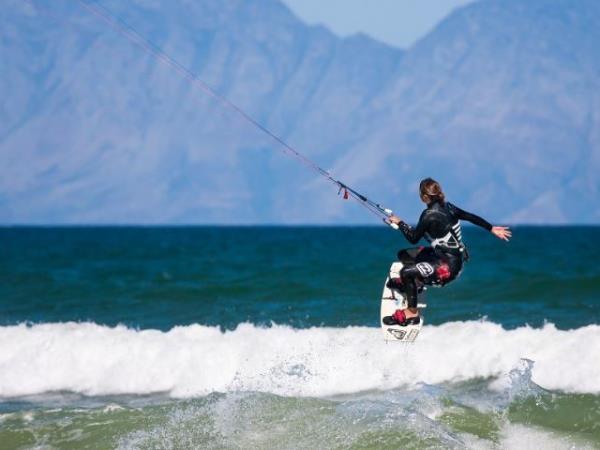
Watersports and whale watching vacation, South Africa
Explore Cape Town’s wildlife, adventure & coastal serenity
From
US $6352.56
9 days
ex flights


Contact Us

Call us for a chat about our vacations. We are happy to discuss your vacation and help in any way we can. No bots, queues or awful hold music.

1-866-821-6866
Call toll free
Calling from outside the USA


Best places for whale watching in South Africa
Hermanus
The whale watching in Hermanus is internationally renowned. On the coast of Walker Bay, this small town sits atop tall cliffs that afford excellent viewpoints of the sea – many guest houses have been built facing the water because you can sometimes see whales swim all the way into the bay where they shelter during their migration. “I love seeing them every day,” says Silize. “My favorite moment in this job was with a mother and her calf that I had been tracking. I saw her leap from the water several times, and her calf followed. I think the mother was teaching the calf. I see a lot of whale behaviours but that moment really stood out.”
A 12km clifftop path, some sections of which are wheelchair accessible, promises uninterrupted sea views, with benches and interpretation signboards provided along the way. The whales get so close that you can frequently see them clearly with the naked eye, and hear their calls with the, erm, naked ear. “I recommend Gearing’s Point as one of the best places to see whales from, it gives you a 360-degree view,” says Silize.
In early October, Hermanus marks the arrival of the whales with a townwide festival. Local people and visitors can talk with marine biologists, use interactive displays and take part in a series of events all aimed at improving knowledge of whales, and helping to protect them, and the seas they depend on.
A 12km clifftop path, some sections of which are wheelchair accessible, promises uninterrupted sea views, with benches and interpretation signboards provided along the way. The whales get so close that you can frequently see them clearly with the naked eye, and hear their calls with the, erm, naked ear. “I recommend Gearing’s Point as one of the best places to see whales from, it gives you a 360-degree view,” says Silize.
In early October, Hermanus marks the arrival of the whales with a townwide festival. Local people and visitors can talk with marine biologists, use interactive displays and take part in a series of events all aimed at improving knowledge of whales, and helping to protect them, and the seas they depend on.
Plettenburg Bay
Plettenburg Bay is further east than Hermanus and sits on the iconic Garden Route, one of the world’s most scenic drives. You can catch migrating whales here in May and June as they make their way north, and then again in October and November as they travel south back to Antarctic waters. Along with Algoa Bay and The Bluff in Durban, Plettenburg is one of three Whale Heritage Areas in South Africa designated by the World Cetacean Alliance. Until the early 20th century there was a whaling station on Beacon Island, just off the coast.
De Hoop Nature Reserve
“I think De Hoop Nature Reserve offers some of the best whale watching in South Africa,” says Phil. “It gets far fewer tourists and far fewer boats than elsewhere, and they also have a vulture colony there.”
De Hoop lies around two hours east of Hermanus, and from its dunes you might also see dolphins and seals. Boat trips are available, while on land, meanwhile, the reserve’s wildlife includes the Cape vultures as well as zebras, bonteboks, baboons and elands.
De Hoop lies around two hours east of Hermanus, and from its dunes you might also see dolphins and seals. Boat trips are available, while on land, meanwhile, the reserve’s wildlife includes the Cape vultures as well as zebras, bonteboks, baboons and elands.
KwaZulu-Natal
The sandy beaches strung along KwaZulu-Natal’s Elephant Coast are virtually empty, making the frequent humpback whale sightings along them all the more special. As with the south coast, you can often see whales directly from the beach, but our KwaZulu-Natal tours can also include boat trips.
When to go
The whale watching season in South Africa is from May to November. From late-May, as winter rolls in, pods of whales migrate north up the east coast towards the warmer waters off Mozambique and Madagascar, where they breed and calve. From around September onwards they make the return journey south, heading for the nutrient-rich waters of Antarctica. As the whales travel, coastal communities like Durban, Hermanus and Port Elizabeth mark their arrival with festivals and events designed to promote awareness and conservation initiatives.
We recommend whale watching in South Africa in the winter, during August and September. “In winter although you do get occasional storms, they tend to last about a day and then they calm down,” says Phil. “Whereas the problem with the summer is that it’s windy all the time – you get these terrific swells that make it hard to navigate the coastline. Often the boats just can’t go out.”
Between May and July a marine wildlife spectacle takes place to rival that of the Great Migration. This is the annual Sardine Run, when millions of sardines make their way northwards from Cape Agulhas, the southern tip of Africa, towards the warmer waters of KwaZulu-Natal. Naturally, this proliferation of pilchards does not go unnoticed, and scores of whales, along with dolphins, sharks and seabirds, turn up for the feast.
Unfortunately, it’s impossible to predict how close to land the Sardine Run will take place, but if you get lucky, Phil advises, get the barbecue on. “When the warm Agulhas Current moves sufficiently far inland, then you can literally stand in the sea up to your knees with a beer crate and scoop the sardines into it.”
We recommend whale watching in South Africa in the winter, during August and September. “In winter although you do get occasional storms, they tend to last about a day and then they calm down,” says Phil. “Whereas the problem with the summer is that it’s windy all the time – you get these terrific swells that make it hard to navigate the coastline. Often the boats just can’t go out.”
Between May and July a marine wildlife spectacle takes place to rival that of the Great Migration. This is the annual Sardine Run, when millions of sardines make their way northwards from Cape Agulhas, the southern tip of Africa, towards the warmer waters of KwaZulu-Natal. Naturally, this proliferation of pilchards does not go unnoticed, and scores of whales, along with dolphins, sharks and seabirds, turn up for the feast.
Unfortunately, it’s impossible to predict how close to land the Sardine Run will take place, but if you get lucky, Phil advises, get the barbecue on. “When the warm Agulhas Current moves sufficiently far inland, then you can literally stand in the sea up to your knees with a beer crate and scoop the sardines into it.”
More South Africa wildlife articles
There aren't many places you can see penguins on the beach, whales from the shore, and then go on an incredible safari.
South Africa is one of those countries that has something on offer, wildlife wise, all year round.
We have a lot of tips for responsible tourism on South Africa wildlife vacations.



.jpg)