Tasmania small group tours

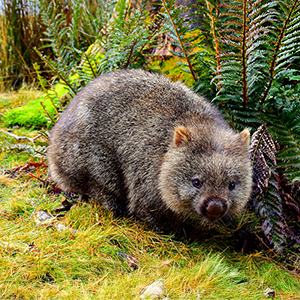
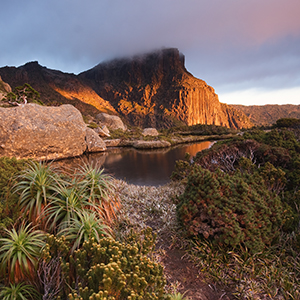
The sun is setting at Cradle Mountain, turning the volcanic stone pink and the sky a celestial twilight-blue. Forget the witching hour: this is the wombat hour, when the marsupials emerge from burrows to munch on their favorite snacks of moss, herbs, sedge and grass. Shuffling along in their cosy fur coats, sometimes with a baby joey tucked close, there’s no other word to describe them: they’re really, really cute.

They’re also a highlight of our small group tours in Tasmania – both for our travelers and local experts.

“We normally spot half a dozen wombats,” says Morgan Wilson, from our small group specialists Fun Tassie Tours. “It’s great. They don’t like heat, so they’ll come out for dinner and then they’ll probably graze well into the night.”

Staying on the boardwalks on the Cradle Valley circuit is sensible for the preservation of the wombats’ habitat – and for the preservation of your toes. Wombats might look cuddly, but those snuffling snouts hide away sharp teeth and, when stressed, they’re not shy about telling you where to go.

You’ll get to stop over in Cradle Mountain for dinner too, staying in a hotel tucked far enough into the forest to deter the big coach tours. The wombats prefer the peace and quiet too – you’ll often see them taking their own evening stroll along the driveway.
The most relaxing and memorable vacation we ever had. Just enjoy, leave everything to the operator, Morgan will take care of everything!
– our traveler Doris Ng

Why go on a small group tour of Tasmania?

Some of the most scenic roads in Tasmania swoop along coastlines, through valleys and around mountains. That makes for some spectacular drives – but you’ve always got to have your eyes on the next bend in the road. “On a small group tour you’re able to relax and watch the scenery,” says Morgan, “and that’s what’s great about Tasmania.”

Small group tours also give you the freedom to go wine tasting, have a snooze on a stretch of boring highway, or even to get a picture of a Tasmanian devil (instead of accidentally squashing it; Tasmania is the roadkill capital of the world).

When it comes to group sizes, 12 is the magic number, half of which are usually solo travelers, plus an accredited local guide who’ll be your host and driver for the trip.

“That’s very deliberate, the number 12,” says Morgan. “The group tends to stay together rather than splitting into two groups and we just find it a really nice, sustainable size to keep it enjoyable for everyone… We can rock up to small venues that are really unique that the big buses can’t go to because the hotel can’t accommodate them.”

The minivans are small enough to get you to places coaches can’t, but big enough for comfort. There’ll usually be more seats than fellow travelers, with room for spreading out, moving seats or storing luggage – including any souvenirs picked up en route.

Contact Us

Responsible Travel, Travel Team

Call us for a chat about our vacations. We are happy to discuss your vacation and help in any way we can. No bots, queues or awful hold music.

Responsible Travel, Travel Team

The western wilderness & hydro towns of the Highlands

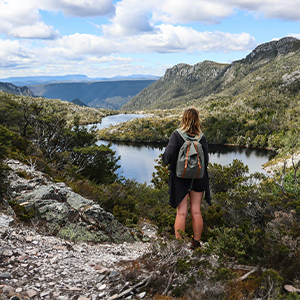
Score a line down the center of Tasmania, and you’ll find that the west is home to less than five percent of the population. That’s largely down to the terrain, including the first-growth rainforests, moorlands, gorges, peaks and glacial lakes of Cradle Mountain-Lake St Clair National Park. This is also the land of the endemic Tasmanian Fagus – the only native tree to put on a dramatic autumn show nicknamed ‘the turning of the fagus’.

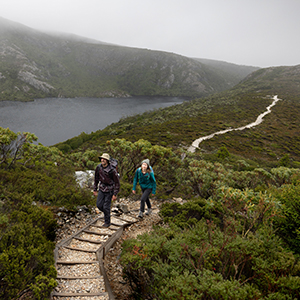
This region tends to be the domain of the two extremes of tourists to Tasmania: trekkers and day-trippers. Our Western Tasmania wilderness tours, on the other hand, strike a happy balance of sightseeing and strolls that work for everyone. “We don’t want to exclude people from being able to participate,” says Morgan. “Short scenic walks are more kind of our style so that everyone can join in.”

This spectacular west side of the island forms part of the Tasmanian Wilderness World Heritage Area, which has been managed by Aboriginal people for over 35,000 years. Slowing down and making stops means taking the chance to learn about over 1,000 ancestral sites, from rock shelters and geometric paintings to the prints of ancient coastal villages.

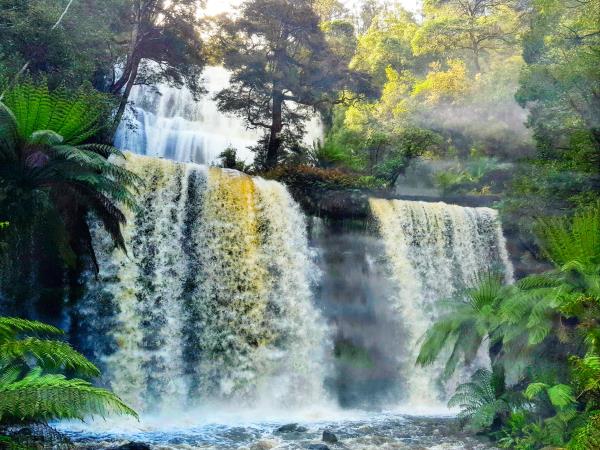
The Central Highlands are also a lesser-visited highlight – and the origins of the century-old hydro project that now fuels 80 percent of Tasmania’s electricity. And where there’s hydropower, there’s a whole lot of water – including Great Lake/Yingina and the multi-tiered Russell Falls.

Our longer tours take the time to put you up in an old hydro town, in a remote lodge set amongst the candy-coloured cabins and cottages and manicured lawns once used by the employees and families working on Tasmania’s early hydroelectric projects. “It only has nine rooms and, as far as I’m aware, we’re the only operator that takes tours in there,” says Morgan. “No one’s ever heard of it – and then you pull up and the grounds are beautiful… It’s got a real wow-factor.”

Taking the slow route through Port Arthur

Most tours dutifully tick off Port Arthur on a day trip from Hobart – but our specialists prefer to stay for the night to give you the time to take in the full story of Tasmania’s most famous penal colony.

“I don’t think there are too many World Heritage Sites in the world where you can stay that close – see it from the breakfast table,” says Morgan. Staying next door also gives you early access to the ruins before the day-trippers arrive. “We’re allowed to go into the site before it’s open, so for the first hour and a half there’s no one there – we have the whole site. I really enjoy that.”
I don’t think there are too many World Heritage Sites in the world where you can stay that close – see it from the breakfast table.
Your driver doubles as a guide, offering a full guided loop to see the skeletal remains of the Convict Church and hear about the stories of the harsh day-to-day lives of prisoners who lived in the Penitentiary, a flour mill-turned-dormitory. You’ll be steered towards all the important spots, as well as the places you might miss if you were wandering on your own.

“It’s the most famous convict prison in Tasmania and Australia,” says Morgan. “But it’s also a beautiful site. When I say prison, people think of a prison building, which it does have there, but it’s more the grounds – it’s massive. It’s very well maintained, so it’s almost like walking through botanical gardens in spring. There are flowers everywhere.”

Seasonal celebrations

Come to Tasmania, and you’ll soon realise that reports of its cool weather have been greatly exaggerated. “People think Tassie is cold, but really on a global scale, it’s not cold at all,” says Morgan. “I guess if you come from Darwin, you’ll probably feel a bit chillier!”

Our small group tours run from September to May, making the most of the Tasmanian spring, summer and autumn. Spring sees cautiously unfurling flowers and snow still striping the mountains. Summer means long days, more sunshine, and star-bright nights. But the standout season tends to be autumn – from mid-February to mid-April.

“I love the autumn,” says Morgan. “The transition is quite stunning.”

But where to catch the display? The rare Fagus trees of the highlands aside, Tasmania’s trees are a deciduous lot that hang onto their leaves all year. The most spectacular shows are in cities like Hobart and Launceston, where houses and parks are filled with plants brought over during British colonisation.

“You’ll see maple trees and wisteria and climbing roses and lavender,” says Morgan. “You see all those autumn colours – oaks and birch trees… Even the architecture around the cities from colonisation is very English. When you get out of the city, you won’t see those colours anymore – but you still get this autumn light. It looks beautiful.”
You’ll see maple trees and wisteria and climbing roses and lavender. You see all those autumn colours – oaks and birch trees around the cities.
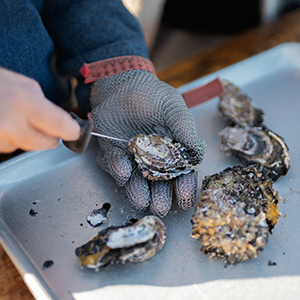
When it comes to seasonal feasts, our local experts will make sure you get the chance to try a bit of everything – the pinot noirs and Rieslings of the Coal River Valley, award-winning cave-aged cheddar cheese, cool-water oysters, ruby chocolate, leatherwood honey…

“Tassie’s famous for great food because there are so many great farms,” says Morgan. “A lot of chefs come to Tasmania because of the fresh produce.”

Join a chocolate tasting session to find out how a husband-and-wife team put their artistry and passion for seasonal flavours into their sweets. You might sample apple and cinnamon, mint, honeycomb and ginger, depending on what’s in season. Meanwhile, in Meander Valley, where farms do indeed meander between rivers and hills, our tours pop by a dairy farm for a slurp of fresh ice cream. The hardest part is choosing from one of the 50 flavours – will it be a classic salted caramel, or a Tasmanian special like pepperberry, whisky cream, or lavender and white chocolate?

“One of my favorites places is a salmon farm hidden in the forest,” says Morgan. “It’s beautiful. We often eat lunch in the garden, under the trees. But it’s one of those places that unless you have a guide, you’re probably not going to find it; you wouldn’t even know it’s there, off the main street. Most people would have lunch in the small township nearby.”

The tours are a-changing

The seasons aren’t the only things ever-changing. “Our tours have evolved quite a lot over the last 10 years or so, and we’re always discussing things,” says Morgan. “It’s a constantly evolving thing,”

Tired restaurants and hotels are swapped for fresh ones; tour routes are continuously fine-tuned. Rather than adding lots in, itineraries are refined – leaving space for that dusk wombat walk and for time to hear how honey is transformed into Tasmania’s most delicious desserts.

“Mostly we’ve found that we’ve taken a lot of things out,” says Morgan. “We slowed down a little bit – sometimes, less is more.”

Practicalities

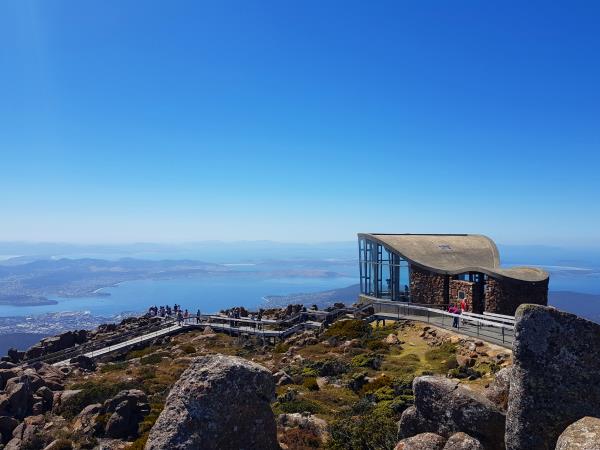
Solo travelers are welcome! On many of our tours, up to half the guests arrive solo, including a large proportion of solo female travelers. Most things are included in the price. Transport is comfortable, accommodation is three- and four-star, and meals range from wineries to salmon farms. Breakfasts and lunches are included, giving you the freedom to choose your own dinner. Colonial stories have long dominated tours of Tasmania, but Indigenous-led tourism is growing in Lutruwita/Tasmania – and your vacation choices can help keep Aboriginal stories front and center. All our tours start in Hobart; chat to our experts about adding extra nights in the capital city for museums, boutiques, art galleries and bush tucker food walks. Aboriginal-led city tours are a highlight and can cover everything from protest and public art to Indigenous Palawa and Pakana perspectives of Hobart’s iconic Kunanyi/Mount Wellington.
Photo credits: [Page banner: TDHai] [Why go on a small group tour of Tasmania?: Morgan Wilson at Fun Tassie Tours] [Taking the slow route through Port Arthur: Hype TV] [Seasonal celebrations: eGuide Travel]